Artwork
Papirius and his Mother
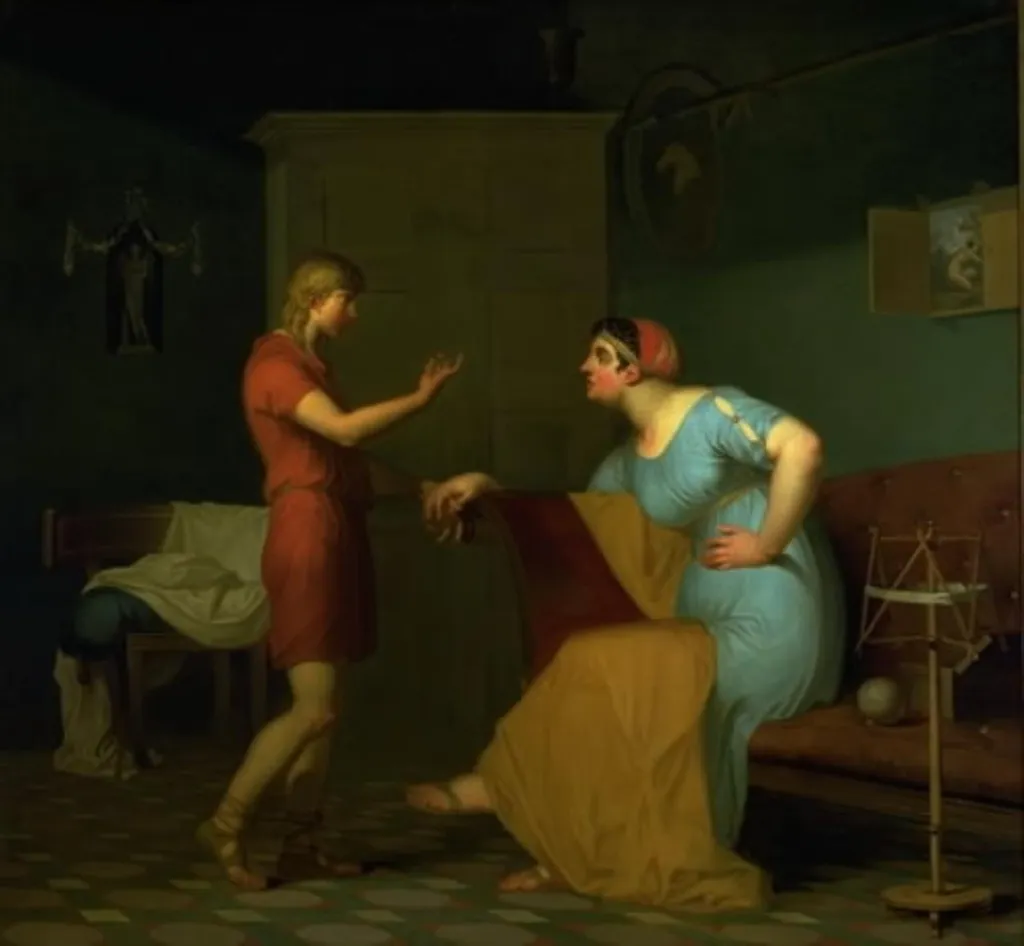
Papirius and his Mother is a photography by the Romanticist artist Unknown. It dates from 1809 and is held in the collection of the Statens Museum for Kunst. Painted in 1809 by 241_person, this work depicts a quiet, emotionally charged moment between two women.
About this work
Overview
The use of dramatic lighting draws attention to their gestures and expressions, emphasizing psychological depth over narrative detail.
Painted in 1809 by 241_person, this work depicts a quiet, emotionally charged moment between two women. Rendered in oil, it is part of the collection at the Museum of Ethnography. The composition centers on a kneeling figure and a standing one, their interaction framed by modest interior elements. The use of dramatic lighting draws attention to their gestures and expressions, emphasizing psychological depth over narrative detail.
Subject & Meaning
The scene portrays a moment of intimate exchange, possibly referencing a Roman legend in which a son is condemned for revealing state secrets, and his mother intervenes. The kneeling woman, holding a small object, may symbolize sacrifice or moral burden, while the standing figure’s reach suggests counsel or restraint. The ambiguity invites contemplation rather than clear moral resolution, aligning with early 19th-century interest in private virtue.
Technique & Style
The artist employs chiaroscuro to heighten emotional tension, casting the figures in stark relief against a near-black background. Light falls selectively on the red and blue garments, enhancing texture and form. The subdued palette and soft transitions between shadow and highlight reflect influences from Baroque traditions, adapted here to a restrained, intimate scale. Details like the globe and framed images are rendered with minimal brushwork, avoiding distraction.
History & Provenance
Created in 1809, the painting entered the Museum of Ethnography’s collection in the early 20th century. Its origins prior to acquisition remain undocumented. No exhibition records or contemporary reviews from the artist’s lifetime are known to survive. The work’s presence in an ethnographic institution suggests it was later interpreted as a cultural artifact of moral storytelling rather than a historical portrait.
Context
In the early 1800s, European artists frequently turned to classical legends to explore themes of duty, loyalty, and familial sacrifice. This painting aligns with that trend, though it omits overt historical markers. Its domestic setting and focus on female figures reflect a broader shift toward intimate, psychologically nuanced subjects, contrasting with grand historical narratives favored in academic circles at the time.
Legacy
Though not widely exhibited or reproduced, the painting remains a quiet example of early 19th-century narrative painting that prioritizes emotional resonance over spectacle. Its preservation in an ethnographic museum underscores its role as a cultural artifact representing moral ideals through visual storytelling. Scholars occasionally cite it in studies of gender and domesticity in neoclassical-inspired art.
Artist & collection

 Domestic Scene
 Giacomo and Cardinal Marco, investing Andrea, Abbot of San Zeno, with his Benefice
 The Nymph of Fontainebleau
 Portrait of a Woman
 Madonna and Child with Saints in the Enclosed Garden
 Venus and Minerva
 Family Group of Four on Sofa
 Wall painting from Room H of the Villa of P. Fannius Synistor at Boscoreale
 The Corinthian Maid
 Fotis sees her Lover Lucius Transformed into an Ass. Motif from Apeleius' The Golden Ass
 Psyke, der nærmer sig den sovende Amor
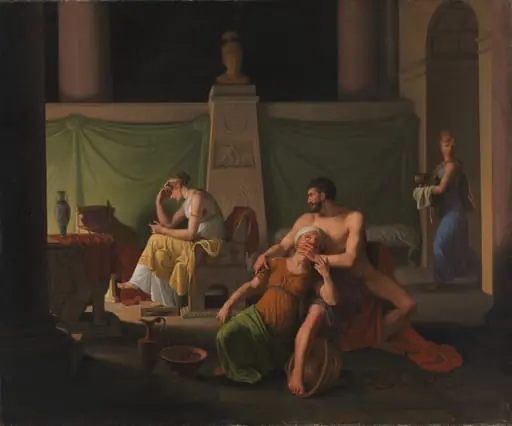 The Return of Ulysses. Scene from Homer´s Ulysses
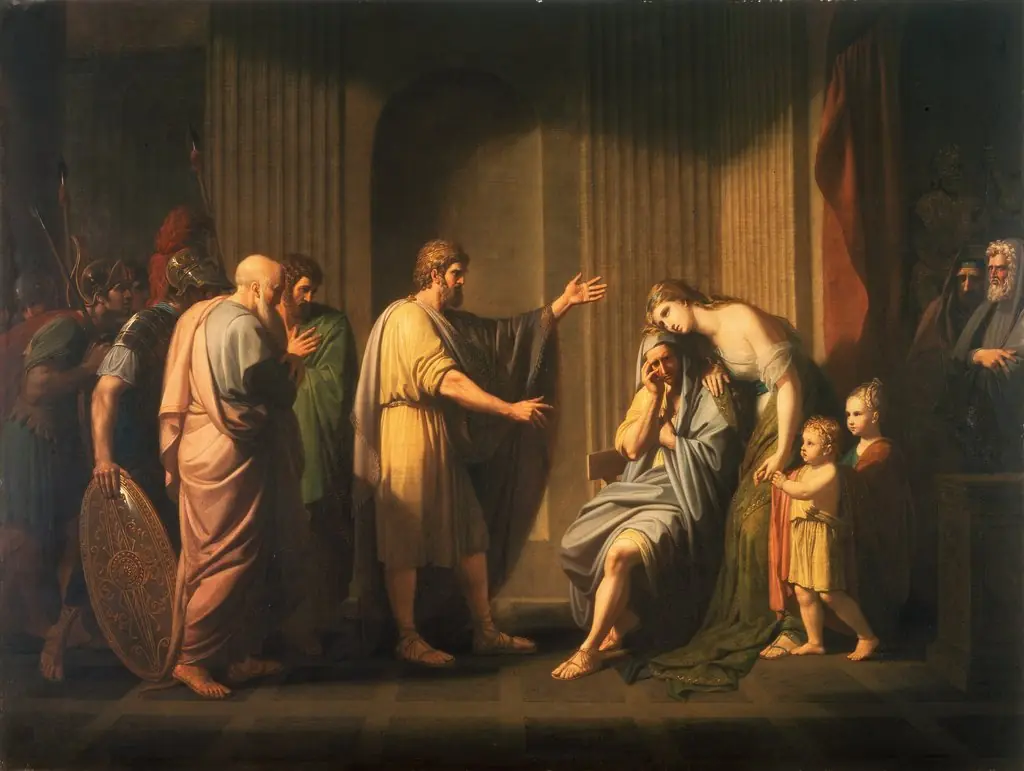 Cleombrotus Ordered into Banishment by Leonidas II, King of Sparta
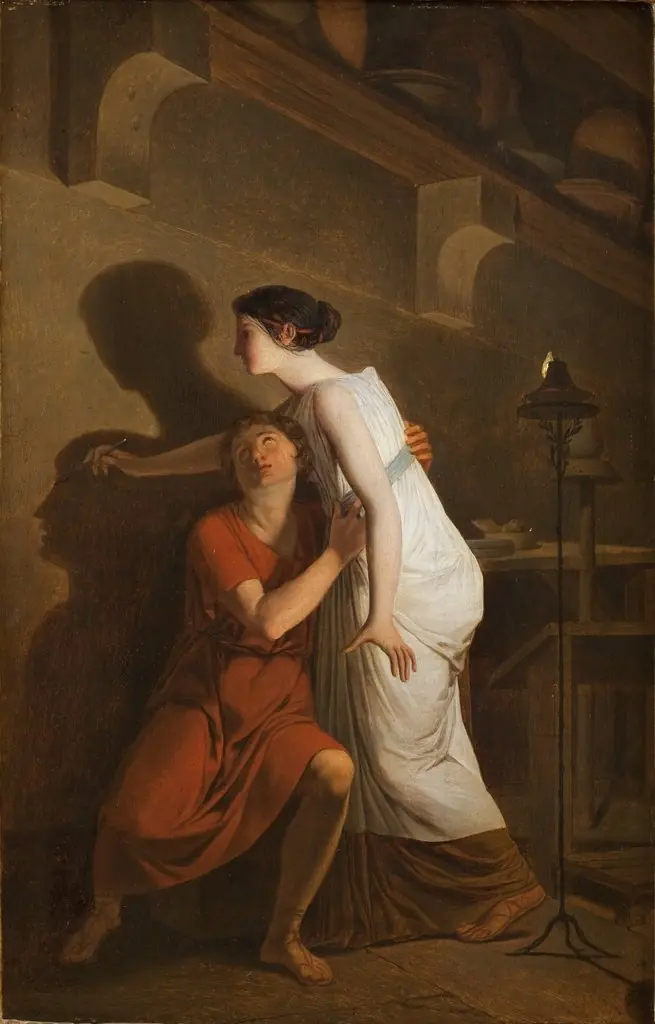 The invention of the art of drawing
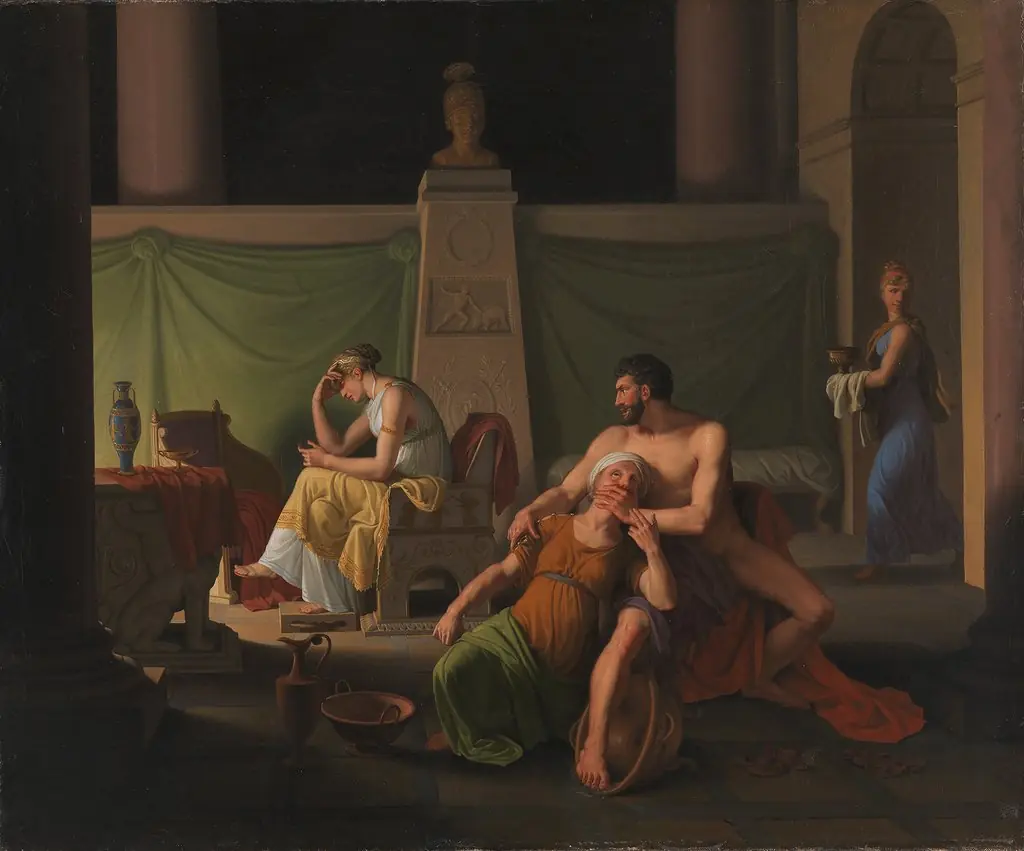 The Return of Ulysses. Scene from Homer´s Ulysses
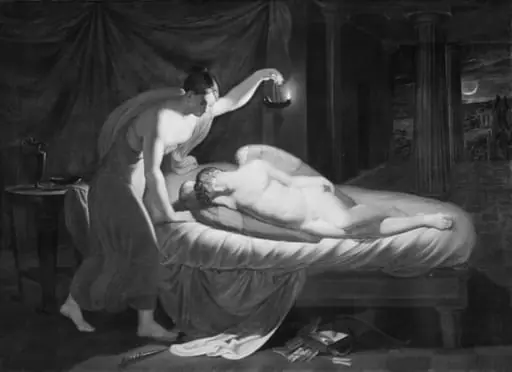 Psyke, der nærmer sig den sovende Amor
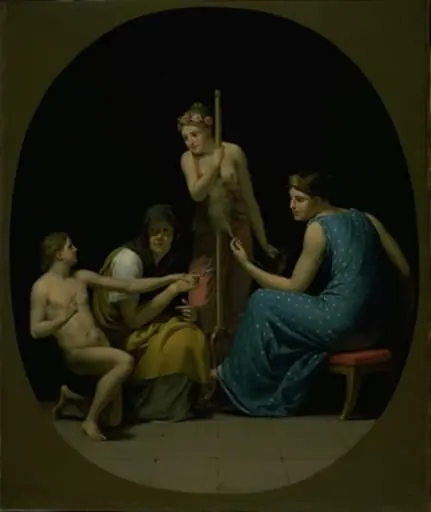 The Parcae: Clotho, Lachesis and Atropos Spinning the Thread of Life
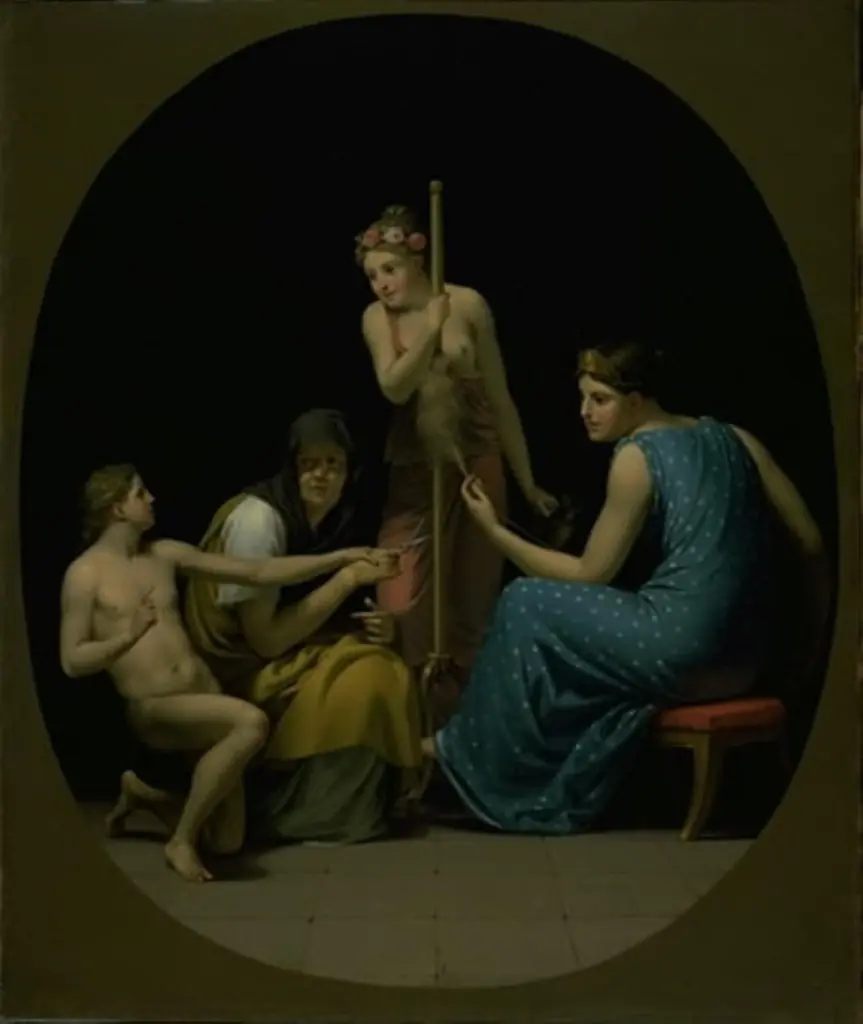 The Parcae: Clotho, Lachesis and Atropos Spinning the Thread of Life