Artwork
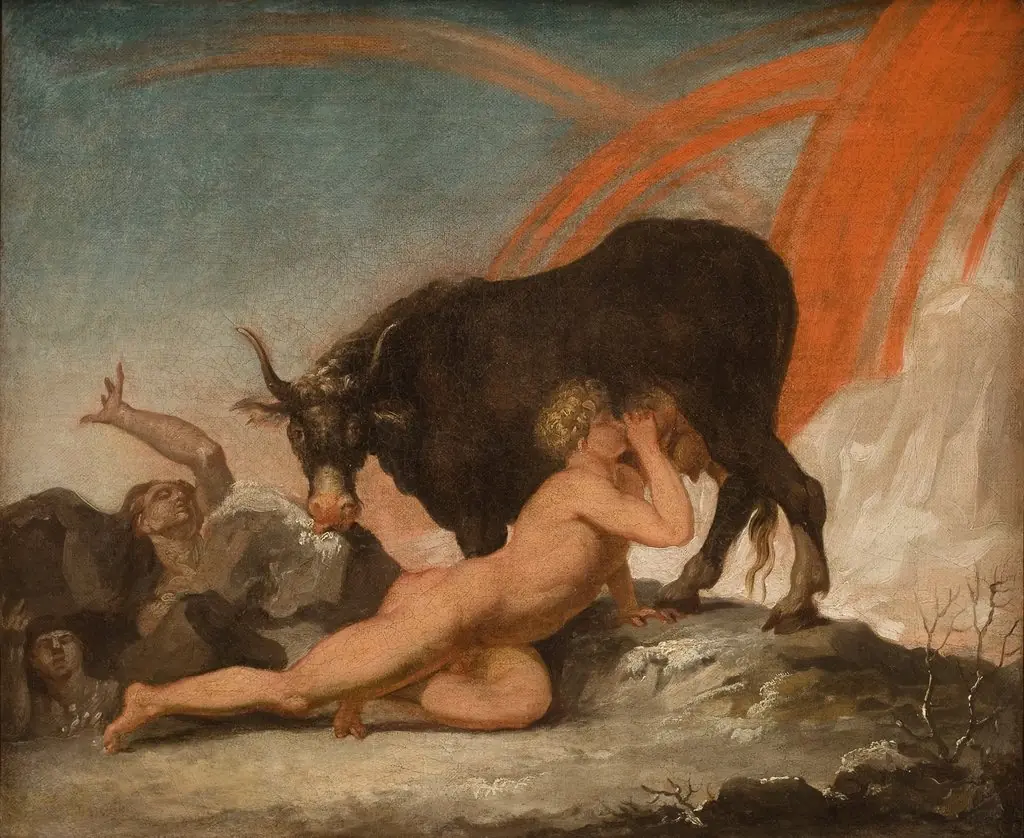
Ymir Suckling the Cow Audhumla
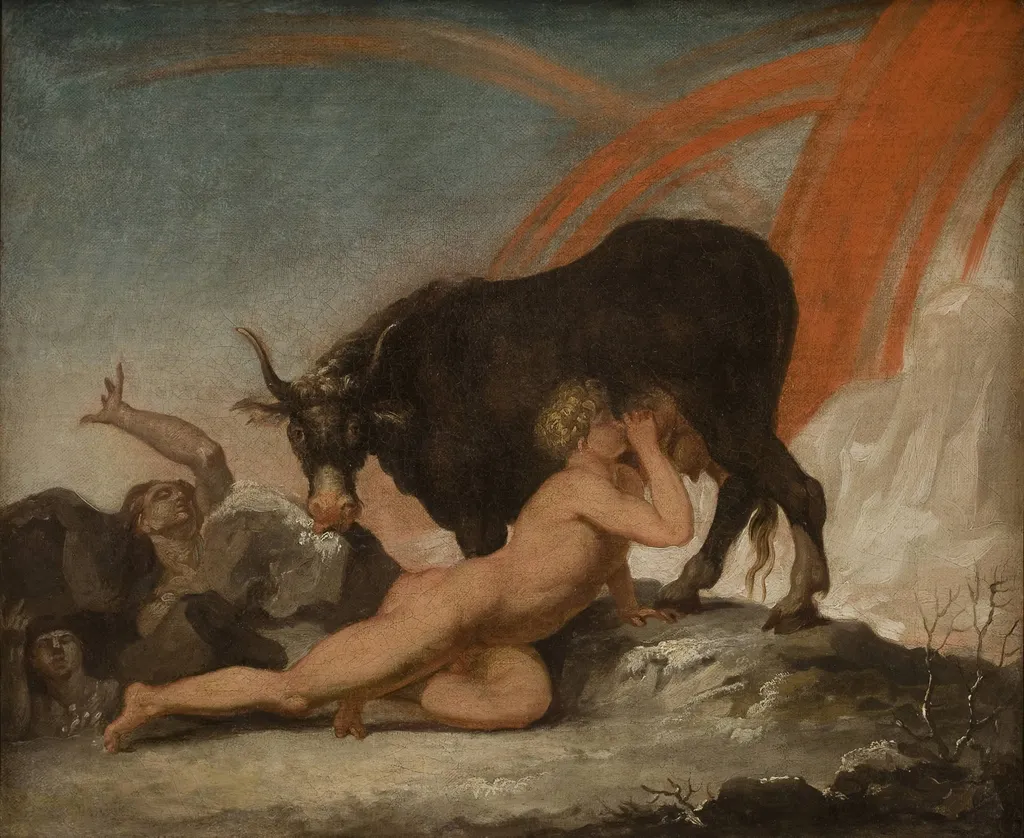
Ymir Suckling the Cow Audhumla is a photography by Unknown. It dates from 1750 and is held in the collection of the Statens Museum for Kunst. Created around 1750, this image depicts a scene from Norse cosmogony: the primordial giant Ymir nursing from the cosmic cow Audhumla.
About this work
Overview
Its composition emphasizes primal forces through stark contrasts and raw, untamed forms, reflecting early modern interpretations of ancient legends.
Created around 1750, this image depicts a scene from Norse cosmogony: the primordial giant Ymir nursing from the cosmic cow Audhumla. The work is held in the Museum of Ethnography and belongs to a tradition of mythological illustration from the Nordic region. Its composition emphasizes primal forces through stark contrasts and raw, untamed forms, reflecting early modern interpretations of ancient legends.
Subject & Meaning
The scene illustrates the foundational myth in which Ymir, the first being, sustains himself by drinking from Audhumla, whose licking of salty ice eventually gives rise to the gods. The childlike figure of Ymir clings to the cow’s back, suggesting dependence and vulnerability. Surrounding figures, partially obscured on the ground, may represent emerging life or the chaotic remnants of the primordial world, reinforcing themes of genesis and elemental struggle.
Technique & Style
The artist employs strong chiaroscuro to isolate the bull and Ymir against a shadowed, uneven landscape. Thick, textured brushwork renders the cow’s fur as wild and organic, contrasting with the smooth, pale skin of the childlike figure. The dim, streaked sky suggests dawn or divine illumination, guiding the viewer’s eye toward the central act of nourishment. The rough terrain and ambiguous figures enhance the myth’s sense of primordial disorder.
History & Provenance
The work entered the Museum of Ethnography’s collection in the late 19th century, likely acquired during a period of renewed interest in Norse folklore. Its origins are tied to Scandinavian illustrative traditions that sought to visualize mythic texts, though the artist’s identity remains unconfirmed. The piece was probably produced for scholarly or cultural dissemination rather than religious use.
Context
This image emerged during a time when European intellectuals were re-examining northern mythologies as alternatives to classical traditions. Norse cosmology, preserved in medieval texts like the Poetic Edda, was being revived in art and literature. The depiction aligns with 18th-century efforts to reconstruct ancient Nordic beliefs through visual symbolism, blending folk memory with Enlightenment-era antiquarianism.
Legacy
Though not widely known outside specialized circles, the image contributes to a broader 18th- and 19th-century visual canon of Norse myths. It influenced later illustrators of Scandinavian folklore and remains a rare early attempt to render the creation myth in a single, dramatic composition. Its raw aesthetic distinguishes it from more polished academic treatments of mythology.
Artist & collection

 Domestic Scene
 Giacomo and Cardinal Marco, investing Andrea, Abbot of San Zeno, with his Benefice
 The Nymph of Fontainebleau
 Portrait of a Woman
 Madonna and Child with Saints in the Enclosed Garden
 Venus and Minerva
 Family Group of Four on Sofa
 Wall painting from Room H of the Villa of P. Fannius Synistor at Boscoreale
 Throat-cutting
 Herakles erlegt den Adler des Prometheus
 Hercules Killing the Centaur Nessus
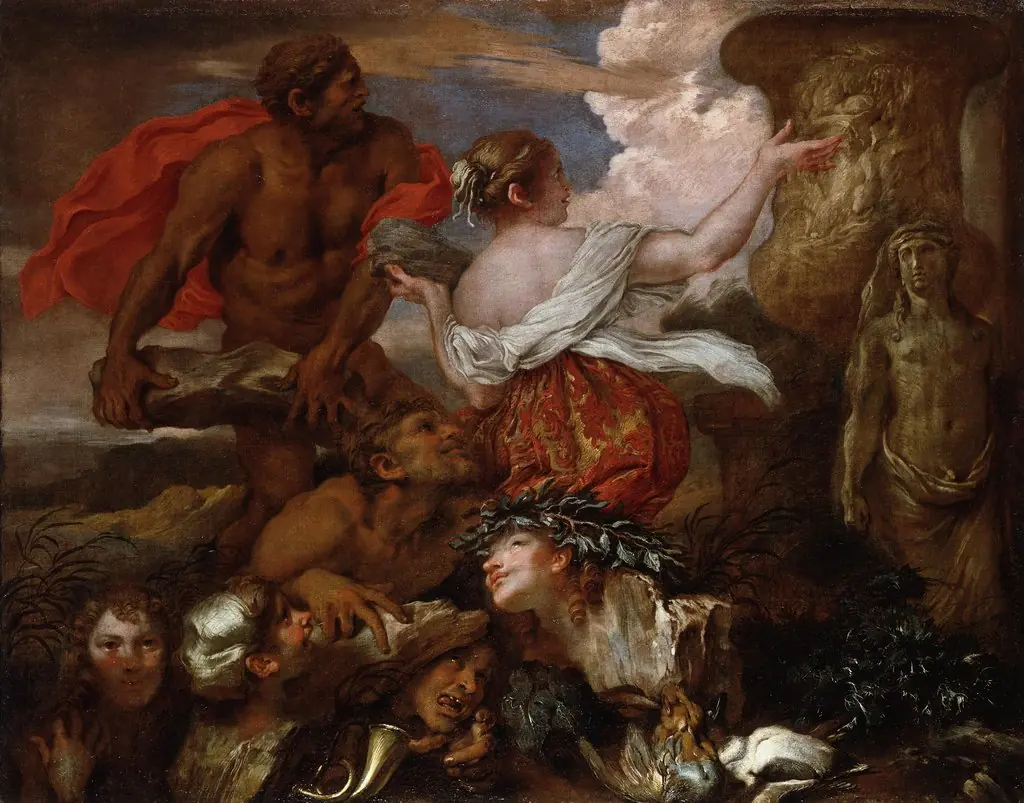 Deukalion and Pyrrha
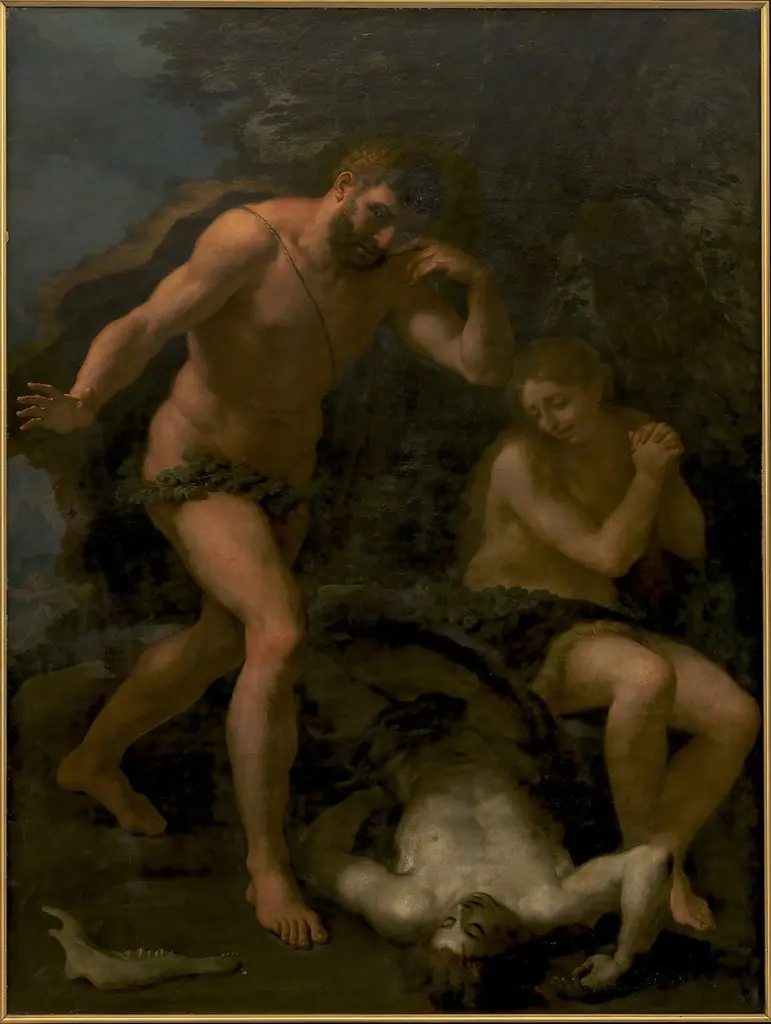 Adam and Eve Lamenting over the Body of Abel
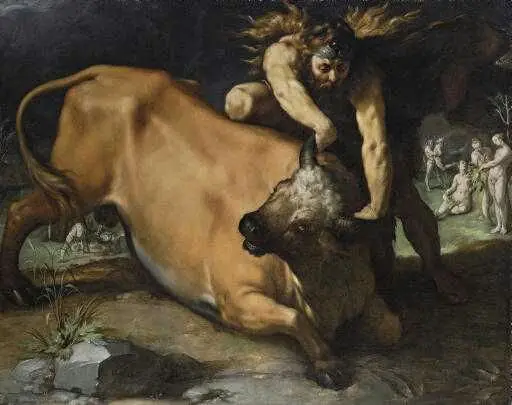 Hercules and Achelous (Ovid, Met. 9:1-100)
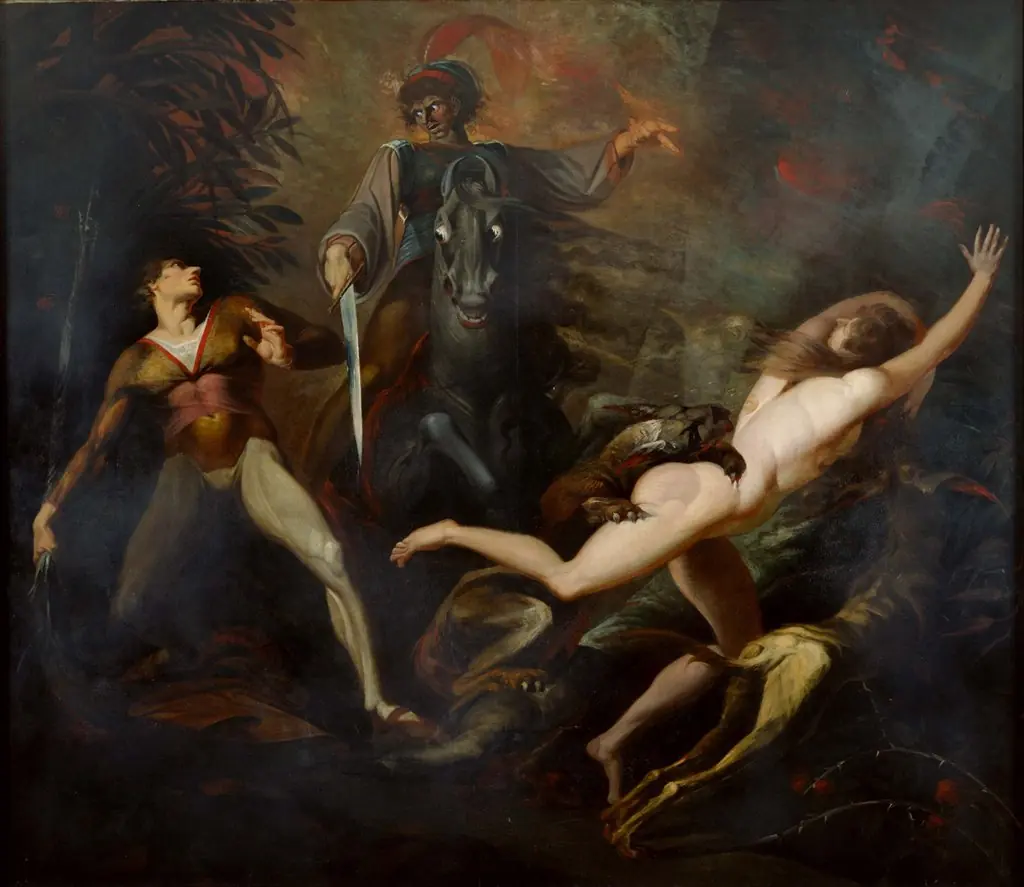 Theodore Meets in the Wood the Spectre of His Ancestor Guido Cavalcanti
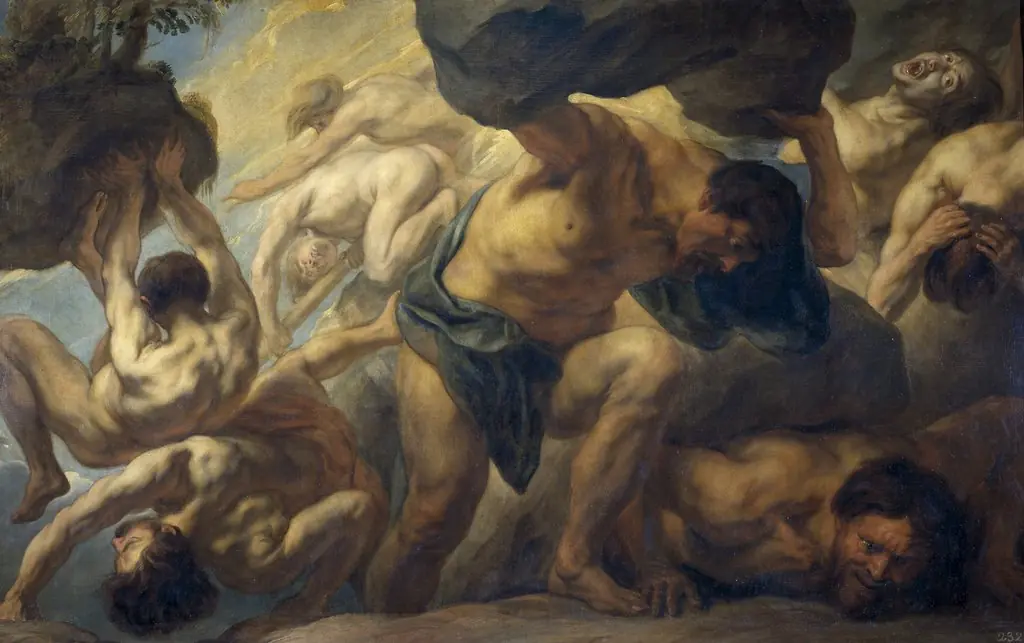 The Fall of the Giants
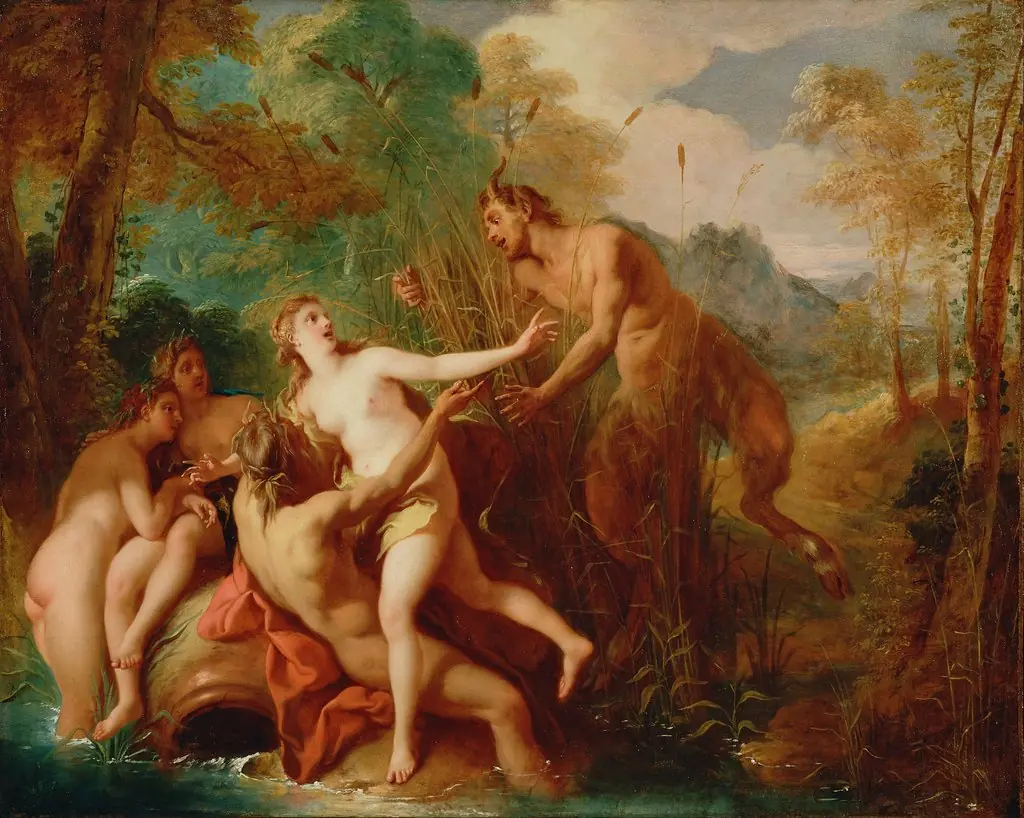 Pan and Syrinx
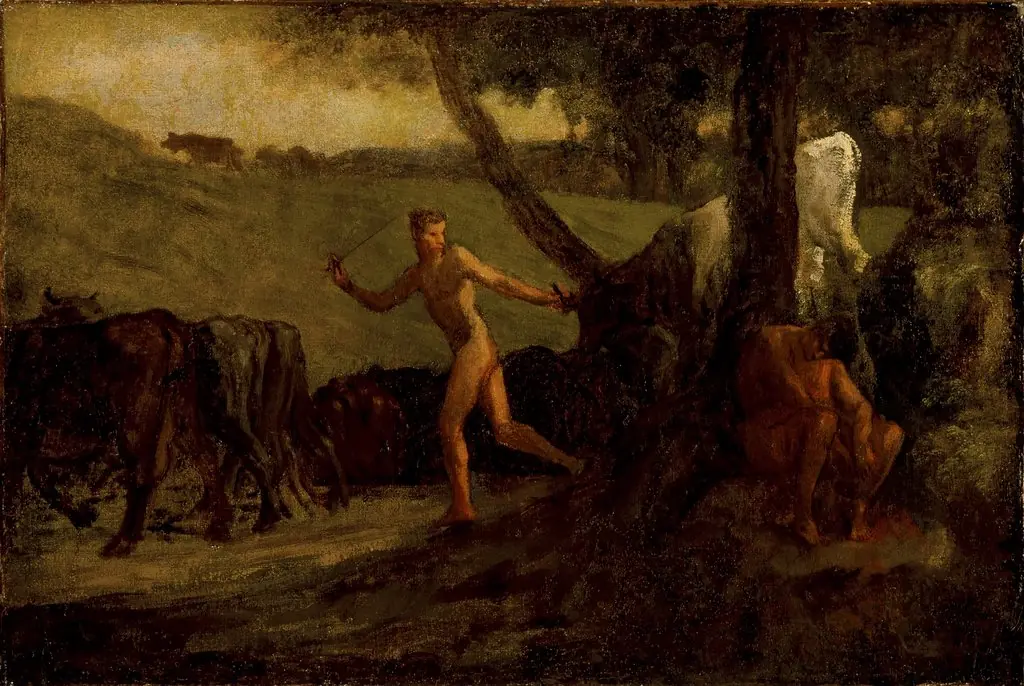 Study for 'Mercury Leading the Cows of Argus to Water'
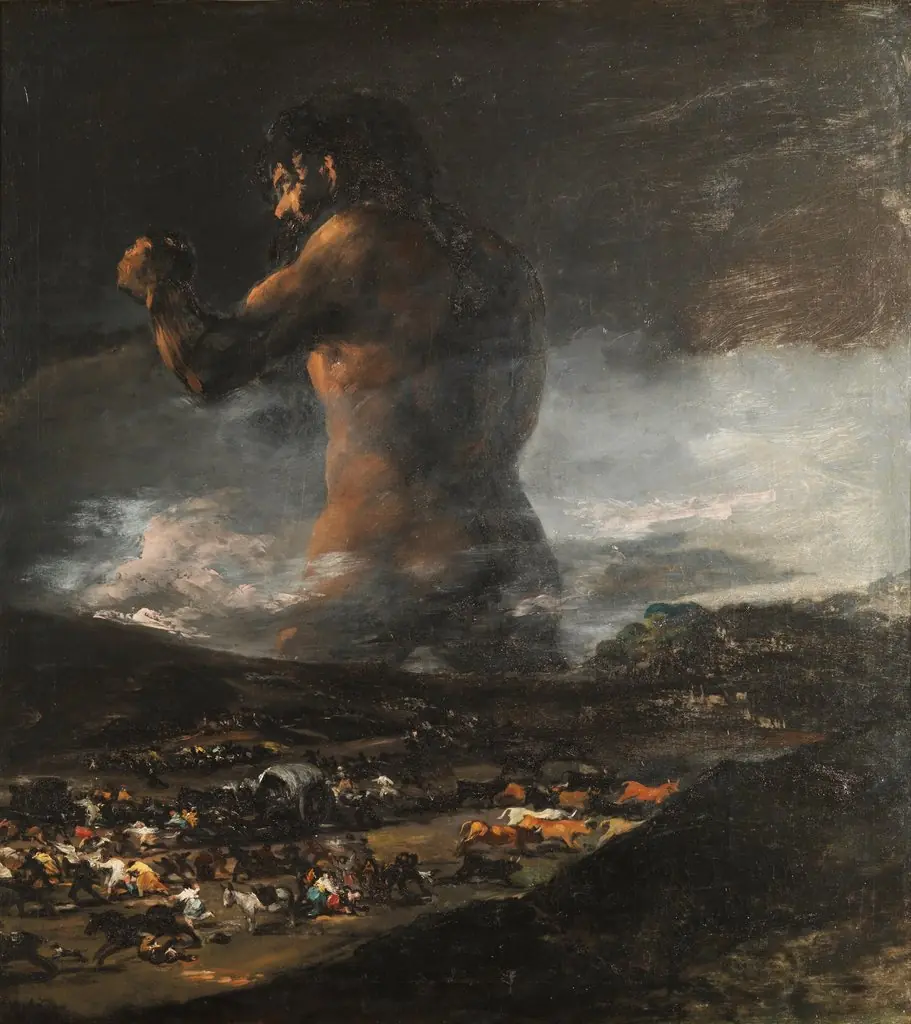 The Colossus
 Ymir Suckling the Cow Audhumla