Artwork
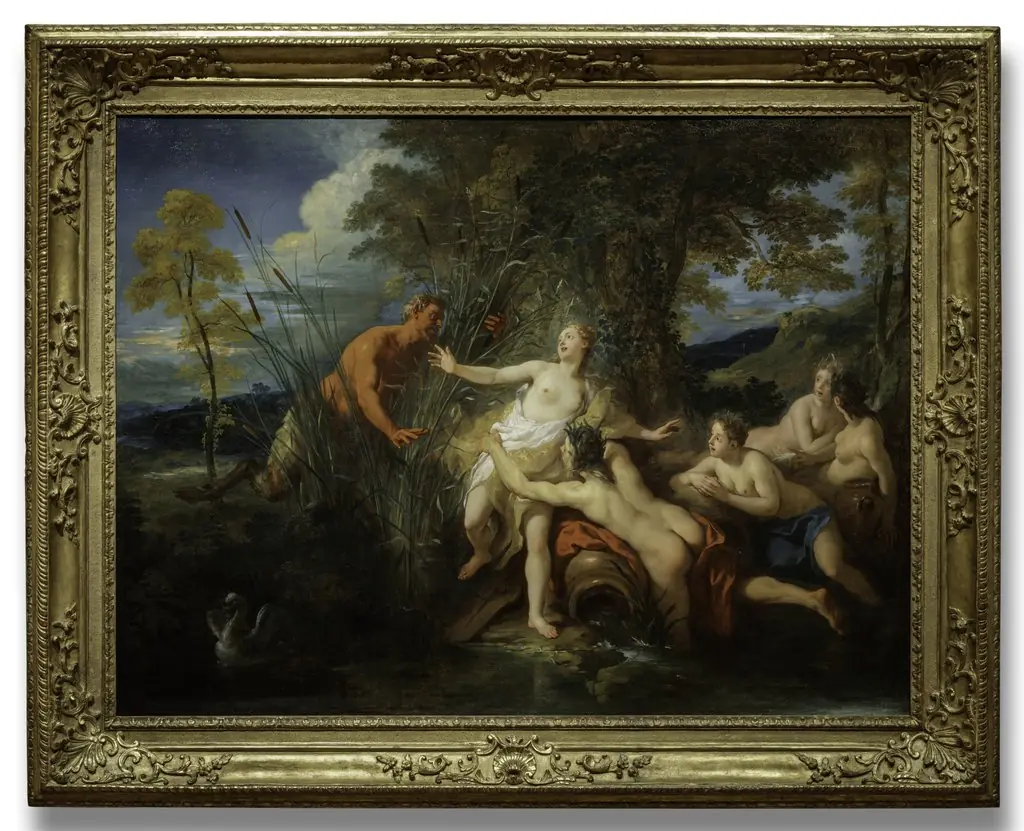
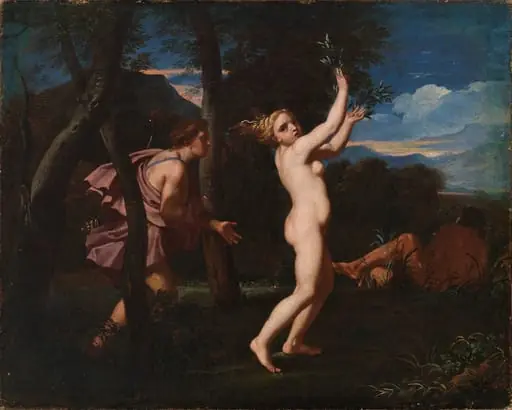
Pan and Syrinx
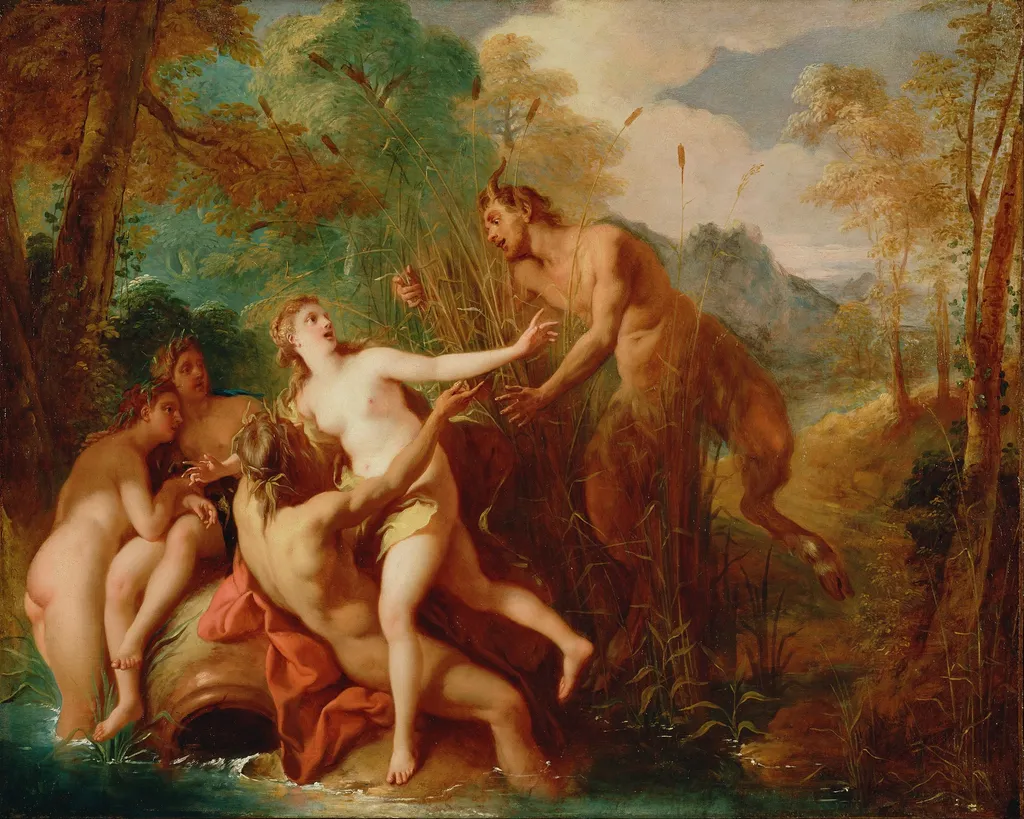
Pan and Syrinx is an oil painting by the Rococo painting artist Jean-François de Troy. It dates from 1722 and is held in the collection of the J. Paul Getty Museum.
About this work
Overview
Pan and Syrinx, painted in 1722 by Jean-François de Troy, is a Rococo-style oil painting depicting a mythological scene. The work showcases de Troy's versatility beyond historical and genre paintings, into the realm of classical mythology.
Subject & Meaning
The painting illustrates the mythological narrative of Pan pursuing Syrinx. Pan, depicted with horns and a goat-like lower body, chases Syrinx, a naked woman with long blonde hair, through a forest. The scene captures a moment of flight and pursuit, emphasizing the emotional tension between the two figures.
Technique & Style
Executed in oil paint, the work embodies the ornate and expressive qualities of the Rococo movement. De Troy's use of a lush forest backdrop, with detailed trees and bushes, adds depth and atmosphere, characteristic of the period's emphasis on natural settings and emotive storytelling.
History & Provenance
Created in 1722, Pan and Syrinx is now part of the J. Paul Getty Museum's collection, highlighting its recognized value within the canon of Rococo art.
Context
As a mythological piece by an artist known for tableaux de modes and historical works, Pan and Syrinx reflects the broader 18th-century French interest in classical themes alongside contemporary life depictions.
Own this work as a print
Artist & collection
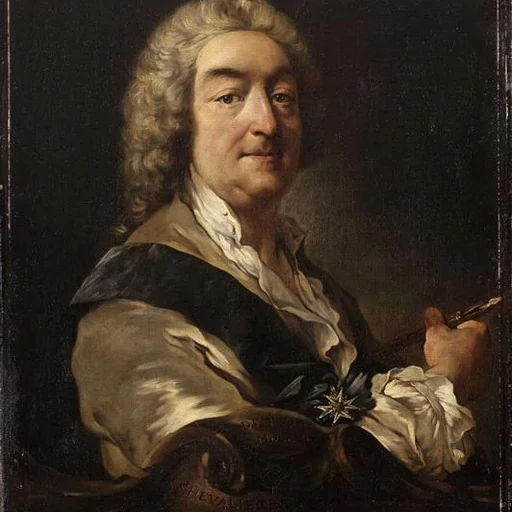
Artist
Jean-François de Troy (27 January 1679, Paris – 26 January 1752, Rome) was a French Rococo easel and fresco painter, draughtsman and tapestry designer.