Artwork
Bucht bei ruhiger See
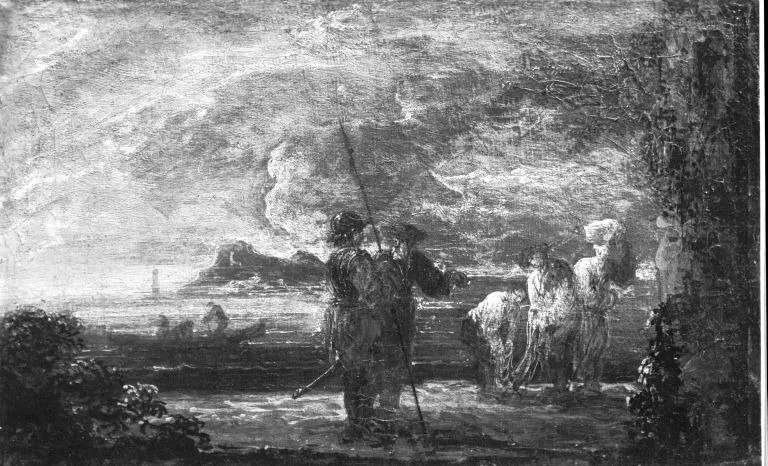
Bucht bei ruhiger See is an unspecified painting by the Early Baroque Italian artist Salvator Rosa. It dates from 1644 and is held in the collection of the Bavarian State Painting Collections.
About this work
Overview
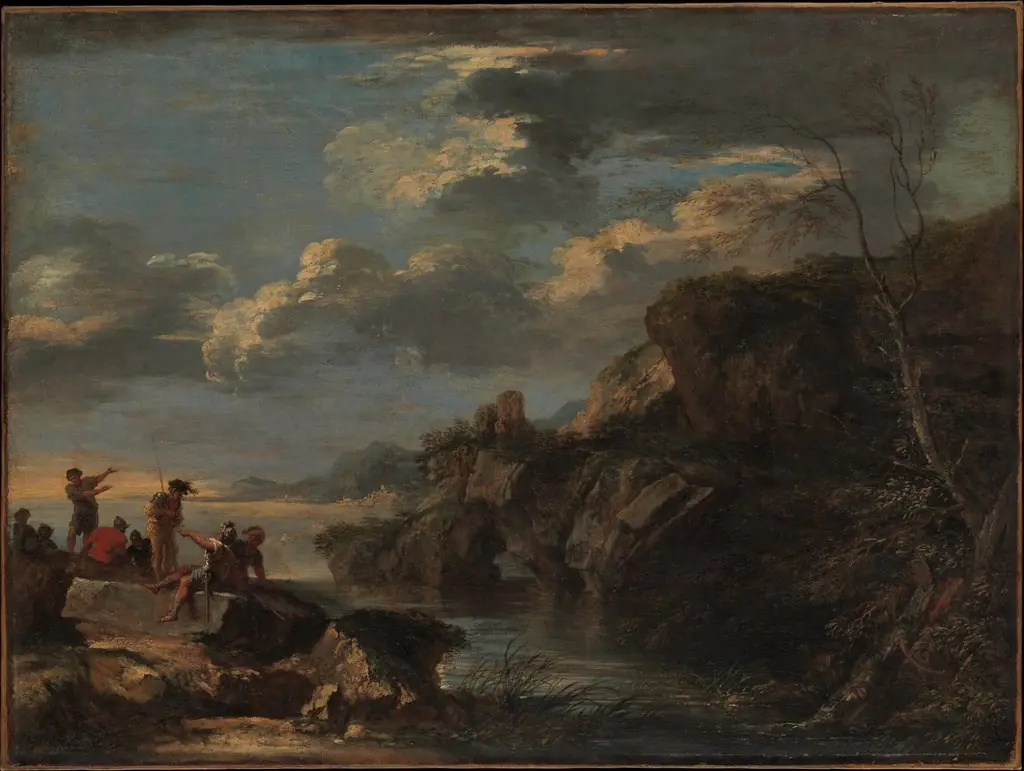
Painted in 1644 by Salvator Rosa, *Bucht bei ruhiger See* is a coastal landscape that captures a moment of quiet tension.
Painted in 1644 by Salvator Rosa, *Bucht bei ruhiger See* is a coastal landscape that captures a moment of quiet tension. Though the title suggests calm waters, the scene evokes an underlying unease. Rosa, active in major Italian artistic centers, infused his landscapes with psychological weight, moving beyond mere topography to suggest human vulnerability against nature’s forces. The work resides in the Alte Pinakothek, Munich.
Subject & Meaning
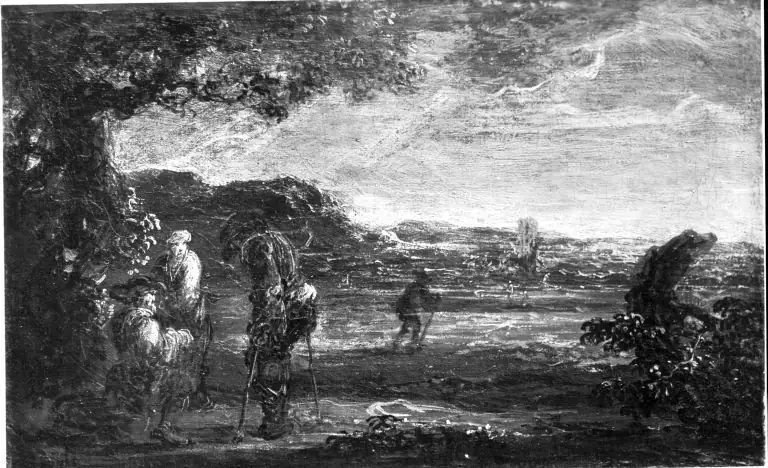
A solitary figure in the foreground, armed with a spear, stands alert on the shore, gazing toward the sea. Behind him, a small group of onlookers gathers, their posture suggesting anticipation or dread. A distant boat hints at fragile human presence amid vastness. The scene does not depict action but suspense—nature’s quiet menace, the fragility of observation, and the isolation of the watcher. The calm of the title contrasts with the implied threat.
Technique & Style
Rosa employed bold, textured brushwork to convey the sea’s restless surface and the sky’s shifting light. Dark blues and grays dominate the water, contrasting with muted, cooler tones above. Chiaroscuro sharpens the figure’s silhouette, anchoring the composition while drawing attention to his stillness. The brushstrokes are deliberate yet energetic, avoiding idealization in favor of raw atmospheric effect, characteristic of Rosa’s rejection of serene pastoral norms.
History & Provenance
Created during Rosa’s mature period, the painting reflects his evolving vision after years in Naples, Rome, and Florence. Though he gained fame for dramatic, almost theatrical landscapes, this work reveals a quieter, more introspective mode. It entered the Alte Pinakothek’s collection in the 19th century, likely through the broader European acquisition of Baroque works, and has remained there since, preserving its original condition and attribution.
Context
In mid-17th-century Italy, landscape painting was often subordinate to religious or mythological themes. Rosa distinguished himself by elevating nature as a subject worthy of emotional and philosophical inquiry. His work stood apart from the harmonious ideals of the time, embracing wildness and ambiguity. This painting aligns with a growing interest in nature’s sublime, foreshadowing later Romantic sensibilities.
Legacy
Rosa’s landscapes, including this one, influenced later artists who sought to depict nature as a force beyond human control. His rejection of idealized scenery paved the way for more psychologically charged depictions of the natural world. Though less celebrated in his lifetime than some contemporaries, his emphasis on mood and individual perception left a lasting imprint on the evolution of European landscape painting.
Artist & collection
Artist
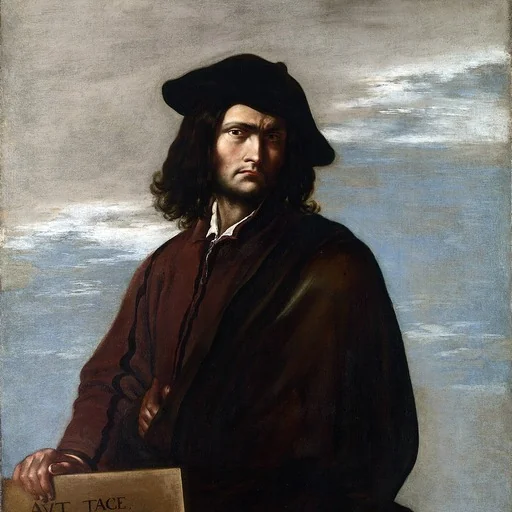
Salvator Rosa (1615 – 15 March 1673) is best known today as an Italian Baroque painter, whose romanticised landscapes and history paintings, often set in dark and untamed nature, exerted considerable influence from the 17th century into…

 Bucht bei bewegter See
 Landscape with Travellers some of them in Oriental Costume
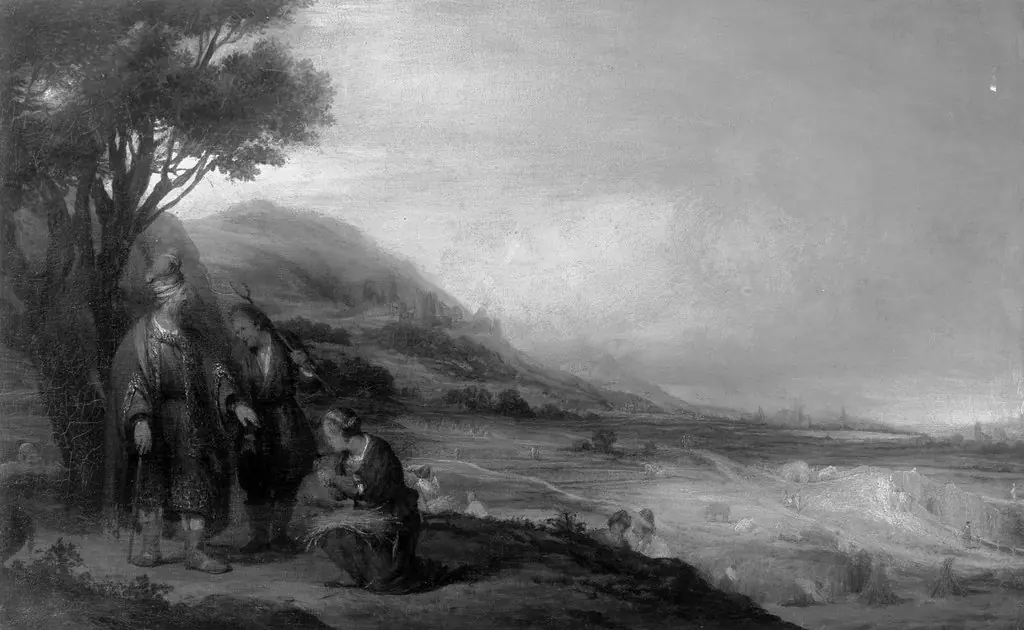 Landscape with Ruth and Boaz
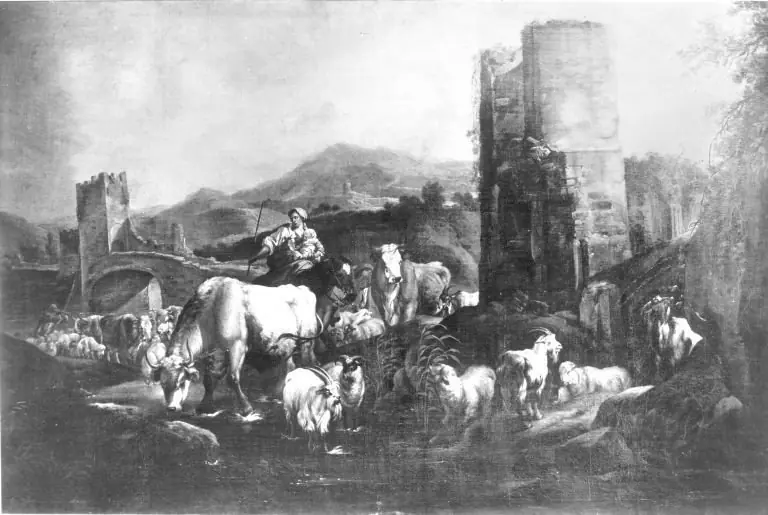 Heimkehrende Herde
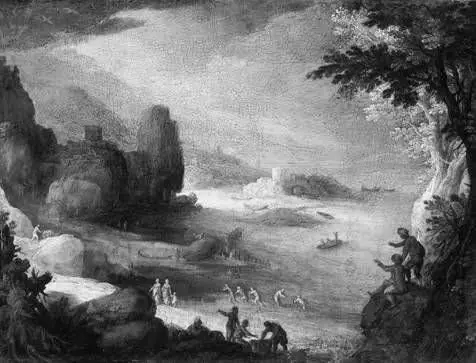 Landschaft mit Ausblick auf eine Meeresbucht
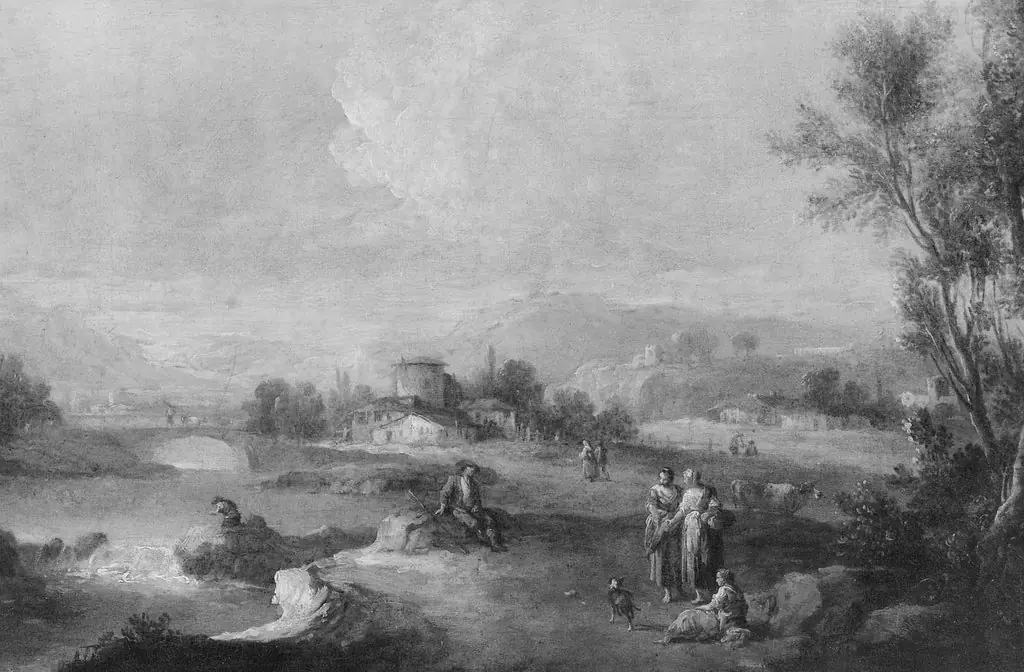 River Landscape with Figures
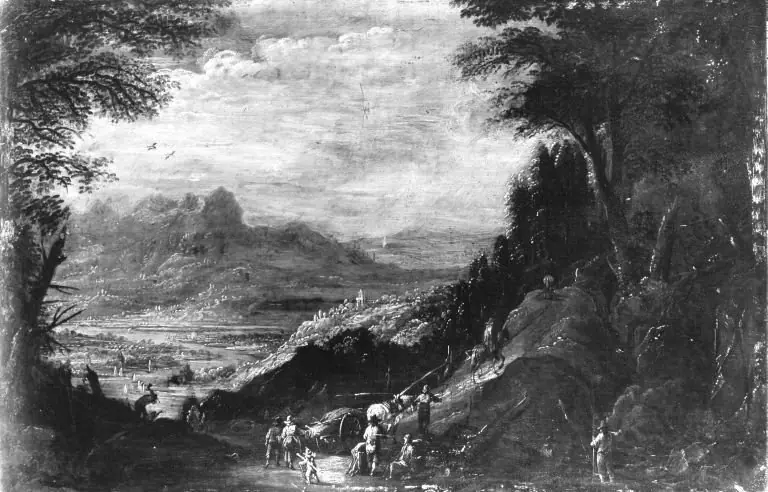 Landschaft (Nachahmer)
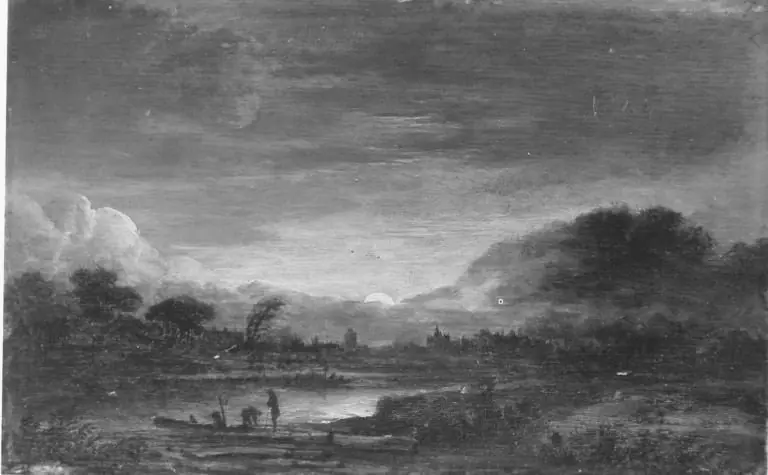 Mondscheinlandschaft (Art des)
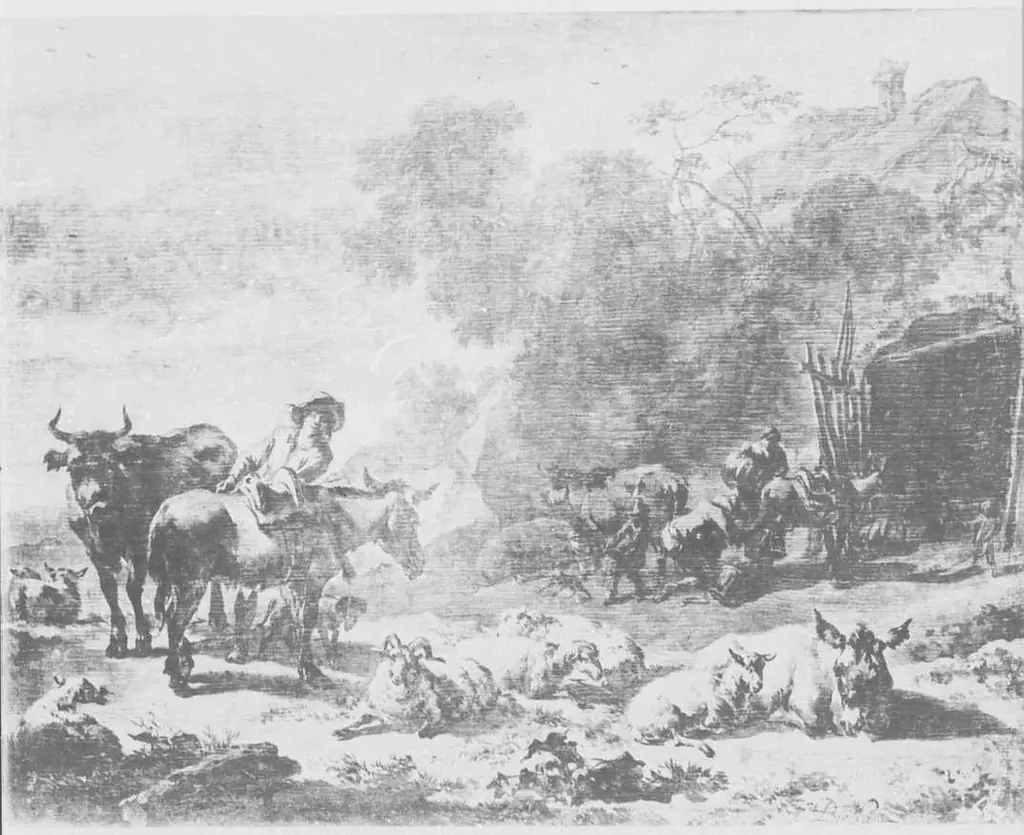 Herders and Herd
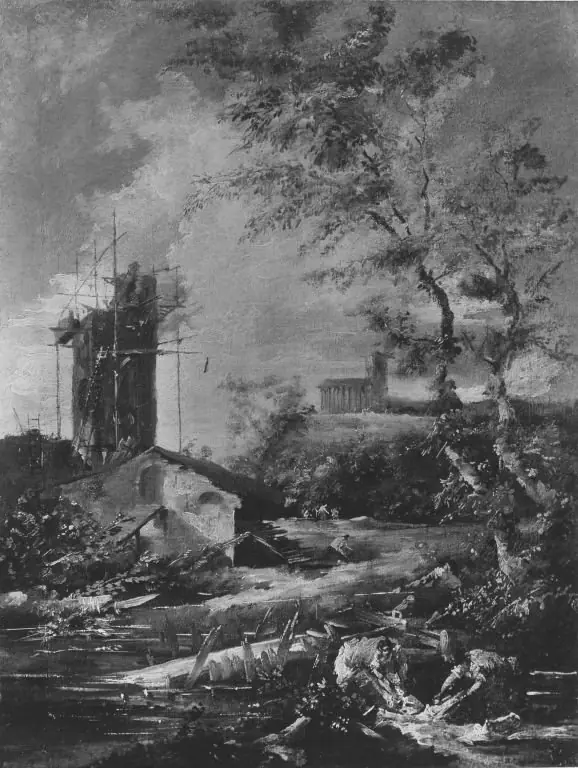 Landschaft mit unvollendetem Turm (Fälschung nach)
 Wooded river landscape with shepherds
 Peasants and Horses