Artwork
Mountainous Landscape with a Monastery
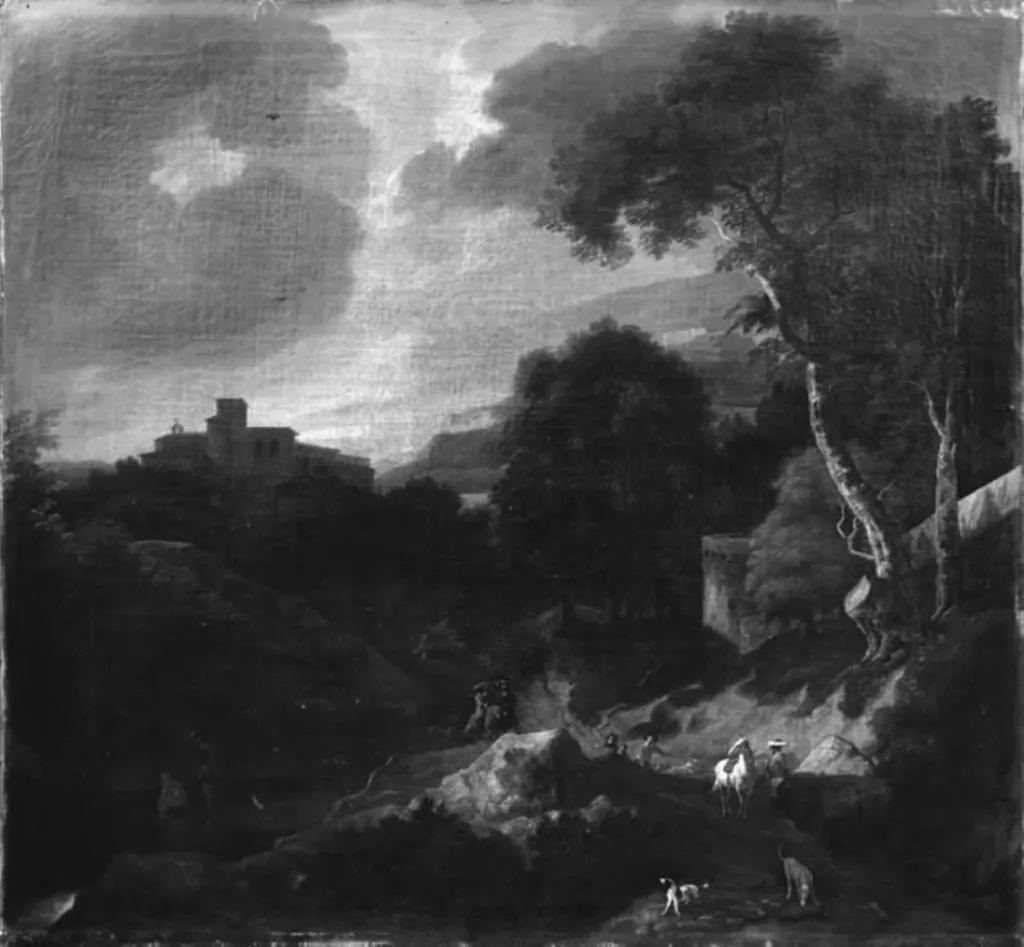
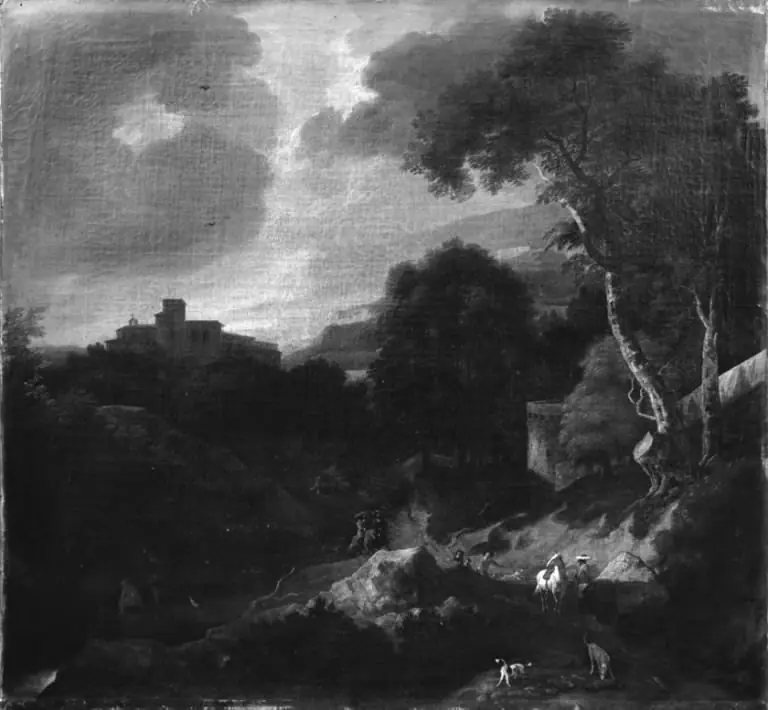
Mountainous Landscape with a Monastery is an unspecified painting by Unknown. It dates from 1750 and is held in the collection of the Statens Museum for Kunst. Painted around 1750, this landscape depicts a rugged mountain range dominated by dark, turbulent skies and steep, uneven terrain.
About this work
Overview
The work is held in the collection of the Museum of Ethnography, though its cultural origins remain unattributed to a named artist.
Painted around 1750, this landscape depicts a rugged mountain range dominated by dark, turbulent skies and steep, uneven terrain. A solitary monastery clings to a high ridge, dwarfed by the surrounding natural forces. The composition emphasizes scale and isolation, with minimal human presence. The work is held in the collection of the Museum of Ethnography, though its cultural origins remain unattributed to a named artist.
Subject & Meaning
The scene centers on a remote monastery, suggesting themes of solitude, spiritual retreat, or human endurance against nature’s grandeur. The tiny figures and animals on the winding path imply quiet movement through an imposing world, reinforcing a sense of humility before the landscape. The absence of clear narrative leaves interpretation open, inviting contemplation rather than storytelling.
Technique & Style
The artist employs thick, uneven brushwork to render the mountains and sky, creating a tactile, almost sculptural surface. Strong contrasts between shadow and light, particularly around the monastery and rocky outcrops, evoke a sense of dramatic tension. The sky’s textured strokes suggest movement and unrest, while the path’s subtle line guides the viewer’s eye through the composition without dominating it.
History & Provenance
The painting entered the Museum of Ethnography’s collection without clear documentation of its origin or early ownership. Its date is estimated based on stylistic comparisons with contemporaneous regional works. No records of exhibitions or commissions survive, and the artist’s identity remains unknown, contributing to its status as an anonymous artifact of 18th-century landscape representation.
Context
Created during a period when European landscape painting increasingly emphasized emotion and nature’s sublime power, this work aligns with broader trends in pre-Romantic visual culture. Yet its stylistic rawness and lack of idealization distinguish it from academic traditions, possibly reflecting regional or folk approaches to depicting the natural world outside urban artistic centers.
Legacy
Though not widely reproduced or studied, the painting contributes to understanding how non-academic artists interpreted landscape in the 18th century. Its emphasis on atmosphere over detail, and its unpolished technique, offer insight into alternative visual languages that existed alongside dominant styles. It remains a quiet testament to the emotional weight assigned to remote natural environments.
Artist & collection

 Domestic Scene
 Giacomo and Cardinal Marco, investing Andrea, Abbot of San Zeno, with his Benefice
 The Nymph of Fontainebleau
 Portrait of a Woman
 Madonna and Child with Saints in the Enclosed Garden
 Venus and Minerva
 Family Group of Four on Sofa
 Wall painting from Room H of the Villa of P. Fannius Synistor at Boscoreale
 Landschaft mit Christus und den Emmaus-Jüngern (Umkreis)
 Wooded Landscape with Hunters
 The Rest on the Flight into Egypt
 An Italian Landscape with the Baptism of Christ
 The Angler at the Forest Brook
 Gebirgslandschaft
 Road with People and Animals
 Wooded Landscape
 Große Landschaft
 Mountain Landscape
 Cattle Piece
 Mountainous Landscape with a Monastery