Artwork
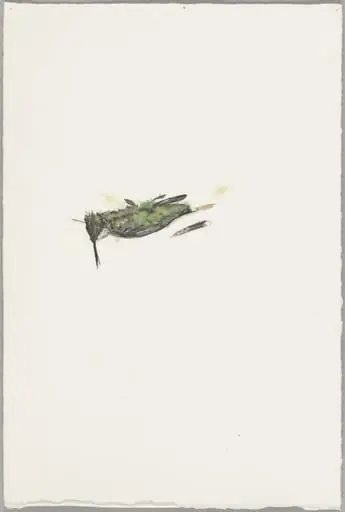
En næsehornsbille (scarabaeidae)
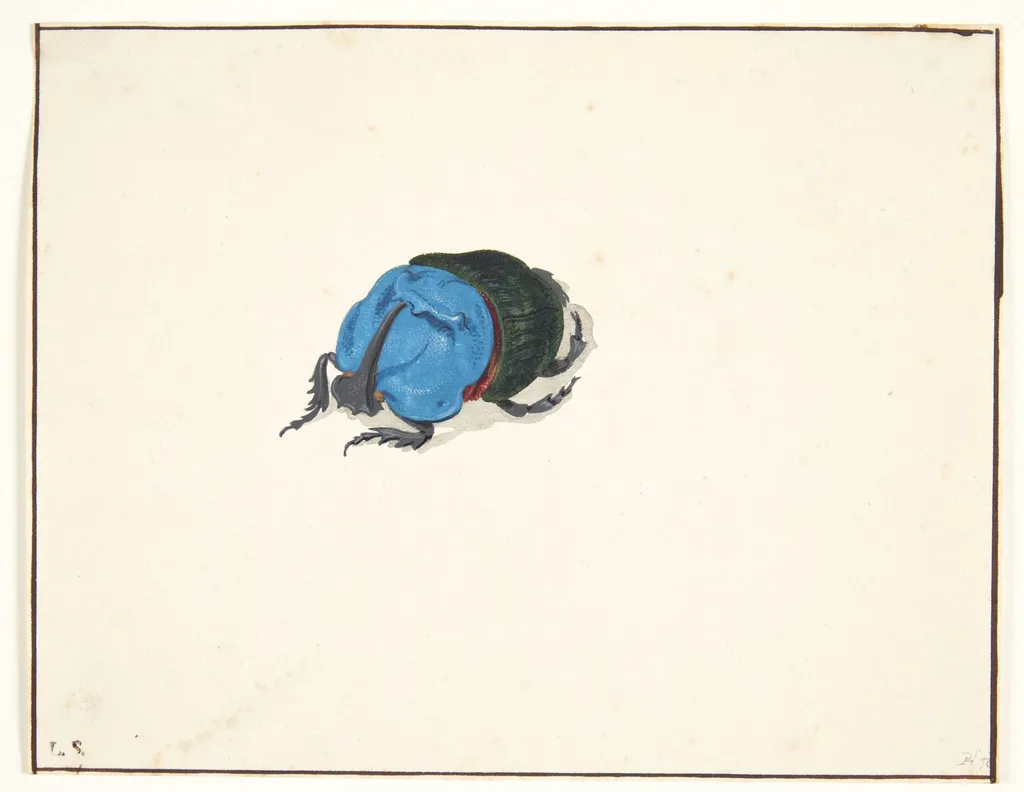
En næsehornsbille (scarabaeidae) is an unspecified painting by Unknown. It dates from 1650 and is held in the collection of the Statens Museum for Kunst. This image, dated around 1650, depicts a single scarab beetle with meticulous attention to anatomical detail.
About this work
Overview
This image, dated around 1650, depicts a single scarab beetle with meticulous attention to anatomical detail. Executed in a highly focused, non-naturalistic style, it isolates the insect against an unadorned background. The work belongs to the collection of the Museum of Ethnography and reflects a tradition of precise natural observation common in early scientific illustration.
Subject & Meaning
The subject is a scarab beetle, distinguished by its robust form and vivid coloration. While not overtly symbolic, the emphasis on its physical structure suggests an interest in biological accuracy rather than mythological association. The beetle’s striking appearance may have served as a specimen for study or as a demonstration of visual precision in natural history recording.
Technique & Style
The artist employed sharp, flat areas of color with no gradation or blending, enhancing the beetle’s surface textures. The metallic sheen of the blue body and the contrast of dark limbs against bright wing markings were rendered through careful application of pigment. The lack of atmospheric context or shadow reinforces a clinical, specimen-like presentation.
History & Provenance
Created circa 1650, the work’s origin is tied to early modern European efforts to document natural forms. It entered the Museum of Ethnography’s holdings through unspecified acquisition, likely as part of a broader collection of natural history illustrations. The artist’s identity remains unverified, though the style aligns with contemporaneous scientific draftsmen.
Context
In the mid-17th century, detailed depictions of insects were increasingly valued as scientific records, preceding formal taxonomy. This image reflects a transitional phase where artistic skill served empirical inquiry. Similar works were often produced for private cabinets of curiosities or academic study, emphasizing form over narrative.
Legacy
The image contributes to a historical archive of entomological illustration, illustrating how visual precision preceded photographic documentation. Its enduring presence in a museum collection underscores its value as a record of observational practice, rather than aesthetic innovation. It remains a quiet example of early naturalist visual culture.
Artist & collection

 Domestic Scene
 Giacomo and Cardinal Marco, investing Andrea, Abbot of San Zeno, with his Benefice
 The Nymph of Fontainebleau
 Portrait of a Woman
 Madonna and Child with Saints in the Enclosed Garden
 Venus and Minerva
 Family Group of Four on Sofa
 Wall painting from Room H of the Villa of P. Fannius Synistor at Boscoreale
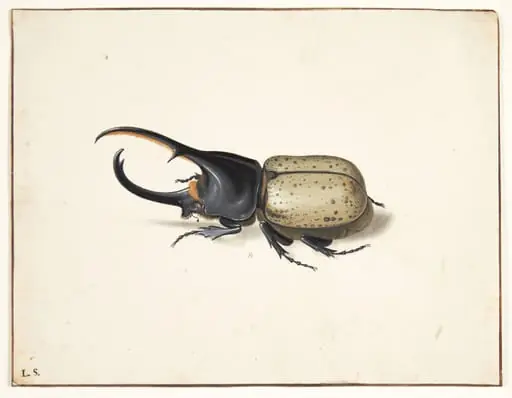 En herkulesbille (dynastes hercules)
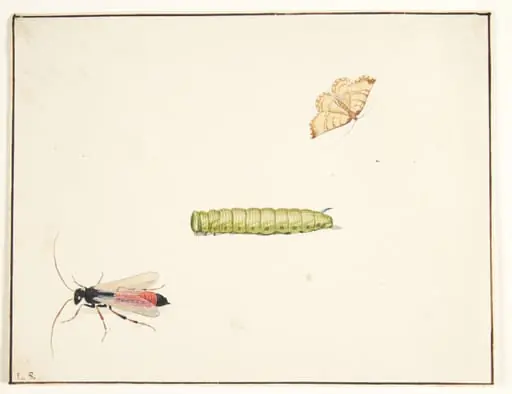 Tre insektstudier
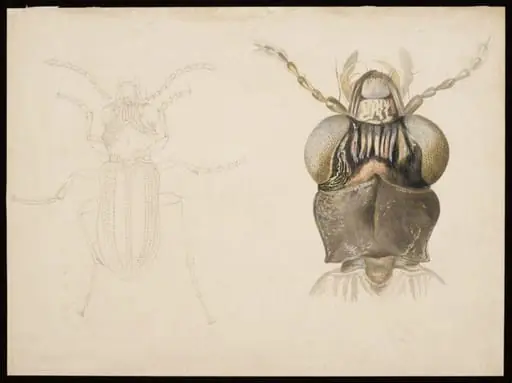 Magnified studies of a beetle (the ground beetle Notiophilus biguttatus?)
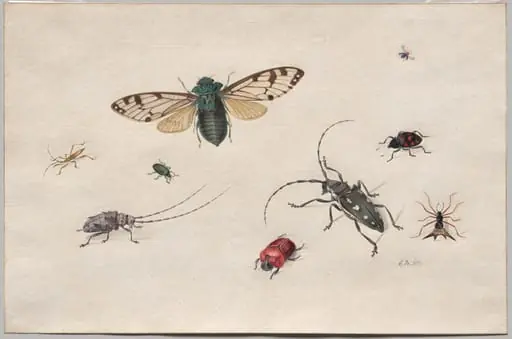 Studies of Insects
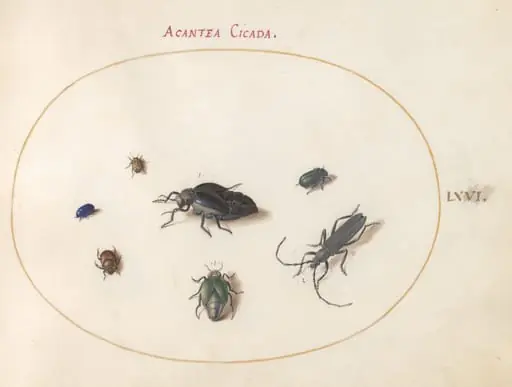 Plate 66: Two Oil Beetles, a Longhorn Beetle, and Four Other Insects
 Thistle
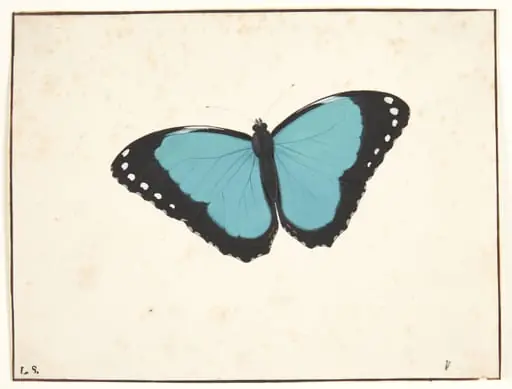 En eksotisk dagsommerfugl
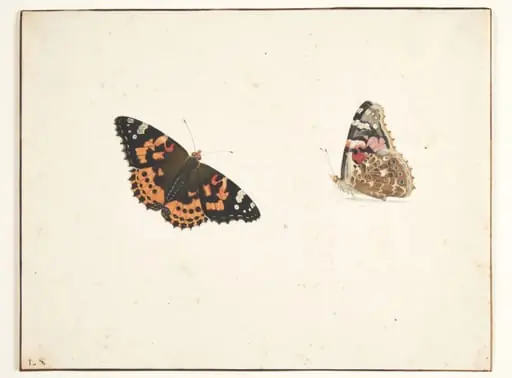 To studier af en tidselfugl (vanessa cardui l.)
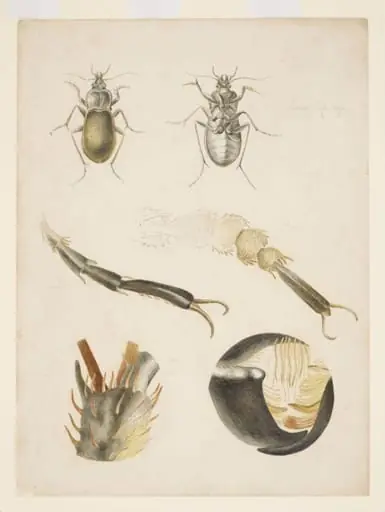 Magnified studies of a ground beetle
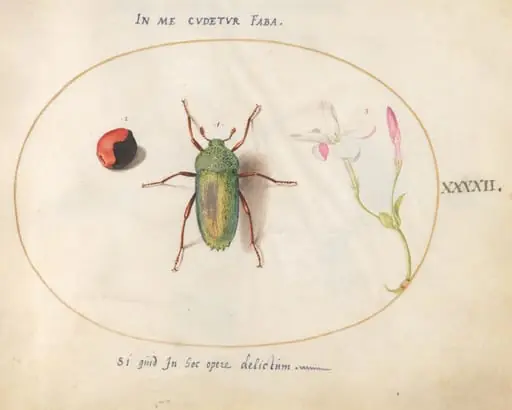 Plate 42: Jewel Beetle with a Rosary Pea and a Flower (Oleander?)
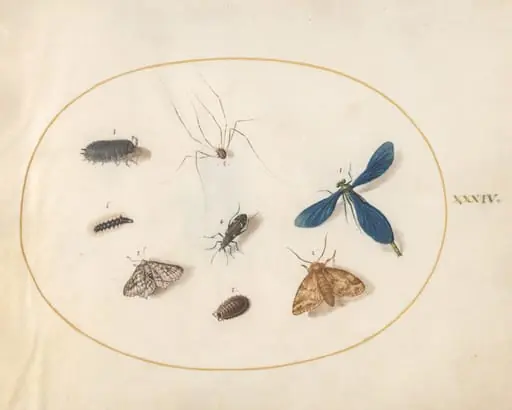 Plate 34: Two Moths with a Spider, a Caterpillar, a Damselfly, and Other Insects
 Untitled