Artwork
Studies of Insects
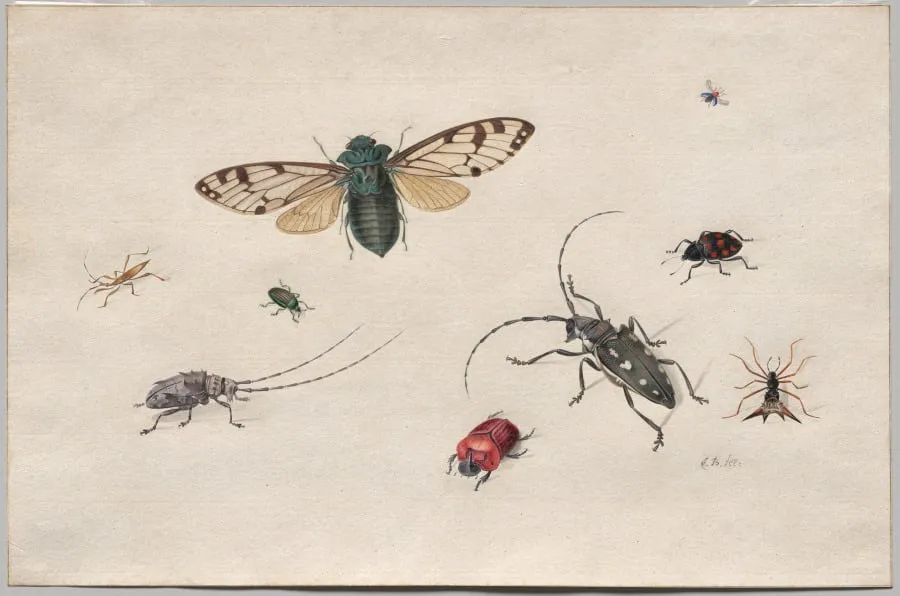
Studies of Insects is a drawing by the Baroque artist Johannes Bronckhorst. It dates from 1696 and is held in the collection of the Cleveland Museum of Art.
About this work
Overview
Johannes Bronckhorst’s drawing presents a compact arrangement of various insects rendered at life size on a single sheet of paper. The work reflects the 17th‑century Dutch fascination with cataloguing natural specimens, serving both as a visual record and a decorative object for collectors.
Subject & Meaning
The composition includes a cicada, a cereal‑leaf beetle, a harlequin ladybird, a spiny orb‑weaver spider, two Asian longhorn beetles, a red rhinoceros beetle, a rosemary beetle and a stick insect. Their juxtaposition creates a balanced, colourful tableau that emphasizes the diversity of the collector’s holdings rather than a narrative theme.
Technique & Style
Bronckhorst employs meticulous brushwork to delineate the texture of wings, legs and exoskeletons, achieving a near‑photographic clarity. Careful lighting on each specimen gives a three‑dimensional impression, while the restrained palette highlights individual hues without overt dramatization.
History & Provenance
Created in the Dutch Republic during the 1600s, the drawing was likely produced for a private natural‑history collection. Such illustrated sheets were common tools for scholars and amateurs to display exotic and local fauna without the risk of decay inherent in preserved specimens.
Context
The work belongs to a broader tradition of scientific illustration that flourished alongside the rise of cabinet‑of‑curiosities. Dutch artists of the period often collaborated with collectors, translating their amassed insects into portable visual inventories.
Artist & collection
Artist
Johannes Bronckhorst (1648–1727) was a Netherlands artist, born in Leiden.

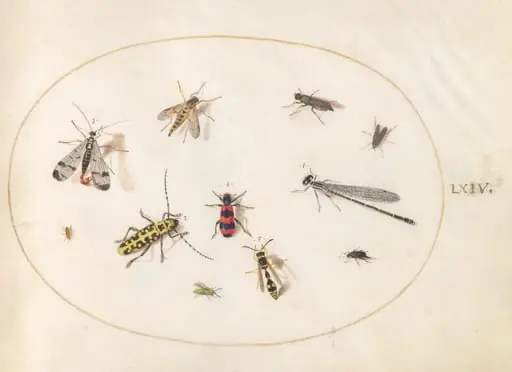 Plate 64: Eleven Insects, Including a Dragonfly and Longhorn Beetle
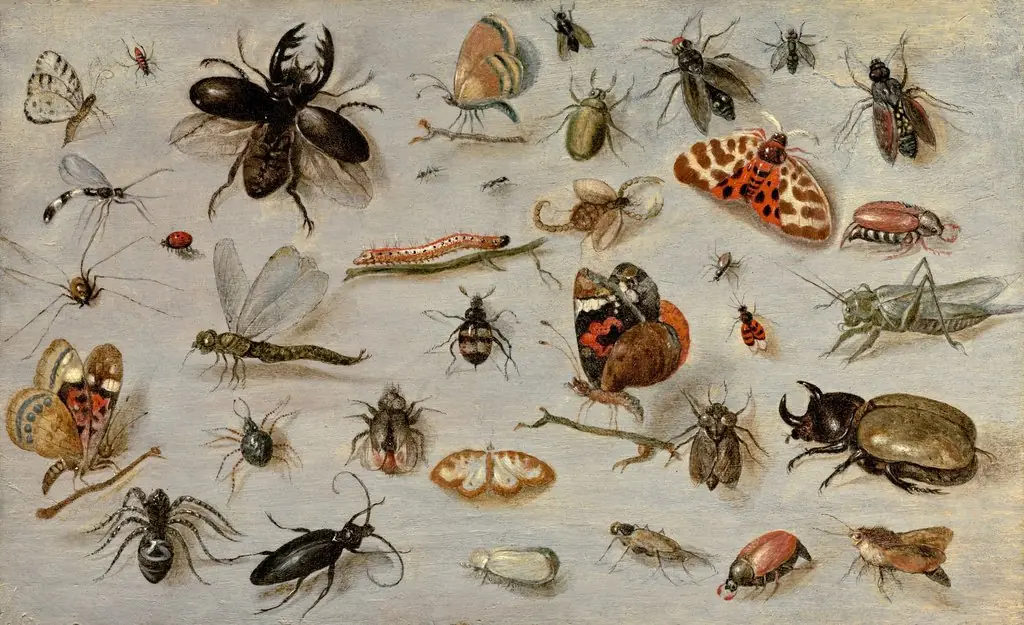 A Study of Butterflies, Moths, Spiders, and Insects
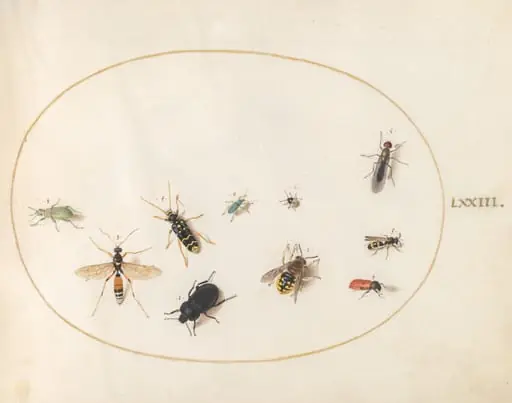 Plate 73: Ten Insects
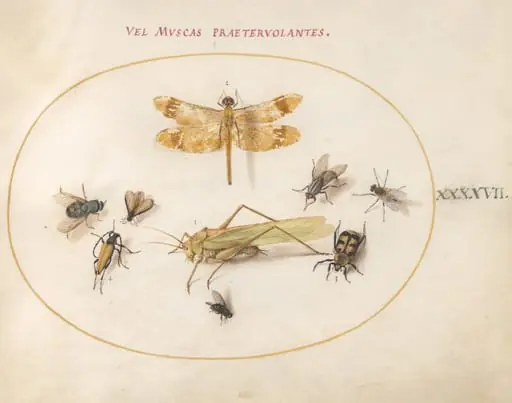 Plate 47: A Dragonfly (Banded Darter?), Grasshopper, Houseflies, a Carrion Beetle, a Flower Longhorn Beetle, and Other Insects
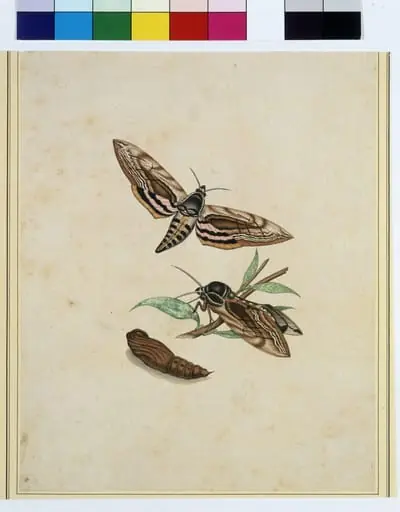 Hawkmoth
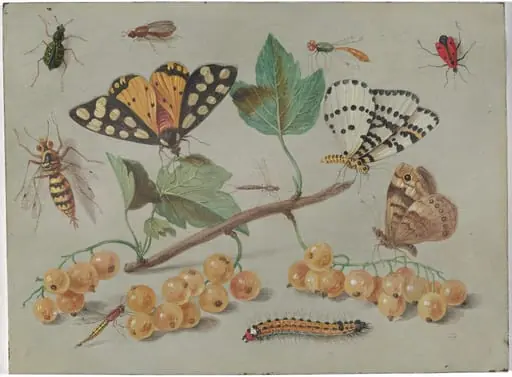 Study of Butterfly and Insects
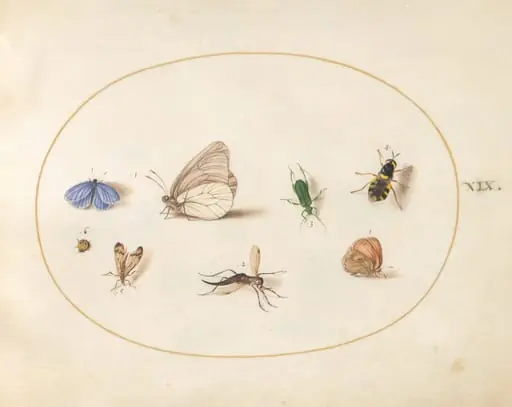 Plate 19: Two Butterflies with Five Other Insects
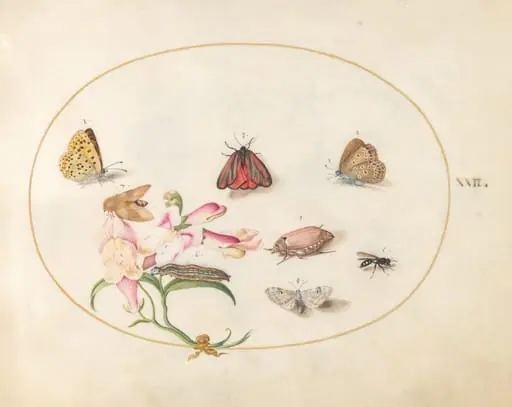 Plate 22: A Cinnabar Moth and a Cockchafer with Butterflies, other Insects, and a Snapdragon
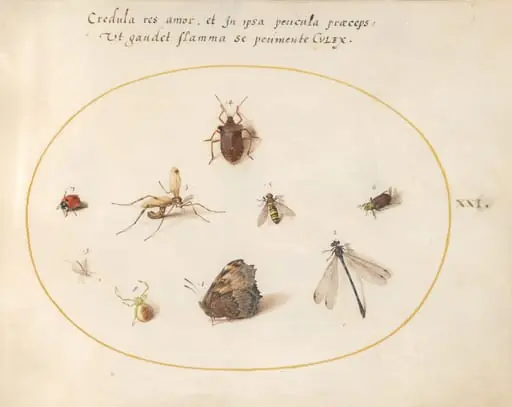 Plate 21: A Butterfly with a Dragonfly, a Ladybug, and Five other Insects
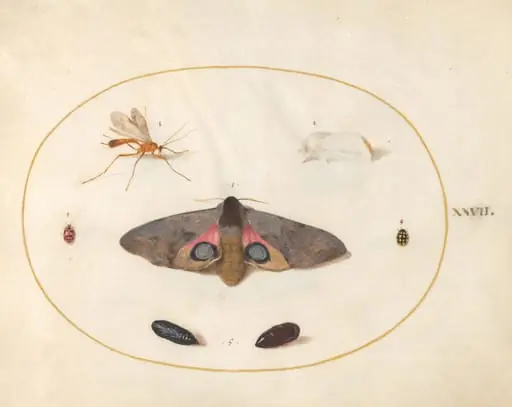 Plate 27: An Eyed Hawk-Moth, Two Chyrsalides, and Other Insects
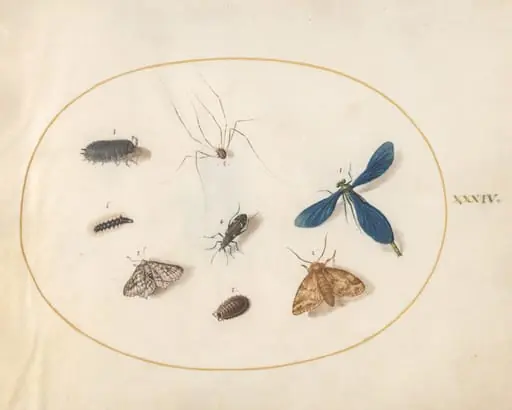 Plate 34: Two Moths with a Spider, a Caterpillar, a Damselfly, and Other Insects
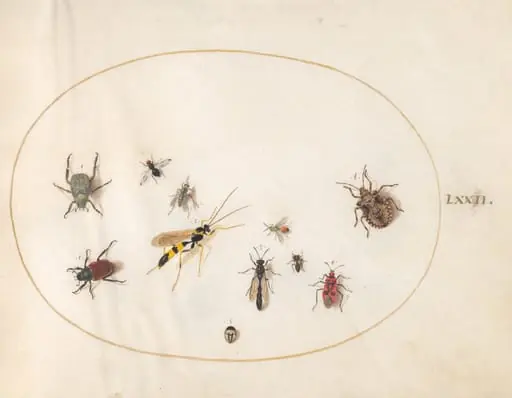 Plate 72: Shield Bug, Cinnamon Bug, Wasp, and Other Insects
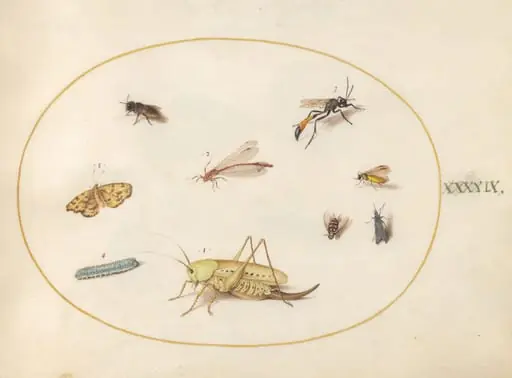 Plate 49: A Grasshopper, a Caterpillar, a Butterfly, a Moth, and Other Insects
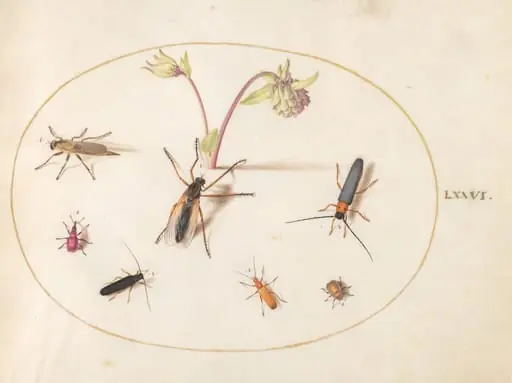 Plate 76: Insects with a Pink and Cream Columbine
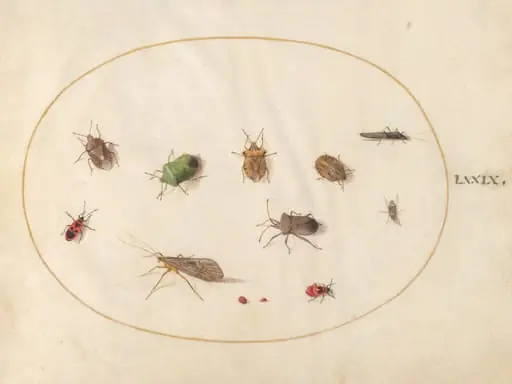 Plate 79: Twelve Insects, Including Shield Bugs
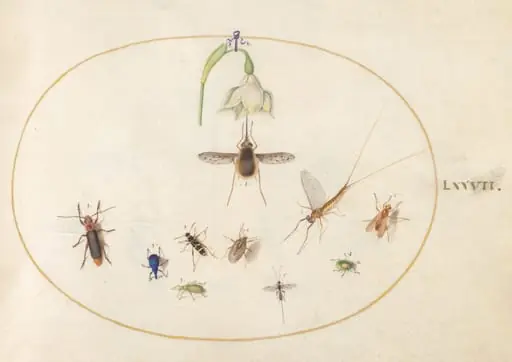 Plate 77: Dotted Bee Fly with a White Flower, a Mayfly, a Blue Weevil, and Other Insects
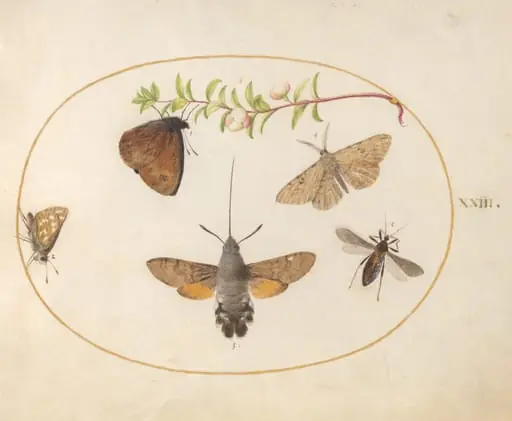 Plate 23: Hummingbird Hawk Moth, Butterflies, and Other Insects around a Snowberry Sprig
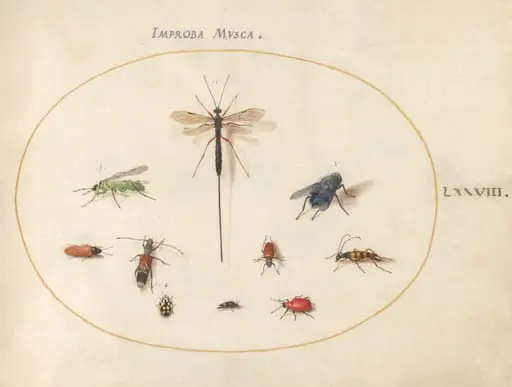 Plate 78: Ten Insects, Including a Blue Fly
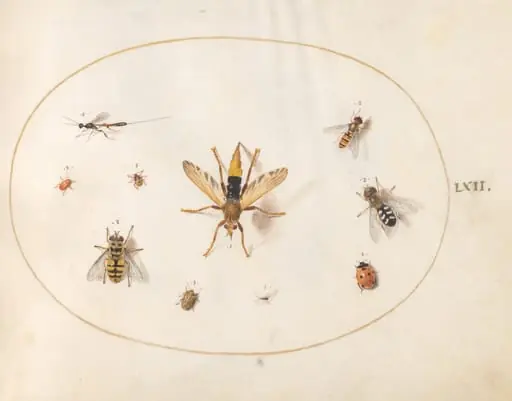 Plate 62: Ten Insects