Artwork
En herkulesbille (dynastes hercules)
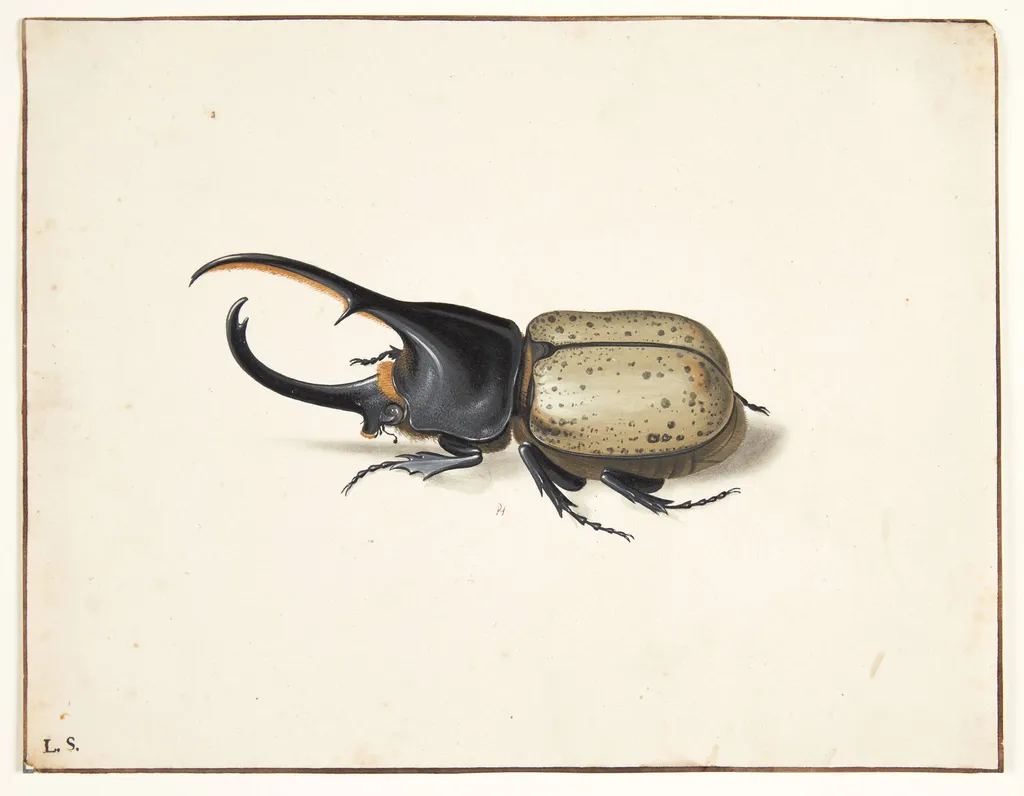
En herkulesbille (dynastes hercules) is an unspecified painting by Unknown. It dates from 1650 and is held in the collection of the Statens Museum for Kunst. This artwork depicts a specimen of Dynastes hercules, commonly known as the Hercules beetle, rendered in precise detail around 1650.
About this work
Overview
This artwork depicts a specimen of Dynastes hercules, commonly known as the Hercules beetle, rendered in precise detail around 1650. Executed as a standalone natural study, it was likely intended for scientific or curatorial purposes. The painting is preserved in the Museum of Ethnography, where it serves as an example of early naturalistic observation in visual culture.
Subject & Meaning
The Hercules beetle, named for its formidable horns, is portrayed without symbolic context or narrative. Its inclusion suggests an interest in biological rarity and physical grandeur rather than mythological allegory. The focus on the insect’s anatomy reflects a growing 17th-century curiosity about the natural world, valuing observation over myth.
Technique & Style
The artist employed fine brushwork to capture the beetle’s textured exoskeleton, using subtle tonal shifts to suggest depth and surface variation. Light is carefully modulated to emphasize the curvature of the horns and the ridges of the shell, while the plain background eliminates distraction. The effect is one of quiet precision, prioritizing accuracy over ornamentation.
History & Provenance
Created circa 1650, the painting entered the collection of the Museum of Ethnography at an unknown date, likely through a private collection or academic donation. Its survival suggests it was valued as a specimen of natural representation, possibly used in early entomological studies or as a teaching aid in natural philosophy.
Context
In mid-17th-century Europe, detailed depictions of insects were rare outside scientific manuscripts. This work aligns with emerging trends in natural history illustration, where artists collaborated with scholars to document biodiversity. The absence of human figures or landscape reinforces its role as a specimen study rather than a decorative piece.
Legacy
The painting stands as an early example of entomological portraiture, predating formalized scientific illustration by decades. Its meticulous rendering influenced later naturalists and artists who sought to document nature with fidelity. Today, it remains a quiet testament to the value placed on observing the small and often overlooked in the natural world.
Artist & collection

 Domestic Scene
 Giacomo and Cardinal Marco, investing Andrea, Abbot of San Zeno, with his Benefice
 The Nymph of Fontainebleau
 Portrait of a Woman
 Madonna and Child with Saints in the Enclosed Garden
 Venus and Minerva
 Family Group of Four on Sofa
 Wall painting from Room H of the Villa of P. Fannius Synistor at Boscoreale
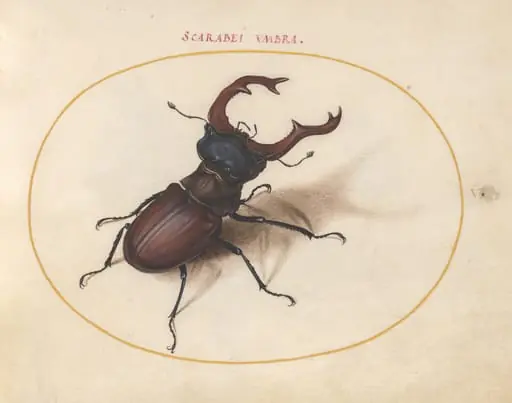 Plate 5: Stag Beetle
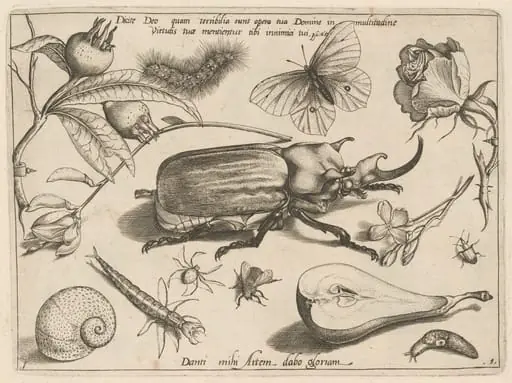 Part 1, Plate 1, from the series Archetypa studiaque (Archetypes and Studies)
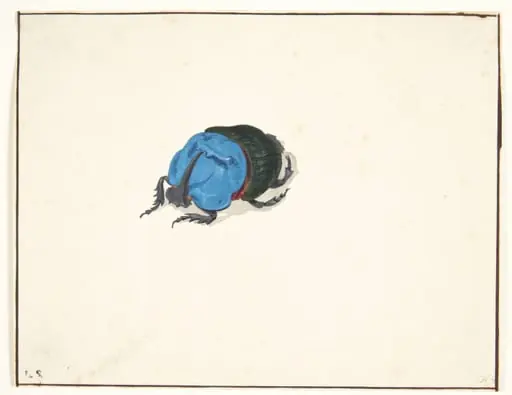 En næsehornsbille (scarabaeidae)
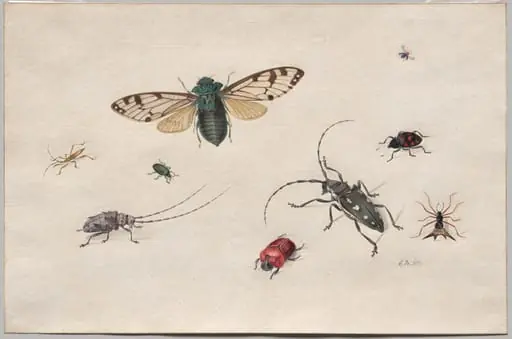 Studies of Insects
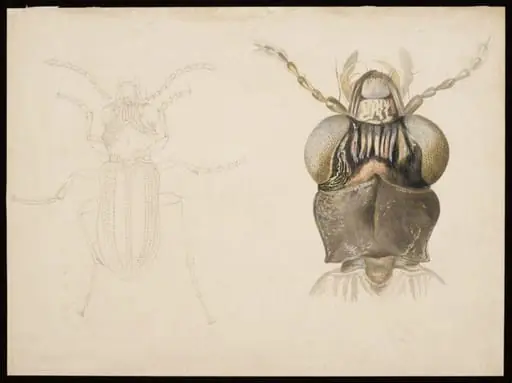 Magnified studies of a beetle (the ground beetle Notiophilus biguttatus?)
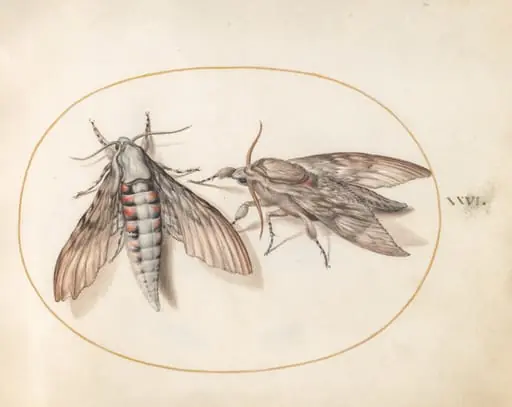 Plate 26: Two Hawk Moths
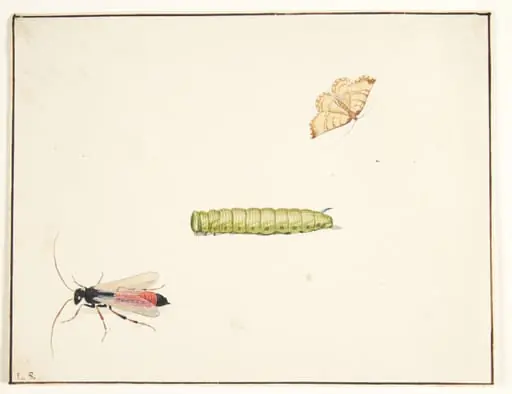 Tre insektstudier
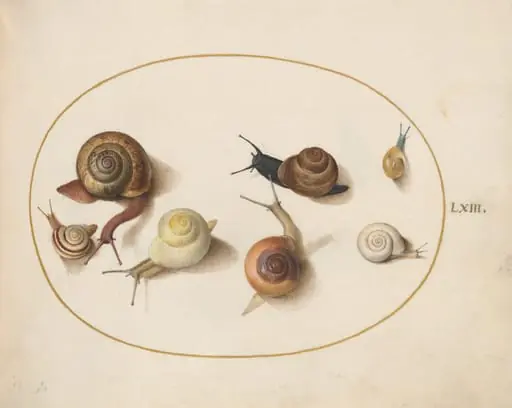 Plate 63: Seven Snails
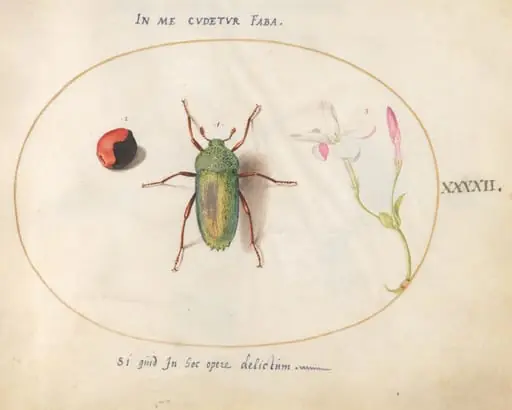 Plate 42: Jewel Beetle with a Rosary Pea and a Flower (Oleander?)
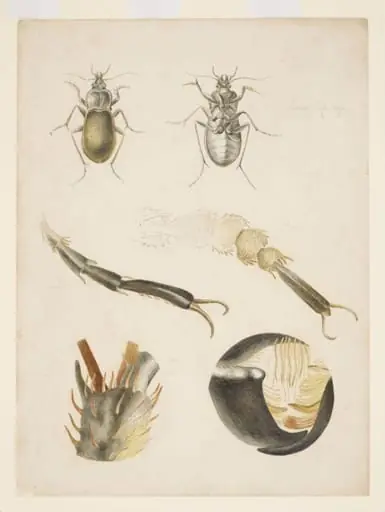 Magnified studies of a ground beetle
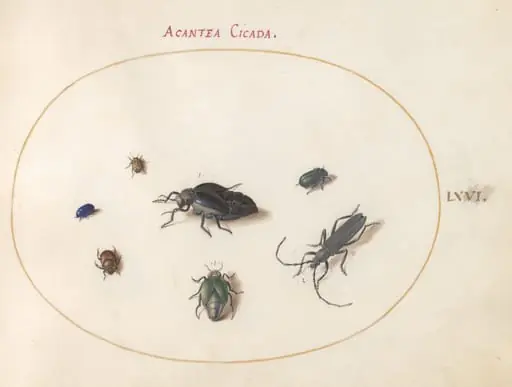 Plate 66: Two Oil Beetles, a Longhorn Beetle, and Four Other Insects
 Plate 50: A Partial Mantis Shrimp with Tower Snail Shells