Artwork
The Holy Family and St John
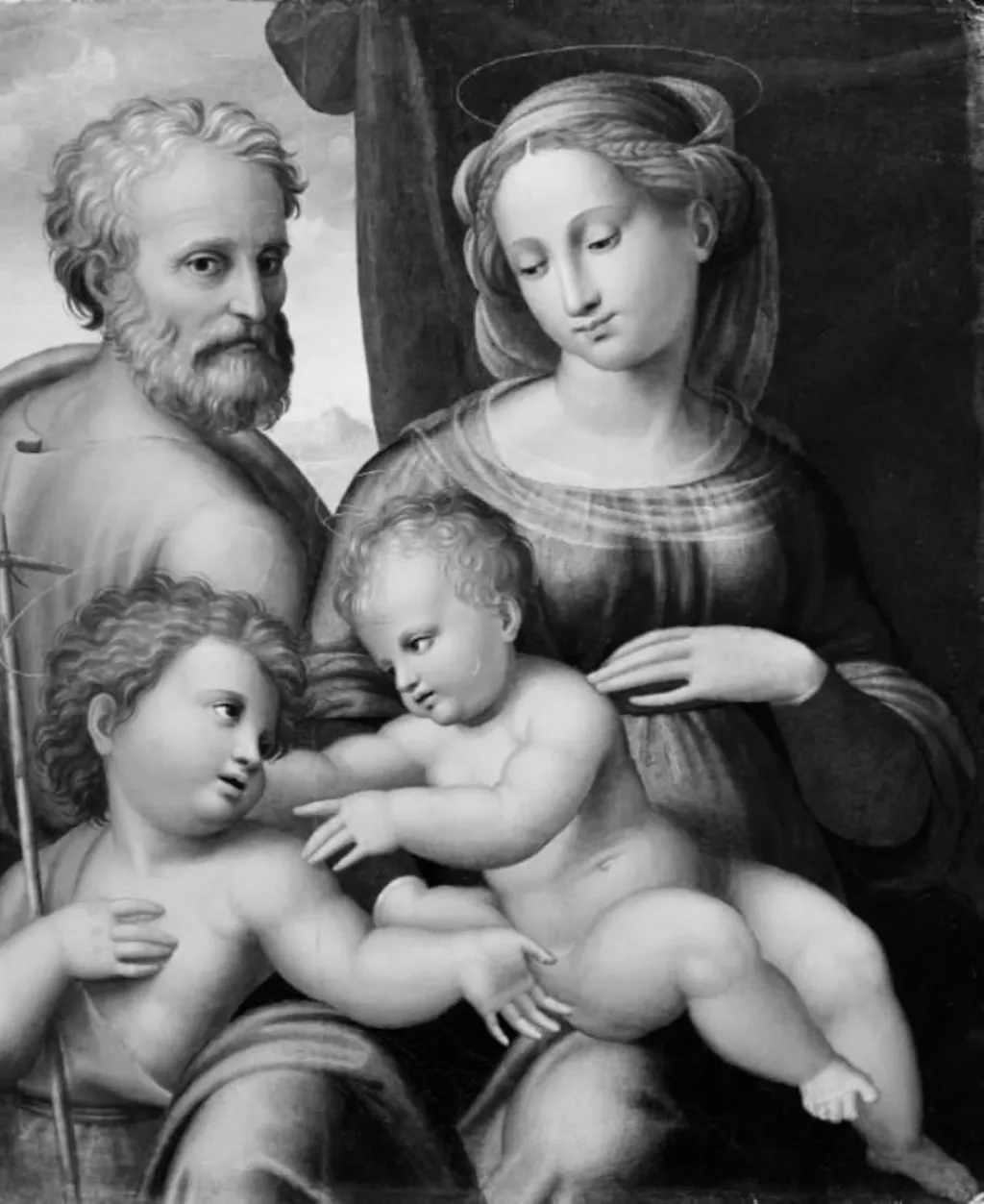
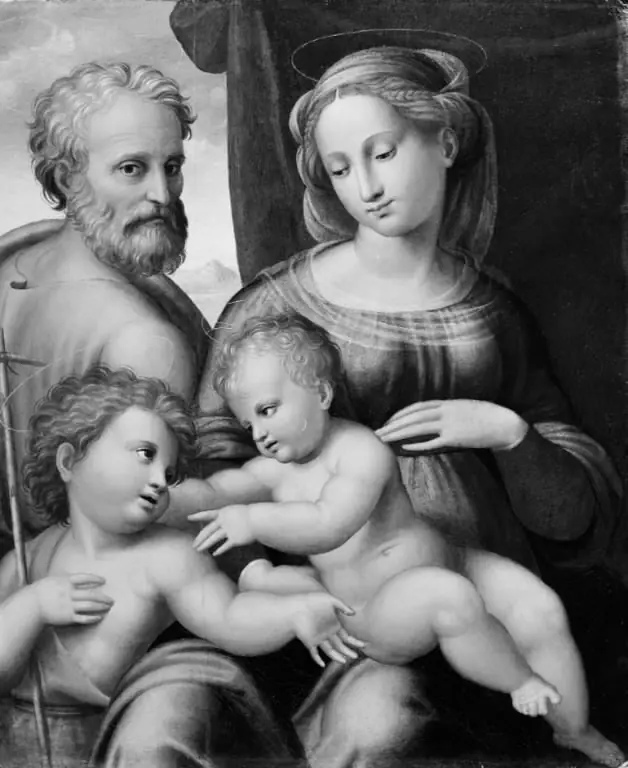
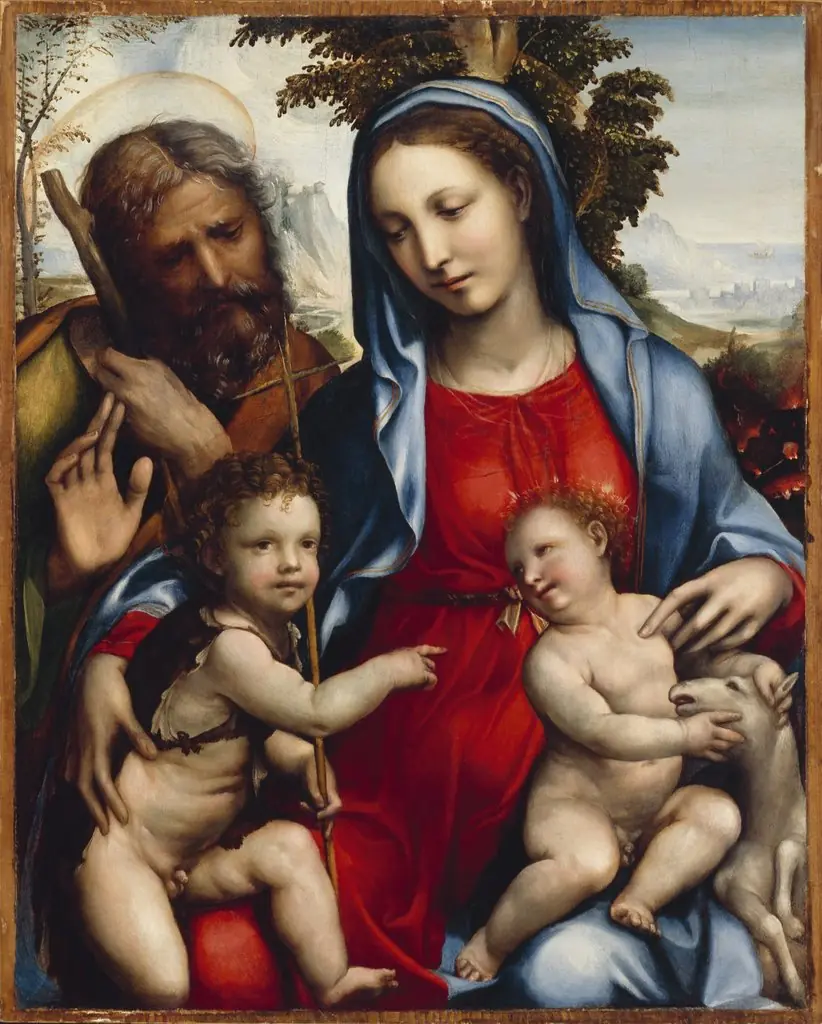
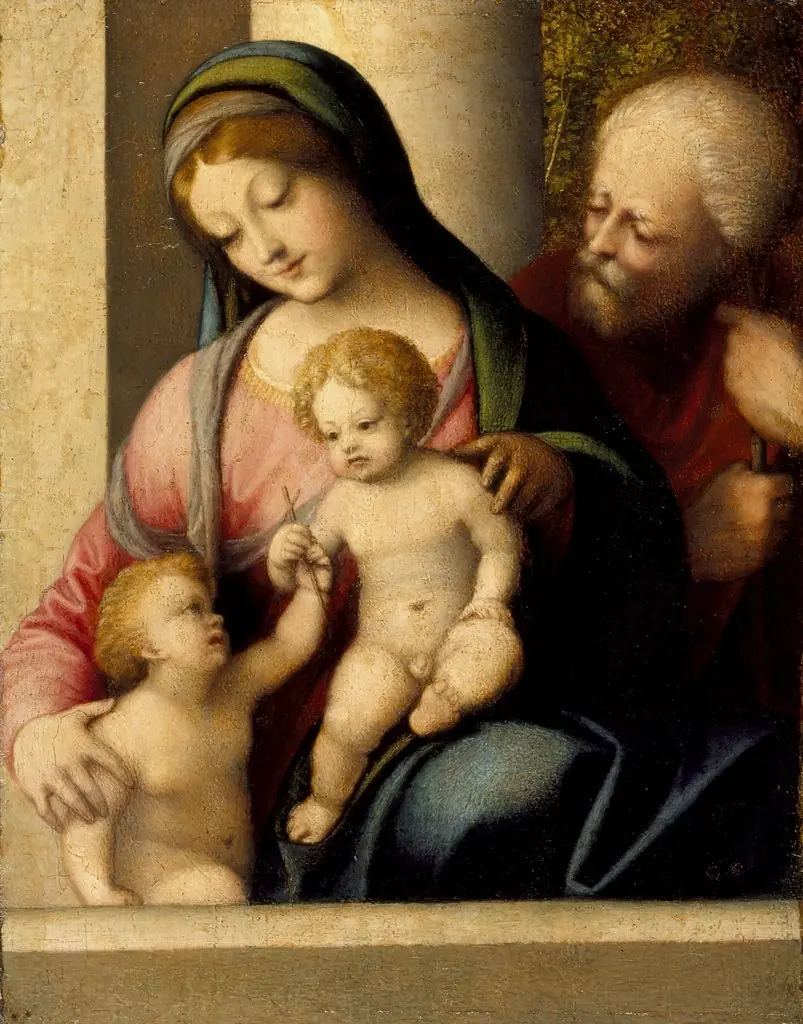
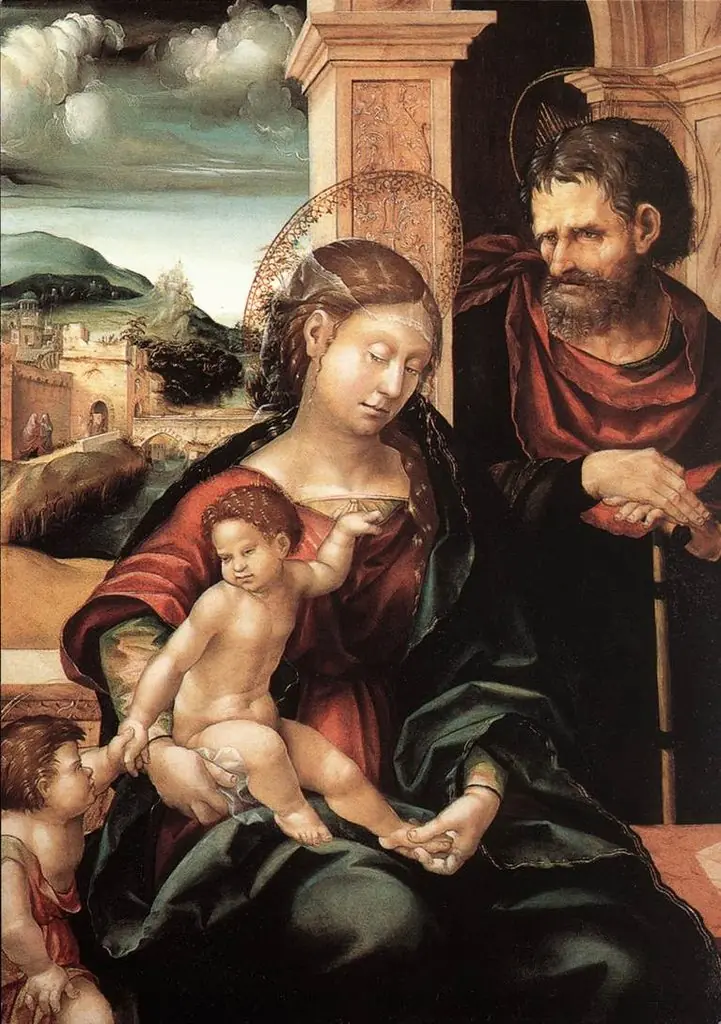
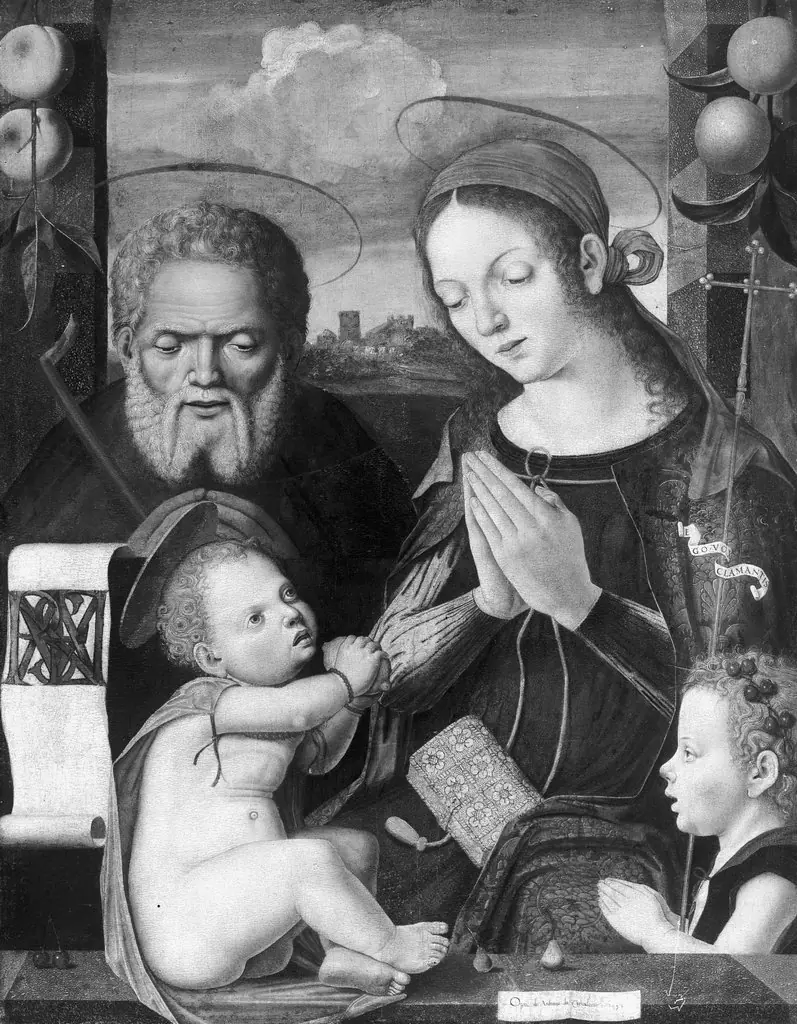
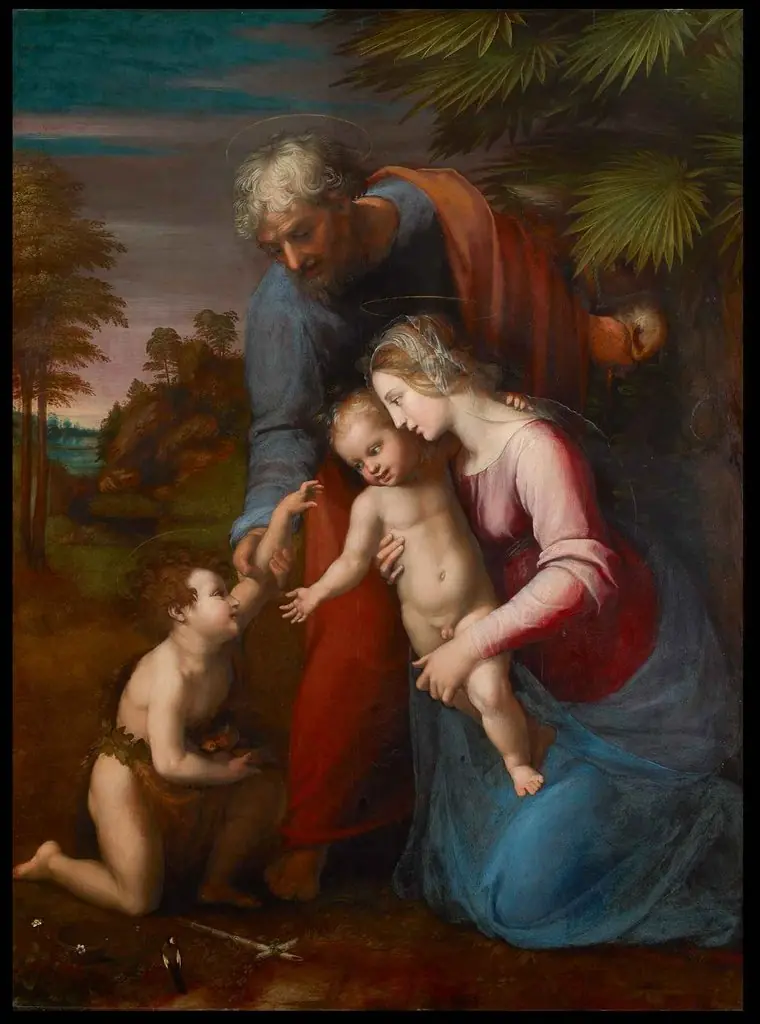
The Holy Family and St John is a photography by Unknown. It dates from 1550 and is held in the collection of the Statens Museum for Kunst. Painted around 1550, this work depicts the Holy Family alongside the young Saint John the Baptist.
About this work
Overview
The composition centers on a maternal figure holding an infant, with two male figures positioned beside them.
Painted around 1550, this work depicts the Holy Family alongside the young Saint John the Baptist. The composition centers on a maternal figure holding an infant, with two male figures positioned beside them. The figures are arranged in a tight grouping, their bodies overlapping to suggest spatial depth. A dark, unmodeled background isolates the group, drawing attention to their gestures and expressions.
Subject & Meaning
The scene represents the Virgin Mary with the Christ Child, flanked by Saint Joseph and the infant John the Baptist. John’s pointing gesture signals his future role as the herald of Christ. The presence of halos identifies the sacred nature of the figures, reinforcing theological themes of divine incarnation and prophetic recognition. The intimate physical closeness underscores familial and spiritual bonds central to Christian devotion.
Technique & Style
The artist employs chiaroscuro to model forms through stark contrasts of light and shadow, emphasizing the faces and hands while subduing the surrounding space. Figures are rendered with soft contours and minimal detail, favoring emotional clarity over anatomical precision. The flat, dark backdrop enhances the three-dimensionality of the group, a technique common in mid-16th-century devotional painting aimed at quiet contemplation.
History & Provenance
The painting has been held by the Museum of Ethnography since at least the early 20th century, though its origins prior to that remain undocumented. Its attribution to a specific artist is uncertain, and it lacks inscriptions or archival records confirming its commission or early ownership. It likely entered the museum’s collection as part of a broader acquisition of religious art from European private holdings.
Context
Created during the Counter-Reformation, this image reflects a period when religious art emphasized clarity, emotional accessibility, and doctrinal orthodoxy. The composition avoids elaborate settings or ornate decoration, aligning with reformist ideals that favored direct spiritual engagement. Similar works were produced for domestic devotion, where intimate scenes of the Holy Family served as aids to personal prayer.
Legacy
Though not attributed to a major artist, the painting exemplifies the widespread production of devotional imagery in 16th-century Europe. Its preservation in an ethnographic museum highlights its role as a cultural artifact of popular piety rather than a celebrated work of fine art. It continues to serve as a visual reference for understanding how religious narratives were conveyed through accessible, emotionally resonant imagery.
Artist & collection

 Domestic Scene
 Giacomo and Cardinal Marco, investing Andrea, Abbot of San Zeno, with his Benefice
 The Nymph of Fontainebleau
 Portrait of a Woman
 Madonna and Child with Saints in the Enclosed Garden
 Venus and Minerva
 Family Group of Four on Sofa
 Wall painting from Room H of the Villa of P. Fannius Synistor at Boscoreale