Artwork
Agrostemma githago (almindelig klinte); Centaurea cyanus (kornblomst)
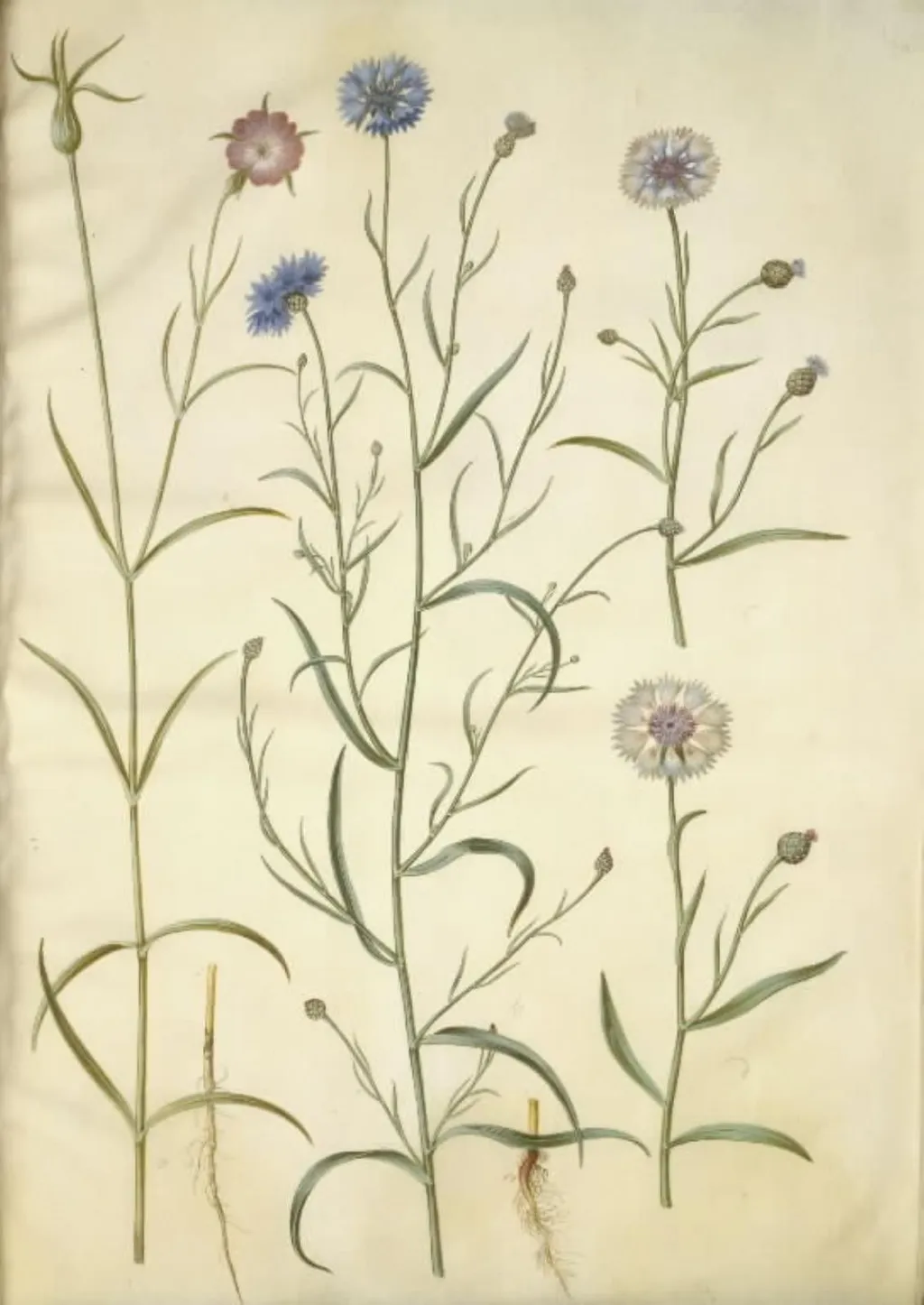
Agrostemma githago (almindelig klinte); Centaurea cyanus (kornblomst) is an unspecified work on paper by Unknown. It dates from 1654 and is held in the collection of the Statens Museum for Kunst. This botanical illustration, dated around 1654, depicts two flowering plants commonly found in European fields: corncockle and cornflower.
About this work
Overview
This botanical illustration, dated around 1654, depicts two flowering plants commonly found in European fields: corncockle and cornflower.
This botanical illustration, dated around 1654, depicts two flowering plants commonly found in European fields: corncockle and cornflower. Rendered in watercolor on paper, the work presents five slender stems with distinct blooms, each rendered with precision. The background is left unadorned, emphasizing the plants as specimens rather than decorative elements. The piece is part of a collection at the Museum of Ethnography, where it serves as a record of natural forms observed in the 17th century.
Subject & Meaning
The two species illustrated—Agrostemma githago and Centaurea cyanus—were both wildflowers growing among cereal crops in northern Europe. Though often regarded as weeds by farmers, they were nonetheless documented for their visual distinctiveness. The painting captures their presence in agricultural landscapes, reflecting a period when naturalists began systematically recording flora for scientific and educational purposes, rather than purely symbolic or ornamental ones.
Technique & Style
The artist employed watercolor to build subtle gradations of color, layering thin washes to achieve the delicate hues of blue, pink, and white petals. Fine brushwork defines the spiky bracts and narrow leaves, while the roots are rendered with equal attention, suggesting an intent to document anatomical accuracy. The composition avoids shading or perspective, focusing instead on clarity and botanical fidelity, typical of scientific illustration of the era.
History & Provenance
Created circa 1654, the work likely originated in a northern European context, possibly Denmark or the Netherlands, where botanical study was advancing. It entered the collection of the Museum of Ethnography at some point in the 19th or early 20th century, where it was preserved as part of a broader archive of natural history materials. Its attribution to '35199_person' indicates the original artist’s identity remains unverified or lost.
Context
During the mid-17th century, European scholars increasingly turned to direct observation of nature, spurred by the rise of empirical science. Botanical illustrations like this one were often compiled into herbals or teaching aids. This piece reflects a shift from medieval symbolic representations toward accurate depiction, aligning with contemporary efforts to classify and understand plant life through visual documentation.
Legacy
Though unsigned and unattributed, the work contributes to a broader tradition of pre-modern botanical art that prioritized observation over aesthetics. It remains a reference for understanding how plants were perceived and recorded before the advent of photography. Its preservation in a museum setting underscores its value as a historical document of natural history practice in early modern Europe.
Artist & collection

 Domestic Scene
 Giacomo and Cardinal Marco, investing Andrea, Abbot of San Zeno, with his Benefice
 The Nymph of Fontainebleau
 Portrait of a Woman
 Madonna and Child with Saints in the Enclosed Garden
 Venus and Minerva
 Family Group of Four on Sofa
 Wall painting from Room H of the Villa of P. Fannius Synistor at Boscoreale
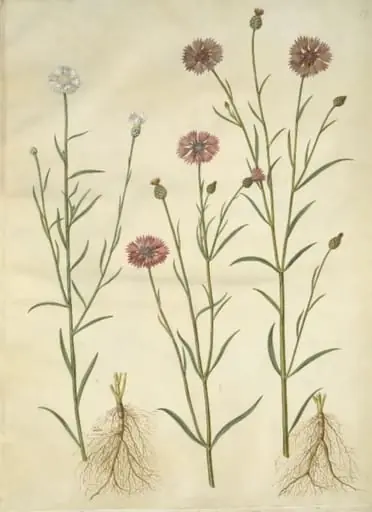 Centaurea cyanus (kornblomst)
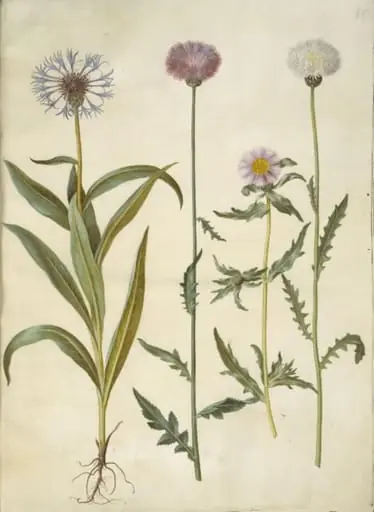 Centaurea montana (bjerg-knopurt); Amberboa moschata (duft-sultan)
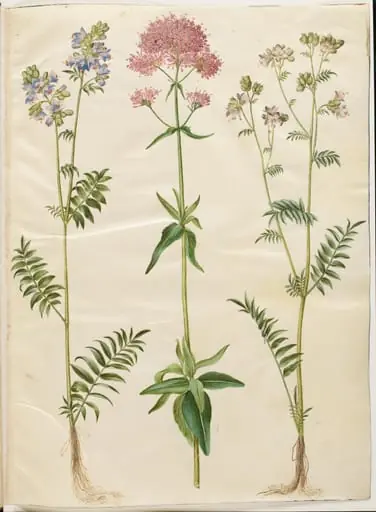 Polemonium caeruleum (almindelig jakobsstige); Centranthus ruber (rød sporebaldrian)
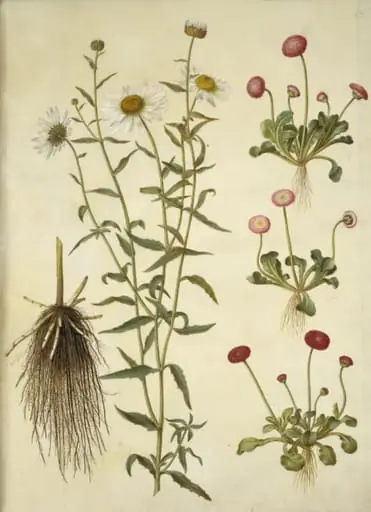 Leucanthemum vulgare (hvid okseøje); Bellis perennis (almindelig tusindfryd)
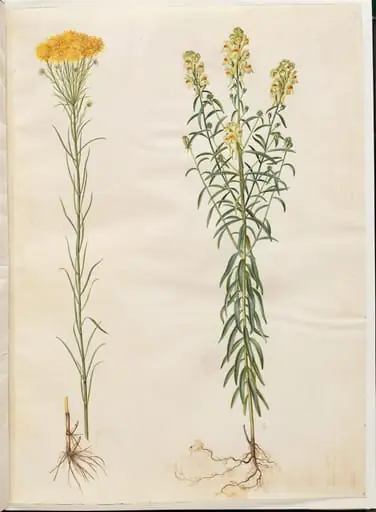 Aster linosyris (guldhår-asters); Linaria vulgaris (almindelig torskemund)
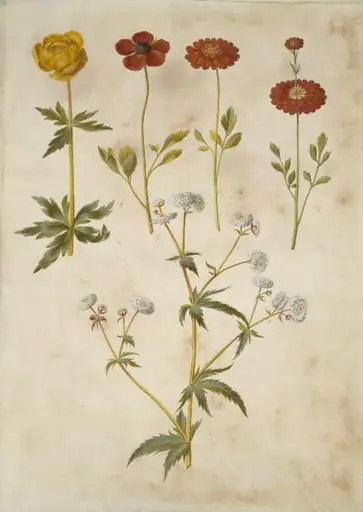 Trollius europaeus (europæisk engblomme); Ranunculus asiaticus (have-ranunkel); Ranunculus aconitifolius (sølvknap-ranunkel)
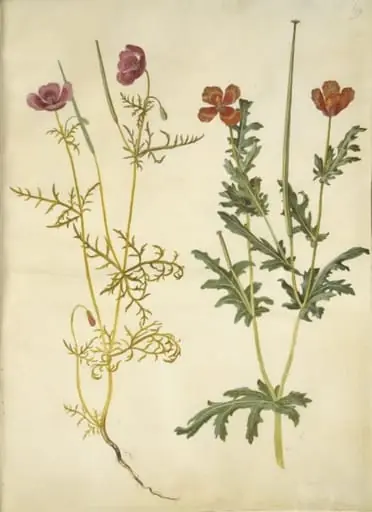 Roemeria hybrida (violet hornvalmue); Glaucium corniculatum (rød hornskulpe)
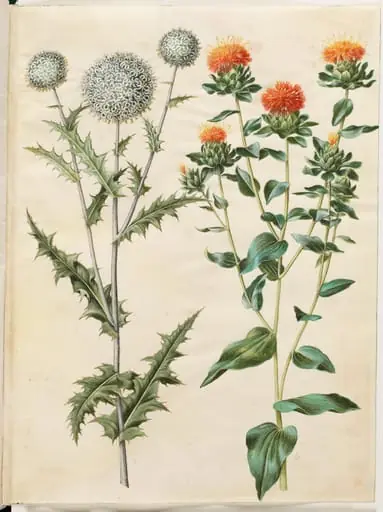 Echinops sphaerocephalus (almindelig tidselkugle); Carthamus tinctorius (gul saflortidsel)
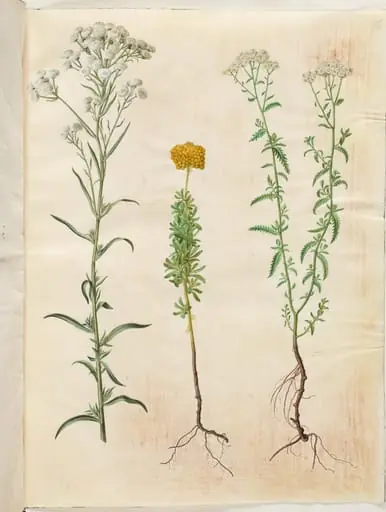 Achillea ptarmica (sølvknap-røllike); Achillea ageratum (balsam-røllike); Achillea millefolium (almindelig røllike)
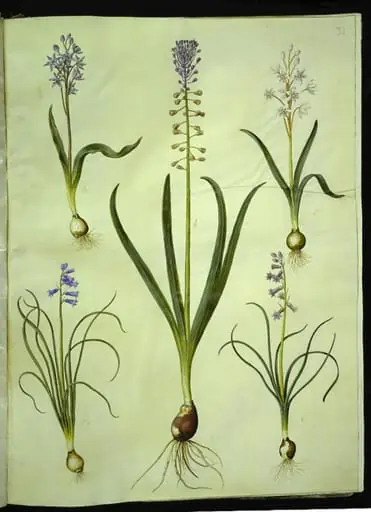 Scilla bifolia (tobladet skilla); Muscari comosum (duskhyacint); Brimeura amethystina (pyrenæisk hyacint)