Artwork
Campanula trachelium (nælde-klokke); Campanula medium (marie-klokke)
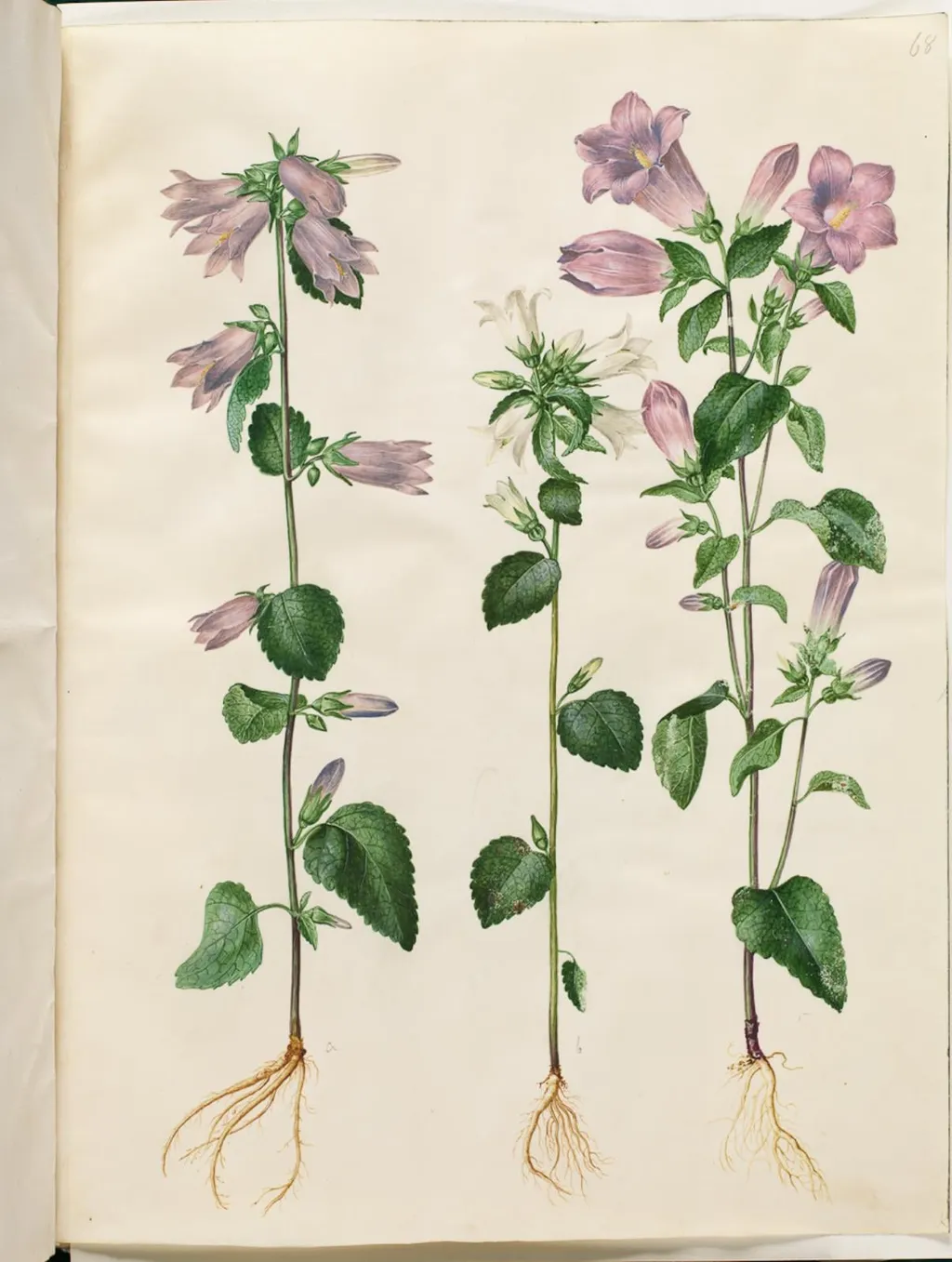
Campanula trachelium (nælde-klokke); Campanula medium (marie-klokke) is an unspecified work on paper by Unknown. It dates from 1654 and is held in the collection of the Statens Museum for Kunst. This watercolor depicts two species of bellflower: Campanula trachelium and Campanula medium, rendered with botanical precision.
About this work
Overview
This watercolor depicts two species of bellflower: Campanula trachelium and Campanula medium, rendered with botanical precision. Created around 1654, the work is part of a scientific documentation tradition that sought to record plant forms accurately. It is currently held in the collection of the Museum of Ethnography, where it serves as a historical record of early botanical illustration.
Subject & Meaning
The painting presents two flowering plants native to Europe, each identified by their common Danish names. The focus on botanical detail suggests an intent to document species for study rather than decorative purposes. The inclusion of roots and stems indicates an interest in full plant morphology, reflecting the era’s growing emphasis on systematic natural history.
Technique & Style
Executed in watercolor, the work employs fine brushwork to capture the texture of petals and the delicate network of leaf veins. Lines are precise but not rigid, allowing natural variation in form to emerge. The palette is restrained, using soft pinks and purples for flowers against muted greens, emphasizing accuracy over embellishment.
History & Provenance
Created circa 1654, the painting likely originated in a scholarly or medical context where plant identification was crucial. Its presence in the Museum of Ethnography suggests it was collected as part of a broader ethnographic or natural history archive, possibly linked to early European efforts to catalog flora from domestic and colonial regions.
Context
In mid-17th century Europe, botanical illustration flourished alongside advances in natural philosophy. Artists and scientists collaborated to produce detailed records of plant life, often for use in apothecaries or academic study. This work aligns with that movement, reflecting a shift toward empirical observation over symbolic representation in depictions of nature.
Legacy
Though unsigned and anonymous, the painting contributes to a larger body of pre-modern botanical art that laid groundwork for modern taxonomy. Its preservation in an ethnographic museum underscores its value as both scientific artifact and cultural document, illustrating how knowledge of the natural world was visually constructed in early modern Europe.
Artist & collection

 Domestic Scene
 Giacomo and Cardinal Marco, investing Andrea, Abbot of San Zeno, with his Benefice
 The Nymph of Fontainebleau
 Portrait of a Woman
 Madonna and Child with Saints in the Enclosed Garden
 Venus and Minerva
 Family Group of Four on Sofa
 Wall painting from Room H of the Villa of P. Fannius Synistor at Boscoreale
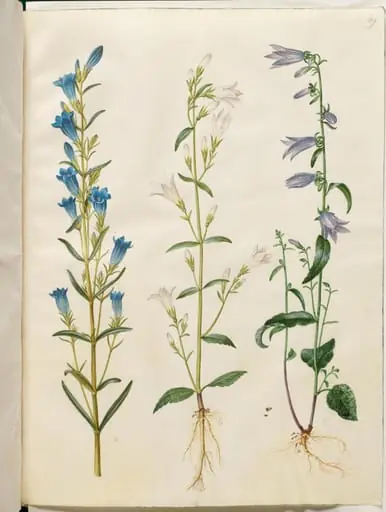 Gentiana pneumonanthe (klokke-ensian); Campanula patula (eng-klokke); Campanula rapunculoides (ensidig klokke)
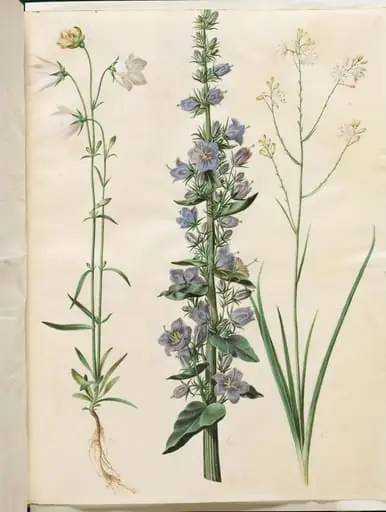 Campanula persicifolia (smalbladet klokke); Campanula pyramidalis (pyramide-klokke); Anthericum ramosum (grenet edderkopurt)
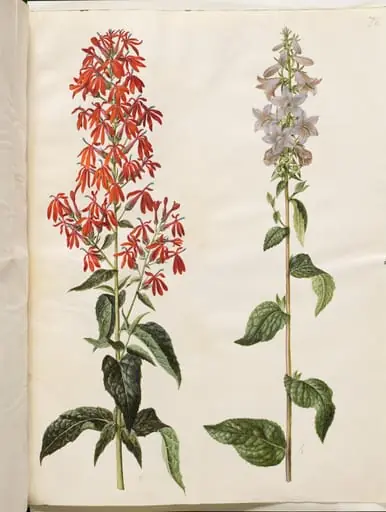 Lobelia cardinalis (kardinal-lobelie); Campanula latifolia (bredbladet klokke)
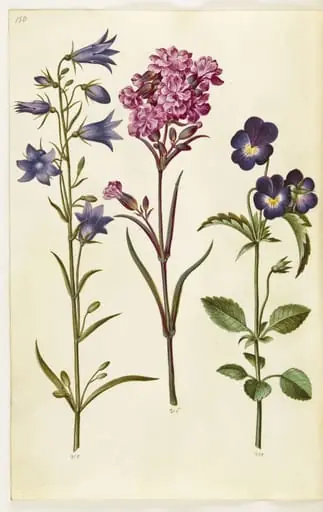 Campanula rotundifolia (liden klokke); Silene viscaria (almindelig tjærenellike); Viola tricolor (almindelig stedmoderblomst)
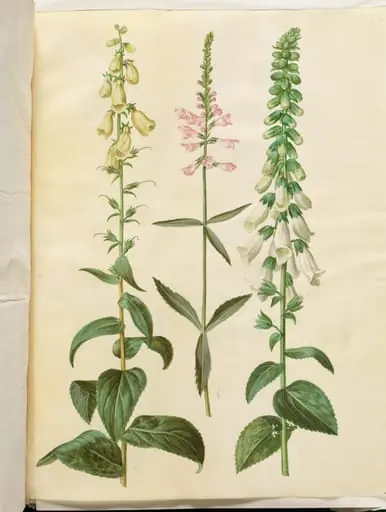 Digitalis grandiflora (storblomstret fingerbøl); Physostegia virginiana (drejeblomst); Digitalis purpurea (almindelig fingerbøl)
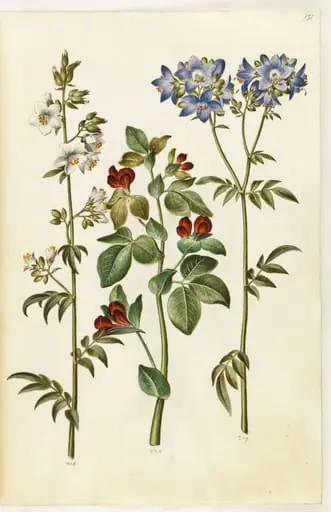 Polemonium caeruleum (almindelig jakobsstige); Lotus tetragonolobus (aspargesært)
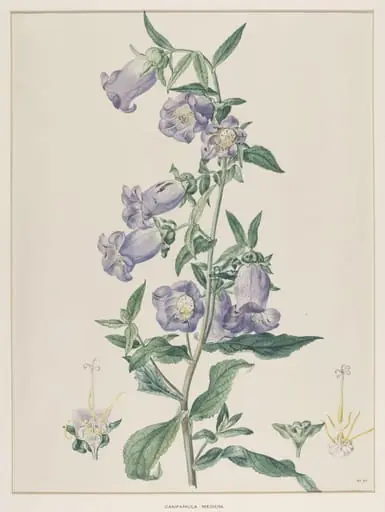 Campanula Medium
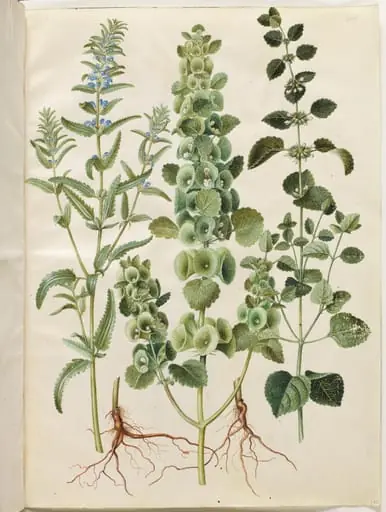 Dracocephalum moldavica (moldavisk dragehoved); Moluccella spinosa (tornet tragtbæger); Melissa officinalis (citron-melisse)
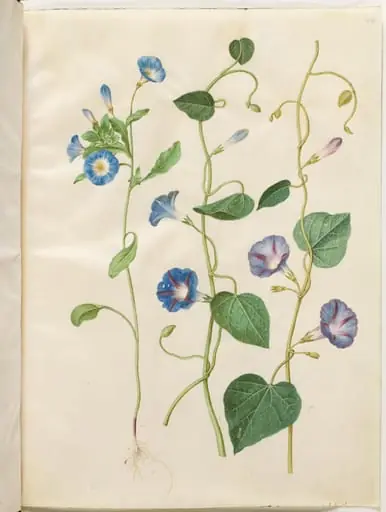 Convolvulus tricolor (jomfruskørt); Ipomoea purpurea (purpur-pragtsnerle)