Artwork
Gentiana pneumonanthe (klokke-ensian); Campanula patula (eng-klokke); Campanula rapunculoides (ensidig klokke)
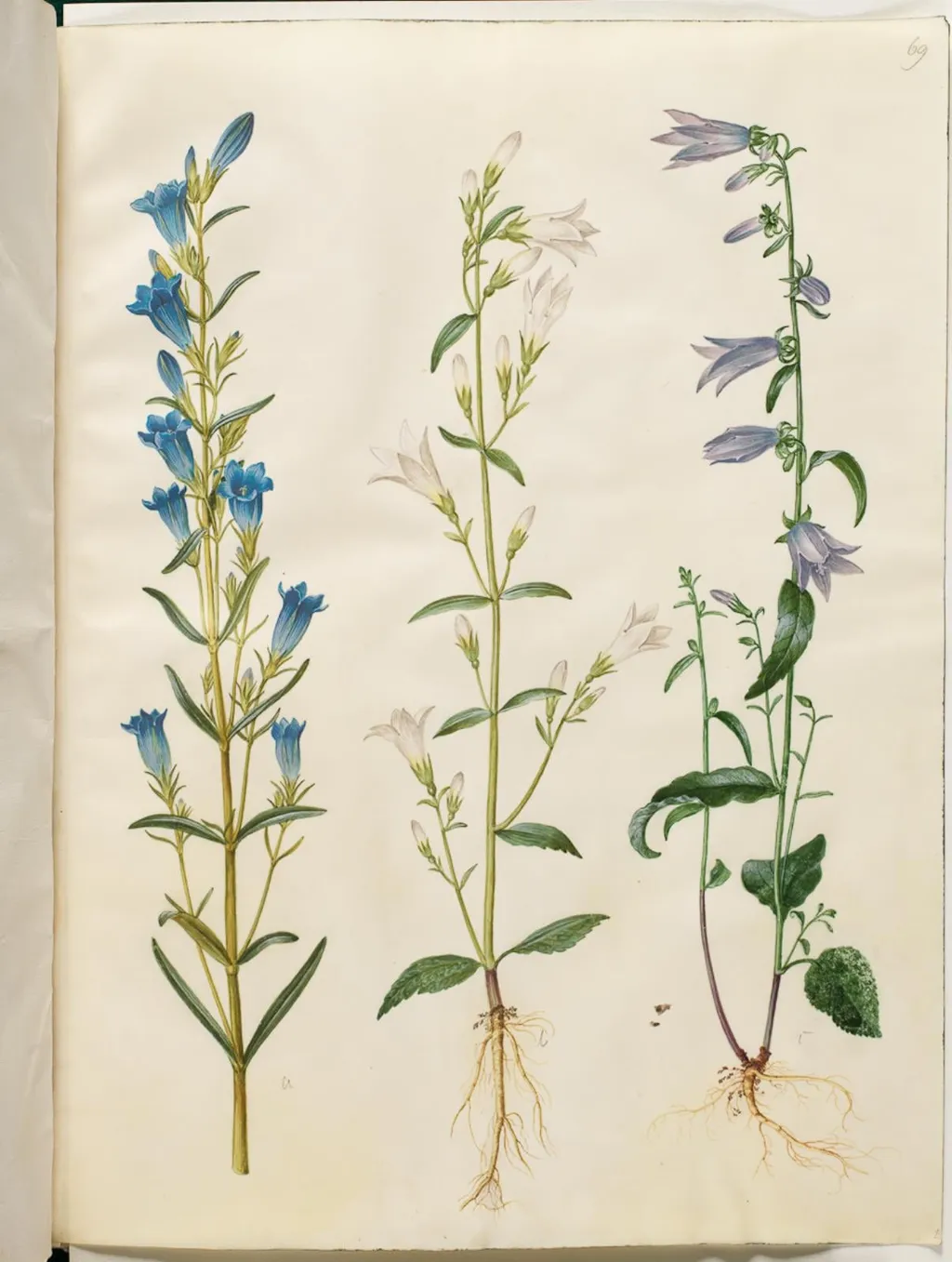
Gentiana pneumonanthe (klokke-ensian); Campanula patula (eng-klokke); Campanula rapunculoides (ensidig klokke) is an unspecified work on paper by Unknown. It dates from 1654 and is held in the collection of the Statens Museum for Kunst.
About this work
Overview
Created around 1654, this watercolor illustration depicts three separate flowering plants—Gentiana pneumonanthe, Campanula patula, and Campanula rapunculoides.
Created around 1654, this watercolor illustration depicts three separate flowering plants—Gentiana pneumonanthe, Campanula patula, and Campanula rapunculoides. Each specimen is rendered with attention to both aerial parts and underground structures, offering a comparative view of their morphology. The work is part of the collection of the Museum of Ethnography and is attributed to the artist recorded as 35199_person.
Subject & Meaning
The image presents a side‑by‑side study of three bell‑shaped species. The Gentiana on the left displays blue blossoms, the Campanula patula in the centre bears white flowers, and the Campanula rapunculoides on the right shows purple blooms. By juxtaposing the plants, the illustration emphasizes botanical diversity within the Campanulaceae family and related genera.
Technique & Style
Executed in watercolor, the piece relies on transparent washes to convey delicate petal hues and the contrasting tones of the roots. Fine brushwork delineates the intricate leaf venation and root textures, while the limited palette highlights the natural coloration of each organ. The medium’s softness reinforces the scientific, observational intent of the drawing.
History & Provenance
The work dates to the mid‑17th century, a period when botanical illustration served both scholarly and exploratory purposes. It entered the Museum of Ethnography’s holdings at an unspecified date, where it remains catalogued under the artist’s identifier 35199_person. The museum’s collection context suggests the piece was valued for its ethnobotanical relevance as well as its artistic merit.
Artist & collection

 Domestic Scene
 Giacomo and Cardinal Marco, investing Andrea, Abbot of San Zeno, with his Benefice
 The Nymph of Fontainebleau
 Portrait of a Woman
 Madonna and Child with Saints in the Enclosed Garden
 Venus and Minerva
 Family Group of Four on Sofa
 Wall painting from Room H of the Villa of P. Fannius Synistor at Boscoreale
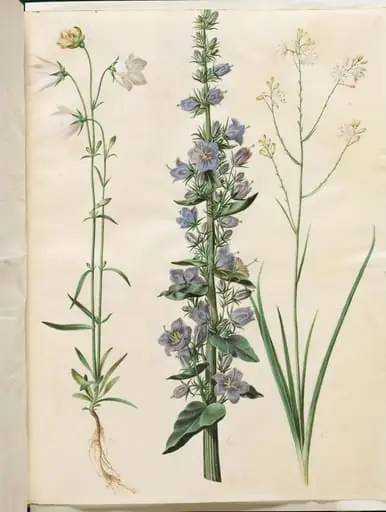 Campanula persicifolia (smalbladet klokke); Campanula pyramidalis (pyramide-klokke); Anthericum ramosum (grenet edderkopurt)
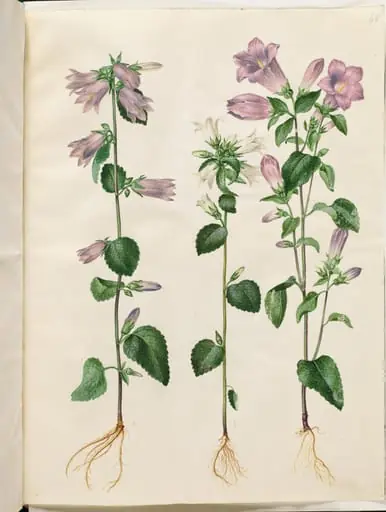 Campanula trachelium (nælde-klokke); Campanula medium (marie-klokke)
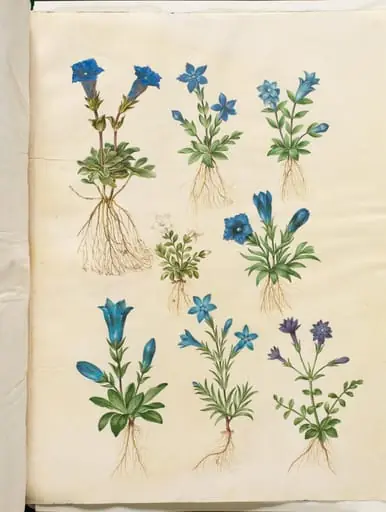 Gentiana acaulis (stængelløs ensian); Gentiana verna (vår-ensian); Gentiana acaulis (stængelløs ensian); Gentiana (art af ensian)
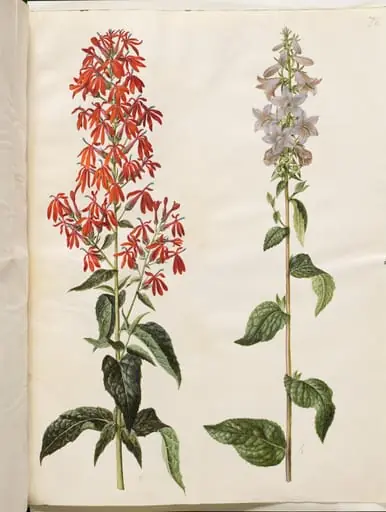 Lobelia cardinalis (kardinal-lobelie); Campanula latifolia (bredbladet klokke)
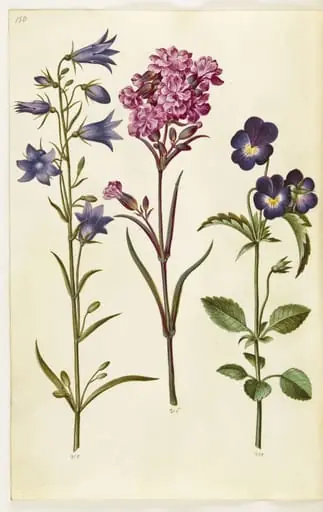 Campanula rotundifolia (liden klokke); Silene viscaria (almindelig tjærenellike); Viola tricolor (almindelig stedmoderblomst)
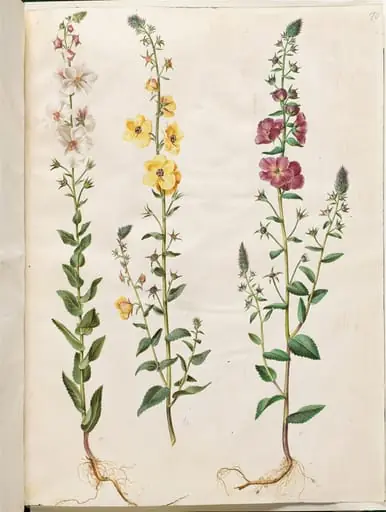 Verbascum blattaria (klase-kongelys); Verbascum phoeniceum (purpur-kongelys)
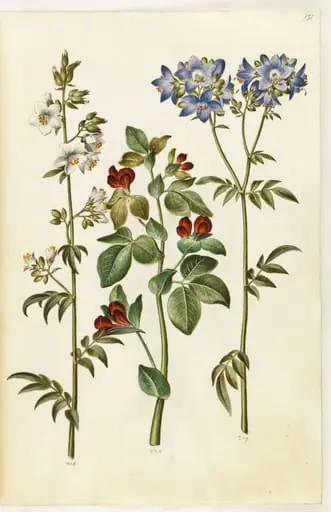 Polemonium caeruleum (almindelig jakobsstige); Lotus tetragonolobus (aspargesært)
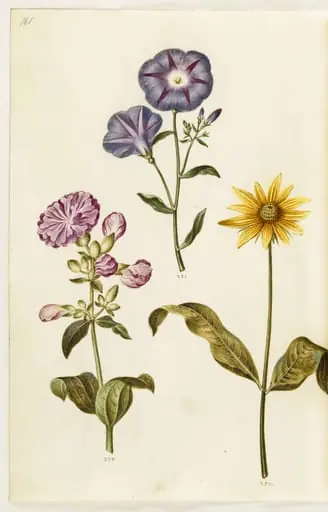 Saponaria officinalis (almindelig sæbeurt); Convolvulus tricolor (jomfruskørt); Helianthus (?) (solsikke-art)
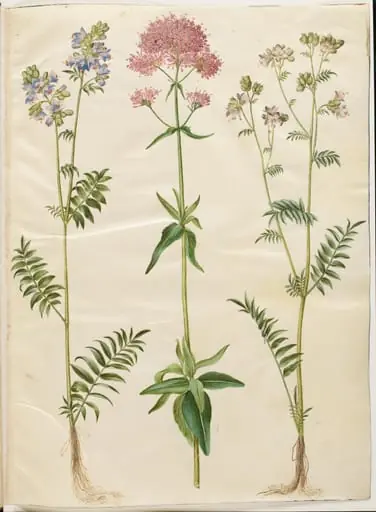 Polemonium caeruleum (almindelig jakobsstige); Centranthus ruber (rød sporebaldrian)
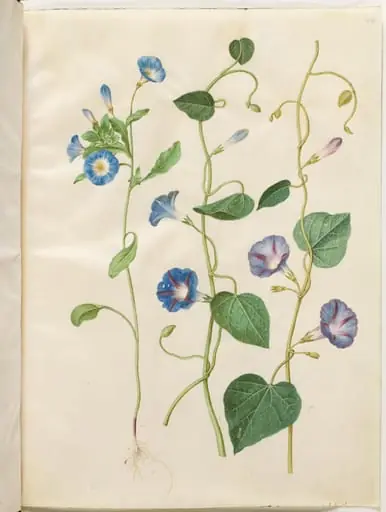 Convolvulus tricolor (jomfruskørt); Ipomoea purpurea (purpur-pragtsnerle)
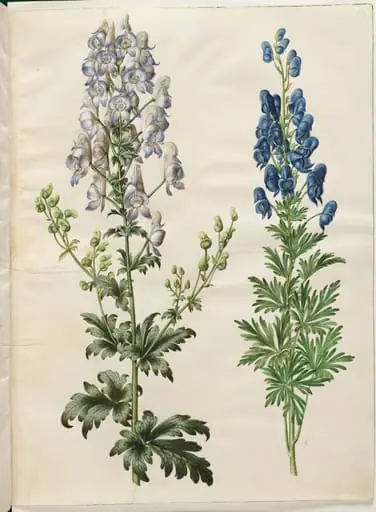 Aconitum variegatum (broget stormhat); Aconitum napellus (ægte stormhat)