Artwork
Cerinthe major (stor voksurt)
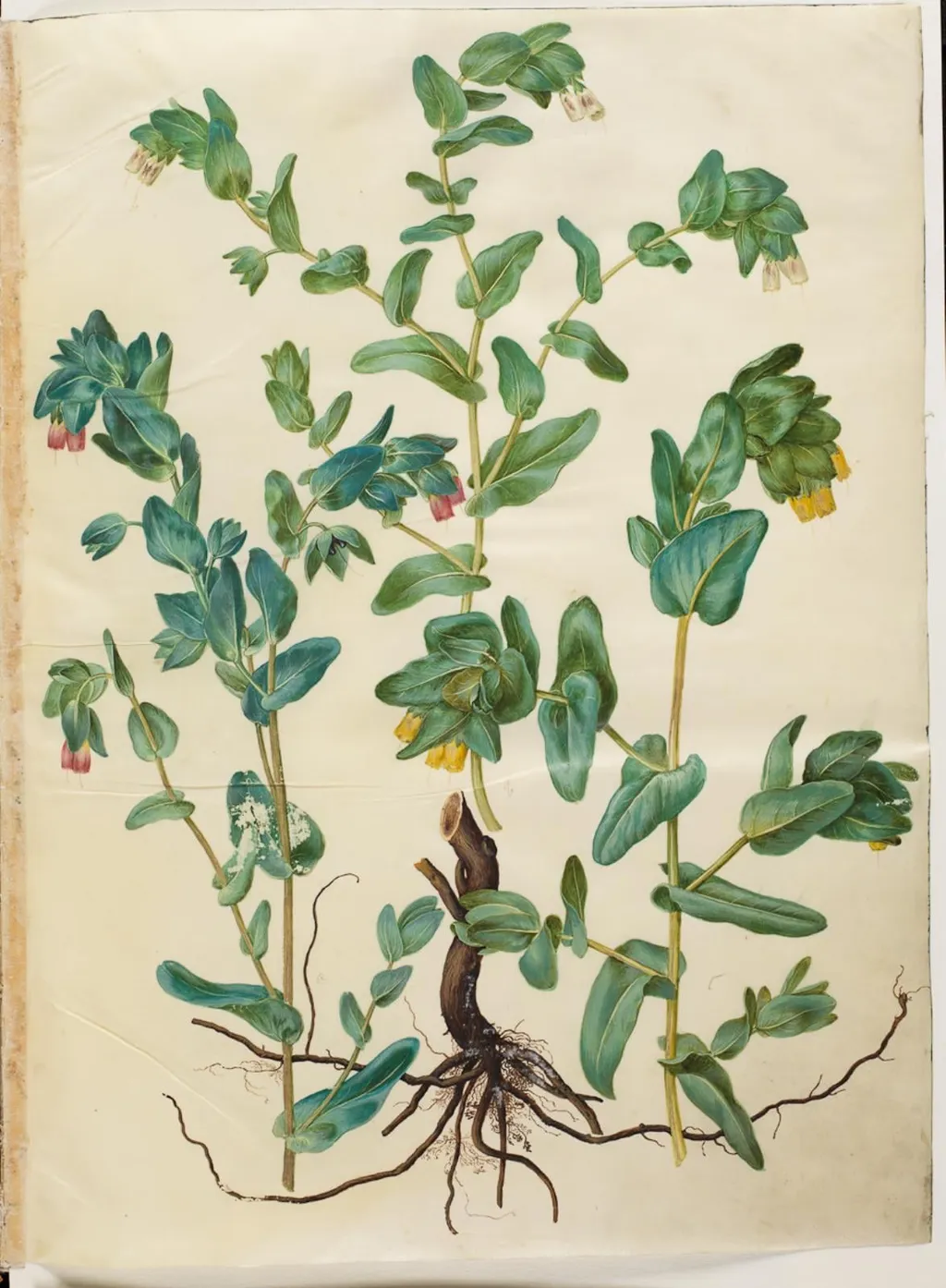
Cerinthe major (stor voksurt) is an unspecified work on paper by Unknown. It dates from 1654 and is held in the collection of the Statens Museum for Kunst. This watercolor illustration depicts Cerinthe major, commonly known as honeywort, rendered around 1654.
About this work
Overview
This watercolor illustration depicts Cerinthe major, commonly known as honeywort, rendered around 1654. The work is part of the Museum of Ethnography’s collection and reflects the scientific documentation practices of the mid-seventeenth century. Its precise botanical rendering suggests it was intended for study rather than decoration, aligning with contemporary efforts to catalog plant species.
Subject & Meaning
The painting focuses on Cerinthe major, a herbaceous plant with distinctive green foliage and small yellow blooms. Visible roots and carefully rendered stems indicate an emphasis on anatomical accuracy. The subject was likely chosen for its medicinal or agricultural relevance in early modern Europe, where botanical knowledge was increasingly tied to pharmacology and natural philosophy.
Technique & Style
Executed in watercolor on paper, the illustration employs soft washes and fine linework to capture the plant’s texture and form.
Executed in watercolor on paper, the illustration employs soft washes and fine linework to capture the plant’s texture and form. The light beige background isolates the specimen, enhancing clarity. The artist’s attention to vein patterns, leaf contours, and root structure reveals a methodical approach, typical of pre-photographic botanical records that prioritized observational fidelity over artistic flourish.
History & Provenance
The work was created circa 1654, during a period when European collectors and scholars systematically documented flora. It entered the Museum of Ethnography’s holdings through later acquisitions, likely as part of a broader collection of natural history illustrations. The artist’s identity remains unconfirmed, though the style suggests training within a tradition of Dutch or German botanical draftsmanship.
Context
In the mid-1600s, illustrated plant studies were vital to emerging scientific disciplines. This piece reflects the intersection of art and natural science, where detailed imagery served as a tool for identification and knowledge transmission. Such works often accompanied herbals or were used in university teaching, contributing to the standardization of botanical classification before Linnaean taxonomy.
Legacy
Though unsigned and unattributed, the illustration endures as a representative example of early scientific botany. It contributes to the historical record of how plants were visually understood and preserved before the advent of photography. Its preservation in a museum of ethnography underscores its role in broader cultural engagements with nature during the early modern era.
Artist & collection

 Domestic Scene
 Giacomo and Cardinal Marco, investing Andrea, Abbot of San Zeno, with his Benefice
 The Nymph of Fontainebleau
 Portrait of a Woman
 Madonna and Child with Saints in the Enclosed Garden
 Venus and Minerva
 Family Group of Four on Sofa
 Wall painting from Room H of the Villa of P. Fannius Synistor at Boscoreale
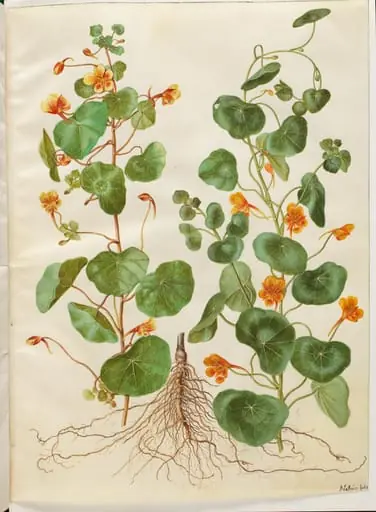 Tropaeolum minus (lille blomsterkarse)
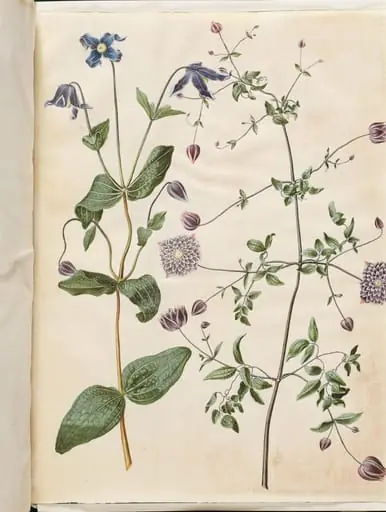 Clematis integrifolia (blå staudeklematis); Clematis viticella (italiensk skovranke)
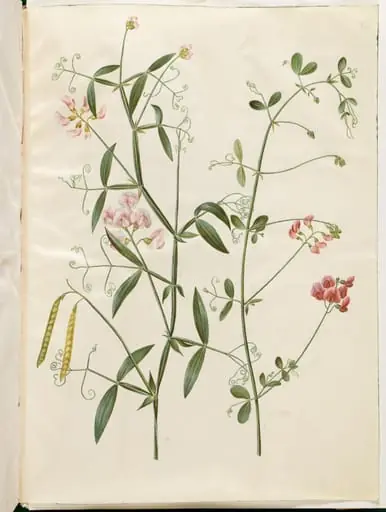 Lathyrus sylvestris (skov-fladbælg); Lathyrus tuberosus (knold-fladbælg)
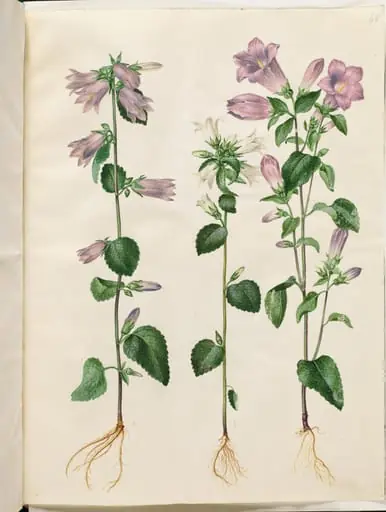 Campanula trachelium (nælde-klokke); Campanula medium (marie-klokke)
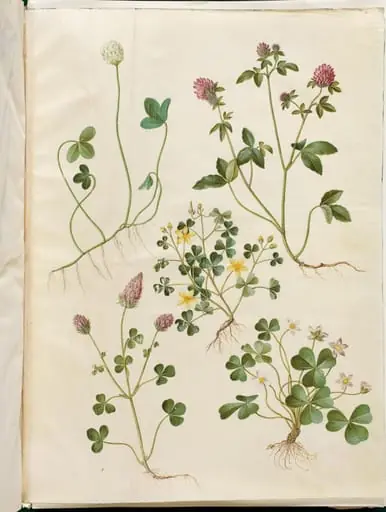 Trifolium repens (hvid-kløver); Trifolium pratense (rød-kløver); Oxalis corniculata (nedliggende surkløver); Trifolium incarnatum (blod-kløver); Oxalis acetosella (skovsyre)
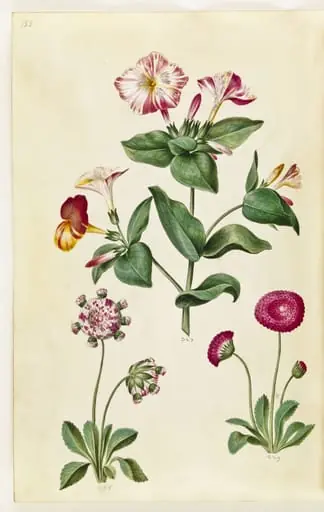 Mirabilis jalapa (vidunderblomst); Bellis perennis (almindelig tusindfryd)
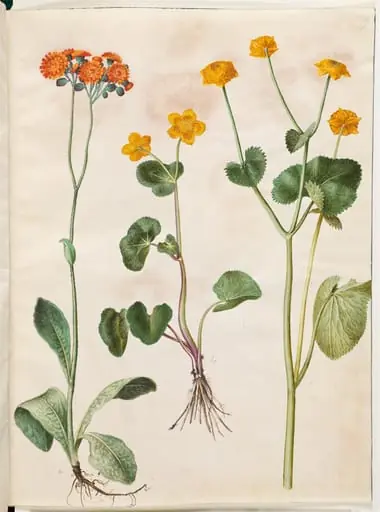 Pilosella aurantiaca (pomerans-høgeurt); Caltha palustris (eng-kabbeleje)
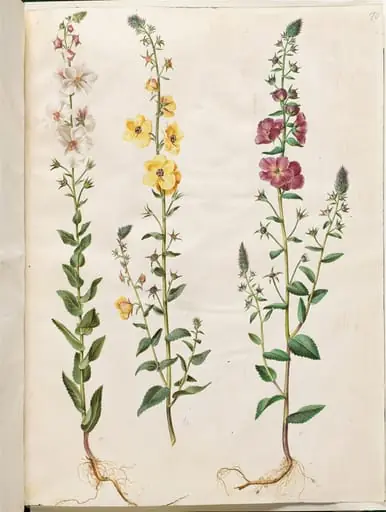 Verbascum blattaria (klase-kongelys); Verbascum phoeniceum (purpur-kongelys)
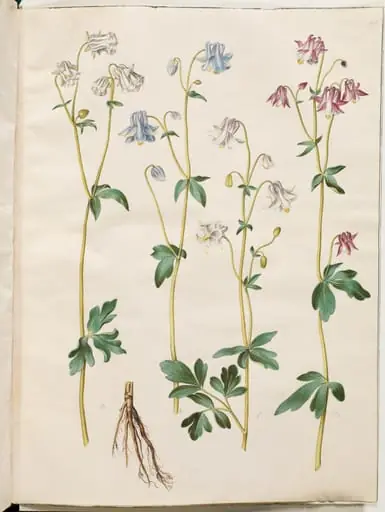 Aquilegia vulgaris (almindelig akeleje)
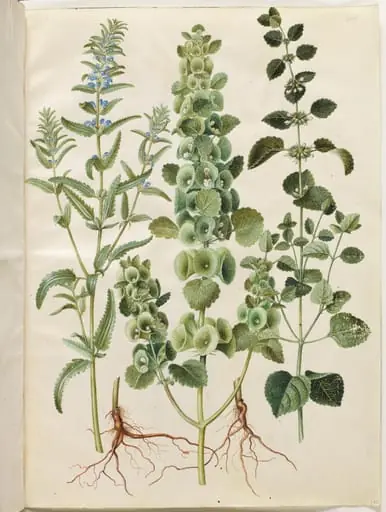 Dracocephalum moldavica (moldavisk dragehoved); Moluccella spinosa (tornet tragtbæger); Melissa officinalis (citron-melisse)
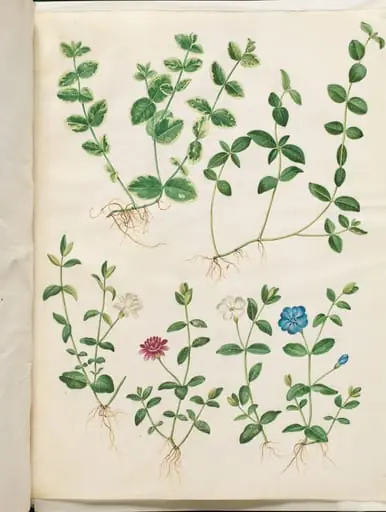 Vinca minor (liden singrøn)
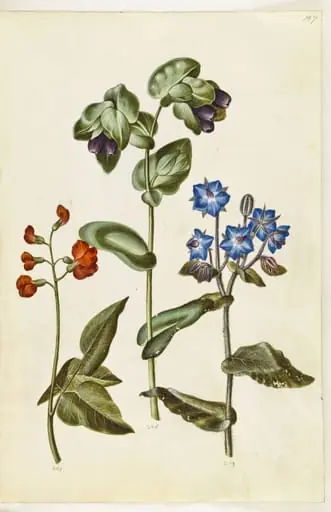 Phaseolus coccineus (pral-bønne); Cerinthe major (stor voksurt); Borago officinalis (almindelig hjulkrone)