Artwork
Citrus sinensis (appelsin)
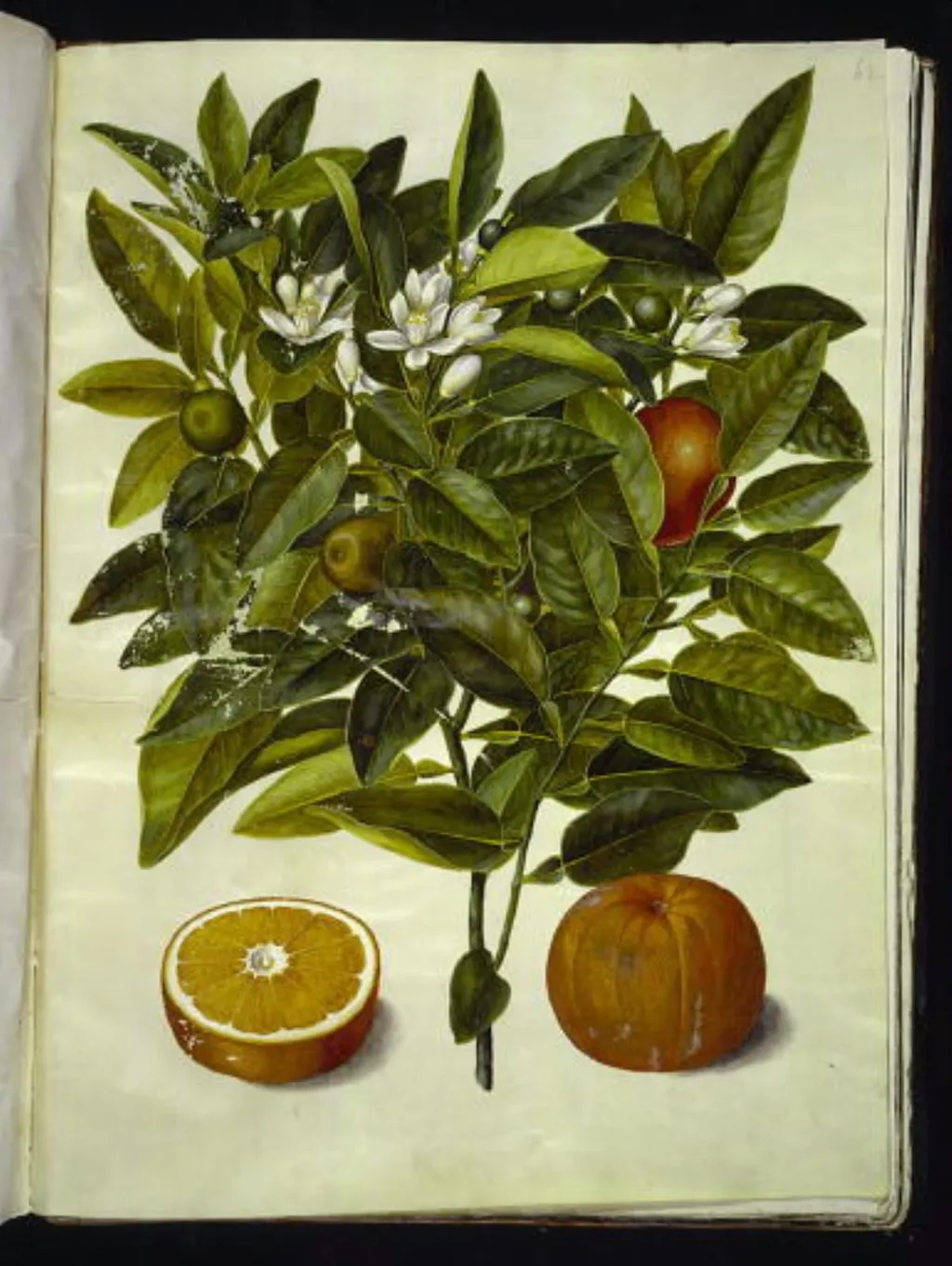
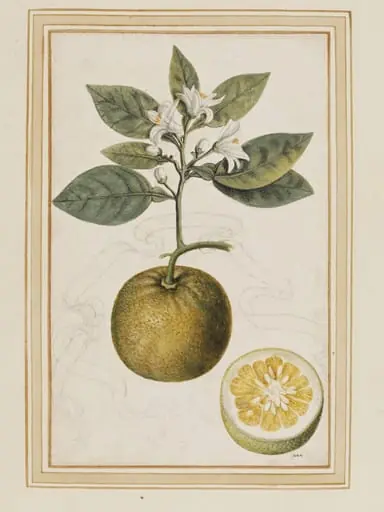
Citrus sinensis (appelsin) is an unspecified work on paper by Unknown. It dates from 1654 and is held in the collection of the Statens Museum for Kunst. Created around 1654, this watercolor depicts Citrus sinensis, commonly known as the sweet orange.
About this work
Overview
The work is held in the collection of the Museum of Ethnography and reflects a detailed botanical observation typical of mid-17th-century natural studies.
Created around 1654, this watercolor depicts Citrus sinensis, commonly known as the sweet orange. The work is held in the collection of the Museum of Ethnography and reflects a detailed botanical observation typical of mid-17th-century natural studies. The composition isolates a single branch with fruit and foliage against an unadorned background, emphasizing scientific clarity over decorative intent.
Subject & Meaning
The painting presents a citrus branch in varying stages of development: unripe green fruit, ripening orange hues, and fully mature specimens. A sliced orange in a shallow dish suggests an interest in internal structure, possibly for educational or medicinal purposes. The inclusion of both whole and cut fruit implies a study of the plant’s utility, aligning with early modern efforts to document useful flora.
Technique & Style
Executed in watercolor with careful glazing, the work builds subtle tonal shifts through layered washes. The artist rendered leaf veins, fruit texture, and the glossy sheen of citrus skin with precision, avoiding bold outlines. The smooth, controlled application resembles botanical illustrations used in scientific manuscripts, prioritizing accuracy over expressive brushwork.
History & Provenance
The painting entered the Museum of Ethnography’s collection as part of a broader effort to catalog plant species encountered through global trade. Its origin is tied to European collectors and naturalists who documented exotic flora during the Age of Exploration. Though the artist’s identity remains unverified, the style suggests training in Dutch or German botanical traditions.
Context
In the mid-1600s, citrus fruits were rare and valuable in northern Europe, often grown in heated greenhouses. Botanical illustrations like this served both scientific and commercial interests, aiding horticulturists and apothecaries. This work reflects a growing institutional interest in classifying plants from colonial territories, particularly those with economic or medicinal potential.
Legacy
The painting contributes to a tradition of empirical plant documentation that preceded modern botanical science. Its methodical approach influenced later herbarium practices and illustrated floras. Though not widely exhibited, it remains a quiet example of how art and science converged in early modern Europe to record the natural world with disciplined observation.
Artist & collection

 Domestic Scene
 Giacomo and Cardinal Marco, investing Andrea, Abbot of San Zeno, with his Benefice
 The Nymph of Fontainebleau
 Portrait of a Woman
 Madonna and Child with Saints in the Enclosed Garden
 Venus and Minerva
 Family Group of Four on Sofa
 Wall painting from Room H of the Villa of P. Fannius Synistor at Boscoreale