Artwork
Crocus angustifolius (balkan-krokus)
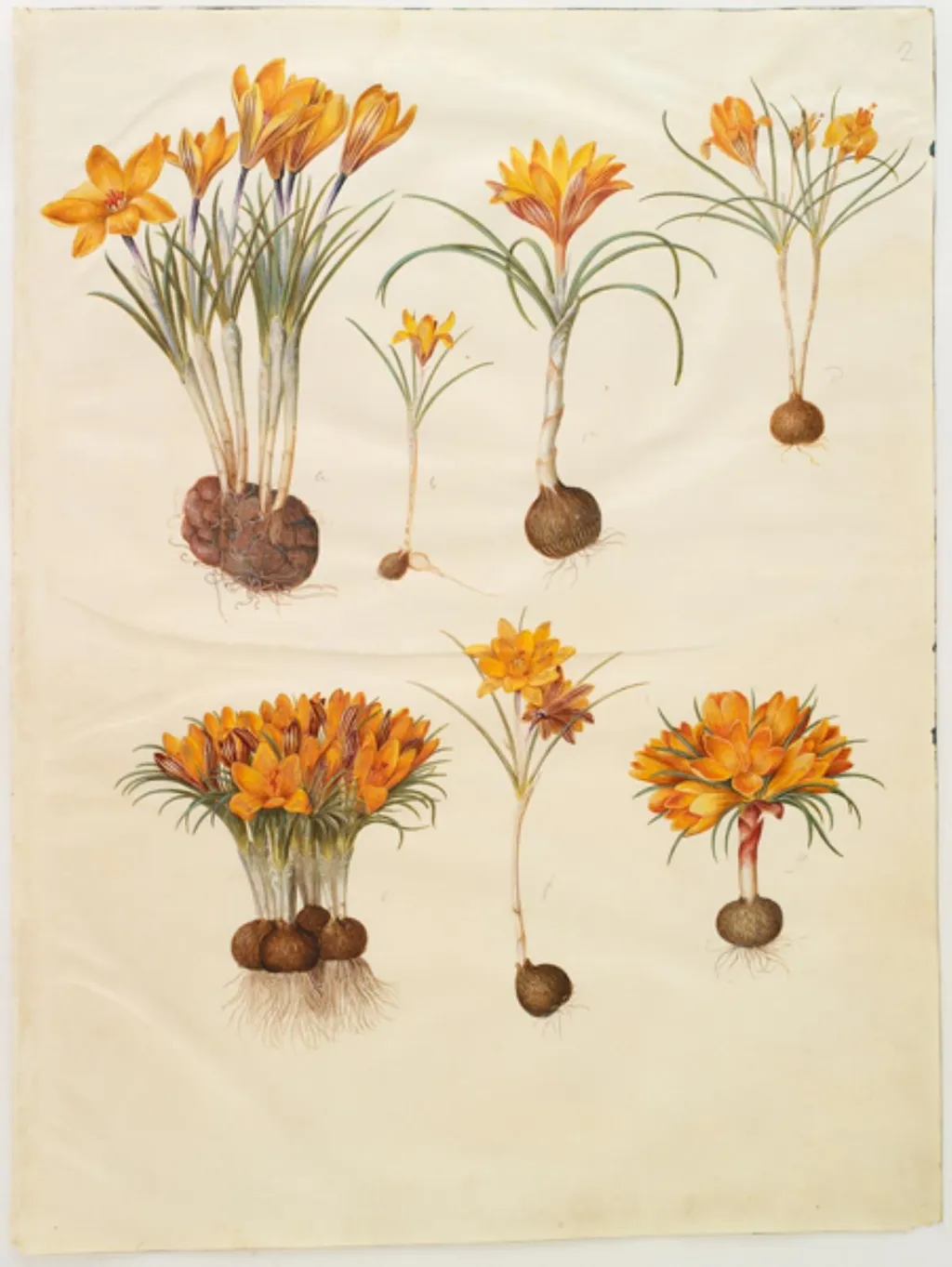
Crocus angustifolius (balkan-krokus) is an unspecified work on paper by Unknown. It dates from 1654 and is held in the collection of the Statens Museum for Kunst. Created around 1654, this watercolor depicts Crocus angustifolius, a species native to the Balkans.
About this work
Overview
Created around 1654, this watercolor depicts Crocus angustifolius, a species native to the Balkans. The work is part of the Museum of Ethnography’s collection and reflects a scientific interest in botanical detail during the mid-seventeenth century. The artist rendered the plant with precision, emphasizing its growth stages from bulb to bloom, likely for educational or archival purposes.
Subject & Meaning
The painting focuses on the life cycle of the crocus, showing both dormant bulbs and fully opened flowers. By including roots and sprouting shoots, the artist highlights the plant’s reproductive structure. This was not decorative but observational, aiming to document the natural form and development of a species known for its early spring emergence in mountainous regions.
Technique & Style
Executed in watercolor, the work uses thin, layered washes to build subtle gradations of color in the petals and leaves. The palette is restrained yet vivid, with orange and yellow hues rendered softly against a neutral background. Delicate linework defines each petal and stem, demonstrating a methodical approach typical of botanical illustration of the period.
History & Provenance
The artwork is attributed to an unnamed artist identified only by the catalog number 35199_person. It entered the Museum of Ethnography’s holdings in the early twentieth century, likely as part of a broader collection of natural history studies. Its origin remains undocumented, but its style aligns with Central European botanical records from the 1600s.
Context
During the mid-1600s, European scholars increasingly turned to visual documentation of flora, especially as botanical gardens and herbaria expanded. This piece fits within a tradition of empirical observation, where accuracy surpassed aesthetic flourish. The plain background and lack of landscape elements suggest it was intended for study rather than display.
Legacy
Though unsigned and unattributed to a known artist, the painting contributes to the historical record of plant taxonomy. Its careful rendering supports later botanical classifications and reflects the transition from ornamental to scientific illustration. It remains a quiet example of how visual precision served early natural science.
Artist & collection

 Domestic Scene
 Giacomo and Cardinal Marco, investing Andrea, Abbot of San Zeno, with his Benefice
 The Nymph of Fontainebleau
 Portrait of a Woman
 Madonna and Child with Saints in the Enclosed Garden
 Venus and Minerva
 Family Group of Four on Sofa
 Wall painting from Room H of the Villa of P. Fannius Synistor at Boscoreale
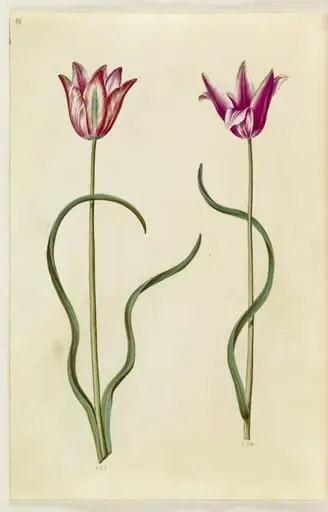 Tulipa clusiana (clusius-tulipan)
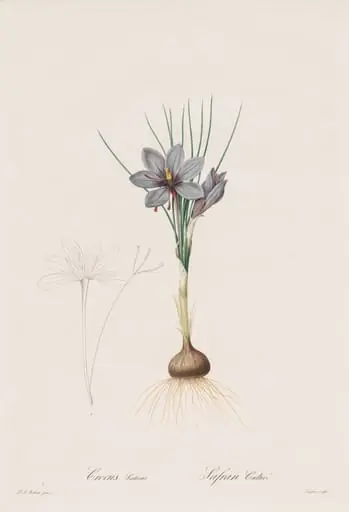 Les Liliacées: Crocus Sativus
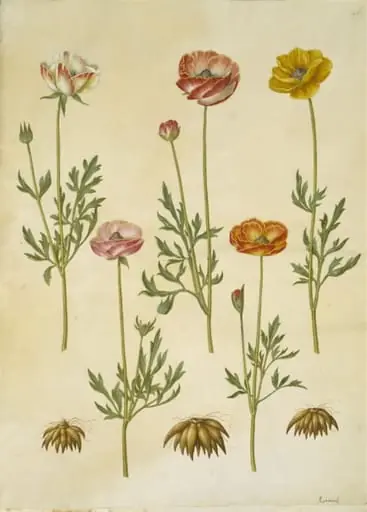 Ranunculus asiaticus (have-ranunkel)
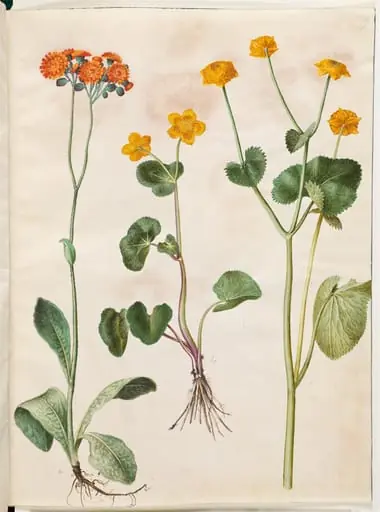 Pilosella aurantiaca (pomerans-høgeurt); Caltha palustris (eng-kabbeleje)
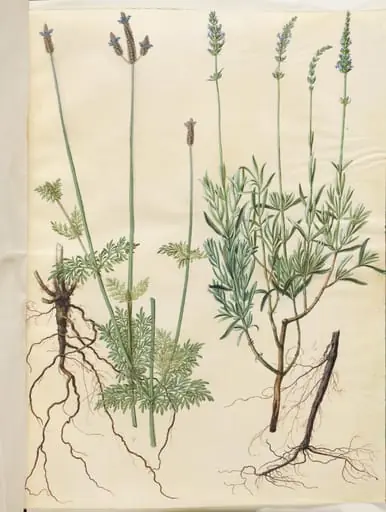 Lavandula multifida (aks-lavendel); Lavandula angustifolia (ægte lavendel)
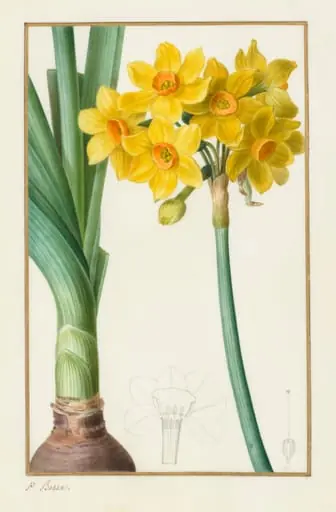 Polyanthus or Cluster Narcissus (Botanical: Narcissus tazetta)