Artwork
Polyanthus or Cluster Narcissus (Botanical: Narcissus tazetta)
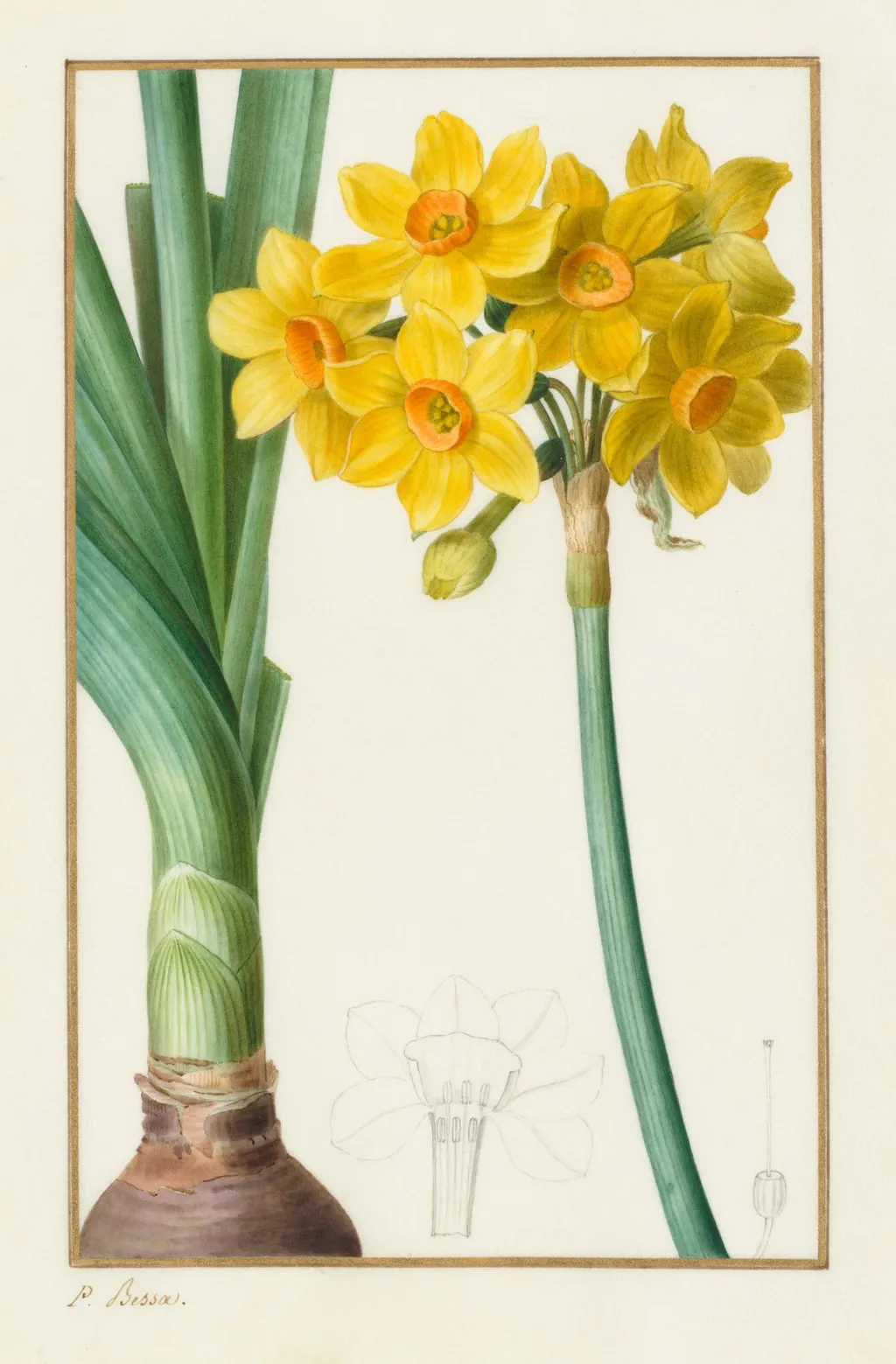
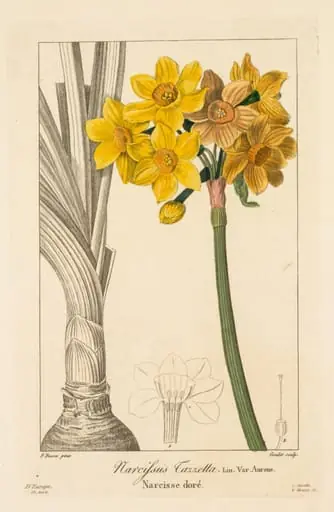
Polyanthus or Cluster Narcissus (Botanical: Narcissus tazetta) is a drawing by the Romanticist artist Pancrace Bessa. It dates from 1836 and is held in the collection of the Cleveland Museum of Art.
About this work
Overview
Polyanthus or Cluster Narcissus (Narcissus tazetta) is a botanical drawing created in 1836 by French artist Pancrace Bessa, known for his meticulous plant illustrations.
Subject & Meaning
The drawing accurately depicts a Narcissus tazetta plant, highlighting its bright yellow petals with orange centers, long curved leaves, and a paper-wrapped bulb base. A small pencil sketch of the flower in the lower right corner suggests a study or alternative view.
Technique & Style
Bessa's work showcases his attention to detail and understanding of light, with carefully rendered petals that appear luminous against a plain white background. His style reflects training under Gerard van Spaendonck and influence from Pierre-Joseph Redouté.
History & Provenance
Created in 1836, the drawing is part of Bessa's body of work exhibited at the Paris Salons from 1806 to 1831. It aligns with the era's tradition of scientific botanical illustration.
Context
This piece contributes to a broader 19th-century effort in botanical art focused on scientific accuracy and detailed representation of plant species.
Legacy
While specific legacy details of this piece are not provided, Bessa's overall contributions to botanical illustration during his time are notable, reflecting the intersection of art and scientific documentation.
Artist & collection
Artist
Pancrace Bessa (1 January 1772 – 11 June 1846) was a French natural history artist, best known for his botanical illustrations.

 Narcissus pseudonarcissus (påskelilje); Narcissus tazetta aureus (guld-tazet)
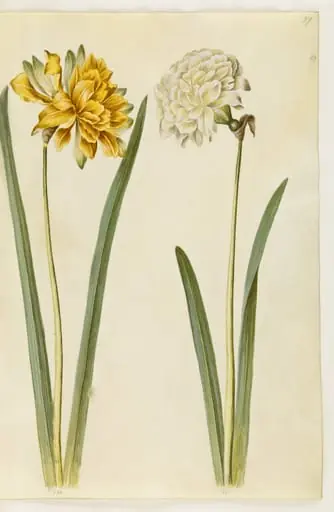 Narcissus pseudonarcissus (påskelilje)
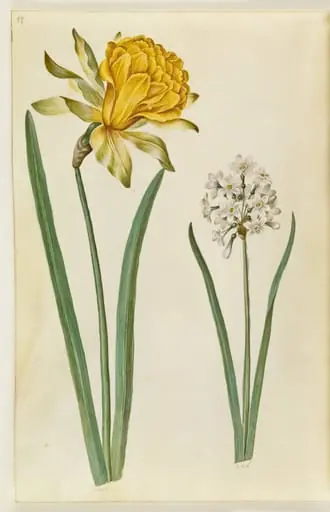 Narcissus pseudonarcissus (påskelilje); Narcissus tazetta (tazet)
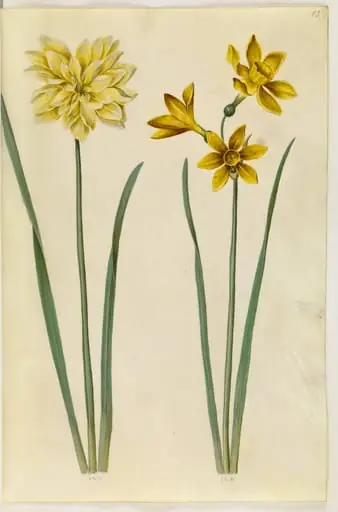
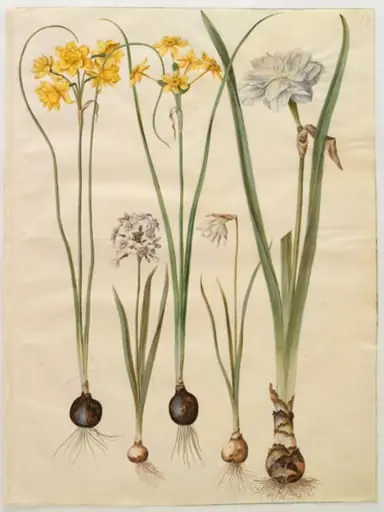 Narcissus jonquilla (siv-narcis); Narcissus tazetta (tazet); Narcissus pseudonarcissus moschatus (moskus-narcis); Narcissus poeticus (pinselilje)
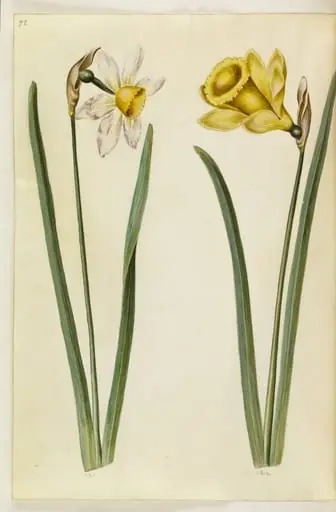 Narcissus ×incomparabilis (have-narcis); Narcissus pseudonarcissus (påskelilje)
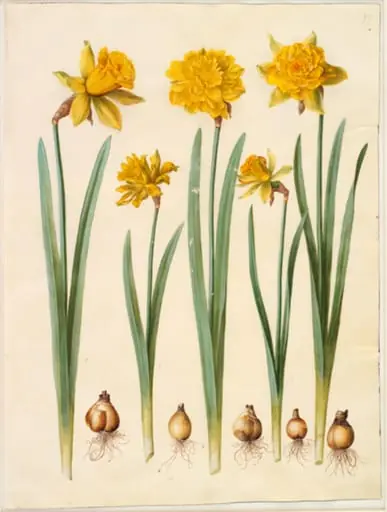 Narcissus pseudonarcissus
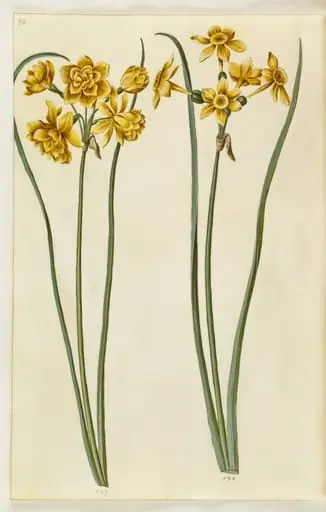 Narcissus jonquilla (siv-narcis)
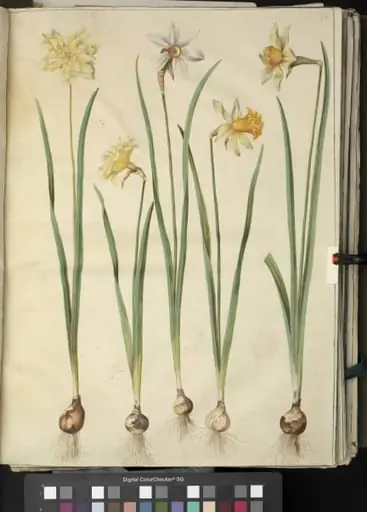 Narcissus pseudonarcissus; Narcissus poeticus (pinselilje); Narcissus ×incomparabilis (have-narcis)
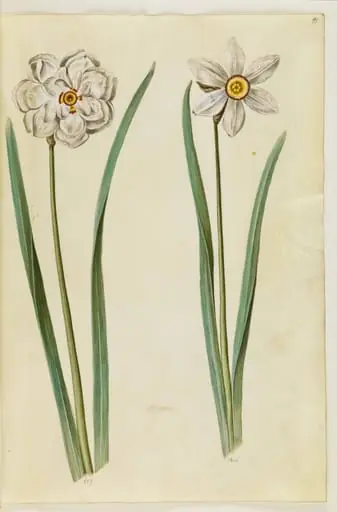 Narcissus poeticus (pinselilje)
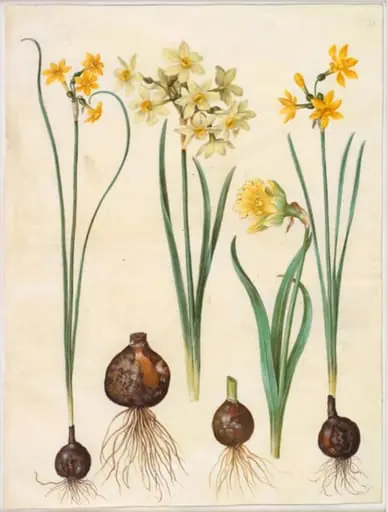 Narcissus jonquilla (siv-narcis); Narcissus tazetta aureus (guld-tazet); Narcissus pseudonarcissus bicolor (tofarvet påskelilje)
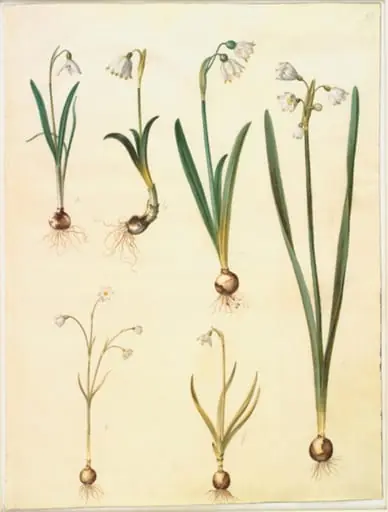 Galanthus nivalis (almindelig vintergæk); Leucojum vernum (dorotealilje); Leucojum aestivum (sommer-hvidblomme); Leucojum autumnale (høst-hvidblomme)