Artwork
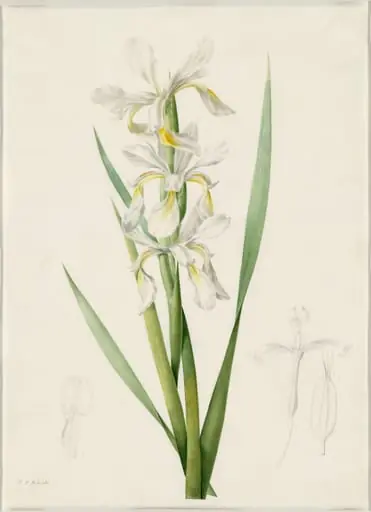
Les Liliacées: Crocus Sativus
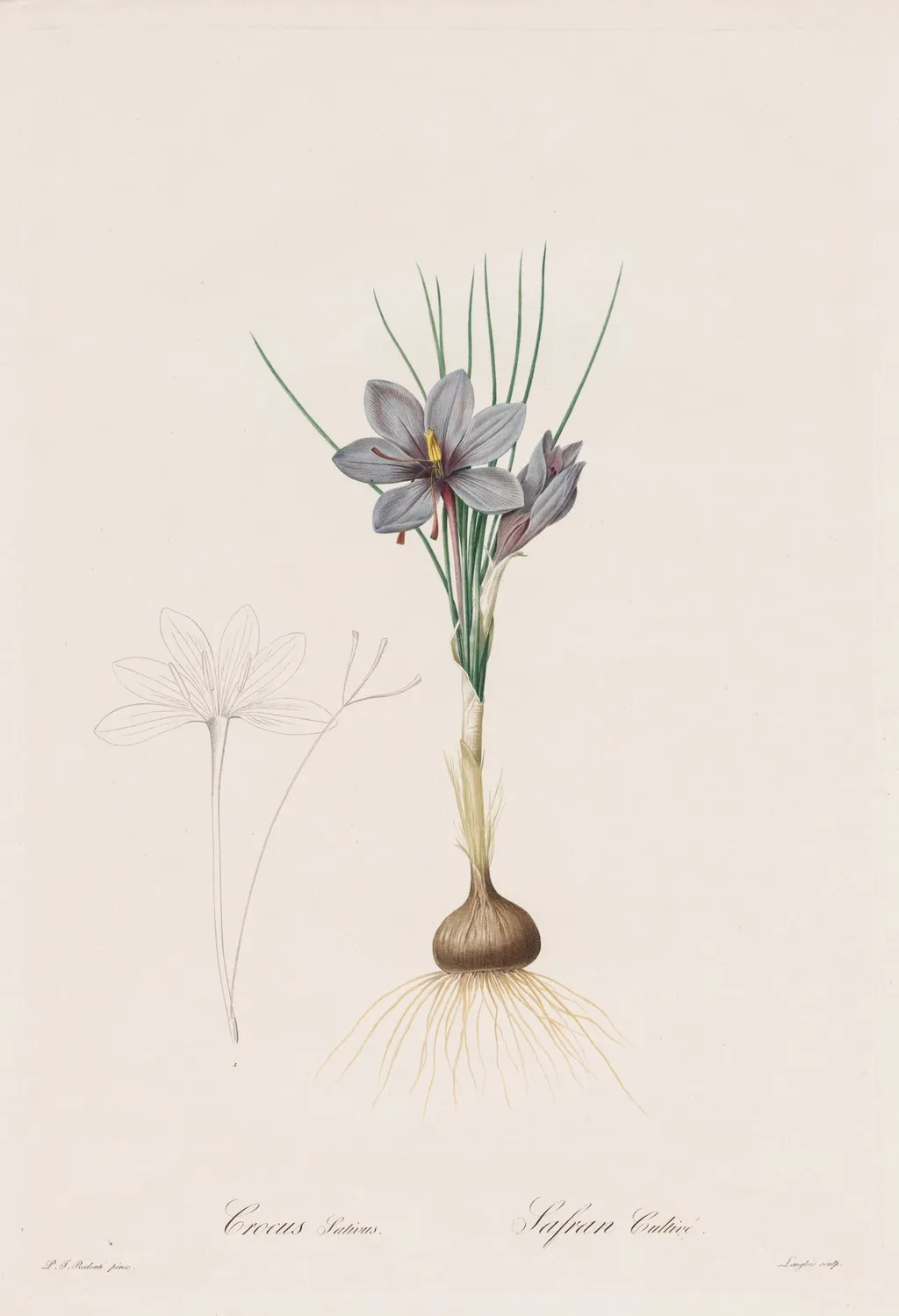
Les Liliacées: Crocus Sativus is a print by the Romanticist artist Henry Joseph Redouté. It dates from 1809 and is held in the collection of the Cleveland Museum of Art.
About this work
This painting shows a detailed drawing of a crocus flower.
It's very precise and colorful. The artist paid close attention to the flower's shape and texture.
The drawing is part of a bigger collection of flower paintings.
The artist was known for his detailed work on flowers and plants.
You can learn more about this style by looking at the work of artist: Henry Joseph Redouté (French, 1766–1853)
Overview
Created in 1809, this print titled Les Liliacées: Crocus Sativus is part of the Cleveland Museum of Art’s collection. It presents a single crocus flower rendered with meticulous detail, emphasizing the plant’s form and surface qualities.
Subject & Meaning
The image focuses exclusively on the crocus, a spring‑blooming bulbous plant, highlighting its delicate petals and subtle coloration. By isolating the flower, the work invites close observation of botanical structure rather than narrative content.
Technique & Style
Executed as a precise botanical illustration, the print employs fine line work and careful shading to convey texture and three‑dimensionality. The coloration is restrained yet accurate, reflecting the scientific illustration tradition of the early nineteenth century.
History & Provenance
The piece was produced by French artist Henry Joseph Redouté (1766–1853), renowned for his contributions to botanical art. It entered the Cleveland Museum of Art’s holdings through acquisition, joining a broader series of flower studies by the same hand.
Artist & collection
Artist
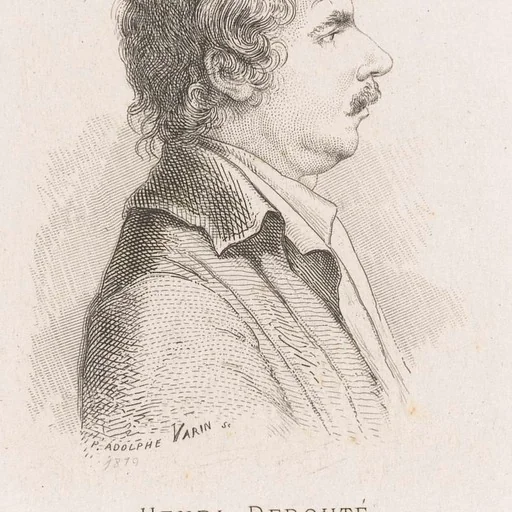
Henry Joseph Redouté (1766–1852) was a French artist, born in Saint-Hubert.

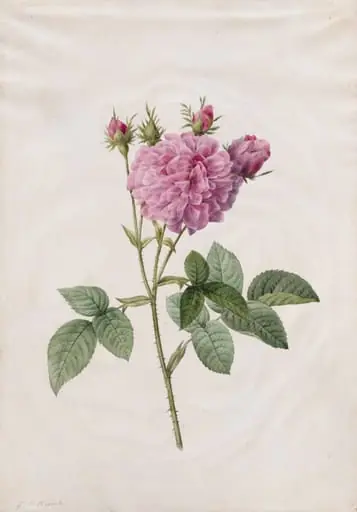
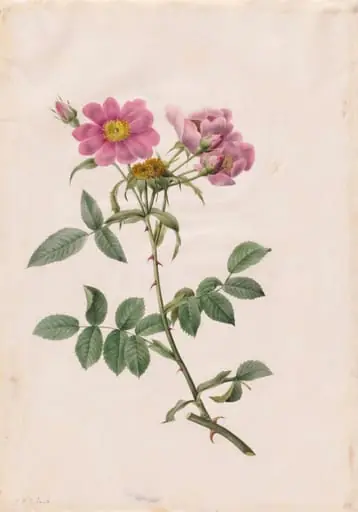
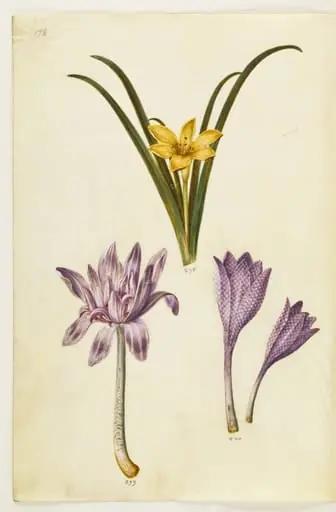 Sternbergia lutea (almindelig sternbergia); Colchicum autumnale (høst-tidløs); Colchicum variegatum (plettet tidløs)
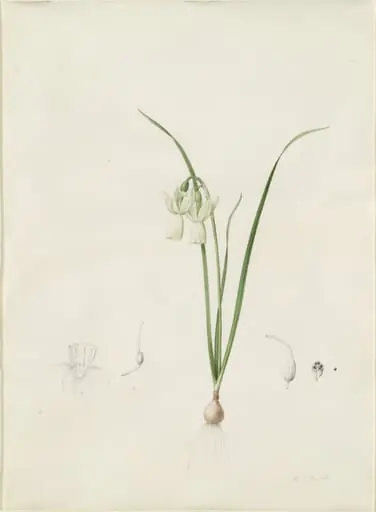 Narcissus calathinus
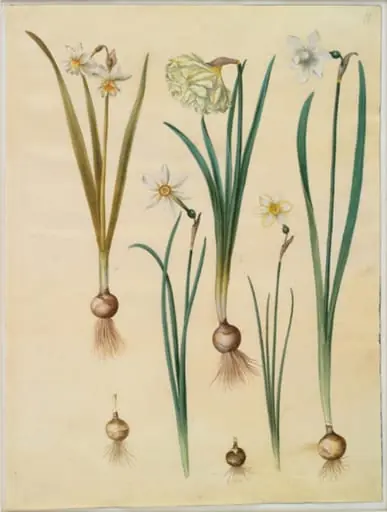 Narcissus ×medioluteus (toblomstret narcis); Narcissus pseudonarcissus; Narcissus (narcis); Narcissus poeticus (pinselilje); Narcissus ×tenuior
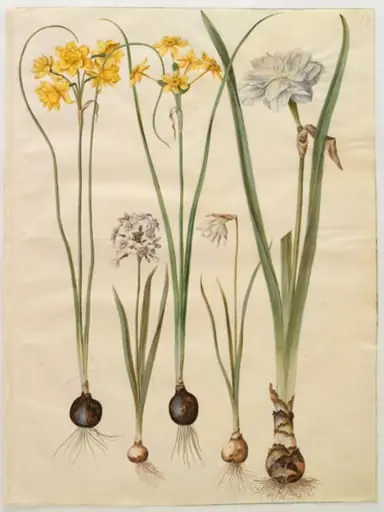 Narcissus jonquilla (siv-narcis); Narcissus tazetta (tazet); Narcissus pseudonarcissus moschatus (moskus-narcis); Narcissus poeticus (pinselilje)
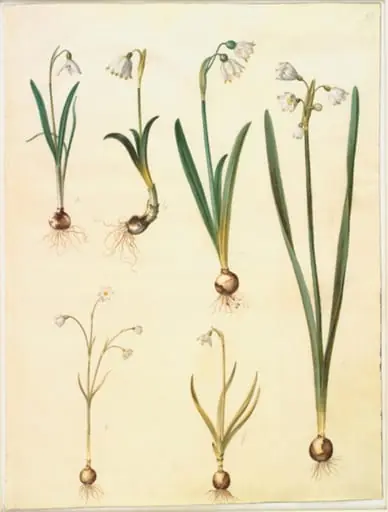 Galanthus nivalis (almindelig vintergæk); Leucojum vernum (dorotealilje); Leucojum aestivum (sommer-hvidblomme); Leucojum autumnale (høst-hvidblomme)
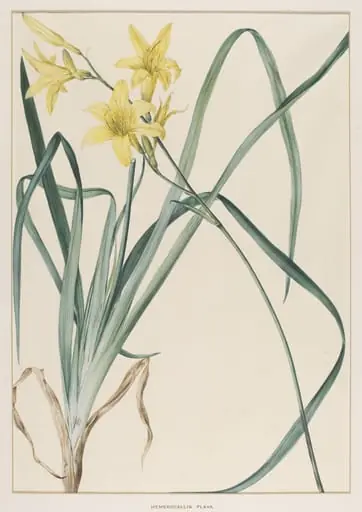 Hemerocallis Flava
 Iris ochroleuca