Artwork
Cyclamen purpurascens (ægte alpeviol); Cyclamen hederifolium (vedbendbladet alpeviol)
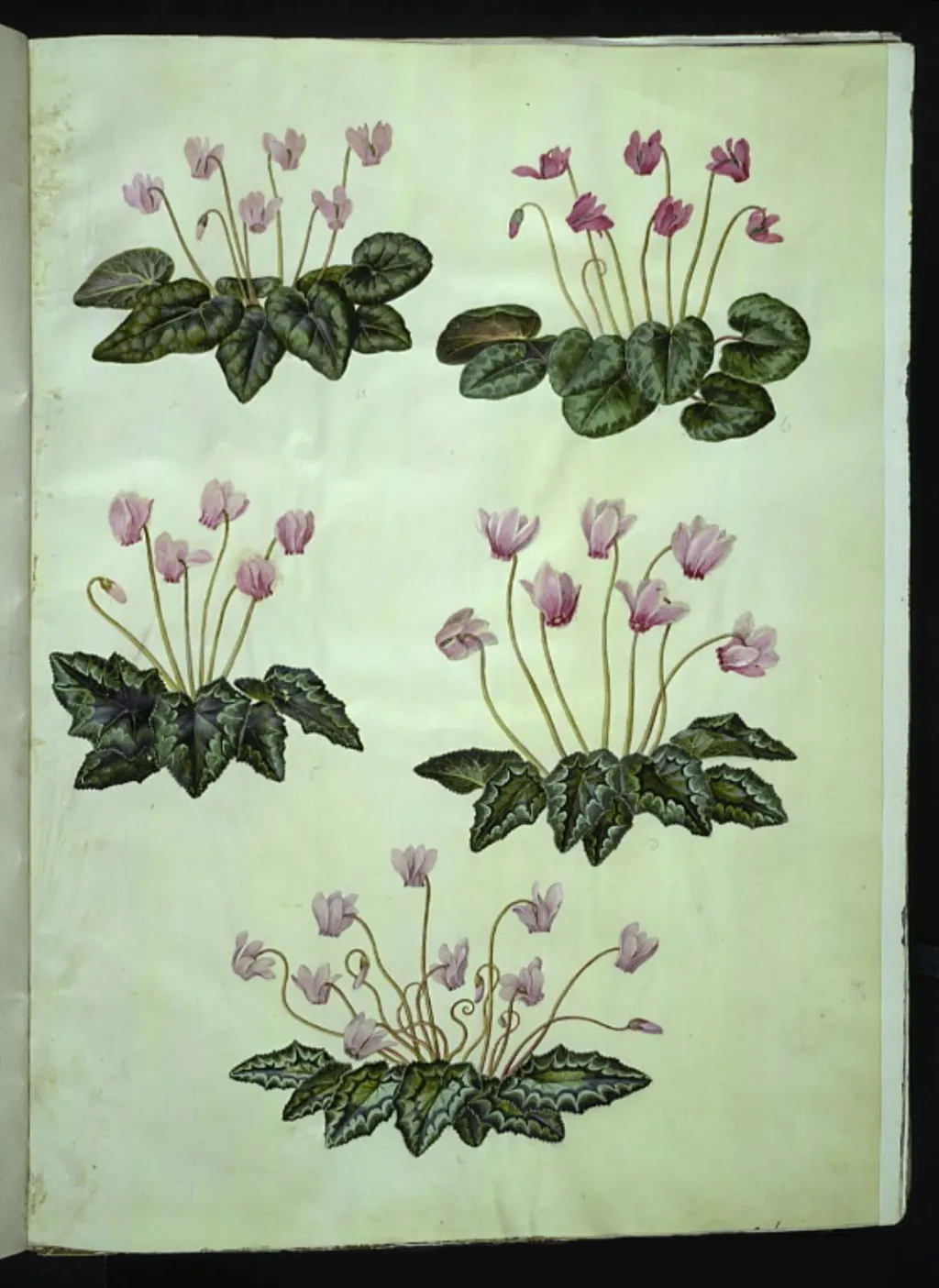
Cyclamen purpurascens (ægte alpeviol); Cyclamen hederifolium (vedbendbladet alpeviol) is an unspecified work on paper by Unknown. It dates from 1654 and is held in the collection of the Statens Museum for Kunst. This image, dated around 1654, depicts two species of cyclamen: Cyclamen purpurascens and Cyclamen hederifolium.
About this work
Overview
The work is part of the collection at the Museum of Ethnography, where it serves as a record of natural forms rather than a decorative piece.
This image, dated around 1654, depicts two species of cyclamen: Cyclamen purpurascens and Cyclamen hederifolium. Rendered in watercolor with glazing techniques, it presents the plants with botanical precision. The work is part of the collection at the Museum of Ethnography, where it serves as a record of natural forms rather than a decorative piece. Its small scale and quiet composition suggest an intent rooted in observation rather than ornamentation.
Subject & Meaning
The painting captures five distinct clusters of purple-flowered cyclamen, each with five petals and slender stems rising from glossy, veined leaves. The selection of two species reflects an interest in regional flora, possibly tied to early modern European botanical study. The absence of human figures or symbolic elements indicates a focus on scientific documentation, emphasizing the plants’ natural structure over allegorical or cultural associations.
Technique & Style
The artist employed watercolor with thin glazes to build subtle layers of color, allowing the delicate purples and deep greens to retain clarity without heaviness. Fine brushwork defines individual leaf veins and petal contours, lending a lifelike texture. The light background isolates the subjects, enhancing their precision. This method aligns with contemporary botanical illustration practices that prioritized accuracy over artistic flourish.
History & Provenance
Created circa 1654, the work’s origin is linked to an unnamed artist identified only by a catalog number. It entered the Museum of Ethnography’s holdings through early collections of natural history materials, likely acquired during a period when European institutions systematically documented plant species. Its survival suggests it was valued as a reference tool, though its specific commission or use remains undocumented.
Context
In mid-17th century Europe, detailed plant illustrations flourished alongside the rise of scientific inquiry and herbarium compilation. This image fits within a broader trend of naturalists recording regional flora with increasing accuracy. Though not published, its style mirrors illustrated manuscripts produced for scholars and collectors, reflecting a growing emphasis on empirical observation over classical or mythological representations of nature.
Legacy
The painting contributes to a historical archive of botanical documentation, preserving visual records of species now subject to ecological change. While not widely exhibited, it remains a quiet testament to the discipline of pre-modern natural history art. Its endurance in museum storage underscores its role as a factual resource rather than a celebrated artwork, valued for its fidelity over aesthetic impact.
Artist & collection

 Domestic Scene
 Giacomo and Cardinal Marco, investing Andrea, Abbot of San Zeno, with his Benefice
 The Nymph of Fontainebleau
 Portrait of a Woman
 Madonna and Child with Saints in the Enclosed Garden
 Venus and Minerva
 Family Group of Four on Sofa
 Wall painting from Room H of the Villa of P. Fannius Synistor at Boscoreale
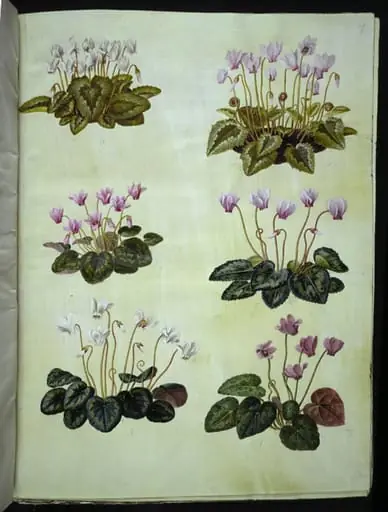 Cyclamen hederifolium (vedbendbladet alpeviol); Cyclamen purpurascens (ægte alpeviol)
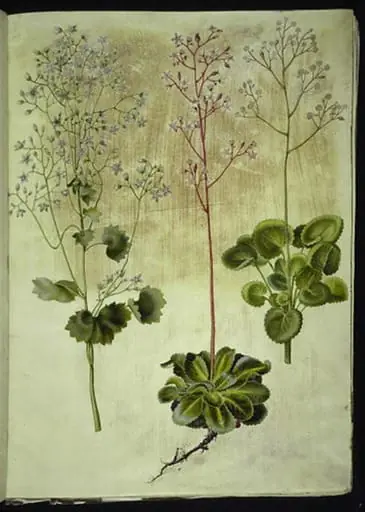 Saxifraga rotundifolia (rundbladet stenbræk); Saxifraga umbrosa (skygge-stenbræk); Saxifraga geum (porcelænsblomst)
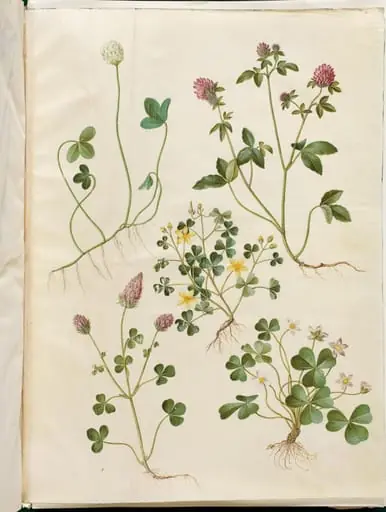 Trifolium repens (hvid-kløver); Trifolium pratense (rød-kløver); Oxalis corniculata (nedliggende surkløver); Trifolium incarnatum (blod-kløver); Oxalis acetosella (skovsyre)
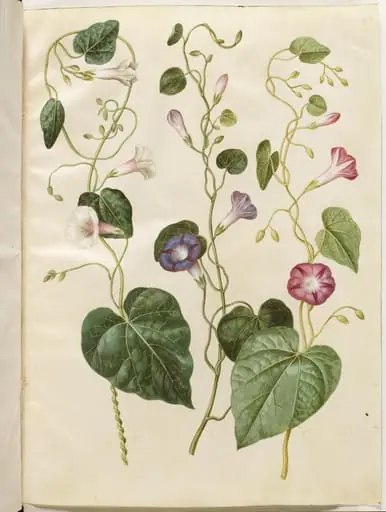 Ipomoea purpurea (purpur-pragtsnerle)
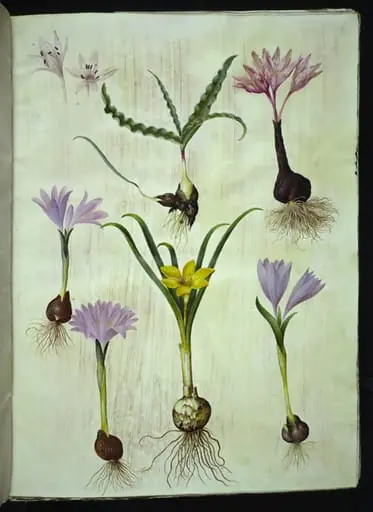 Colchicum variegatum (plettet tidløs); Bulbocodium vernum (vår-lysblomst); Sternbergia lutea (almindelig sternbergia)
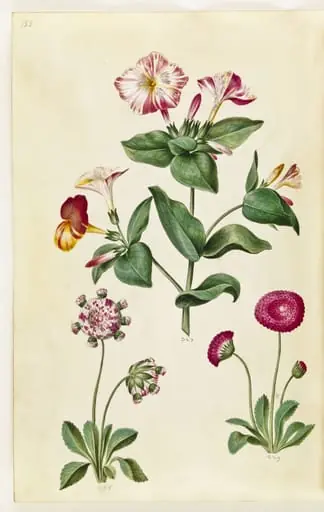 Mirabilis jalapa (vidunderblomst); Bellis perennis (almindelig tusindfryd)
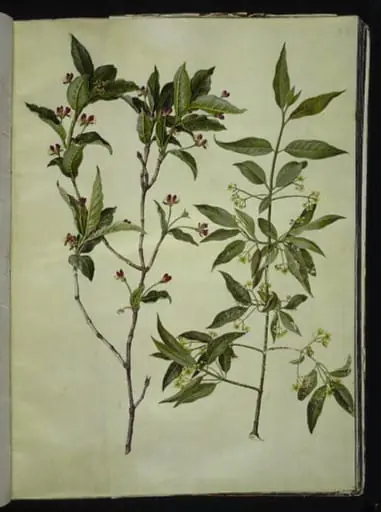 Lonicera alpigena (alpe-gedeblad); Euonymus europaeus (almindelig benved)
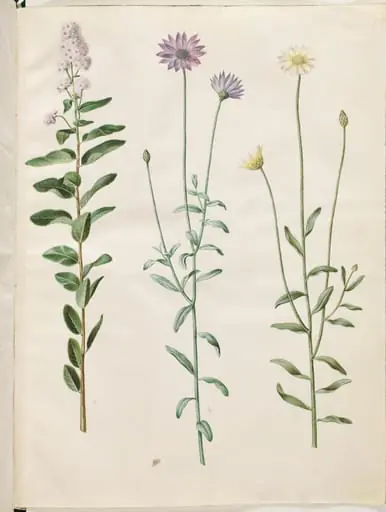 Spiraea salicifolia (pilebladet spiræa); Catananche caerulea (blå rasleblomst)
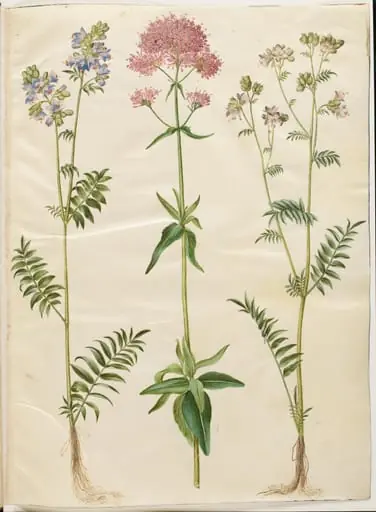 Polemonium caeruleum (almindelig jakobsstige); Centranthus ruber (rød sporebaldrian)
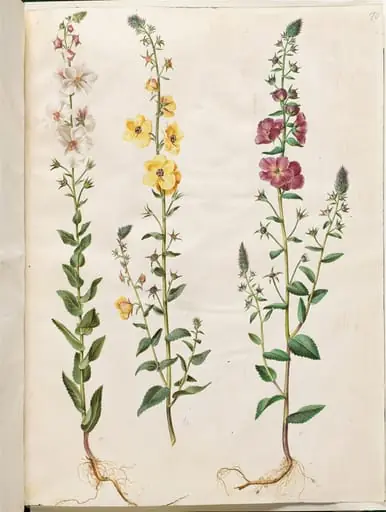 Verbascum blattaria (klase-kongelys); Verbascum phoeniceum (purpur-kongelys)
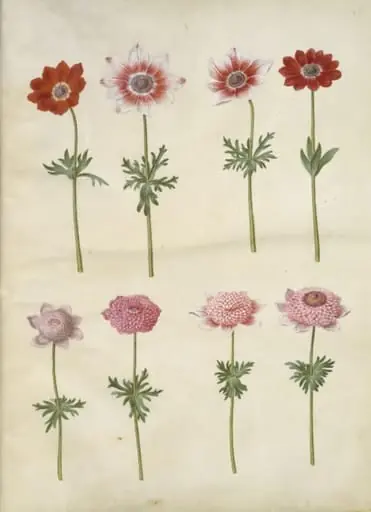 Anemone coronaria L. (fransk anemone); Anemone pavonina (påfugle-anemone)
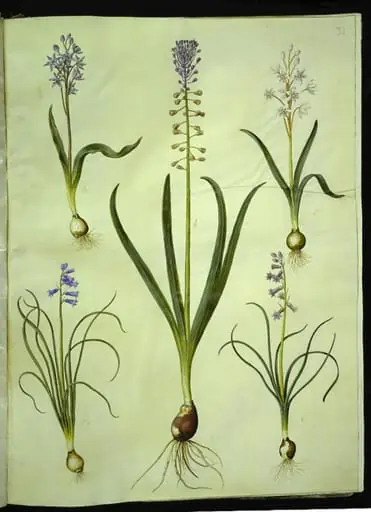 Scilla bifolia (tobladet skilla); Muscari comosum (duskhyacint); Brimeura amethystina (pyrenæisk hyacint)