Artwork
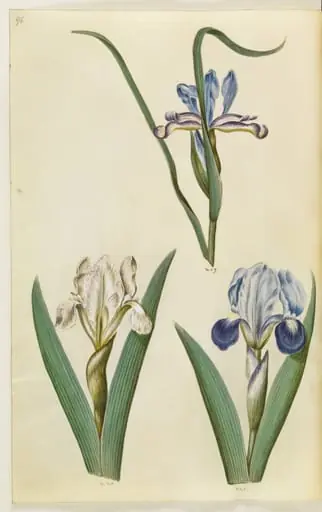
Iris pallida (bleg iris); Iris variegata (broget iris); Iris sibirica (sibirisk iris)
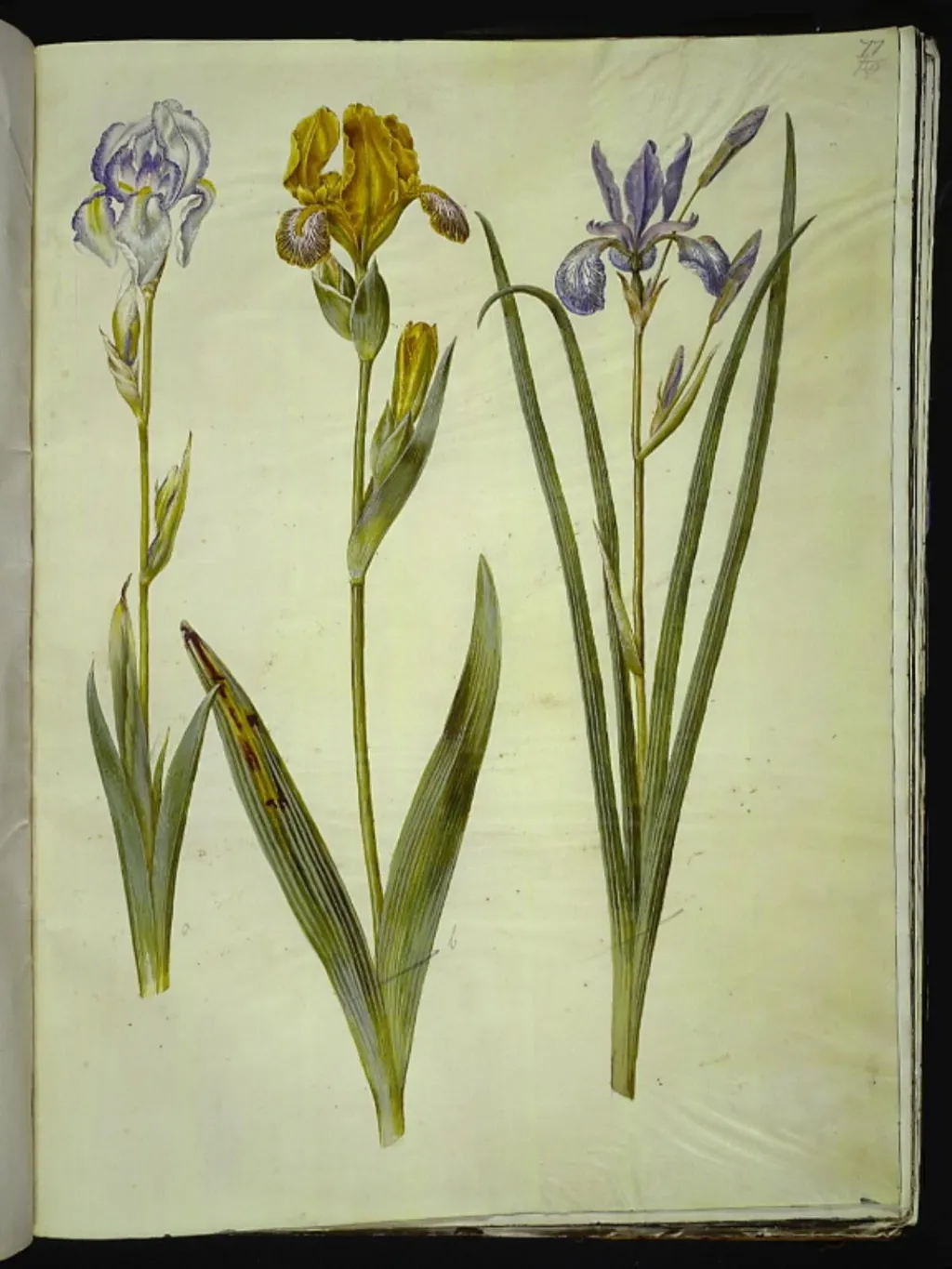
Iris pallida (bleg iris); Iris variegata (broget iris); Iris sibirica (sibirisk iris) is an unspecified work on paper by Unknown. It dates from 1654 and is held in the collection of the Statens Museum for Kunst. This work depicts three species of iris—Iris pallida, Iris variegata, and Iris sibirica—painted around 1654.
About this work
Overview
The artist’s focus on structural clarity aligns with scientific illustration practices of the mid-seventeenth century.
This work depicts three species of iris—Iris pallida, Iris variegata, and Iris sibirica—painted around 1654. Rendered in watercolor on paper, the composition presents each plant with botanical precision. The background is left unadorned, emphasizing the natural forms without distraction. The artist’s focus on structural clarity aligns with scientific illustration practices of the mid-seventeenth century.
Subject & Meaning
The three irises represent distinct botanical varieties, each identified by its common and Latin name. Their inclusion suggests an interest in classification and regional flora, possibly for educational or archival purposes. The absence of insects, soil, or seasonal context implies a deliberate neutrality, prioritizing taxonomic accuracy over symbolic or decorative intent.
Technique & Style
The artist employed delicate watercolor washes to capture the translucent quality of petals and the sharp edges of leaves. Subtle gradations in purple, yellow, and white create volume without heavy shading. Fine brushwork defines veins and textures, while the flat white ground enhances the sense of isolation and clarity. The method reflects a tradition of observational drawing rooted in natural philosophy.
History & Provenance
The painting resides in the Museum of Ethnography, though its origin as a scientific study rather than a cultural artifact is evident. It likely entered the collection through academic or colonial networks of the period, where botanical specimens were documented for European audiences. Its survival suggests it was valued for its detail, even if its creator remains unidentified.
Context
Created during a time of expanding botanical inquiry, the work aligns with the rise of illustrated herbals and plant collections in Northern Europe. Artists and naturalists collaborated to record new species brought from abroad, often using watercolor for its portability and precision. This piece reflects a broader movement to systematize nature through visual means.
Legacy
Though unsigned and unattributed, the painting contributes to a lineage of botanical art that prioritized fidelity over ornamentation. Its preservation in an ethnographic museum underscores how such works were later reclassified as cultural records of scientific practice. It remains a quiet testament to the discipline of close observation in pre-modern natural history.
Artist & collection

 Domestic Scene
 Giacomo and Cardinal Marco, investing Andrea, Abbot of San Zeno, with his Benefice
 The Nymph of Fontainebleau
 Portrait of a Woman
 Madonna and Child with Saints in the Enclosed Garden
 Venus and Minerva
 Family Group of Four on Sofa
 Wall painting from Room H of the Villa of P. Fannius Synistor at Boscoreale
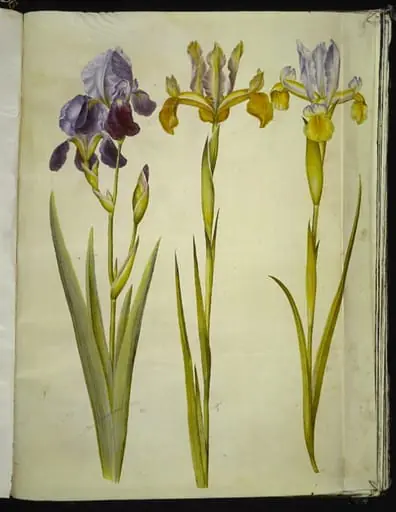 Iris ×sambucina (hylde-iris); Iris latifolia (engelsk iris)
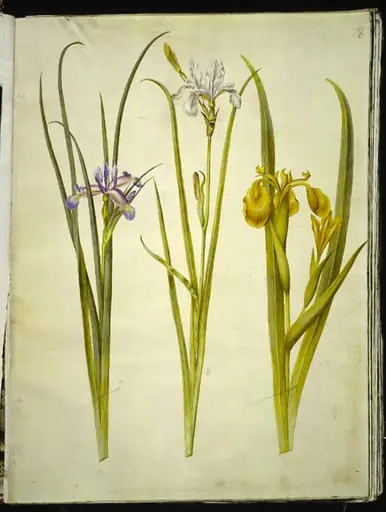 Iris graminea (græsbladet iris); Iris sibirica (sibirisk iris); Iris pseudacorus (gul iris)
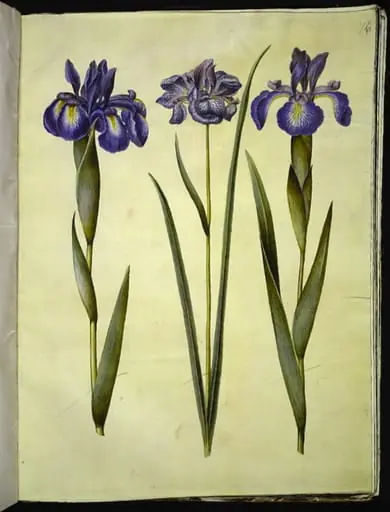 Iris latifolia (engelsk iris); Iris sibirica (sibirisk iris)
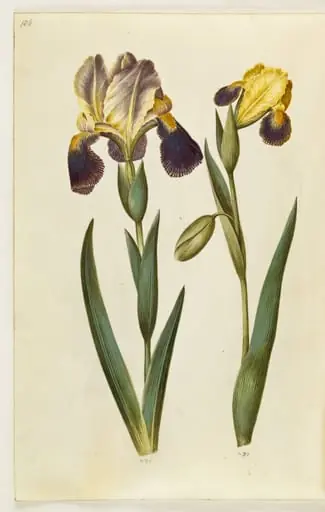 Iris ×germanica eller Iris ×sambucina (have-iris eller hylde-iris); Iris variegata (broget iris)
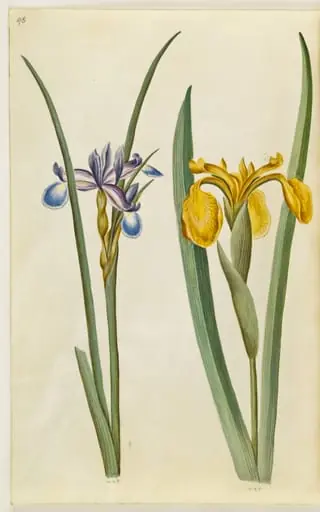 Iris graminea (græsbladet iris); Iris pseudacorus (gul iris)
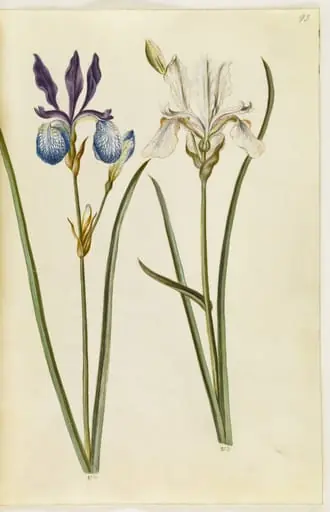 Iris sibirica (sibirisk iris)
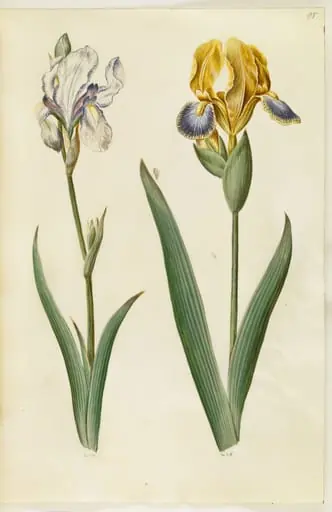 Iris pallida (bleg iris); Iris variegata (broget iris)
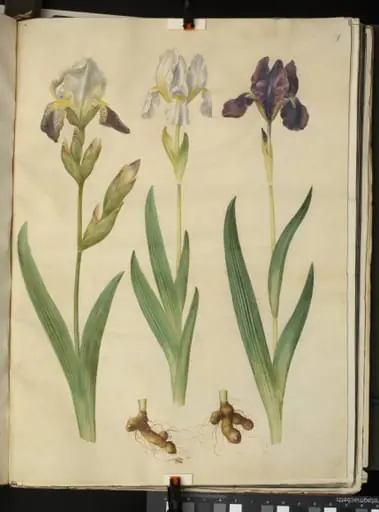 Iris ×squalens (iris-hybrid); Iris (iris)
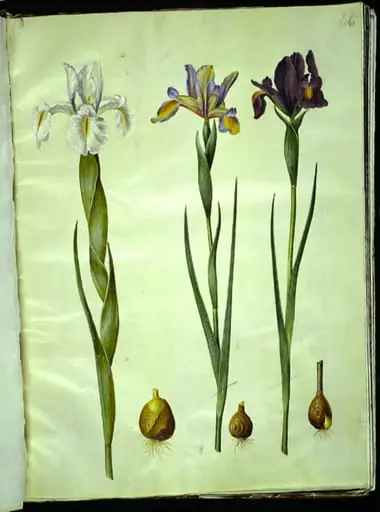 Iris latifolia (engelsk iris); Iris xiphium (spansk iris)
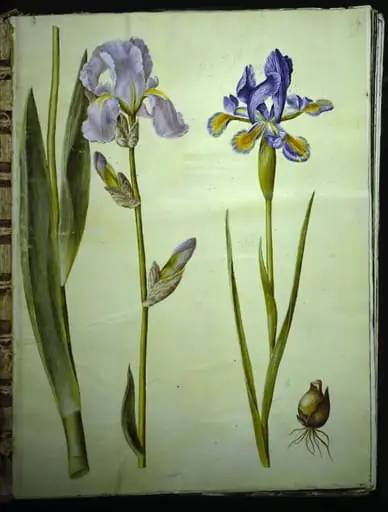 Iris ×germanica (have-iris); Iris xiphium (spansk iris)
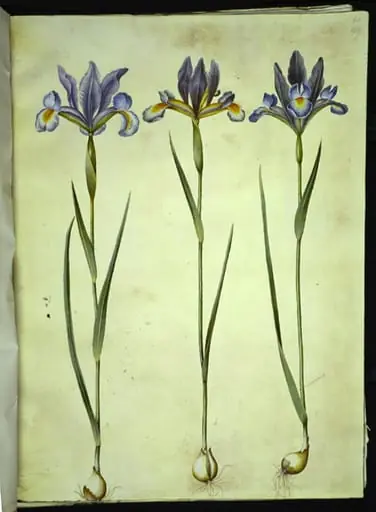 Iris xiphium (spansk iris)
 Iris graminea (græsbladet iris); Iris lutescens eller Iris pumila (?) (dværg-iris eller lav iris)