Artwork
Narcissus pseudonarcissus minor; Narcissus pseudonarcissus (påskelilje); Narcissus ×tenuior; Narcissus bulbocodium (krinoline-narcis); Narcissus pseudonarcissus bicolor (tofarvet påskelilje)
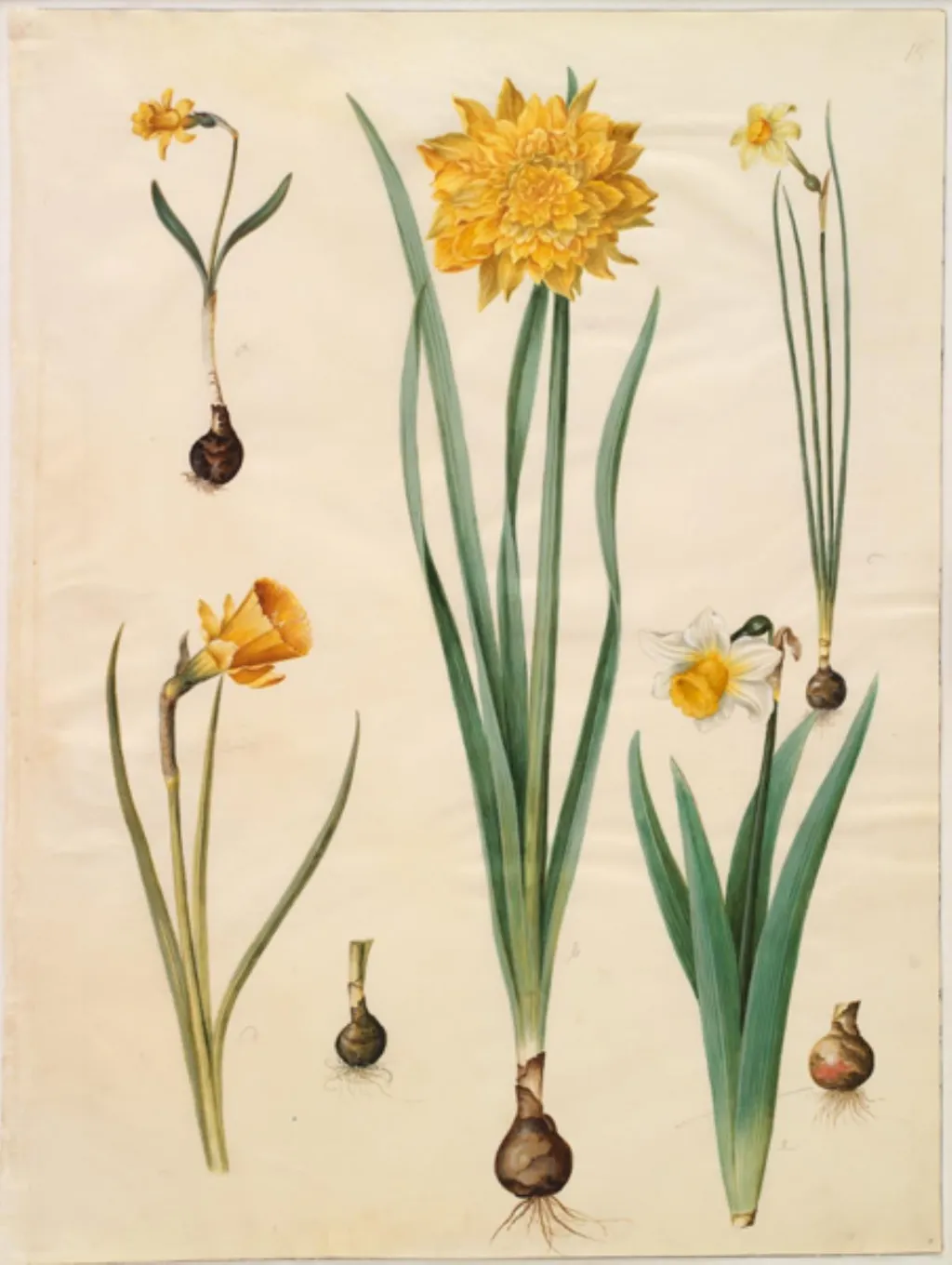
Narcissus pseudonarcissus minor; Narcissus pseudonarcissus (påskelilje); Narcissus ×tenuior; Narcissus bulbocodium (krinoline-narcis); Narcissus pseudonarcissus bicolor (tofarvet påskelilje) is an unspecified work on paper by Unknown. It dates from 1654 and is held in the collection of the Statens Museum for Kunst. This image, dated around 1654, depicts five distinct varieties of wild daffodils, each rendered with botanical precision.
About this work
Overview
This image, dated around 1654, depicts five distinct varieties of wild daffodils, each rendered with botanical precision.
This image, dated around 1654, depicts five distinct varieties of wild daffodils, each rendered with botanical precision. Created by an unnamed artist, the work is part of the Museum of Ethnography’s collection. Unlike decorative floral paintings common in the period, this piece emphasizes anatomical accuracy, showing not only the blooms but also their bulbs and root systems—details typically reserved for scientific documentation rather than artistic display.
Subject & Meaning
The painting presents five species or variants of Narcissus, including common yellow, bicolored, and smaller forms, each labeled with their contemporary names. By including bulbs and roots, the artist shifts focus from aesthetic appeal to biological structure, suggesting an intent to aid identification or study. This approach reflects a growing 17th-century interest in classifying flora, aligning the image with early botanical science rather than ornamental tradition.
Technique & Style
Executed in watercolor, the work uses translucent layers to capture subtle gradations in petal color—from deep yellow to near-white—and the delicate texture of roots and leaves. The stems are rendered with fine, controlled lines, while the bulbs are modeled with muted browns to suggest earth-bound form. The composition is orderly and unembellished, prioritizing clarity over ornamentation, consistent with the conventions of scientific illustration of the era.
History & Provenance
The artist remains unidentified, though the work’s style and date place it within a circle of Northern European naturalists active in the mid-17th century. It entered the Museum of Ethnography’s holdings through a collection of botanical records, likely acquired during a period of expanding European interest in plant taxonomy. Its preservation suggests it was valued as a reference tool rather than a decorative object.
Context
In the 1650s, European naturalists were systematically documenting native and imported plants, often commissioning detailed illustrations for herbaria and botanical texts. This image fits within that movement, where accuracy surpassed artistic flourish. Similar works were used by apothecaries, gardeners, and scholars to distinguish between species, particularly as new varieties were introduced through trade and exploration.
Legacy
Though not widely known outside specialist circles, the image exemplifies the transition from decorative naturalism to empirical botany. Its inclusion in a museum of ethnography underscores how plant knowledge was intertwined with cultural and scientific practices of the time. Today, it serves as a quiet testament to the quiet labor of early scientific observation, where precision became a form of understanding.
Artist & collection

 Domestic Scene
 Giacomo and Cardinal Marco, investing Andrea, Abbot of San Zeno, with his Benefice
 The Nymph of Fontainebleau
 Portrait of a Woman
 Madonna and Child with Saints in the Enclosed Garden
 Venus and Minerva
 Family Group of Four on Sofa
 Wall painting from Room H of the Villa of P. Fannius Synistor at Boscoreale
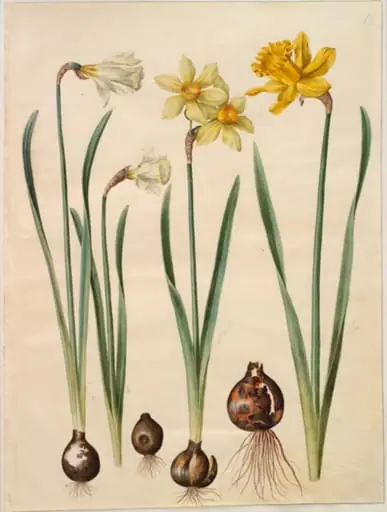 Narcissus pseudonarcissus moschatus (moskus-narcis); Narcissus ×medioluteus (toblomstret narcis); Narcissus pseudonarcissus major (stor påskelilje)
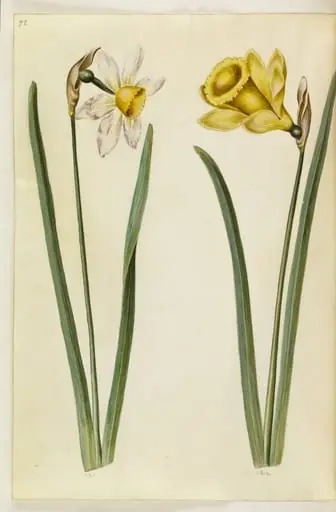 Narcissus ×incomparabilis (have-narcis); Narcissus pseudonarcissus (påskelilje)
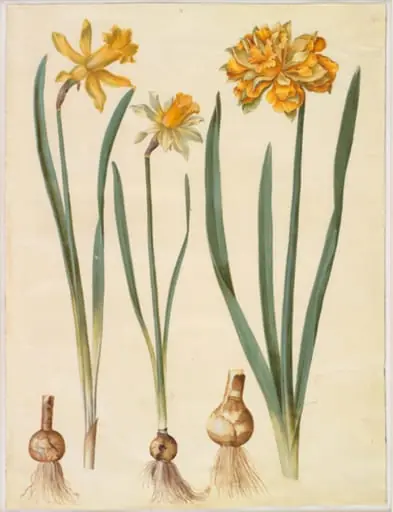 Narcissus pseudonarcissus major (stor påskelilje); Narcissus pseudonarcissus bicolor (tofarvet påskelilje); Narcissus pseudonarcissus
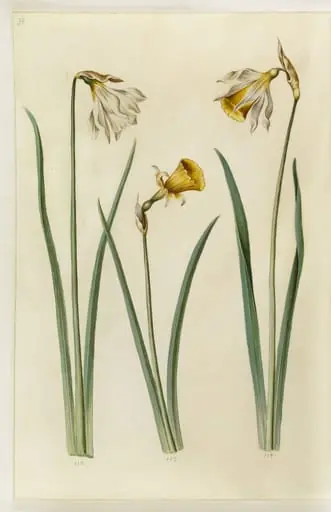 Narcissus pseudonarcissus moschatus (moskus-narcis); Narcissus bulbocodium (krinoline-narcis); Narcissus pseudonarcissus (påskelilje)
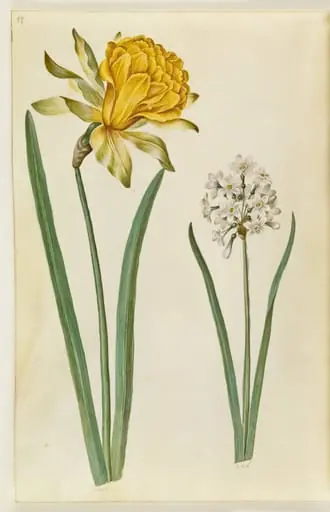 Narcissus pseudonarcissus (påskelilje); Narcissus tazetta (tazet)
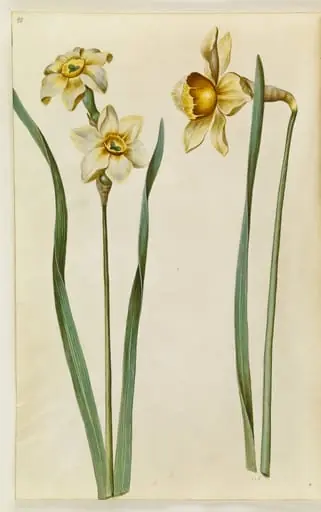 Narcissus ×medioluteus (toblomstret narcis); Narcissus ×incomparabilis (have-narcis)
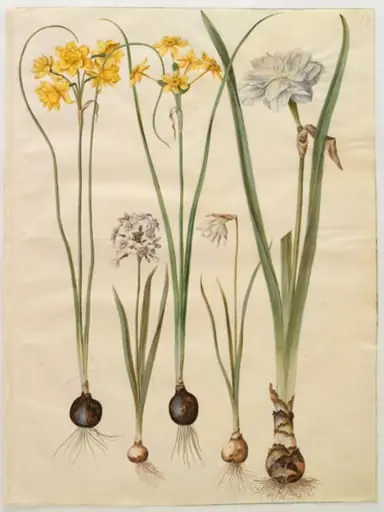 Narcissus jonquilla (siv-narcis); Narcissus tazetta (tazet); Narcissus pseudonarcissus moschatus (moskus-narcis); Narcissus poeticus (pinselilje)
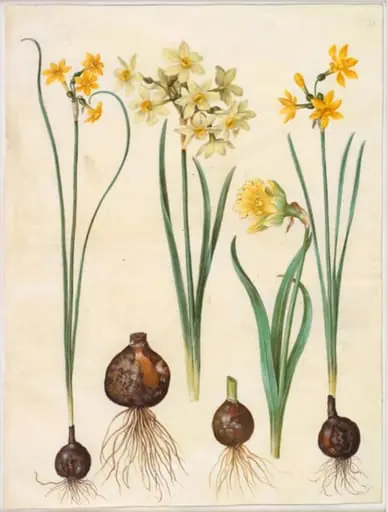 Narcissus jonquilla (siv-narcis); Narcissus tazetta aureus (guld-tazet); Narcissus pseudonarcissus bicolor (tofarvet påskelilje)
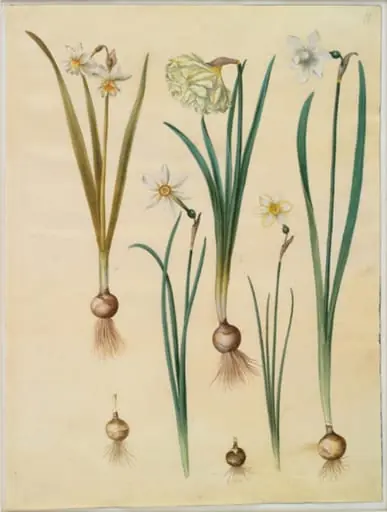 Narcissus ×medioluteus (toblomstret narcis); Narcissus pseudonarcissus; Narcissus (narcis); Narcissus poeticus (pinselilje); Narcissus ×tenuior