Artwork
Adonis vernalis (vår-adonis); Cypripedium calceolus (stor fruesko); Ranunculus asiaticus (have-ranunkel); Ranunculus (art af ranunkel)
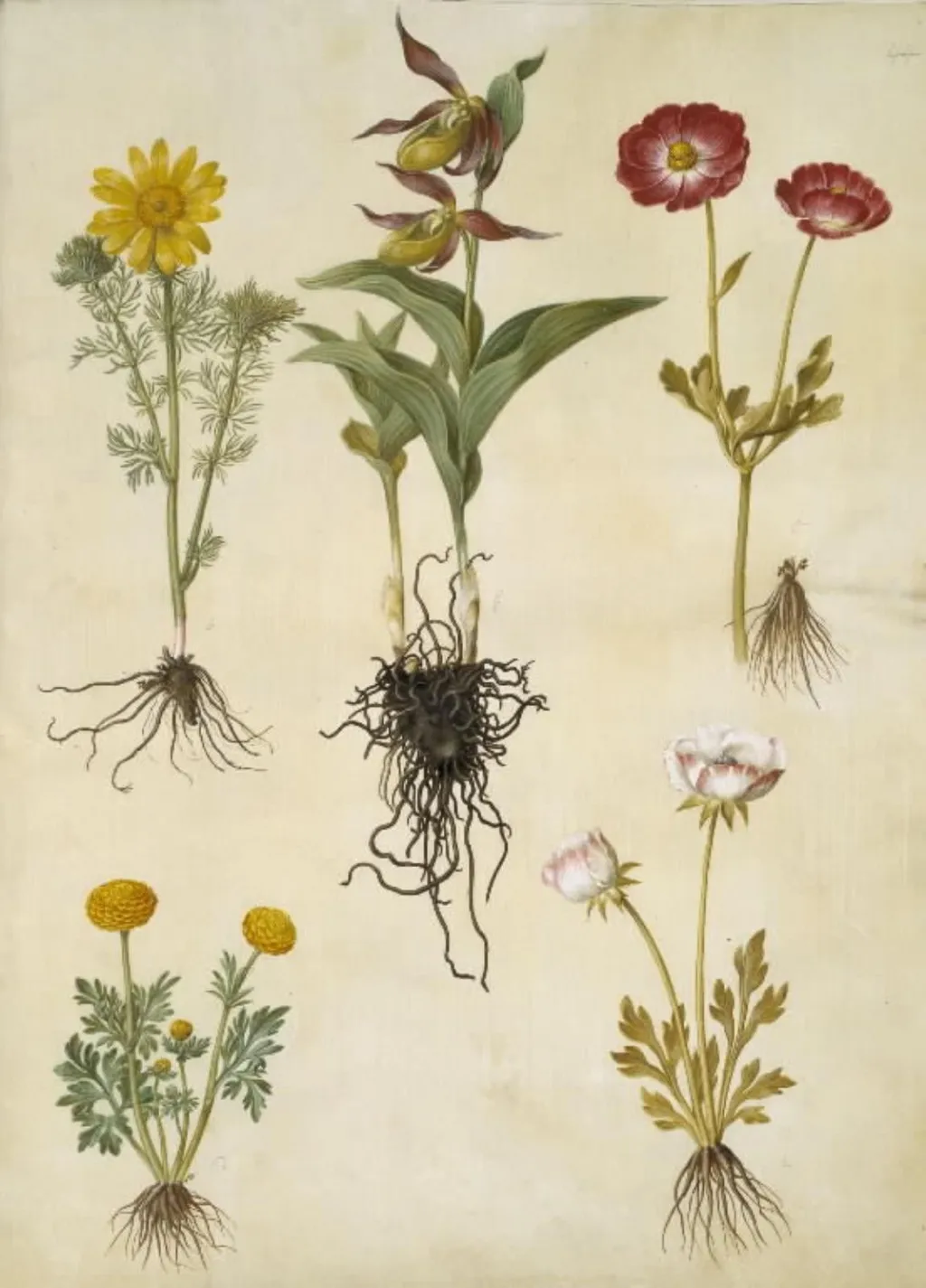
Adonis vernalis (vår-adonis); Cypripedium calceolus (stor fruesko); Ranunculus asiaticus (have-ranunkel); Ranunculus (art af ranunkel) is an unspecified work on paper by Unknown. It dates from 1654 and is held in the collection of the Statens Museum for Kunst.
About this work
Overview
The plants are shown with their root systems exposed, a distinctive feature that sets this work apart from typical floral still lifes of the period.
This image, dated around 1654, presents a group of four flowering plants: Adonis vernalis, Cypripedium calceolus, Ranunculus asiaticus, and an unspecified Ranunculus species. Rendered in a naturalistic style, the composition emphasizes botanical accuracy over decorative arrangement. The plants are shown with their root systems exposed, a distinctive feature that sets this work apart from typical floral still lifes of the period. It is held in the collection of the Museum of Ethnography.
Subject & Meaning
The selected plants represent European and Near Eastern species, each with known medicinal or cultural associations in early modern botany. By depicting them with roots intact, the image suggests a scientific intent—perhaps for study, classification, or teaching. The absence of ornamental elements or symbolic motifs indicates a focus on botanical documentation rather than allegory or aesthetic display.
Technique & Style
The painting employs fine brushwork to render delicate petals, stems, and intricate root structures in varying shades of yellow, red, and white. The light beige background isolates the specimens, enhancing their anatomical clarity. Roots are rendered with individualized detail, suggesting close observation and possibly direct study from live specimens. The style reflects a blend of artistic precision and empirical interest common in 17th-century natural history illustration.
History & Provenance
Attributed to an artist identified as 35199_person, the work likely originated in a scholarly or medical context, possibly linked to a botanical garden or private collection. Its presence in the Museum of Ethnography implies it was later acquired as part of a broader ethnographic or scientific archive, though its original purpose remains undocumented. No records of prior ownership or exhibition history are publicly available.
Context
Created during a period of expanding botanical inquiry in Europe, the image aligns with the rise of systematic plant study. Artists and naturalists increasingly collaborated to produce accurate visual records of flora, often for use in herbals or university instruction. The inclusion of roots reflects a growing interest in plant anatomy beyond surface appearance, mirroring trends seen in the works of contemporaries like Rembrandt’s botanical sketches or the illustrations of John Ray.
Legacy
Though not widely known, the image contributes to a body of early scientific visual documentation that helped transition botanical illustration from decorative art to empirical science. Its preservation in an ethnographic museum underscores its value as a historical artifact of knowledge production, rather than as a work of fine art. It remains a quiet testament to the meticulous observation of nature in the 17th century.
Artist & collection

 Domestic Scene
 Giacomo and Cardinal Marco, investing Andrea, Abbot of San Zeno, with his Benefice
 The Nymph of Fontainebleau
 Portrait of a Woman
 Madonna and Child with Saints in the Enclosed Garden
 Venus and Minerva
 Family Group of Four on Sofa
 Wall painting from Room H of the Villa of P. Fannius Synistor at Boscoreale
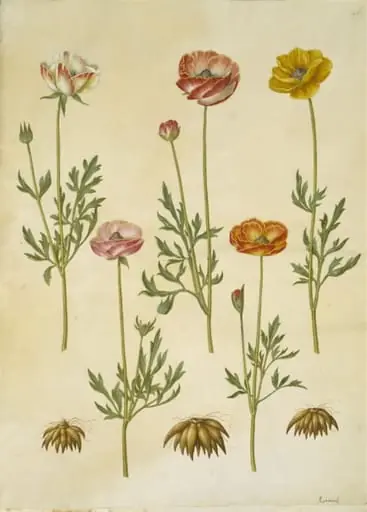 Ranunculus asiaticus (have-ranunkel)
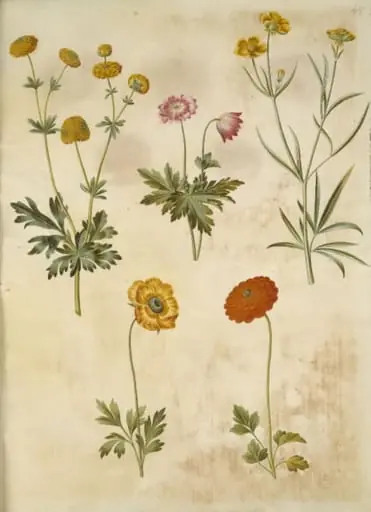 Ranunculus acris (guldknap-ranunkel); Anemone nemorosa (hvid anemone); Ranunculus illyricus (steppe-ranunkel); Ranunculus asiaticus (have-ranunkel)
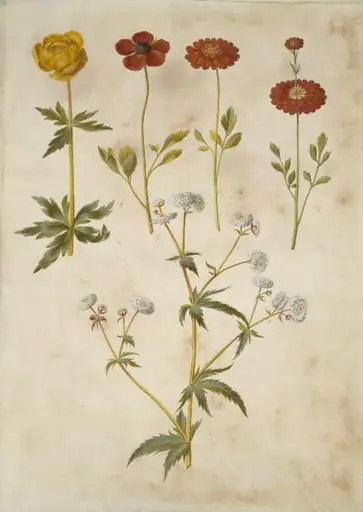 Trollius europaeus (europæisk engblomme); Ranunculus asiaticus (have-ranunkel); Ranunculus aconitifolius (sølvknap-ranunkel)
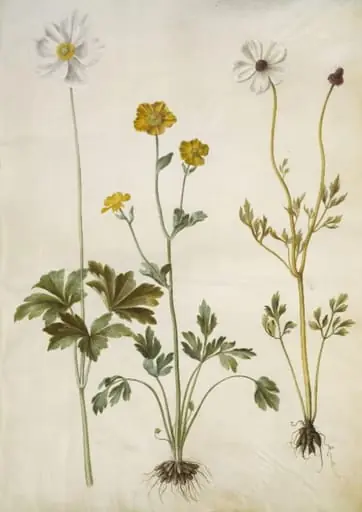 Anemone sylvestris (sommer-anemone); Ranunculus monspeliacus (silke-ranunkel); Ranunculus asiaticus (have-ranunkel)
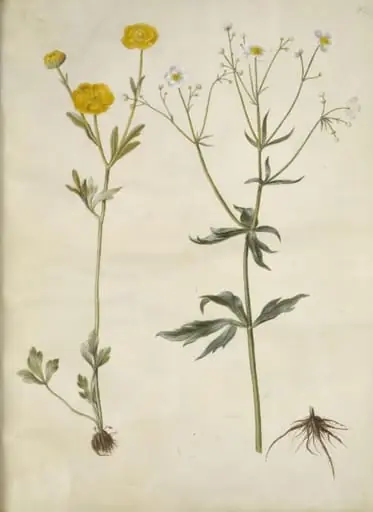 Ranunculus monspeliacus (silke-ranunkel); Ranunculus aconitifolius (stormhatbladet ranunkel)
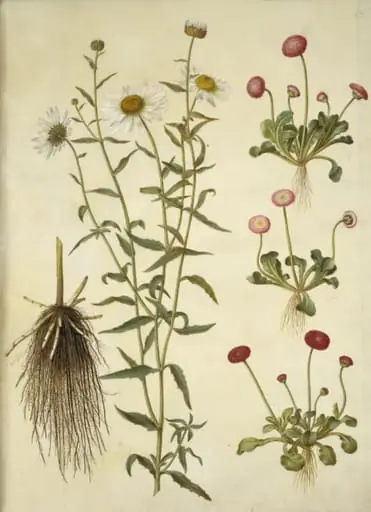 Leucanthemum vulgare (hvid okseøje); Bellis perennis (almindelig tusindfryd)
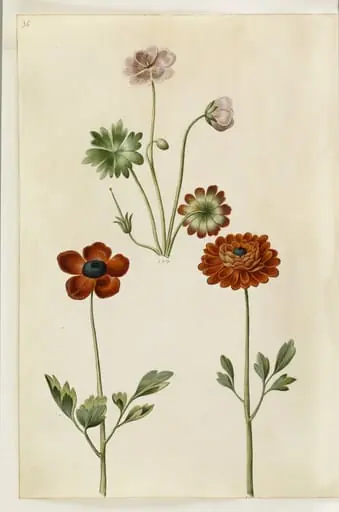 Geranium sanguineum striatum (stribet storkenæb); Ranunculus asiaticus (have-ranunkel)
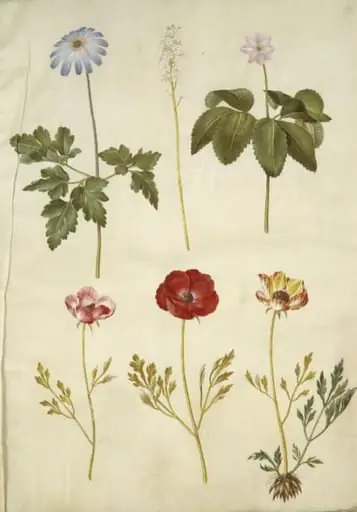 Anemone apennina (appenniner-anemone); Tiarella cordifolia (almindelig skumblomst); Anemone trifolia (trilling-anemone); Ranunculus asiaticus (have-ranunkel)
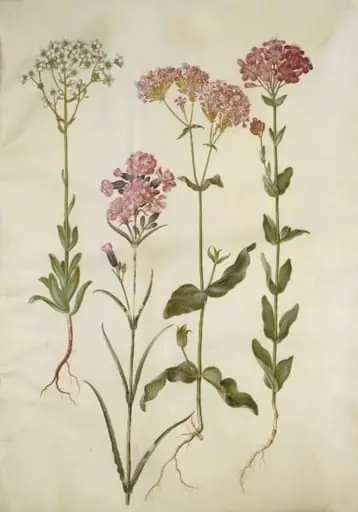 Saxifraga paniculata (klippe-stenbræk); Silene viscaria (almindelig tjærenellike); Silene armeria (knippe-limurt);
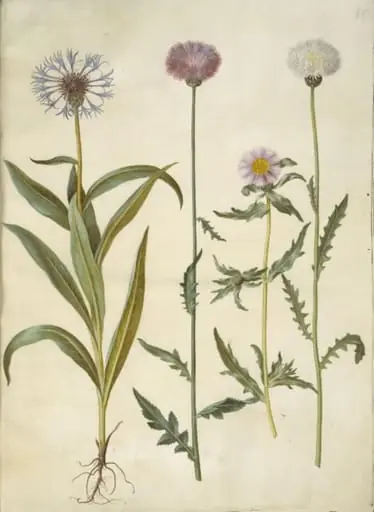 Centaurea montana (bjerg-knopurt); Amberboa moschata (duft-sultan)
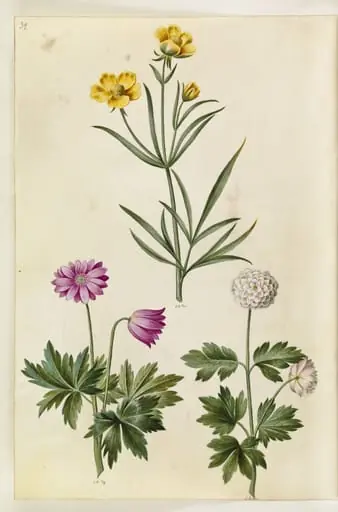 Ranunculus illyricus (steppe-ranunkel); Anemone nemorosa (hvid anemone)