Artwork
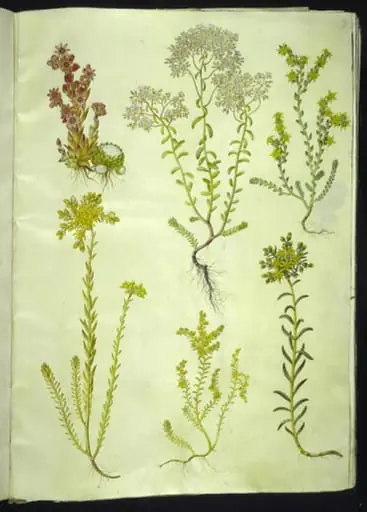
Sedum album (hvid stenurt); Sedum anacampseros (rundbladet stenurt); Sedum (stenurt); Suaeda vera (busk-strandgåsefod); Sedum rupestre (bjerg-stenurt)
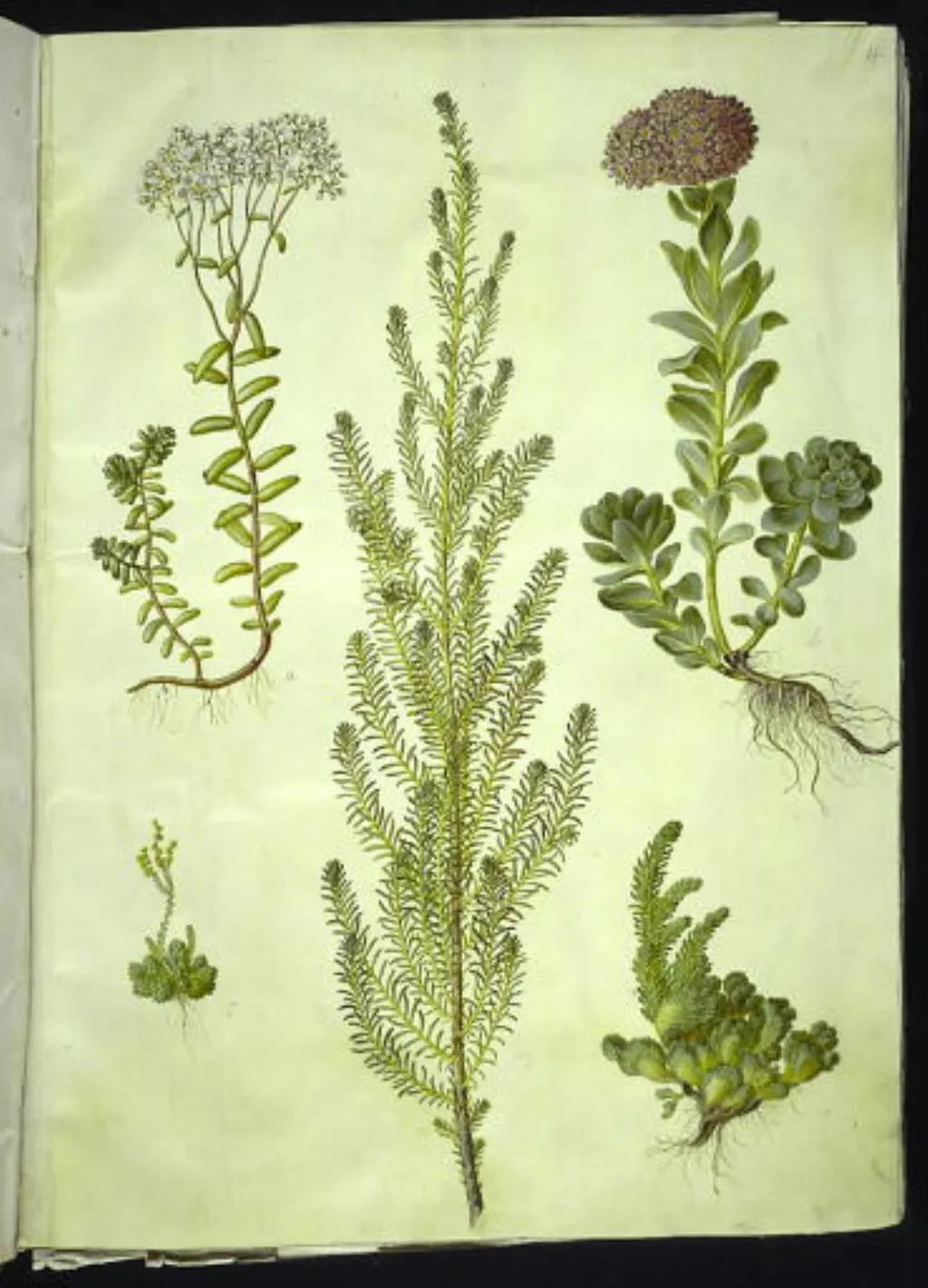
Sedum album (hvid stenurt); Sedum anacampseros (rundbladet stenurt); Sedum (stenurt); Suaeda vera (busk-strandgåsefod); Sedum rupestre (bjerg-stenurt) is an unspecified work on paper by Unknown. It dates from 1654 and is held in the collection of the Statens Museum for Kunst.
About this work
Overview
This watercolor image, dated around 1654, depicts five species of plants native to northern Europe, including several sedums and Suaeda vera.
This watercolor image, dated around 1654, depicts five species of plants native to northern Europe, including several sedums and Suaeda vera. Executed with precision, the drawings were likely made for scientific documentation rather than decorative purposes. Each plant is rendered individually, with attention to structural detail, suggesting an intent to catalog botanical forms accurately. The work is held in the collection of the Museum of Ethnography.
Subject & Meaning
The selected plants—Sedum album, Sedum anacampseros, Sedum rupestre, and Suaeda vera—are all hardy, low-growing species found in coastal or rocky habitats. Their inclusion reflects an interest in regional flora with ecological resilience. The inclusion of root systems indicates a focus on growth patterns and adaptation. These drawings serve as visual records of plant morphology, possibly for use in herbal studies or natural history classification.
Technique & Style
Rendered in watercolor, the illustrations use soft greens and muted yellows, with a single cluster of purple flowers adding subtle contrast. Lines are fine and deliberate, capturing leaf shape, stem structure, and root morphology with botanical accuracy. The absence of background or contextual elements directs focus entirely to the plants themselves. The technique suggests a methodical approach, typical of early modern naturalist illustration.
History & Provenance
Created circa 1654, the work is attributed to an unnamed artist identified only by a catalog number, 35199_person. Its survival in the Museum of Ethnography implies it was collected as part of a broader ethnographic or scientific archive. The lack of known provenance prior to institutional acquisition suggests it may have been part of a private or academic collection from the 17th century, later integrated into the museum’s holdings.
Context
In mid-17th century Europe, detailed botanical illustration flourished alongside the rise of empirical science. This image aligns with the tradition of herbaria and plant studies conducted by naturalists seeking to classify flora systematically. Though not part of a published work, its precision reflects the growing cultural value placed on direct observation and documentation of the natural world.
Legacy
The image endures as an example of pre-modern botanical recording, valued for its fidelity to form rather than aesthetic flourish. It contributes to the historical record of how European naturalists engaged with native vegetation. Today, it offers insight into the visual methods used before photographic technology, preserving a quiet but significant chapter in the study of plant life.
Artist & collection

 Domestic Scene
 Giacomo and Cardinal Marco, investing Andrea, Abbot of San Zeno, with his Benefice
 The Nymph of Fontainebleau
 Portrait of a Woman
 Madonna and Child with Saints in the Enclosed Garden
 Venus and Minerva
 Family Group of Four on Sofa
 Wall painting from Room H of the Villa of P. Fannius Synistor at Boscoreale
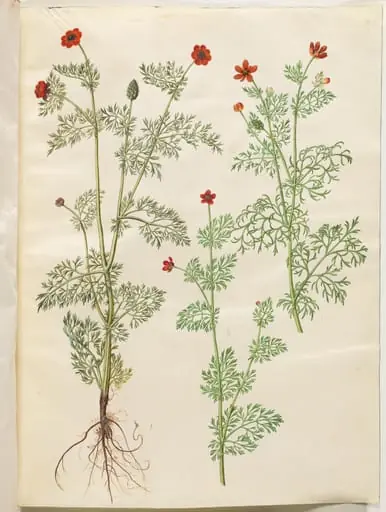 Adonis annua (høst-adonis); Adonis aestivalis (sommer-adonis)
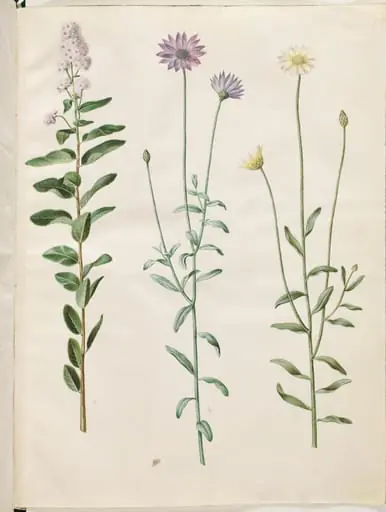 Spiraea salicifolia (pilebladet spiræa); Catananche caerulea (blå rasleblomst)
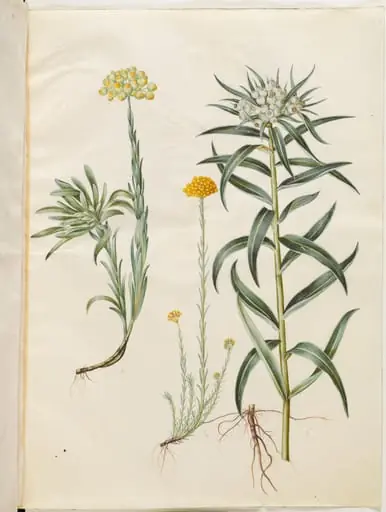 Helichrysum orientale (busk-evighedsblomst); Helichrysum Stoechas (stinkende evighedsblomst); Anaphalis margaritacea (almindelig perlekurv)
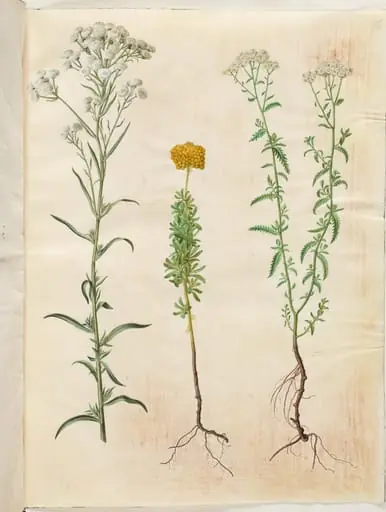 Achillea ptarmica (sølvknap-røllike); Achillea ageratum (balsam-røllike); Achillea millefolium (almindelig røllike)
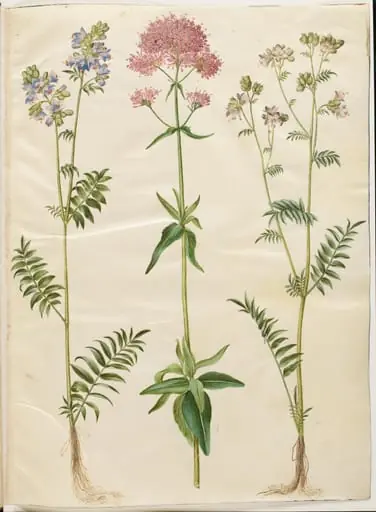 Polemonium caeruleum (almindelig jakobsstige); Centranthus ruber (rød sporebaldrian)
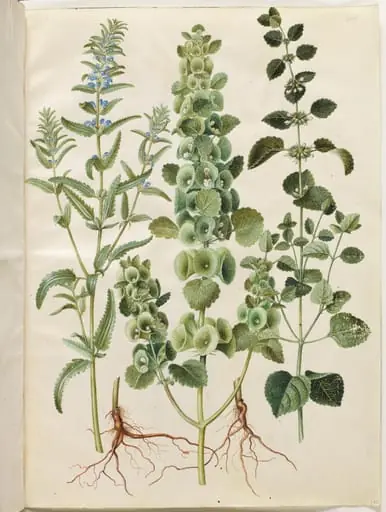 Dracocephalum moldavica (moldavisk dragehoved); Moluccella spinosa (tornet tragtbæger); Melissa officinalis (citron-melisse)
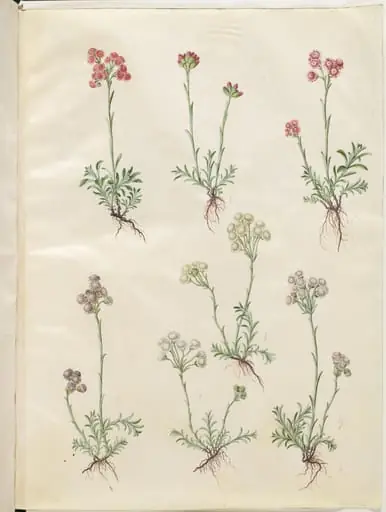 Antennaria dioica (almindelig kattefod)
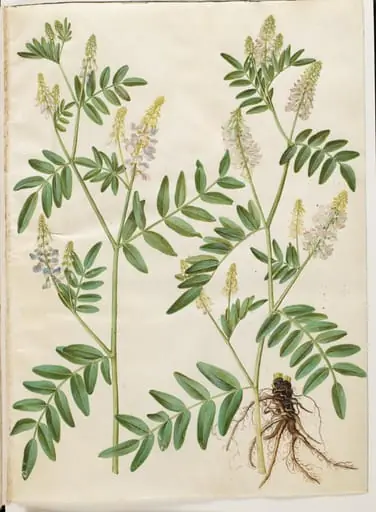 Galega officinalis (læge-stregbælg)
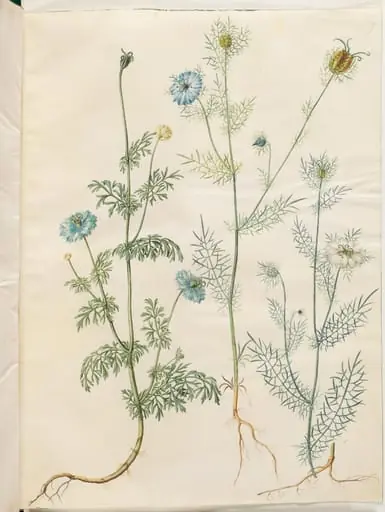 Nigella sativa (sortkommen); Nigella damascena (jomfru i det grønne)
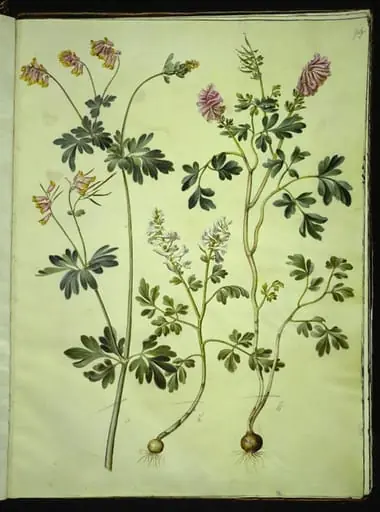 Capnoides sempervirens (harlekinurt); Corydalis solida (langstilket lærkespore)
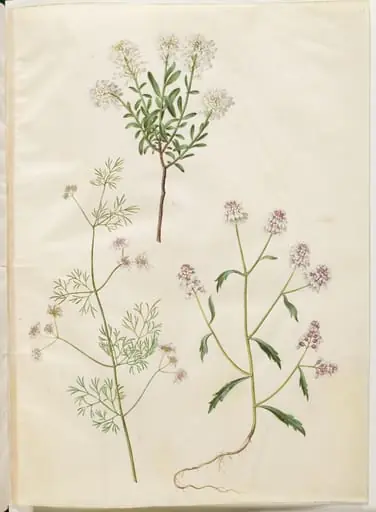 Iberis sempervirens (snepude); Coriandrum sativum (almindelig koriander); Iberis amara (bitter sløjfeblomst)
 Sempervivum arachnoideum (spindelvæv-husløg); Sedum album (hvid stenurt); Sedum acre (bidende stenurt); Sedum rupestre (bjerg-stenurt); Sedum sexangulare (seksradet stenurt)