Artwork
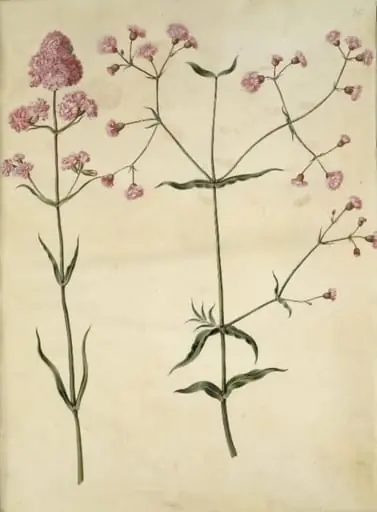
Silene chalcedonica (brændende kærlighed); Dianthus barbatus (studenter-nellike)
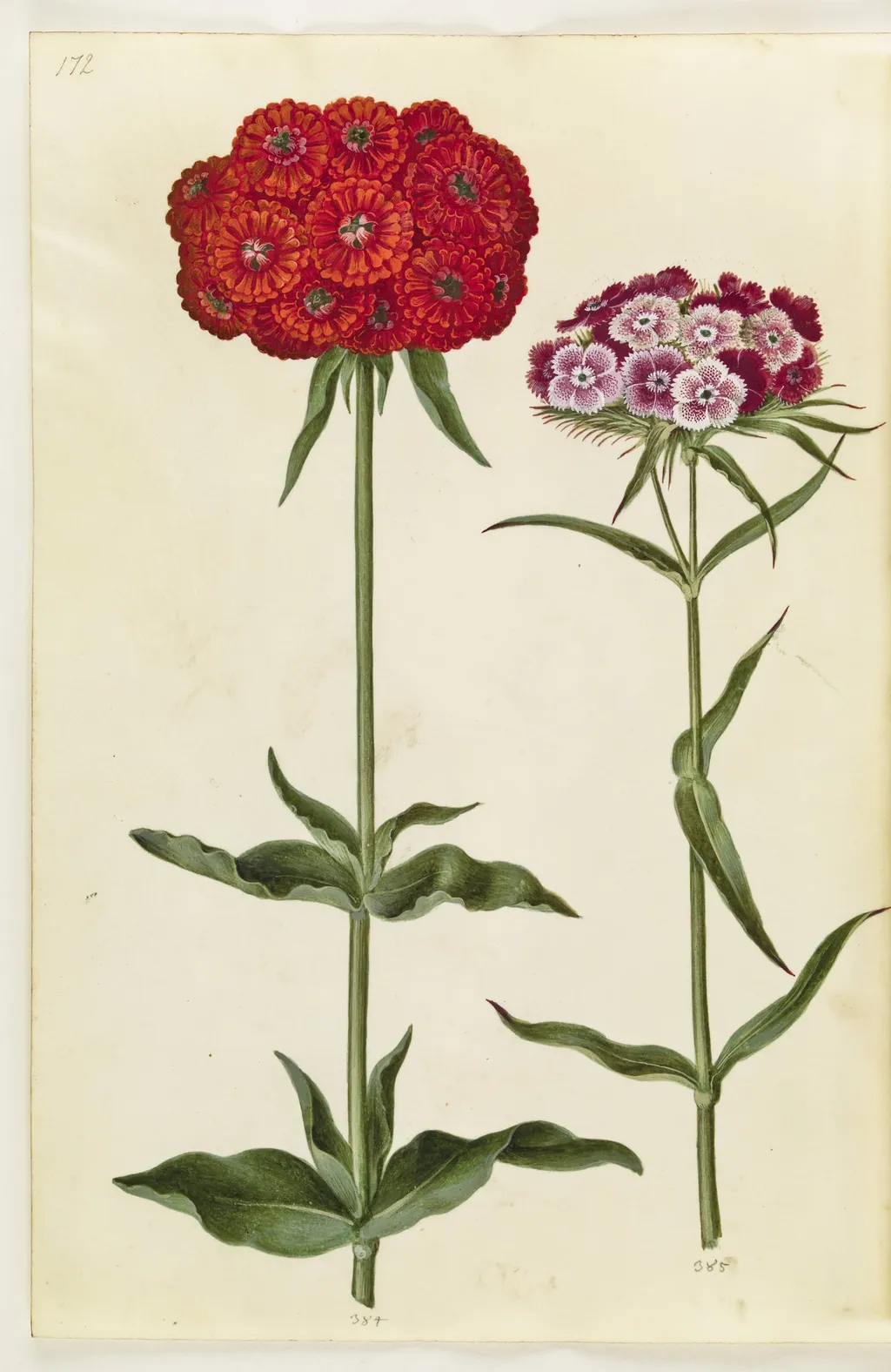
Silene chalcedonica (brændende kærlighed); Dianthus barbatus (studenter-nellike) is an unspecified work on paper by Unknown. It dates from 1650 and is held in the collection of the Statens Museum for Kunst. This work, dated around 1650, depicts two flowering plants rendered in watercolor on paper.
About this work
Overview
The artist, whose identity remains unrecorded, focused on botanical accuracy rather than decorative flourish.
This work, dated around 1650, depicts two flowering plants rendered in watercolor on paper. The artist, whose identity remains unrecorded, focused on botanical accuracy rather than decorative flourish. The composition is minimal, with no background or contextual elements, emphasizing the plants as specimens. The Museum of Ethnography holds this piece as part of its historical collection of naturalist illustrations.
Subject & Meaning
The two plants are Silene chalcedonica and Dianthus barbatus, known in Danish as brændende kærlighed and studenter-nellike. Their inclusion suggests a scientific interest in regional flora, possibly for educational or archival purposes. The names hint at folk associations—passion and student culture—but the image itself avoids symbolism, presenting the flowers as observable specimens rather than cultural emblems.
Technique & Style
Executed in watercolor, the painting uses precise, controlled brushwork to capture fine details: individual petals, veined leaves, and subtle gradations of color. The light paper background enhances the vibrancy of the red, pink, and purple blooms. There is no shading or perspective beyond what is necessary to convey form, reflecting a method aligned with early scientific illustration rather than artistic expression.
History & Provenance
The work’s origin is undocumented beyond its approximate date and current location. It likely belonged to a broader collection of botanical studies produced in Northern Europe during the mid-17th century, a period when systematic recording of plant life gained momentum. Its presence in the Museum of Ethnography suggests it was acquired as part of a larger ethnographic or natural history archive.
Context
In the 1650s, European naturalists increasingly turned to visual documentation to classify plants, often working alongside physicians and apothecaries. This image fits within that trend—its clarity and lack of ornamentation align with emerging scientific standards. It reflects a shift from allegorical botanical art toward empirical representation, though without the labeling common in later herbaria.
Legacy
Though unsigned and unattributed, the work contributes to a broader archive of pre-modern botanical observation. Its preservation in a museum setting underscores its value as a record of early visual taxonomy. It remains a quiet example of how art and science intersected in the service of knowledge, before the formalization of botanical illustration as a distinct discipline.
Artist & collection

 Domestic Scene
 Giacomo and Cardinal Marco, investing Andrea, Abbot of San Zeno, with his Benefice
 The Nymph of Fontainebleau
 Portrait of a Woman
 Madonna and Child with Saints in the Enclosed Garden
 Venus and Minerva
 Family Group of Four on Sofa
 Wall painting from Room H of the Villa of P. Fannius Synistor at Boscoreale
 Dianthus barbatus (studenter-nellike); Dianthus (art af nellike)
 Silene chalcedonica (brændende kærlighed)
 Silene latifolia (aften-pragtstjerne); Silene dioica (dag-pragtstjerne)
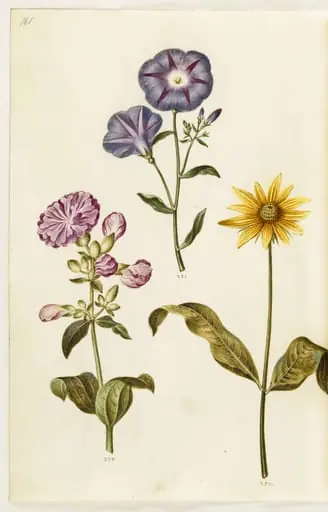 Saponaria officinalis (almindelig sæbeurt); Convolvulus tricolor (jomfruskørt); Helianthus (?) (solsikke-art)
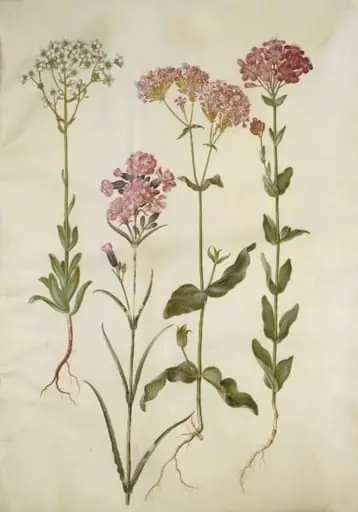 Saxifraga paniculata (klippe-stenbræk); Silene viscaria (almindelig tjærenellike); Silene armeria (knippe-limurt);
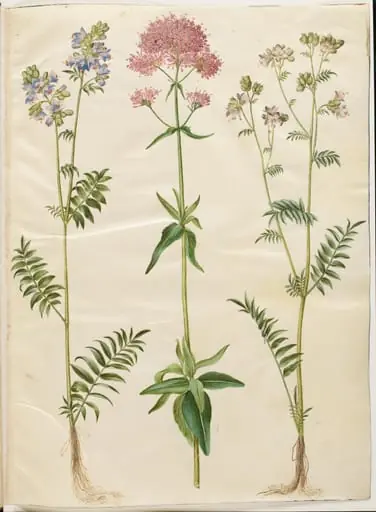 Polemonium caeruleum (almindelig jakobsstige); Centranthus ruber (rød sporebaldrian)
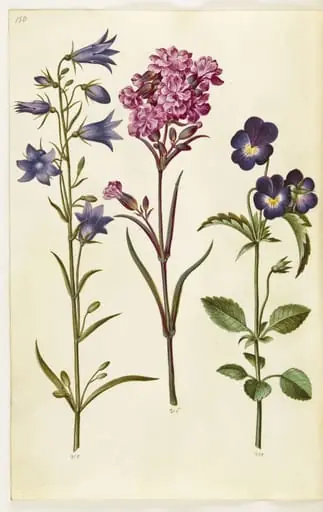 Campanula rotundifolia (liden klokke); Silene viscaria (almindelig tjærenellike); Viola tricolor (almindelig stedmoderblomst)
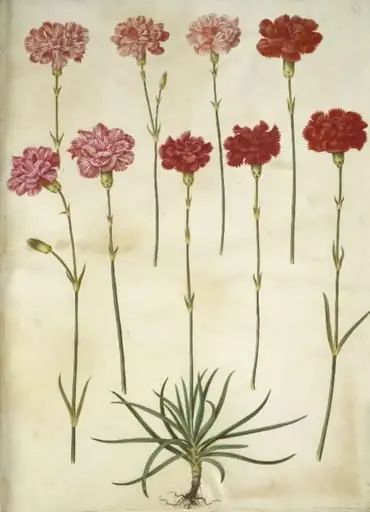 Dianthus caryophyllus (have-nellike)
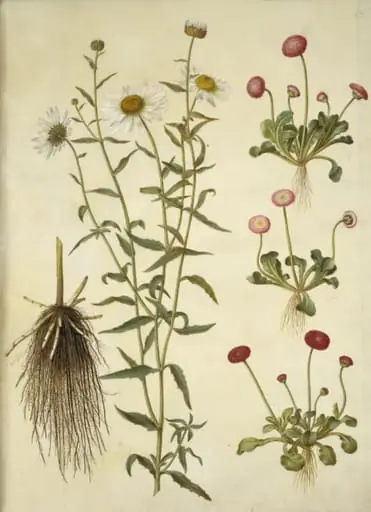 Leucanthemum vulgare (hvid okseøje); Bellis perennis (almindelig tusindfryd)
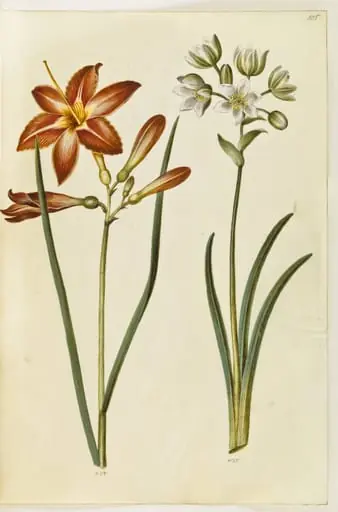 Hemerocallis fulva (brun daglilje); Ornithogalum arabicum (mælkestjerne)
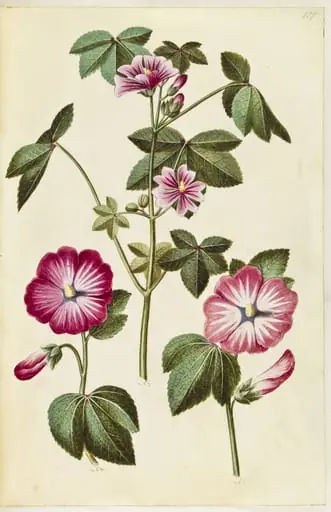 Malva sylvestris (almindelig katost); Lavatera trimestris (mamelukærme)
 Silene viscaria (almindelig tjærenellike); Silene (trævlekrone)