Artwork
Study of a Tulip (Wit en root boode)
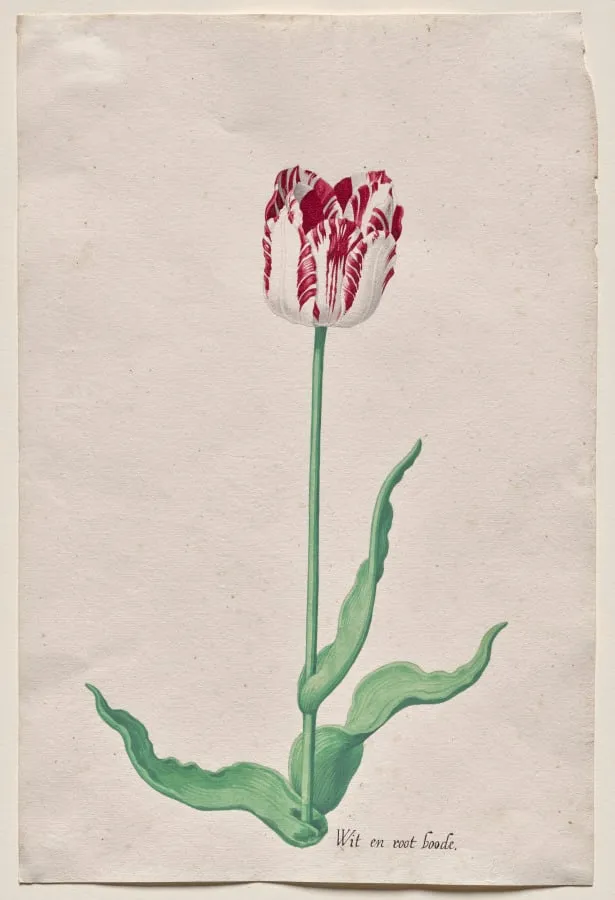
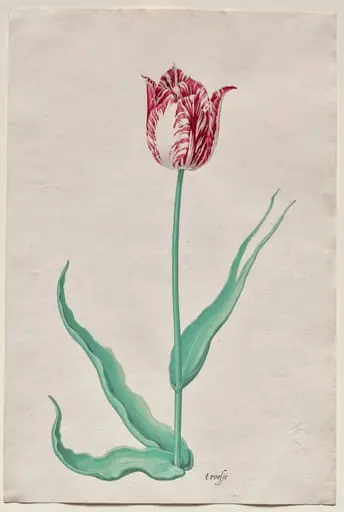
Study of a Tulip (Wit en root boode) is a drawing by the Baroque artist Pieter Holsteyn II. It dates from 1645 and is held in the collection of the Cleveland Museum of Art.
About this work
Overview
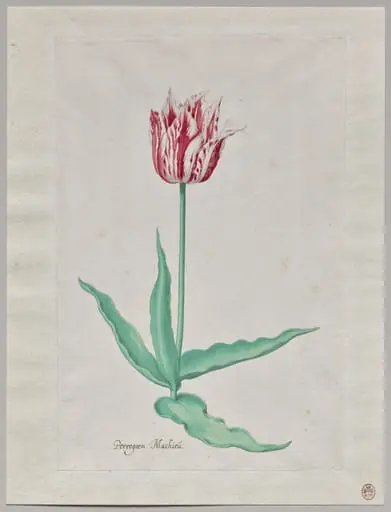
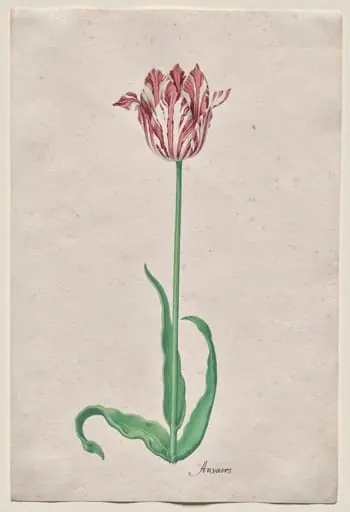
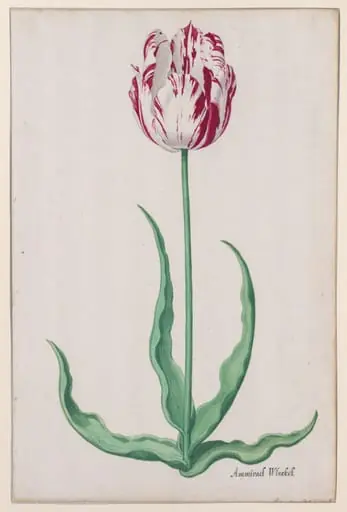
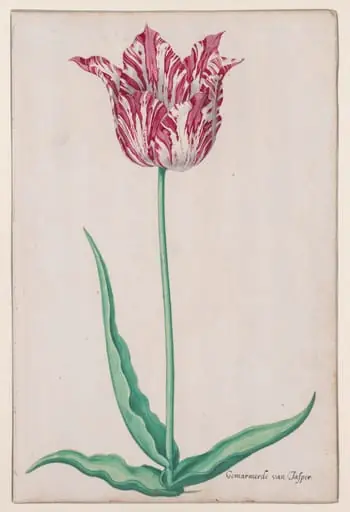
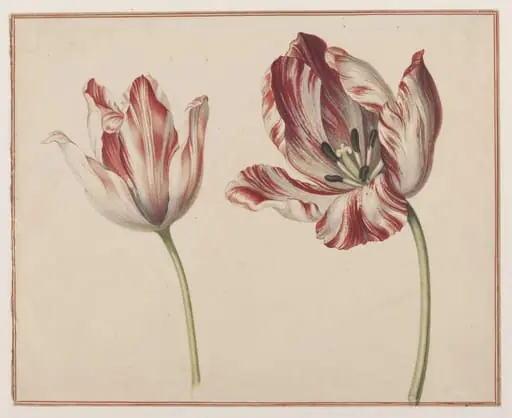
Study of a Tulip (Wit en root boode) is a drawing by Pieter Holsteyn II, a Dutch artist known for botanical illustration. The work depicts a single tulip with white petals streaked with red.
Subject & Meaning
The tulip's Dutch name, 'Wit en root boode,' translates to 'white and red messenger.' The red striations were caused by a virus, making the tulip rare and highly valued during the 17th-century tulip trade.
Technique & Style
The drawing features delicate rendering of the tulip's petals, with visible veins and soft shadows, creating a lifelike appearance against a plain background.
History & Provenance
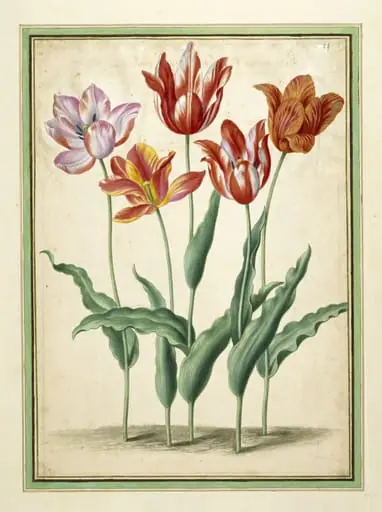
The drawing was likely created as part of a tulip catalog, a marketing tool used by growers during the tulip mania, a speculative bubble in 17th-century Holland.
Context
Holsteyn was one of many artists in the Netherlands specializing in botanical illustration, reflecting the era's intersection of art, science, and commerce.
Artist & collection