Artwork
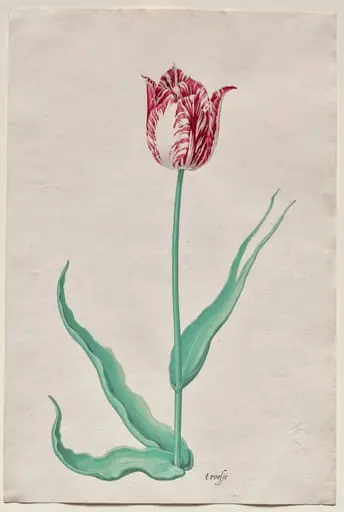
Study of a Tulip (Ammirael Winckel)
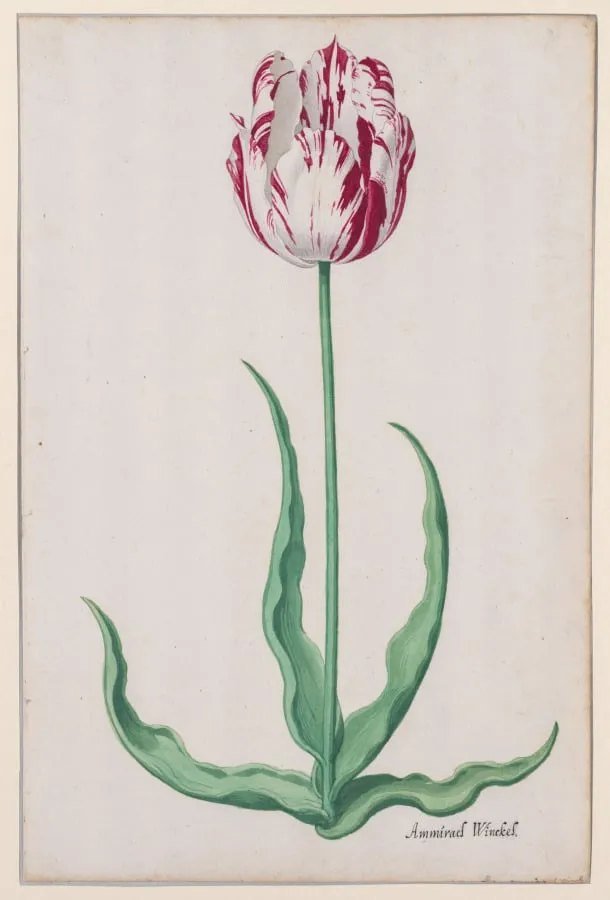
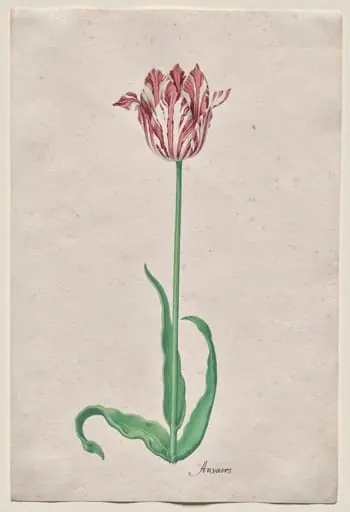
Study of a Tulip (Ammirael Winckel) is a drawing by the Baroque artist Pieter Holsteyn II. It dates from 1645 and is held in the collection of the Cleveland Museum of Art.
About this work
Overview
The work is attributed to Pieter Holsteyn II, a specialist in botanical rendering, and bears the tulip’s Dutch name: 'Ammirael Winckel.
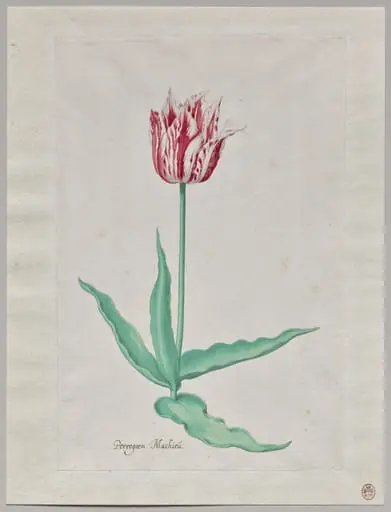
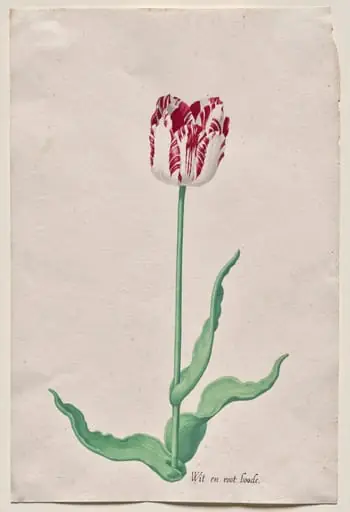
This pencil and watercolor drawing depicts a single tulip with distinctive red-and-white striations, created in the Netherlands during the height of tulip mania. It was produced as part of a commercial catalog intended to showcase rare bulb varieties to potential buyers. The work is attributed to Pieter Holsteyn II, a specialist in botanical rendering, and bears the tulip’s Dutch name: 'Ammirael Winckel.'
Subject & Meaning
The tulip’s vivid streaks, caused by a mosaic virus infecting the bulb, were mistaken by collectors as evidence of unnatural beauty and rarity. These markings elevated its market value far beyond ordinary flowers, symbolizing status and wealth. The inscription links the flower to the Winckel family, prominent tulip cultivators whose name lent credibility and prestige to the specimen in commercial contexts.
Technique & Style
Rendered with precise, delicate lines and subtle watercolor washes, the drawing emphasizes botanical accuracy over decorative flourish. The plain background isolates the flower, directing attention to its form and patterning. Holsteyn’s method reflects the scientific observation common among Dutch illustrators, balancing aesthetic clarity with documentary intent for horticultural commerce.
History & Provenance
Created during the early 1630s, the drawing belonged to a series compiled by growers to promote high-value bulbs. Such albums served as visual inventories for buyers before the market collapsed in 1637. While the original tulip book is lost, individual sheets like this one survived in private collections, later entering institutional holdings as examples of economic and artistic history.
Context
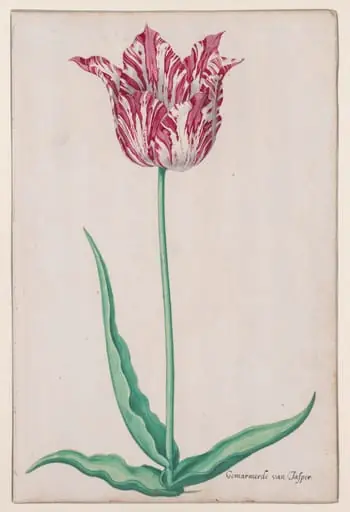
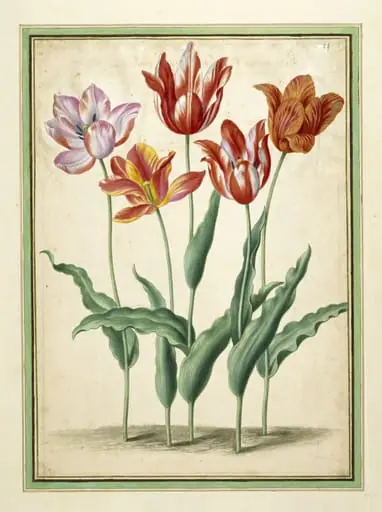
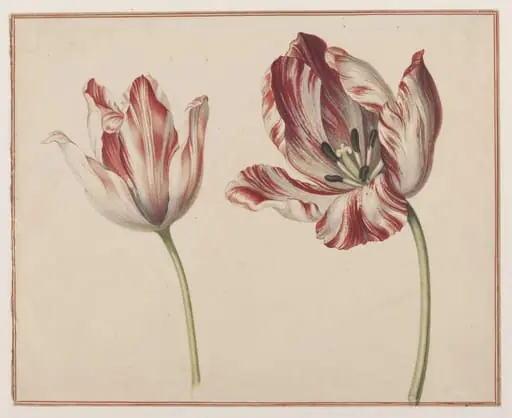
Tulip mania reflected a speculative frenzy in which contracts for bulbs traded at extraordinary sums, sometimes equivalent to skilled laborers’ lifetime earnings. Botanical illustrations were essential tools in this market, transforming biological anomalies into desirable commodities. Artists like Holsteyn operated at the intersection of science, commerce, and fashion, documenting nature shaped by human desire.
Legacy
The drawing endures as a quiet testament to the convergence of natural phenomenon and economic irrationality. It illustrates how aesthetic perception can be manipulated by market forces, and how scientific observation was enlisted to fuel speculation. Today, such works are studied not only for their artistry but as records of early financial behavior and the cultural weight assigned to botanical rarity.
Artist & collection