Artwork
Study of a Tulip ('t roosje)
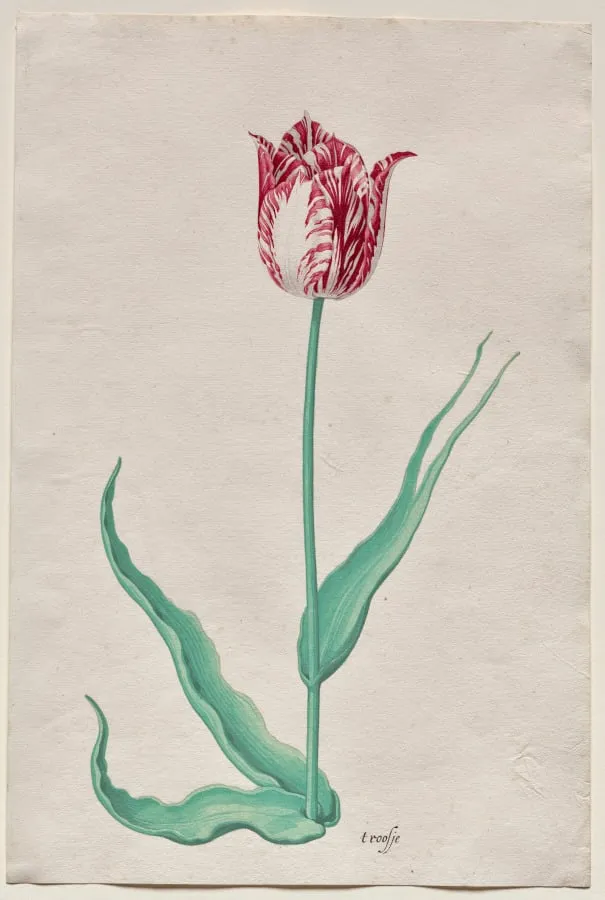
Study of a Tulip ('t roosje) is a drawing by the Baroque artist Pieter Holsteyn II. It dates from 1645 and is held in the collection of the Cleveland Museum of Art.
About this work
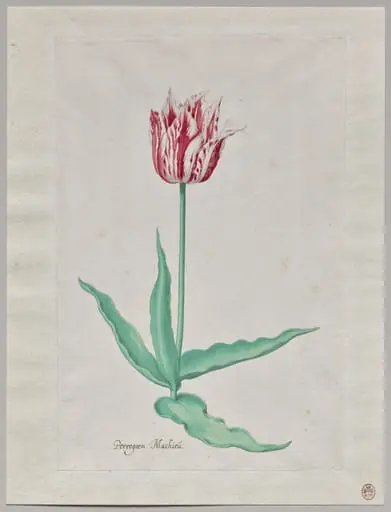
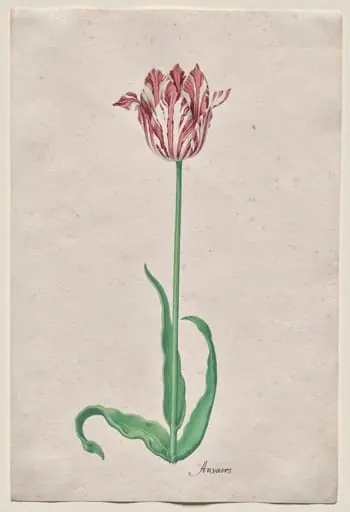
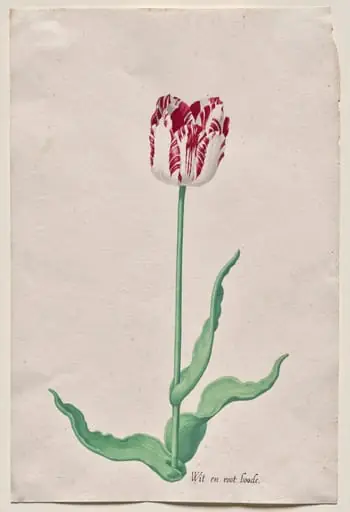
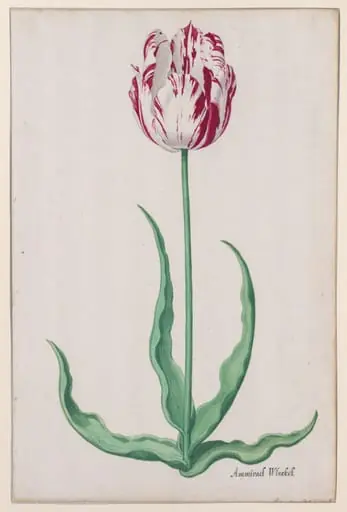
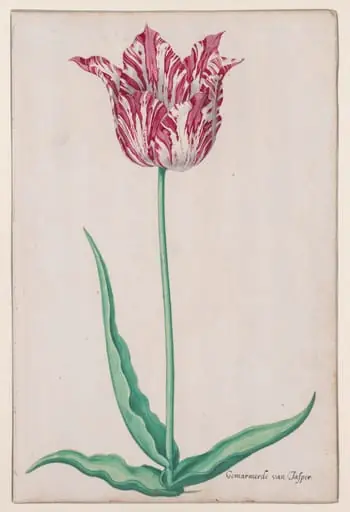
You see a single tulip, petals striped red and white, drawn on a plain page with its Dutch name written below.
You see a single tulip, petals striped red and white, drawn on a plain page with its Dutch name written below.
This tulip was worth more than a house in 1645. The stripes came from a virus that made the flower rare—and expensive. Growers hired artists like Holsteyn to paint the bulbs they wanted to sell, almost like a catalog.
If you like this, look up other tulip books from the subject: netherlands.
Overview
Study of a Tulip ('t roosje) is a drawing by Pieter Holsteyn II, created as part of a tulip book used for marketing purposes.
Subject & Meaning
The drawing depicts a single tulip with red and white striped petals, its Dutch name ('t roosje, meaning 'trumpet') inscribed below. The tulip's value lay in its rare striations, caused by a virus in the bulb.
History & Provenance
The tulip's value was exceptionally high in 1645, during the tulip mania, a speculative bubble in 17th-century Holland where tulip bulbs were traded at exorbitant prices.
Technique & Style
Holsteyn was one of many artists in the Netherlands specializing in botanical illustration at the time, producing detailed drawings like this tulip study.
Artist & collection