Artwork
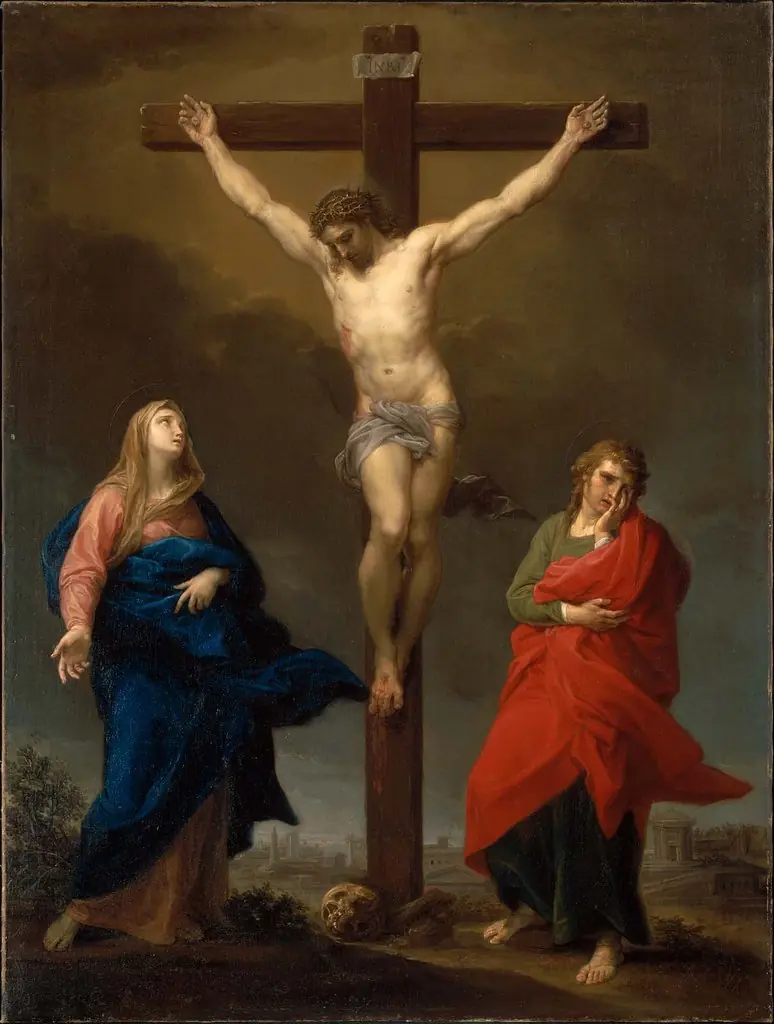
Christ on the Cross between the Virgin Mary and St John
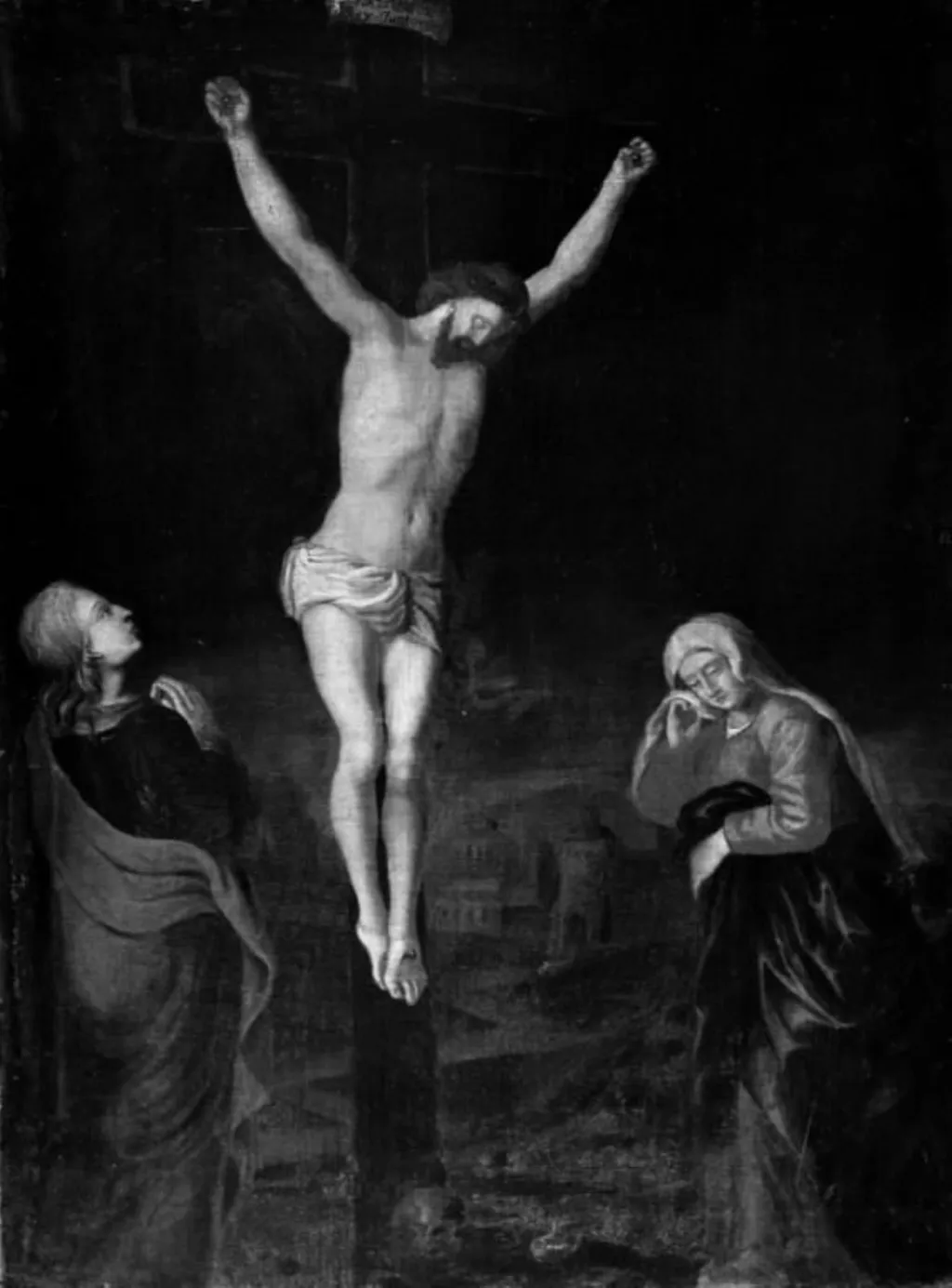
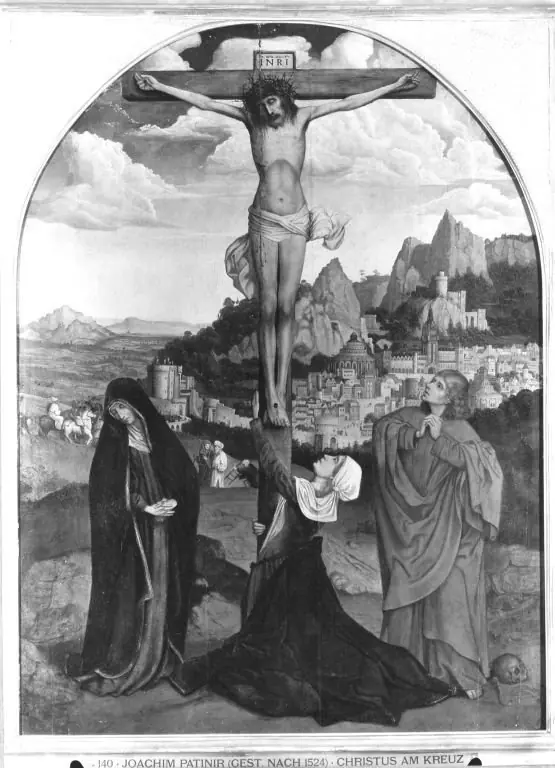
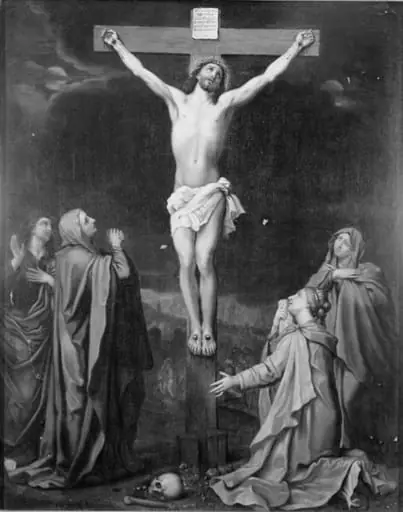
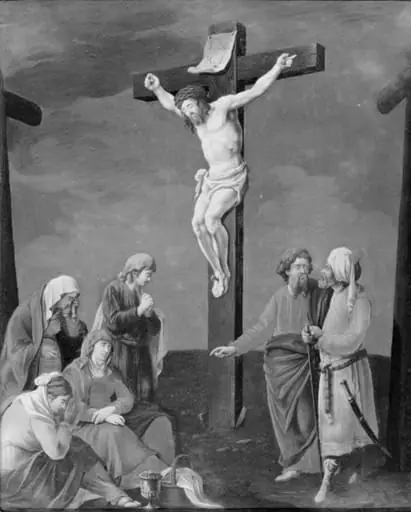
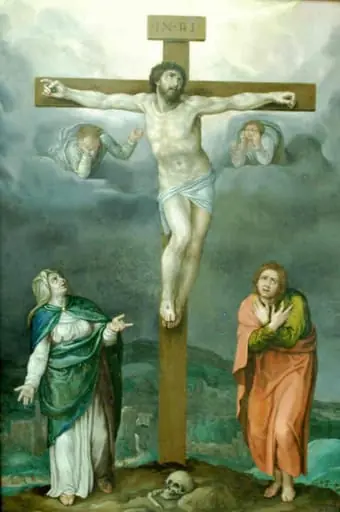
Christ on the Cross between the Virgin Mary and St John is a photography by Unknown. It dates from 1800 and is held in the collection of the Statens Museum for Kunst. This black-and-white image depicts a crucifixion scene, likely a photograph of a painted altarpiece from around 1800.
About this work
Overview
This black-and-white image depicts a crucifixion scene, likely a photograph of a painted altarpiece from around 1800.
This black-and-white image depicts a crucifixion scene, likely a photograph of a painted altarpiece from around 1800. The composition centers on Christ on the cross, flanked by the Virgin Mary and Saint John. The stark tonal contrast and simplified forms suggest it was captured from a work rooted in traditional Christian iconography, now held in the Museum of Ethnography, where it may be contextualized within broader religious visual cultures.
Subject & Meaning
The scene portrays the moment of Christ’s death on the cross, a central event in Christian theology. The Virgin Mary, kneeling in grief, and Saint John, standing in silent mourning, represent the human response to divine sacrifice. Their postures—prayerful and overwhelmed—emphasize emotional resonance over narrative detail, reinforcing themes of sorrow, devotion, and spiritual witness.
Technique & Style
The image exhibits strong chiaroscuro, with deep shadows and sharply lit figures creating dramatic volume. The rough, dark background isolates the central group, heightening emotional intensity. The monochrome treatment suggests the original painting may have been rendered in muted tones, with lighting used to model flesh and fabric, a technique common in Baroque-influenced religious art of the period.
History & Provenance
The original painting was likely produced in Europe around 1800, possibly for a private chapel or devotional setting. It entered the collection of the Museum of Ethnography, where it is preserved not as a fine art object but as part of a broader study of religious imagery in cultural practice. Its current form as a black-and-white photograph indicates it may have been documented for anthropological or archival purposes.
Context
Created during a time when religious art was increasingly displaced by secular themes, this work reflects enduring devotional traditions in rural or conservative communities. Its presence in an ethnographic museum suggests it was collected as an example of popular piety rather than high artistic achievement, offering insight into how sacred narratives were visually sustained outside academic circles.
Legacy
Though not attributed to a known master, the image preserves a conventional yet emotionally direct representation of the crucifixion. Its preservation in an ethnographic context underscores how such imagery continued to function in everyday religious life, even as artistic movements shifted toward modernism. It remains a quiet testament to the persistence of visual devotion in the 19th century.
Artist & collection

 Domestic Scene
 Giacomo and Cardinal Marco, investing Andrea, Abbot of San Zeno, with his Benefice
 The Nymph of Fontainebleau
 Portrait of a Woman
 Madonna and Child with Saints in the Enclosed Garden
 Venus and Minerva
 Family Group of Four on Sofa
 Wall painting from Room H of the Villa of P. Fannius Synistor at Boscoreale