Artwork
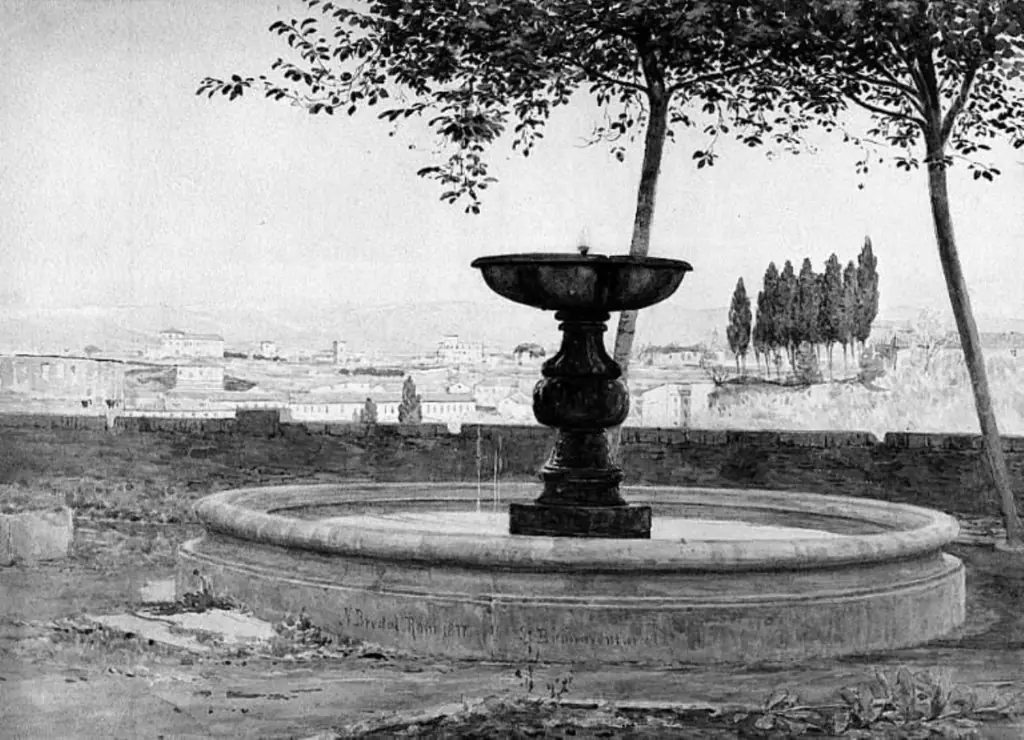
A View from S. Onofrio on Monte Gianicolo, Rome
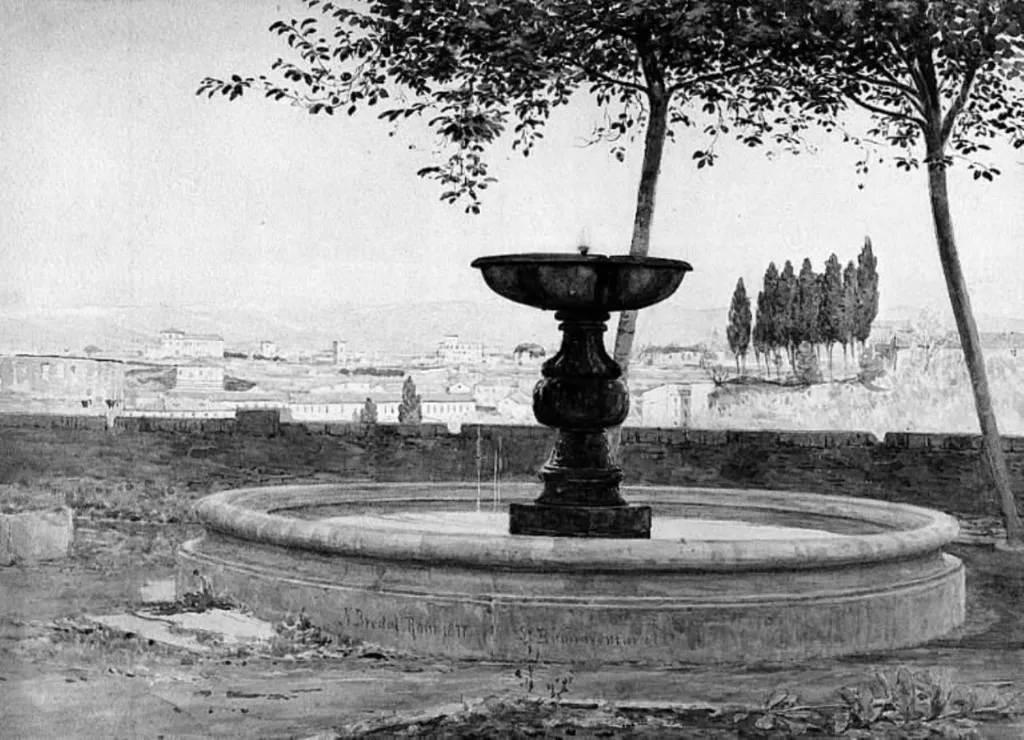
A View from S. Onofrio on Monte Gianicolo, Rome is a photography by the Impressionist artist Unknown. It dates from 1875 and is held in the collection of the Statens Museum for Kunst. Painted in 1875, this work depicts a quiet outdoor scene from the Gianicolo hill in Rome, viewed near the church of S.
About this work
Overview
Painted in 1875, this work depicts a quiet outdoor scene from the Gianicolo hill in Rome, viewed near the church of S.
Painted in 1875, this work depicts a quiet outdoor scene from the Gianicolo hill in Rome, viewed near the church of S. Onofrio. The composition centers on a stone fountain with a circular base and a modest spout, surrounded by foliage. Distant architecture and a city wall frame the horizon, suggesting a tranquil, elevated vantage point. The artist rendered the setting with careful attention to spatial depth and natural detail.
Subject & Meaning
The scene captures a moment of stillness in a well-trodden Roman landscape. The fountain, a functional yet poetic element, anchors the view, while the surrounding trees and distant urban fabric imply a harmony between nature and the built environment. There is no overt narrative; instead, the painting invites contemplation of place, time, and the quiet rhythms of daily life in late 19th-century Rome.
Technique & Style
The artist employed fine brushwork and a nuanced palette to achieve a sense of realism. Light falls naturally across the stone surfaces and leaves, with subtle shifts in tone suggesting atmospheric depth. Colors are varied but restrained, avoiding theatricality. Details such as individual leaves and architectural textures are rendered with precision, reflecting a commitment to observed reality over idealized composition.
History & Provenance
The painting entered the collection of the Museum of Ethnography shortly after its creation, though its original ownership is undocumented. Its placement in an ethnographic institution, rather than a fine arts museum, suggests an early interest in documenting everyday environments as cultural artifacts. No significant alterations or restorations are recorded in its history.
Context
Created during a period when European artists increasingly turned to topographical realism, this work aligns with a broader trend of recording specific locales with scientific accuracy. Rome, with its layered history and enduring urban fabric, was a favored subject. The choice of a modest, non-monumental view reflects a shift away from grand historical scenes toward intimate, observed moments.
Legacy
Though not widely exhibited beyond its institutional home, the painting remains a quiet example of 19th-century observational landscape painting. It contributes to a body of work that values quietude and detail over spectacle. Its presence in an ethnographic context underscores evolving ideas about what constitutes cultural record, influencing later approaches to documenting urban and domestic environments.
Artist & collection

 Domestic Scene
 Giacomo and Cardinal Marco, investing Andrea, Abbot of San Zeno, with his Benefice
 The Nymph of Fontainebleau
 Portrait of a Woman
 Madonna and Child with Saints in the Enclosed Garden
 Venus and Minerva
 Family Group of Four on Sofa
 Wall painting from Room H of the Villa of P. Fannius Synistor at Boscoreale
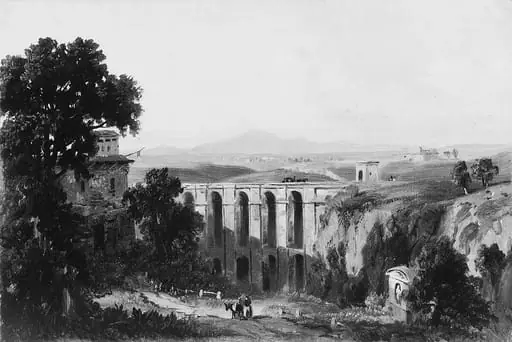 Civita Castellana and Mount Soracte, 1852
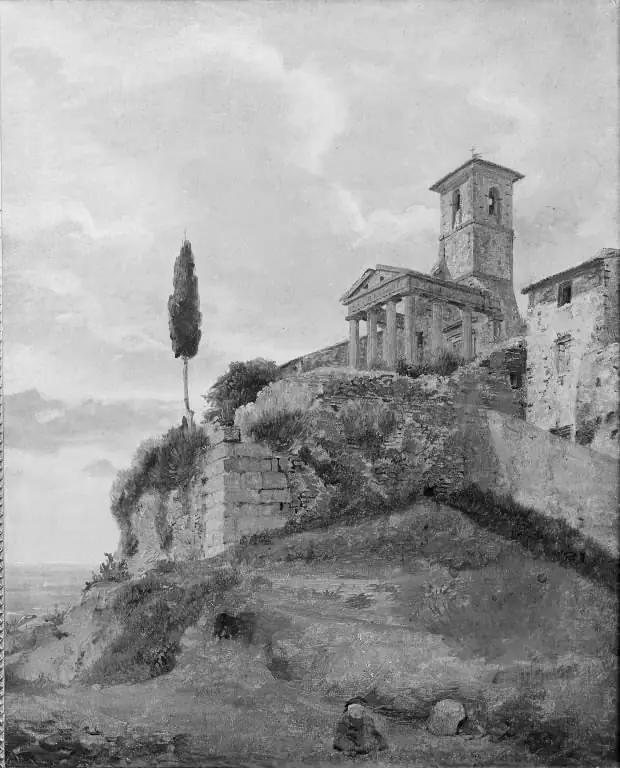 The Temple of Hercules at Cori
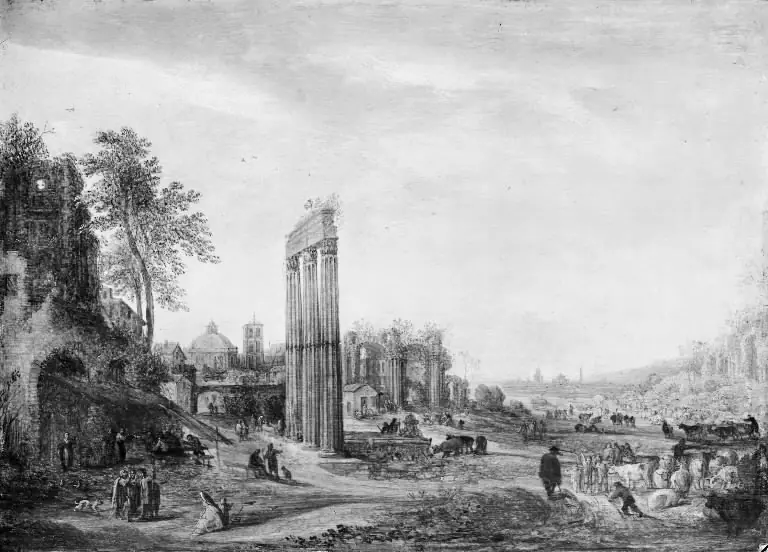 View of Campo Vaccino in Rome
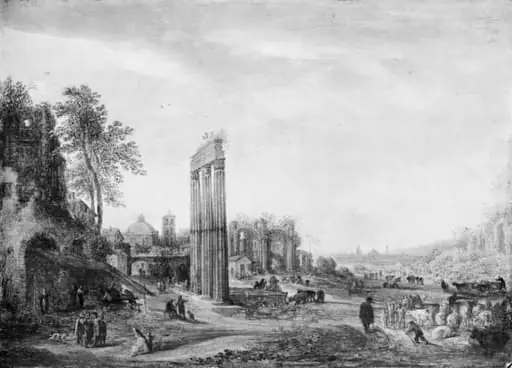 View of Campo Vaccino in Rome
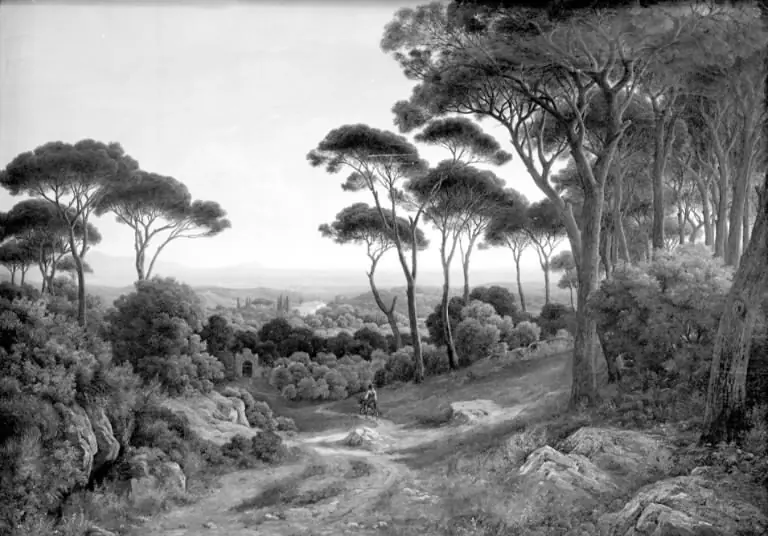 Udsigt fra Villa Barberini i Albano ved Campagnen til Monte Felice
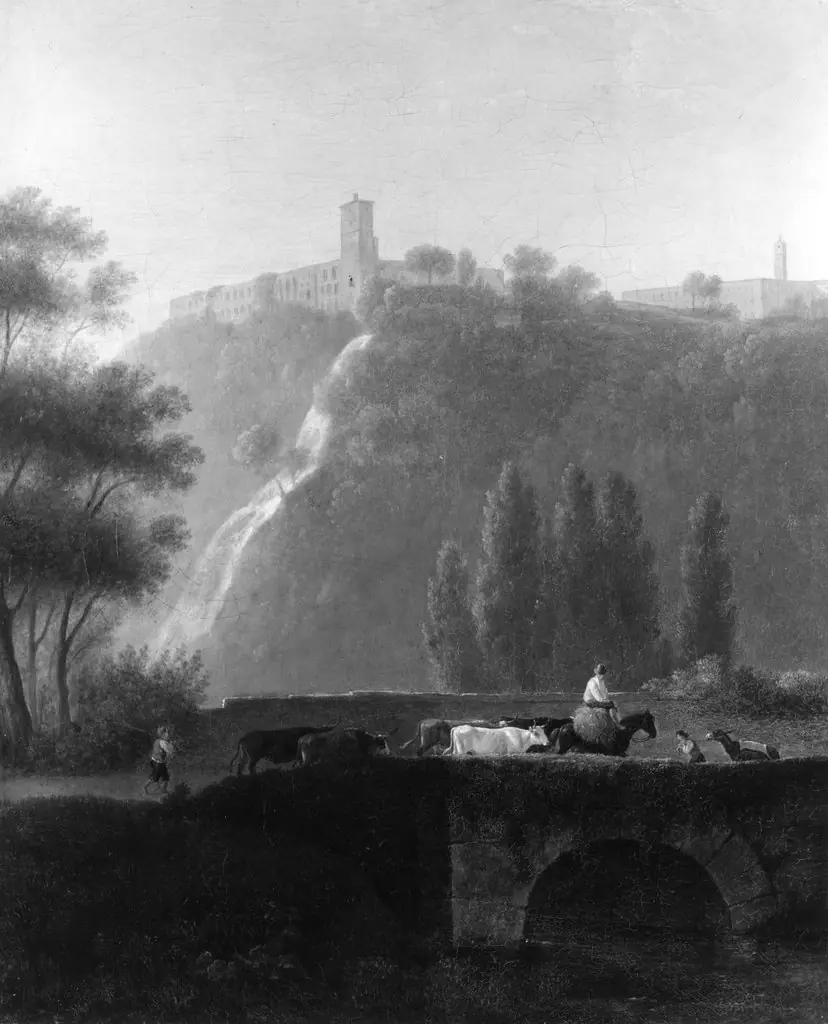 Landscape, the Cascades of Tivoli
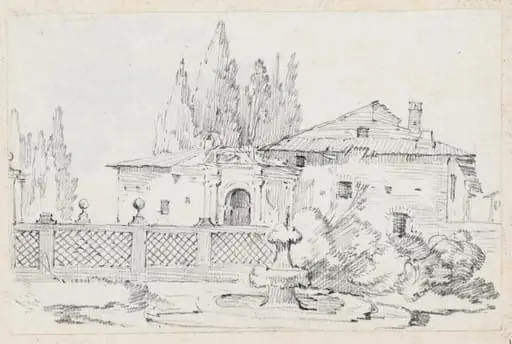 House and Trees across a Garden Wall
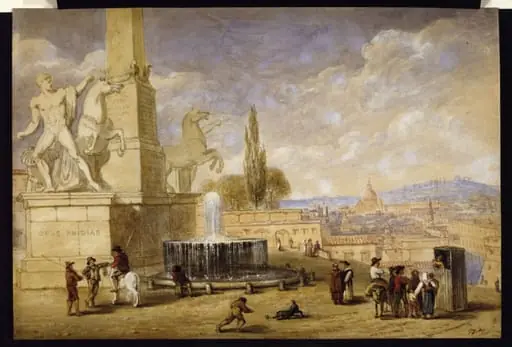 Monte Cavallo, Rome
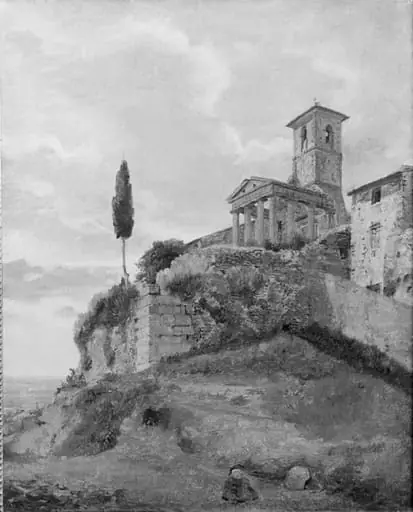 The Temple of Hercules at Cori
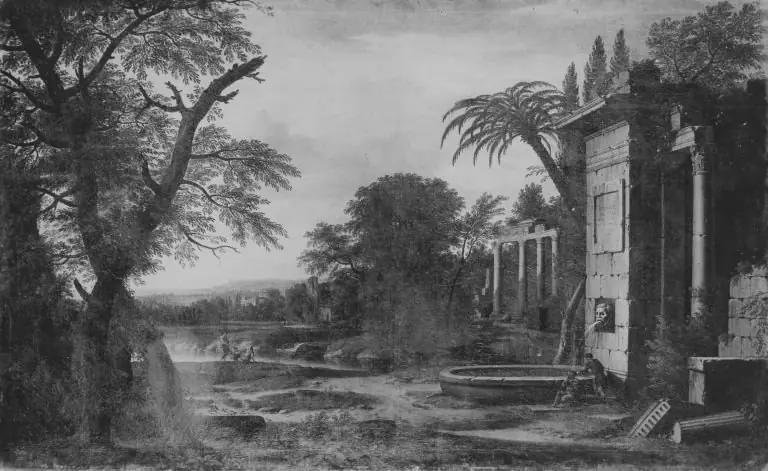 Landschaft mit Ruinen und Personenstaffagen
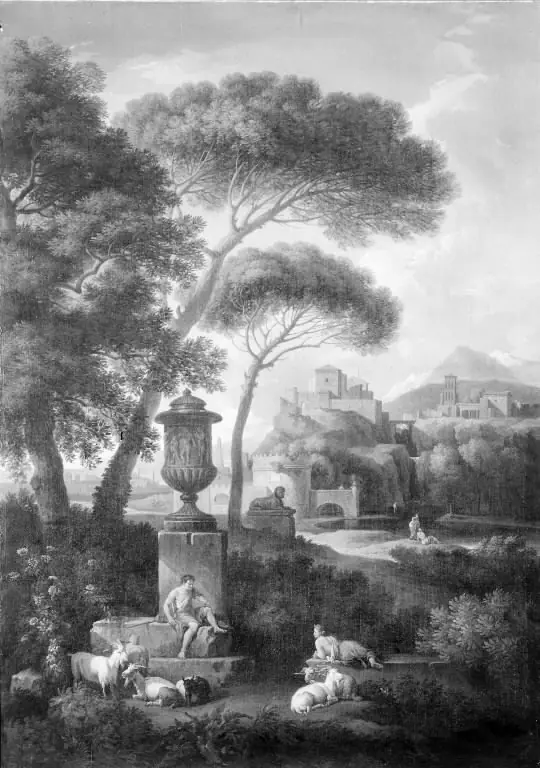 Landscape with the Tomb of Cecilia Metella
 A View from S. Onofrio on Monte Gianicolo, Rome