Artwork
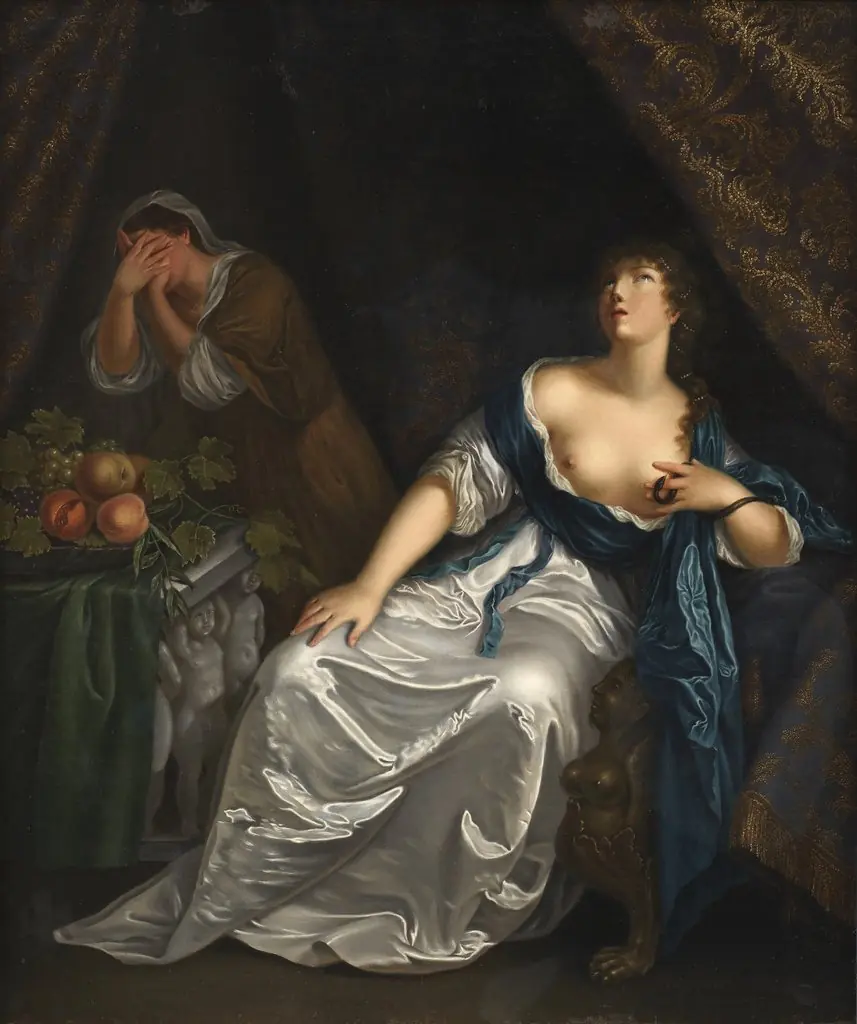
The Death of Cleopatra. Laterally reversed copy after Caspar Netscher in the Staatliche Kunsthalle in Karlsruhe
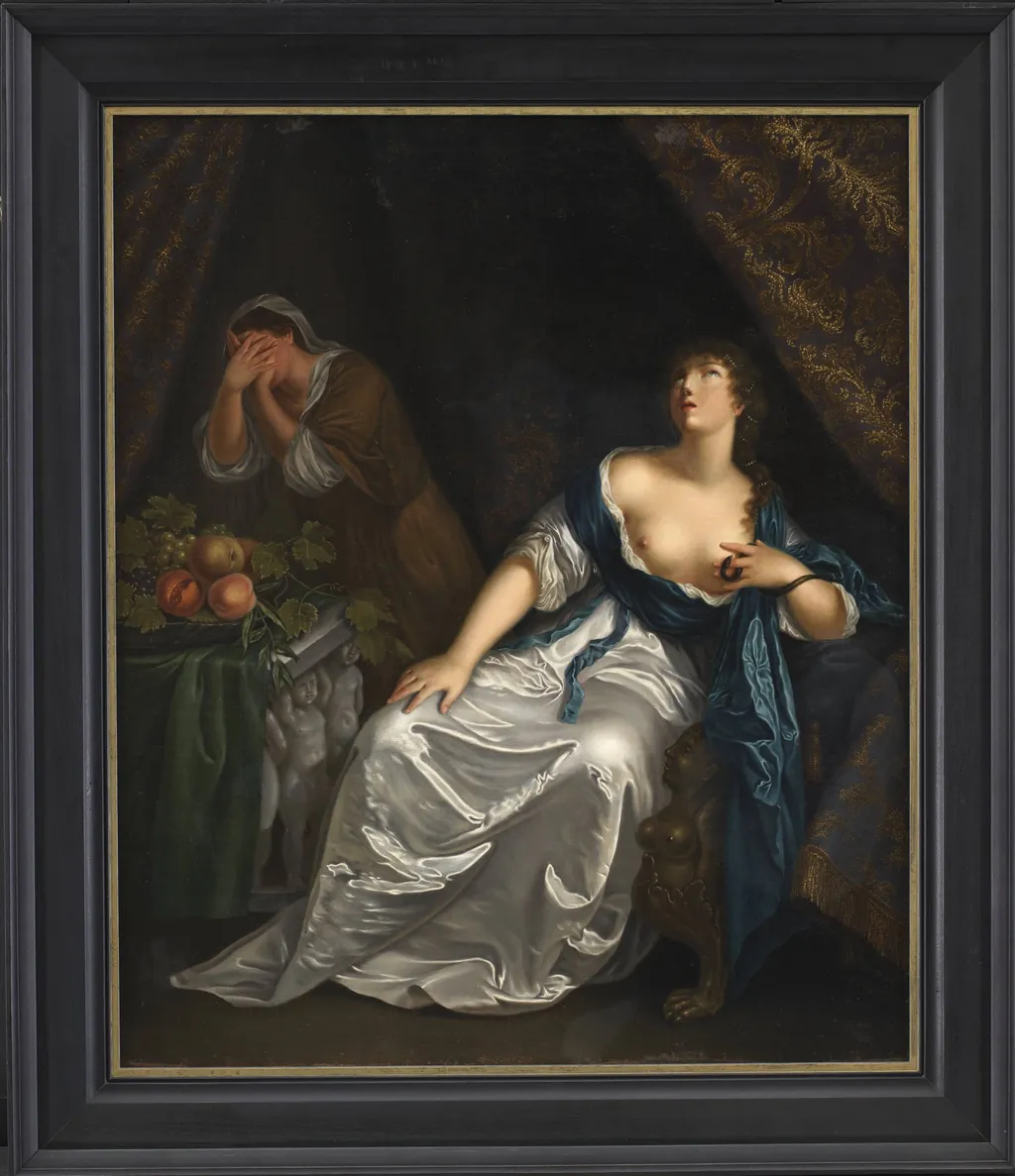
The Death of Cleopatra. Laterally reversed copy after Caspar Netscher in the Staatliche Kunsthalle in Karlsruhe is a photography by the Romanticist artist Unknown. It dates from 1813 and is held in the collection of the Statens Museum for Kunst. Created in 1813, this oil painting is a laterally reversed replica of a composition originally executed by Dutch artist Caspar Netscher.
About this work
Overview
The work is currently listed in the collection of the Museum of Ethnography, while a comparable version resides in the Staatliche Kunsthalle Karlsruhe.
Created in 1813, this oil painting is a laterally reversed replica of a composition originally executed by Dutch artist Caspar Netscher. The work is currently listed in the collection of the Museum of Ethnography, while a comparable version resides in the Staatliche Kunsthalle Karlsruhe. It depicts a solitary female figure in a white gown seated on a couch, accompanied by a secondary figure and a basket of fruit, all set against a dark, patterned backdrop.
Subject & Meaning
The central woman, rendered in a flowing white dress, appears poised in a moment of contemplation or resignation, her arm resting on the couch’s back. Behind her, a second figure leans forward, hands covering the face, suggesting grief or shock. The inclusion of a fruit basket on the floor evokes themes of abundance and mortality, inviting reference to historical narratives of regal demise, such as the death of Cleopatra.
Technique & Style
The artist employs chiaroscuro, contrasting luminous highlights on the figures and drapery with deep shadows in the surrounding space. This manipulation of light creates a dramatic three‑dimensional effect and emphasizes the emotional tension. The composition mirrors Netscher’s refined Dutch genre style, with meticulous attention to texture, especially in the silk dress and the glossy fruit, while the reversed orientation alters the visual balance.
History & Provenance
The painting was produced as a copy after Netscher’s original, likely for the market of reproductions in the early nineteenth century. It entered the Museum of Ethnography’s holdings at an unspecified date, while a related version is documented in the Staatliche Kunsthalle Karlsruhe. The work’s provenance reflects the period’s practice of replicating admired Dutch masterpieces for broader audiences.
Context
In the early 1800s, European artists frequently revisited seventeenth‑century Dutch genre scenes, valuing their compositional clarity and moral undertones. This piece aligns with that trend, translating Netscher’s intimate domestic tableau into a Romantic‑era sensibility, where heightened emotion and dramatic lighting were prized. The reversed format may have catered to specific display requirements or collector preferences of the time.
Artist & collection

 Domestic Scene
 Giacomo and Cardinal Marco, investing Andrea, Abbot of San Zeno, with his Benefice
 The Nymph of Fontainebleau
 Portrait of a Woman
 Madonna and Child with Saints in the Enclosed Garden
 Venus and Minerva
 Family Group of Four on Sofa
 Wall painting from Room H of the Villa of P. Fannius Synistor at Boscoreale