Artwork
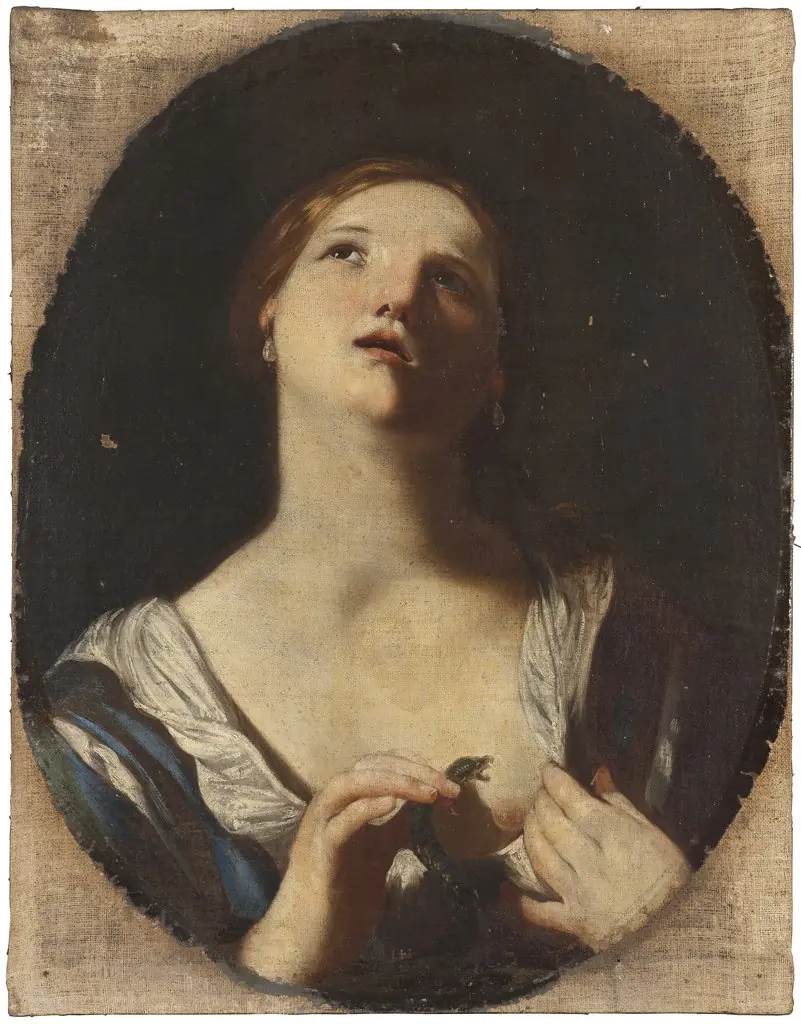
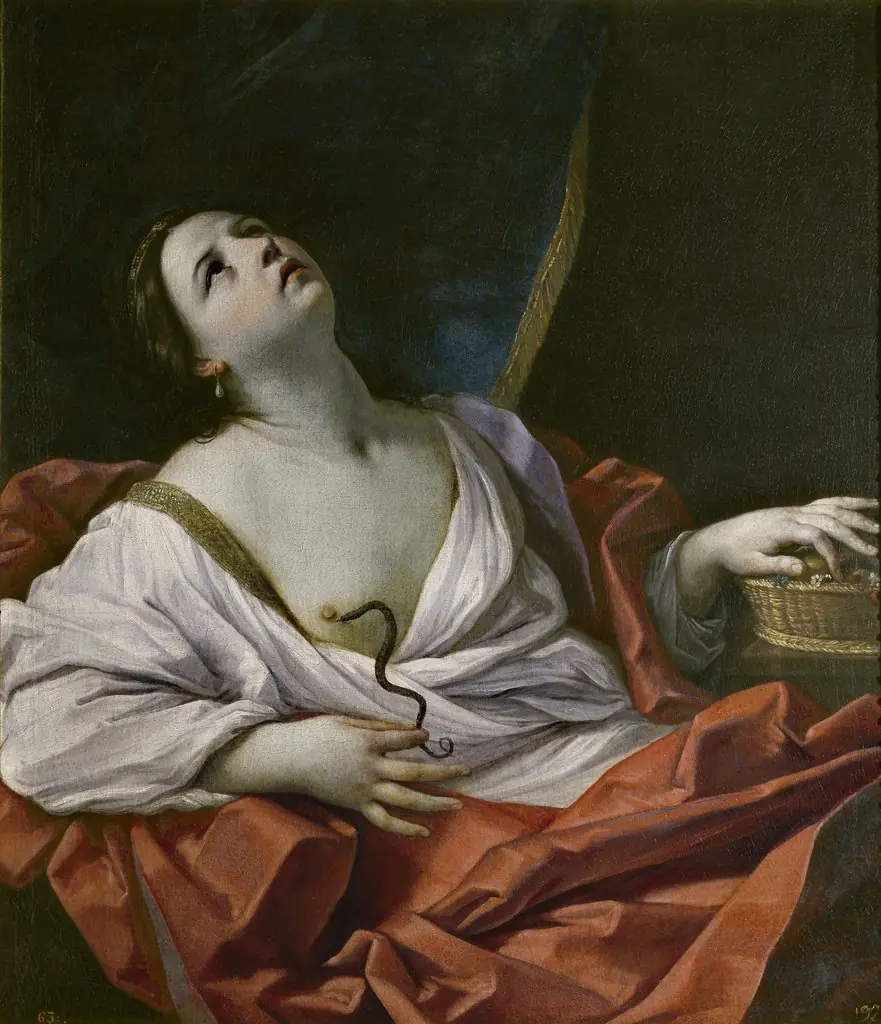
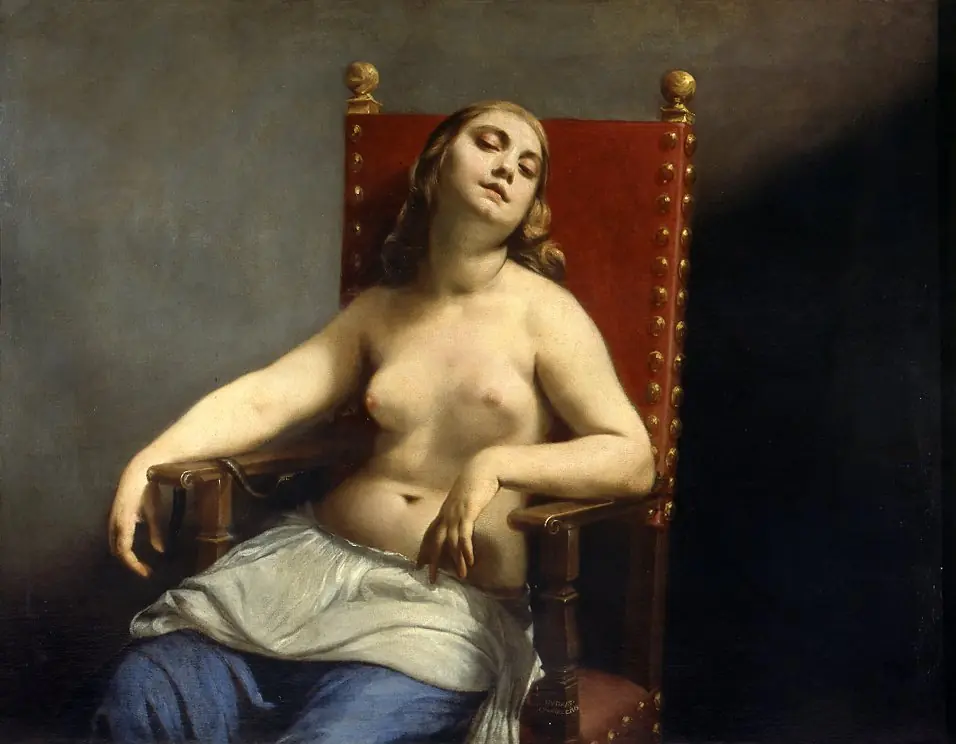
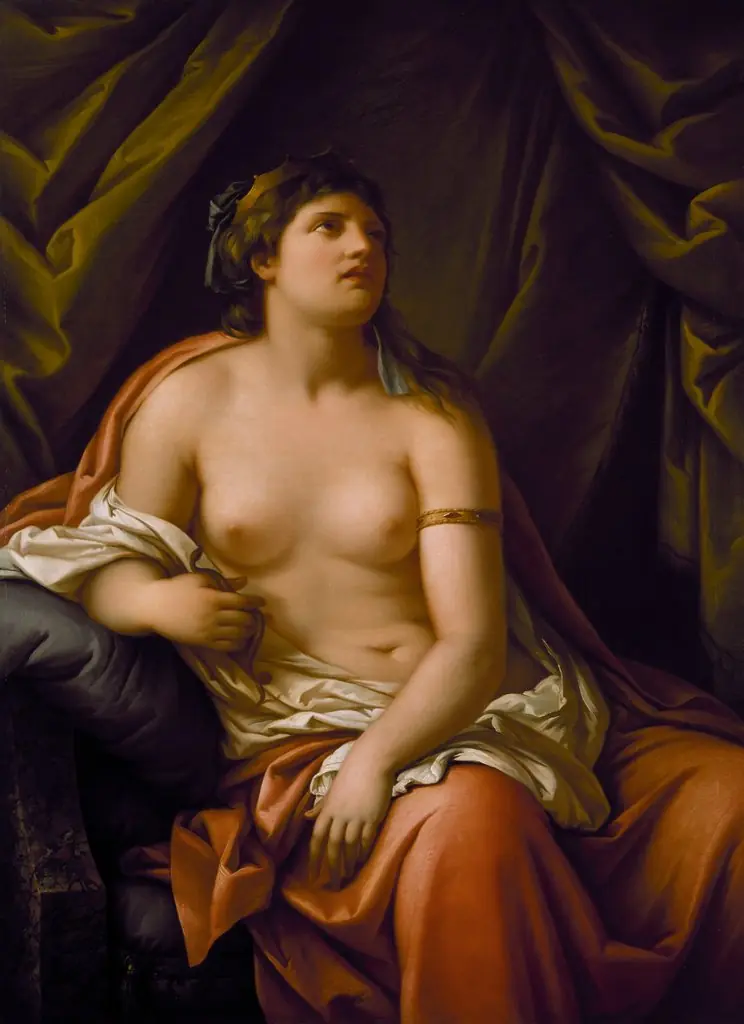
The death of Cleopatra
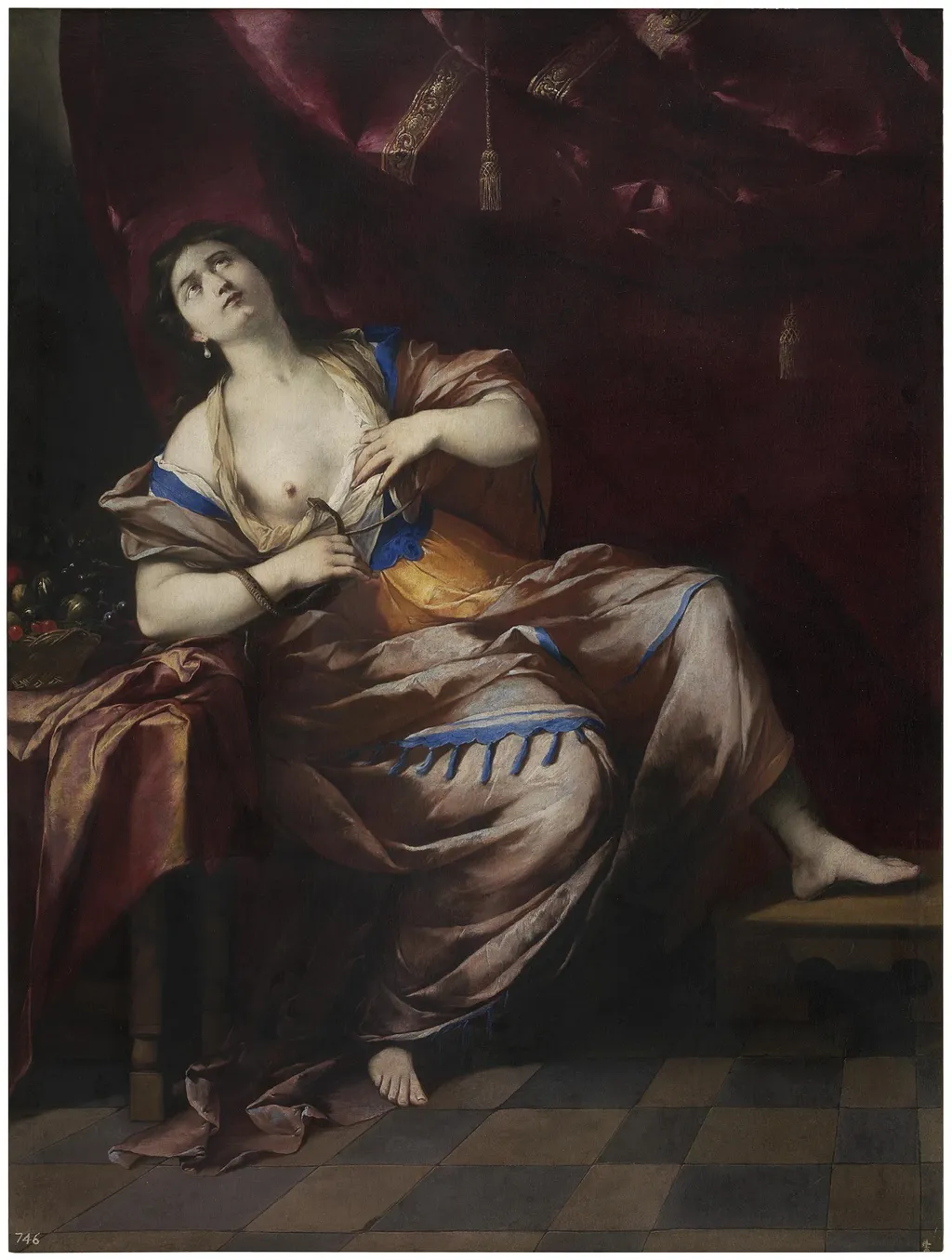
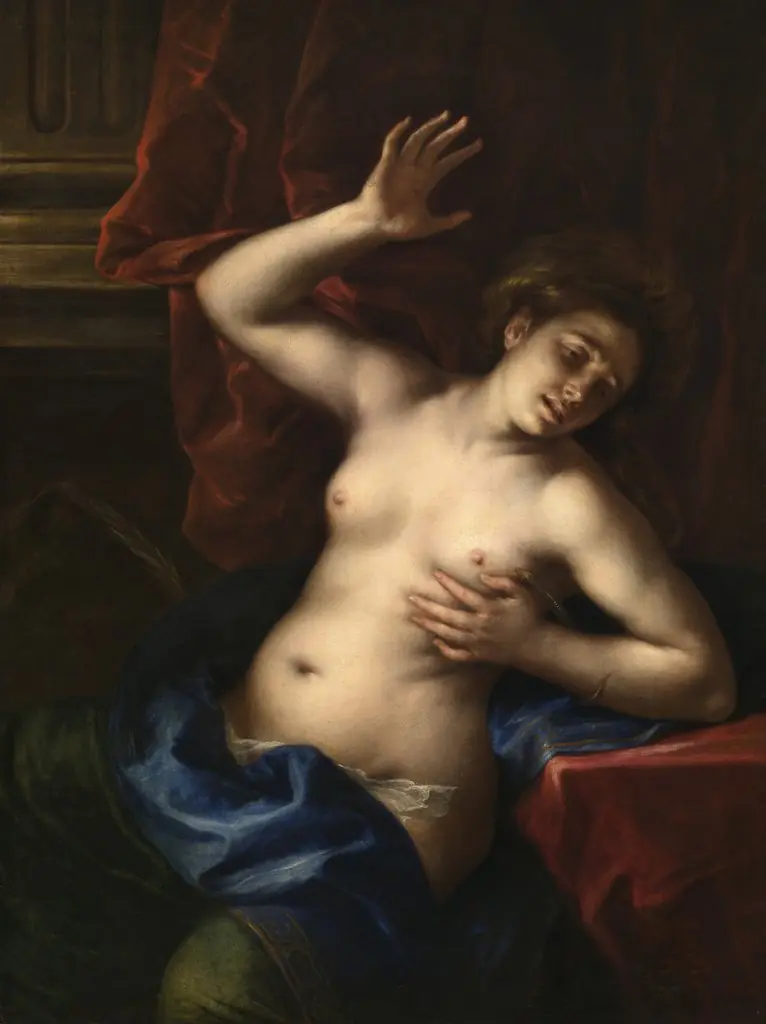
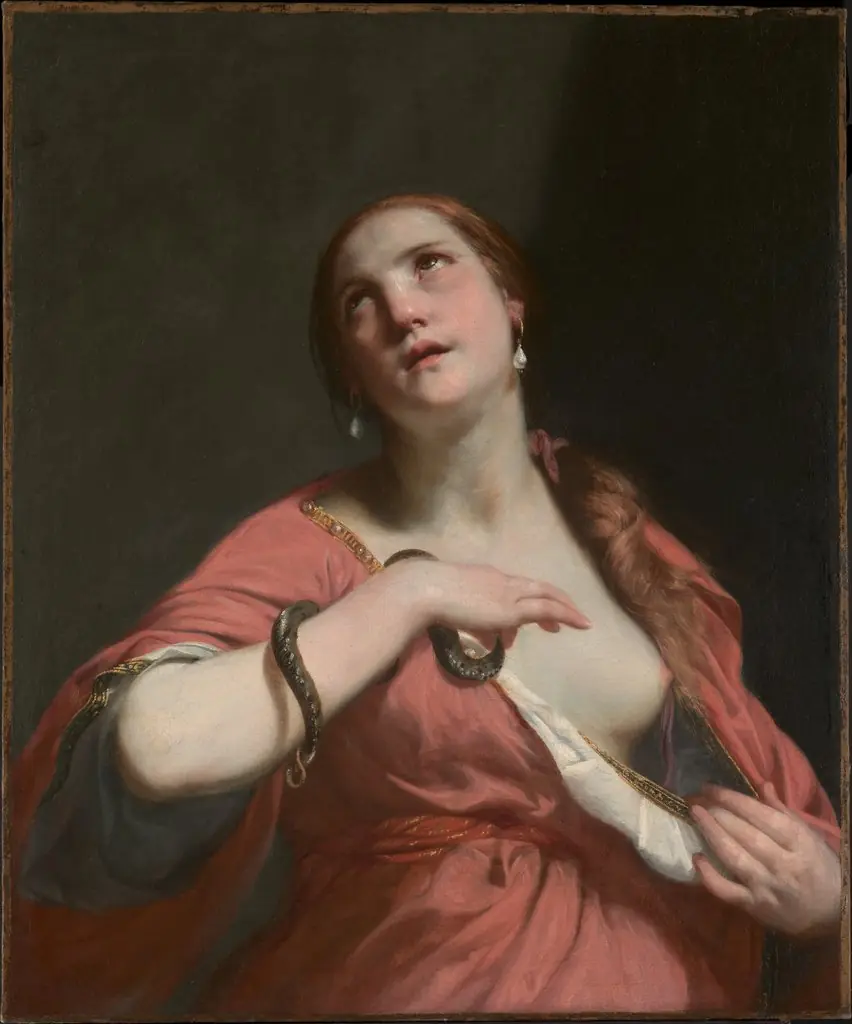
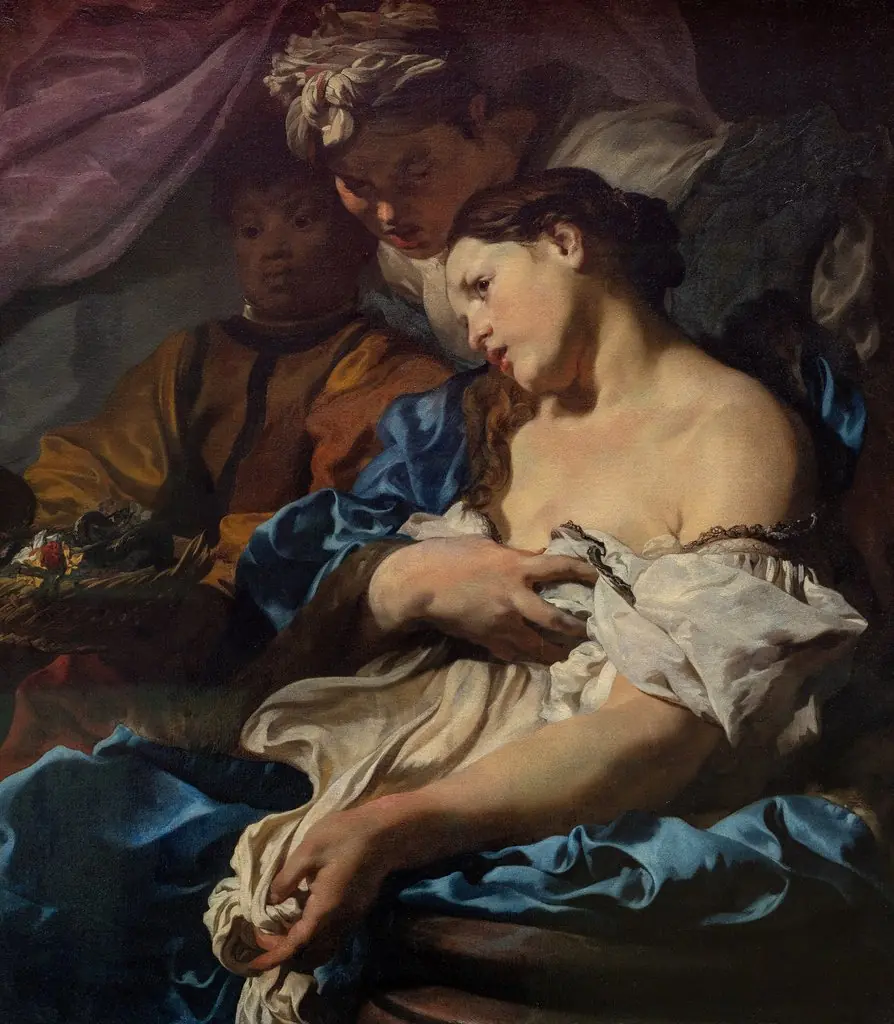
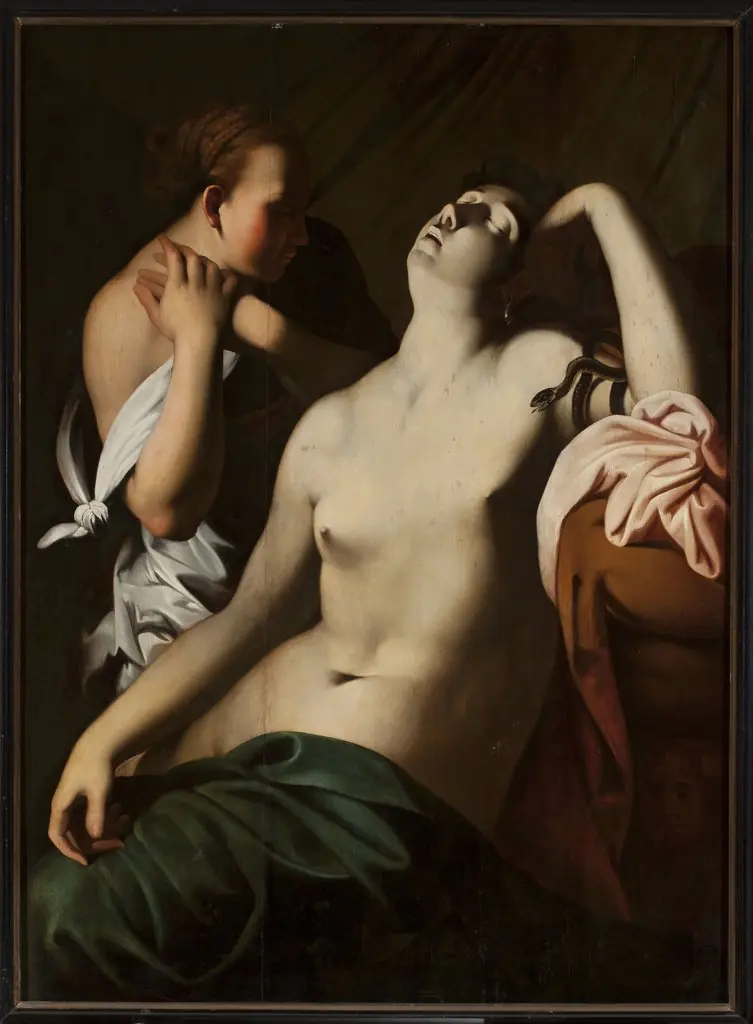
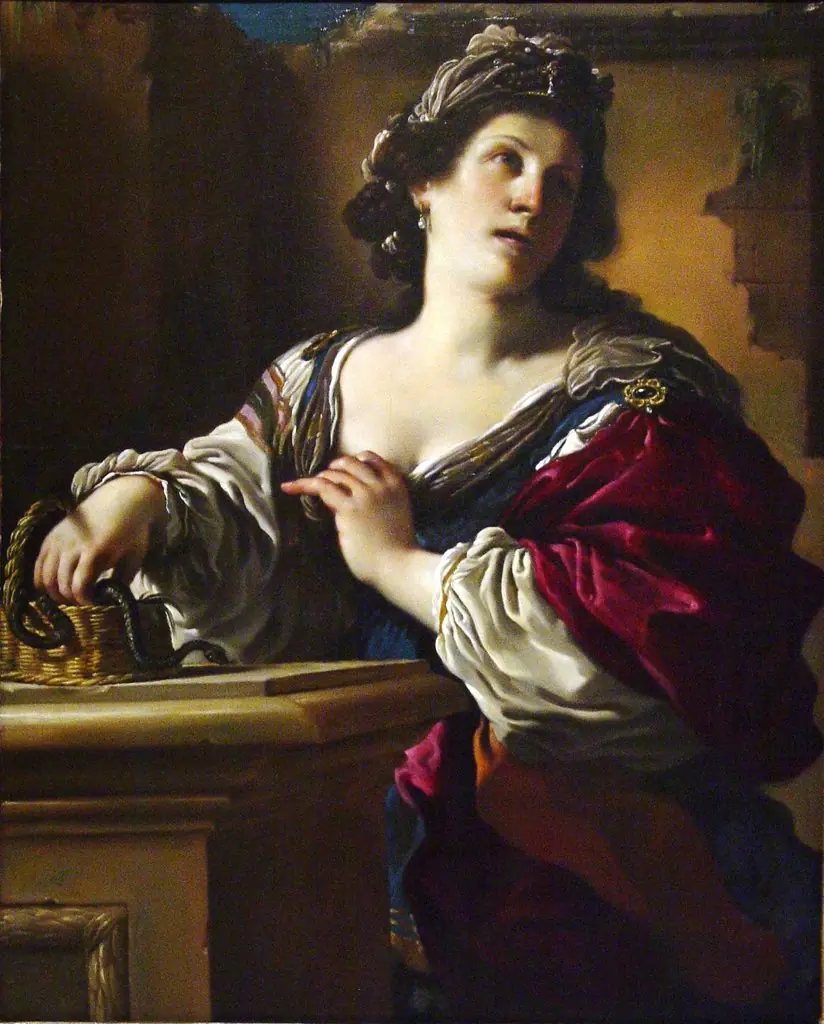
The death of Cleopatra is an oil painting by the Early Baroque Italian artist Andrea Vaccaro. It dates from 1601 and is held in the collection of the Museo del Prado.
About this work
Overview
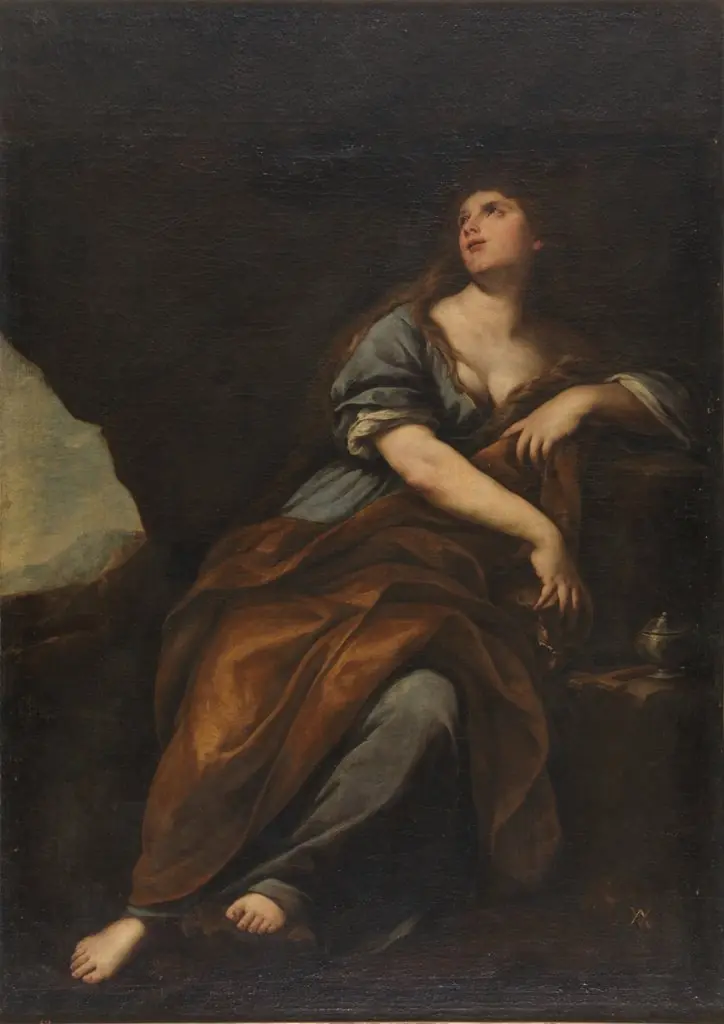
Painted in the early 17th century by Andrea Vaccaro, this oil on canvas work portrays the final moments of Cleopatra. Though often associated with religious themes, Vaccaro also engaged with historical subjects, blending dramatic lighting with restrained emotion. The painting resides in the Museo del Prado, reflecting its significance in early Baroque Italian collections.
Subject & Meaning
Cleopatra is depicted not in panic or agony, but in quiet resignation, seated on the floor with a calm gaze directed upward. Her partially exposed torso and loose hair suggest vulnerability, yet her expression conveys composure. The bowl of fruit beside her may allude to the myth of the asp’s venom carried in a basket of figs, subtly signaling her method of death without overt violence.
Technique & Style
Vaccaro employs chiaroscuro to isolate the figure against a deep, shadowed background, enhancing the intimacy of the scene. The red curtain behind her creates a framed, theatrical space, while the soft modeling of skin and fabric reflects Caravaggesque naturalism. Brushwork is precise yet unobtrusive, prioritizing emotional stillness over theatrical drama.
History & Provenance
The painting entered the Spanish royal collection in the 17th century, likely acquired during a period of active patronage of Italian art. It has remained in the Prado since its formal establishment, with no record of significant alteration. Vaccaro’s reputation as a Neapolitan painter helped secure its place among works by southern Italian artists collected by the Habsburgs.
Context
In early 17th-century Italy, depictions of Cleopatra often emphasized moral or emotional themes rather than political narratives. Vaccaro’s version aligns with a trend favoring introspective, humanized portrayals of tragic figures, contrasting with earlier Renaissance idealizations. The quiet tone reflects broader shifts in Baroque sensibility toward psychological depth.
Legacy
While not among Vaccaro’s most widely studied works, this painting exemplifies his ability to merge Caravaggio’s realism with a subdued, contemplative mood. It contributes to the broader understanding of how Neapolitan artists adapted northern Italian innovations to suit local tastes for intimate, emotionally resonant storytelling.
Own this work as a print
Artist & collection
Artist
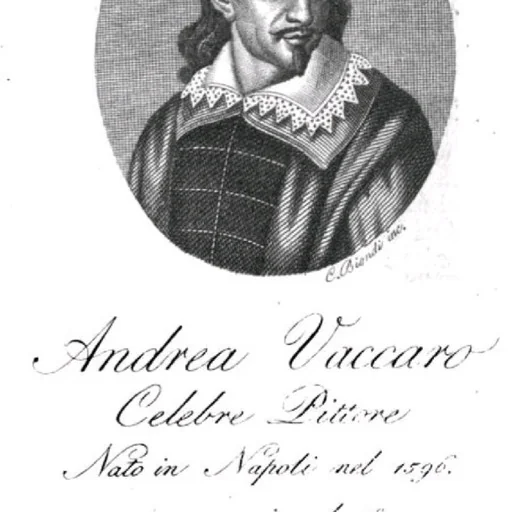
Andrea Vaccaro (baptised on 8 May 1604 – 18 January 1670) was an Italian painter of the Baroque period.