Artwork
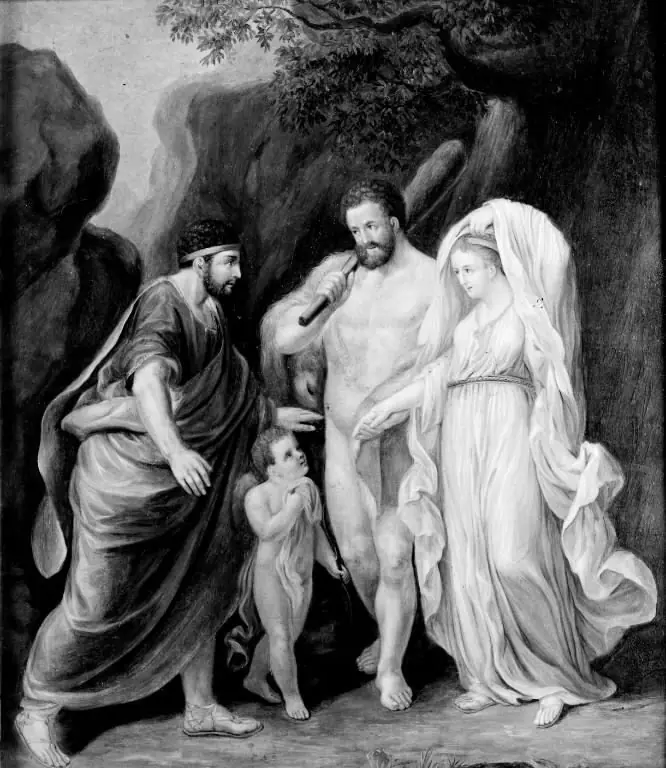
Hercules and Alcestis
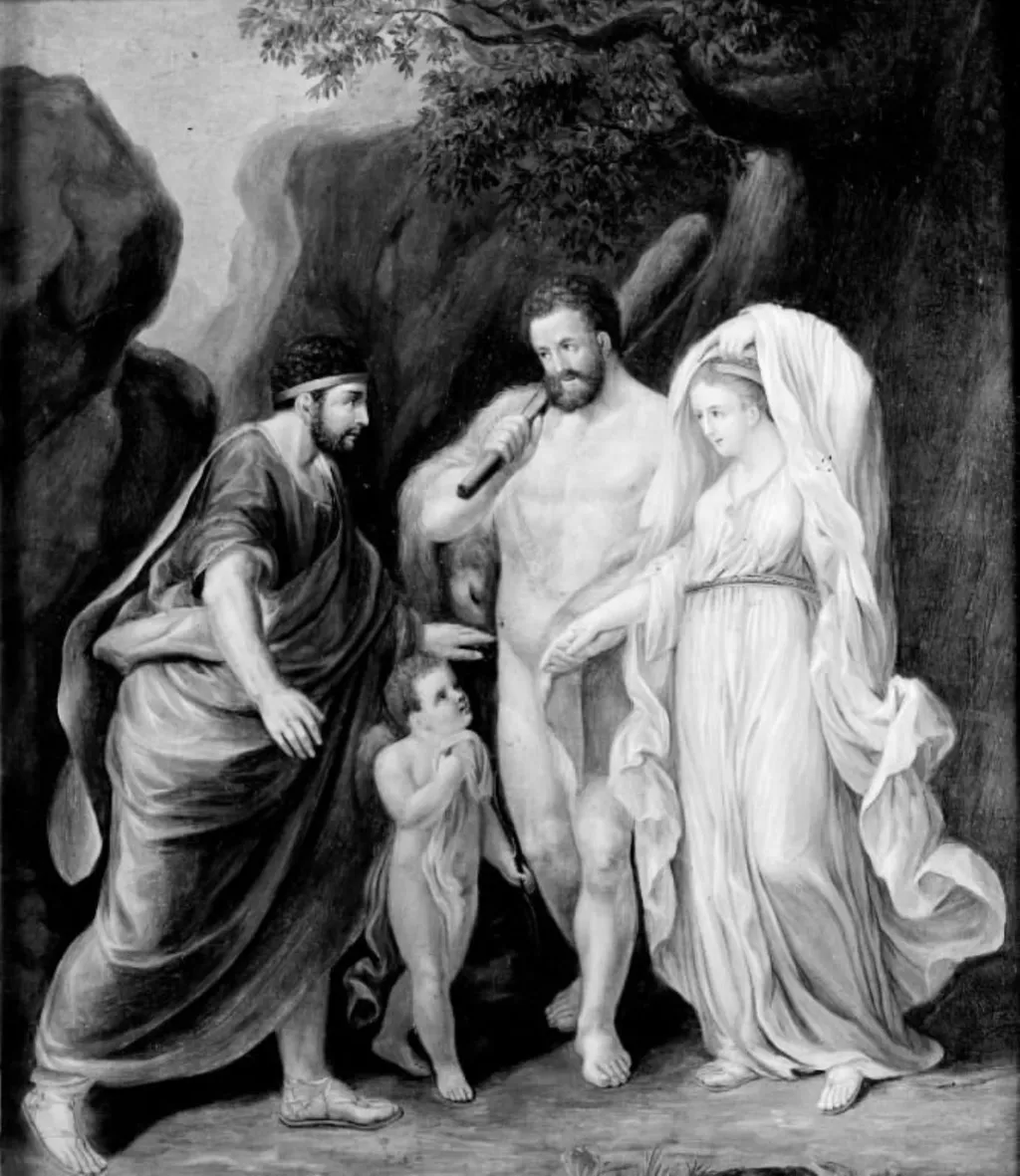
Hercules and Alcestis is a photography by Unknown. It dates from 1750 and is held in the collection of the Statens Museum for Kunst. This black-and-white image depicts a mythological scene attributed to an artist active around 1750.
About this work
Overview
This black-and-white image depicts a mythological scene attributed to an artist active around 1750.
This black-and-white image depicts a mythological scene attributed to an artist active around 1750. The composition centers on four figures in a dim, rocky environment. The work is held in the collection of the Museum of Ethnography, though its original context as a painted canvas is now known only through photographic documentation. The lighting and arrangement suggest a dramatic narrative moment drawn from classical legend.
Subject & Meaning
The scene illustrates Hercules intervening in the fate of Alcestis, who sacrificed her life to save her husband. The winged figure is likely Admetus, the king restored to life, while the woman beside him is Alcestis, returned from the underworld. The bearded man pointing is Hercules, asserting his role as the divine agent of rescue. The child, possibly their son, observes the reunion, reinforcing themes of familial redemption and divine intervention.
Technique & Style
The image reveals strong contrasts of light and shadow, characteristic of chiaroscuro, which heightens emotional tension and defines form in the absence of color. Figures are rendered with sculptural weight, their drapery and musculature suggested through gradations of tone. The rocky backdrop and confined space focus attention on the interaction between the central figures, emphasizing narrative clarity over environmental detail.
History & Provenance
The original painting, dated circa 1750, was likely created in a European academic tradition, though the artist’s identity remains unverified. It entered the Museum of Ethnography’s collection in the late 19th or early 20th century, possibly as part of a broader acquisition of mythological imagery used for educational purposes. The current record exists only as a photographic reproduction, with the original’s current location or condition unknown.
Context
During the mid-18th century, mythological subjects were frequently employed in academic art to convey moral and emotional ideals. Hercules, as a symbol of strength and virtue, was a popular figure in such narratives. The depiction of Alcestis’s return reflects Enlightenment-era interest in themes of sacrifice, resurrection, and the limits of human and divine power, aligning with broader cultural fascination with classical antiquity.
Legacy
Though the original painting is no longer accessible, its photographic record preserves a moment in the transmission of classical myth through visual culture. The image’s inclusion in an ethnographic museum suggests its use as an artifact of cultural representation rather than fine art. It remains a reference point for understanding how mythological narratives were visually codified and disseminated in the 18th and 19th centuries.
Artist & collection

 Domestic Scene
 Giacomo and Cardinal Marco, investing Andrea, Abbot of San Zeno, with his Benefice
 The Nymph of Fontainebleau
 Portrait of a Woman
 Madonna and Child with Saints in the Enclosed Garden
 Venus and Minerva
 Family Group of Four on Sofa
 Wall painting from Room H of the Villa of P. Fannius Synistor at Boscoreale
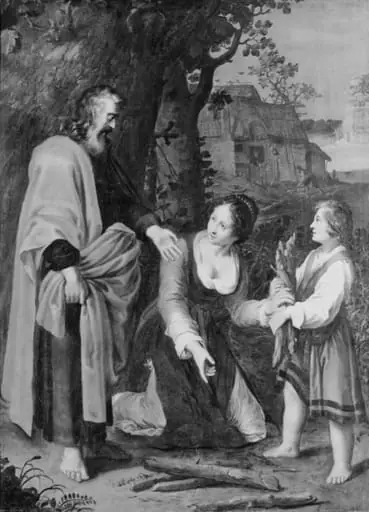 The Prophet Elisha and the Shunamite Woman
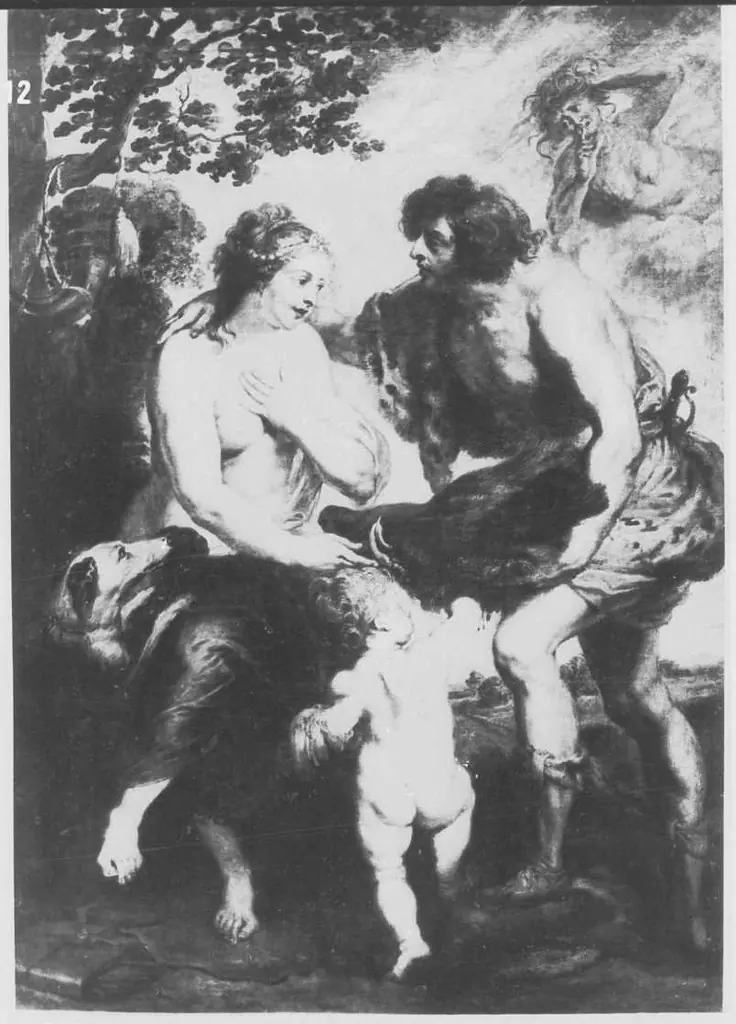 Meleager and Atalanta
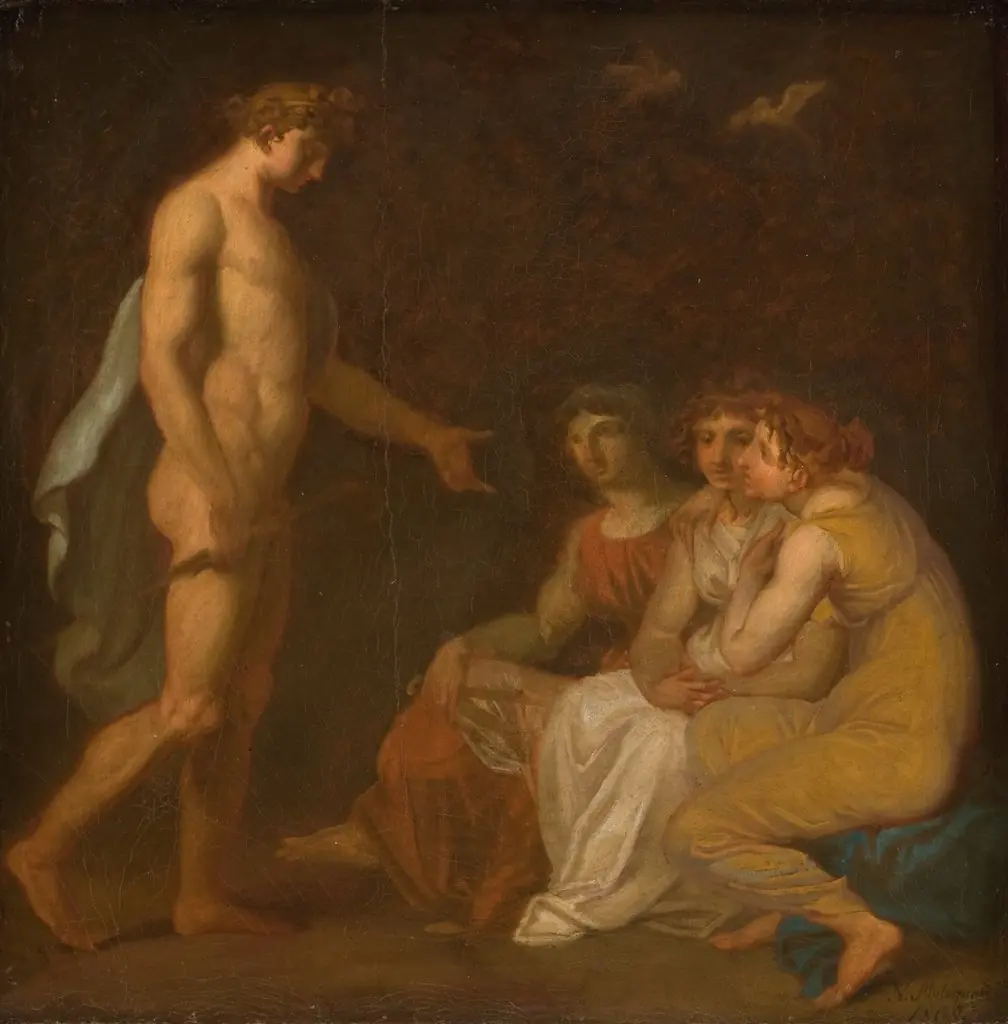 Apollo charging the Parcae to visit Ceres, who has fled from the Earth
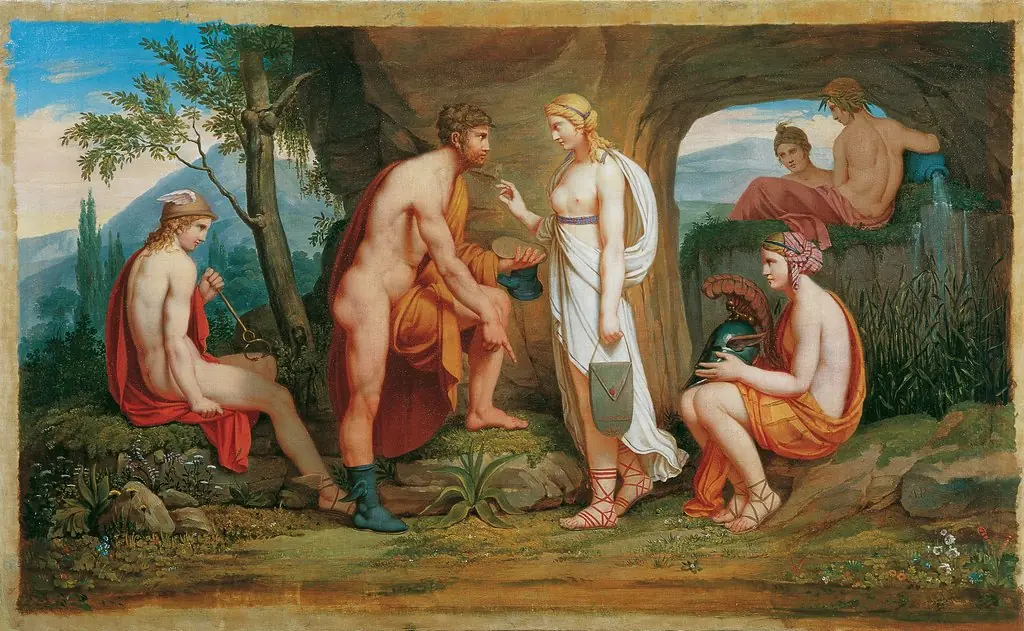 Perseus and the Nymphs
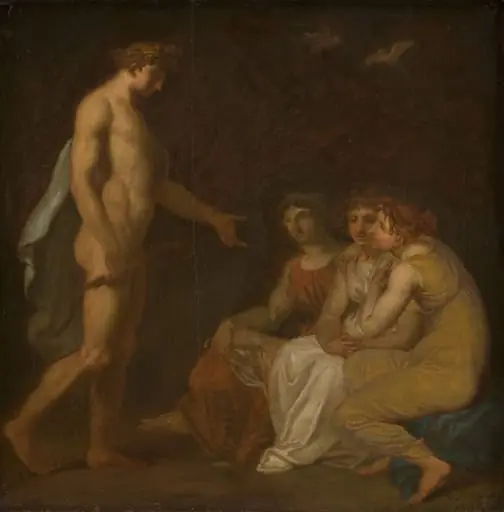 Apollo charging the Parcae to visit Ceres, who has fled from the Earth
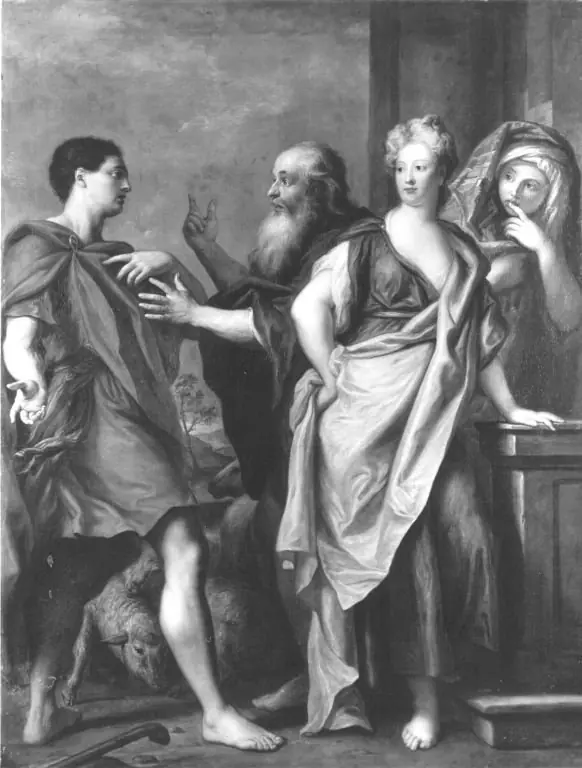 Jacob blames Laban of his deception with Lea (Genesis 29:25-27)
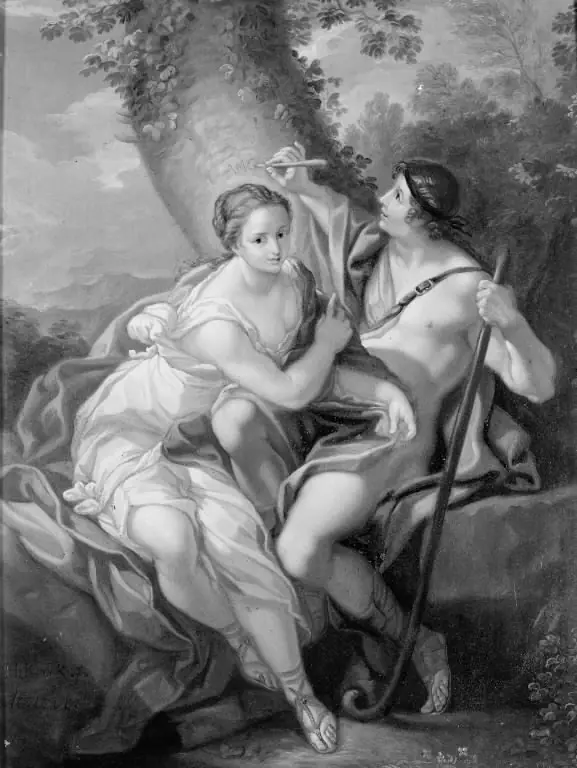 Medos og Angelica
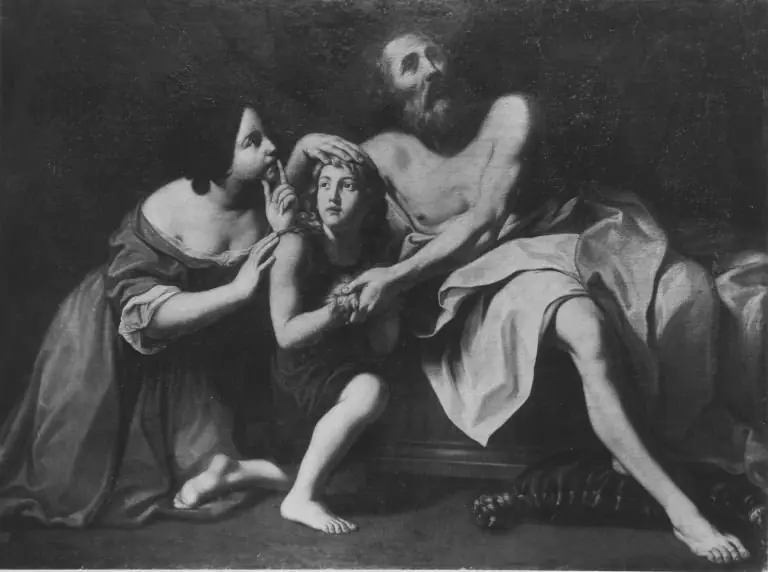 Isaak segnet Jakob
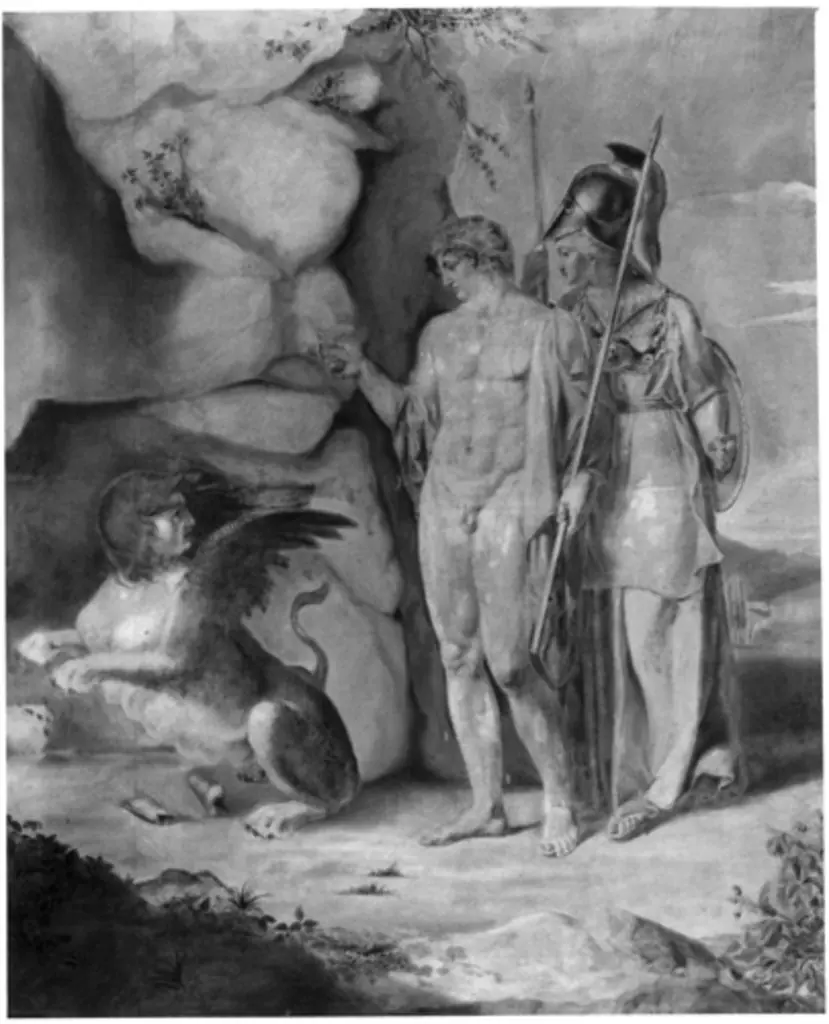 Oedipus und Minerva mit der Sphinx
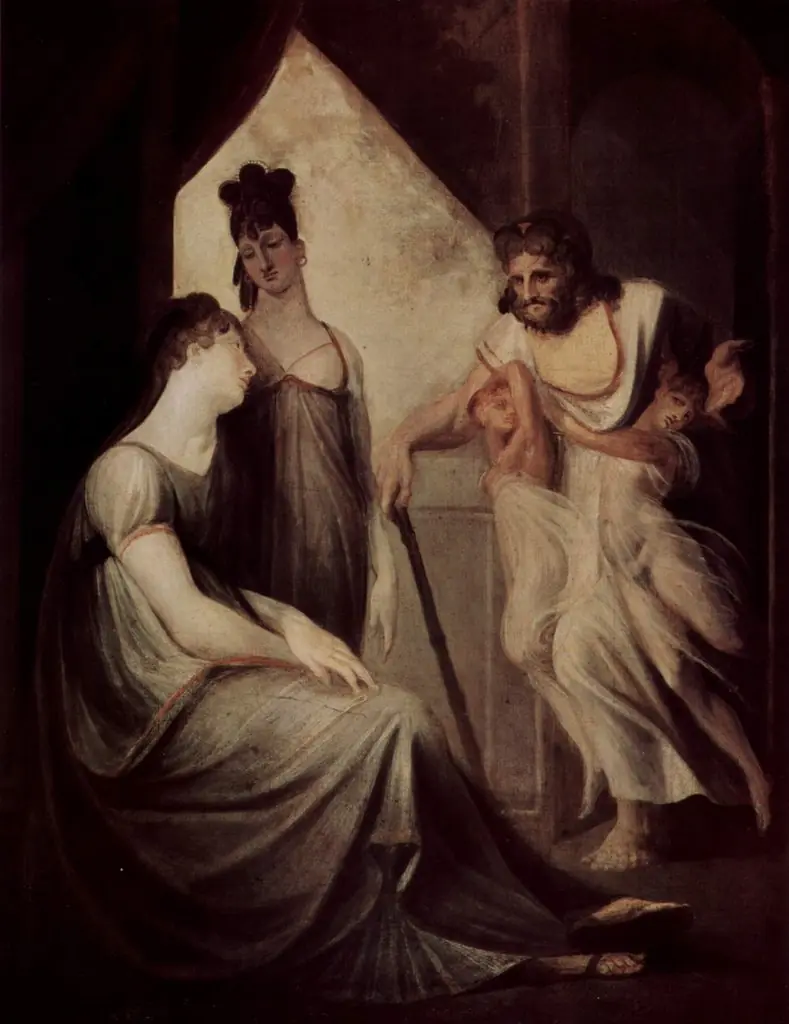 Thetis bittet Hephaistos, für ihren Sohn Achilleus eine Rüstung zu schmieden
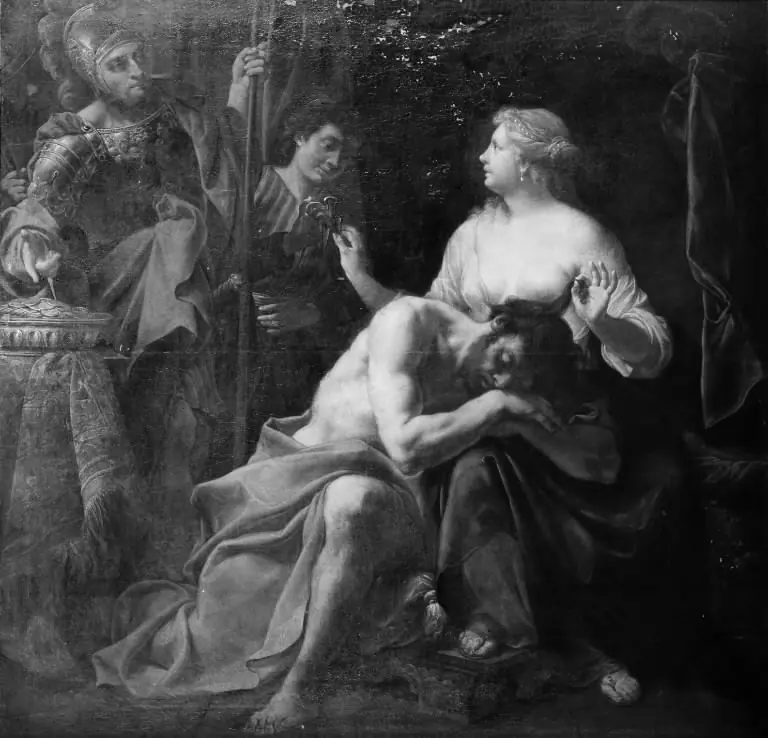 Samson and Delilah
 Hercules and Alcestis