Artwork
The Holy Family
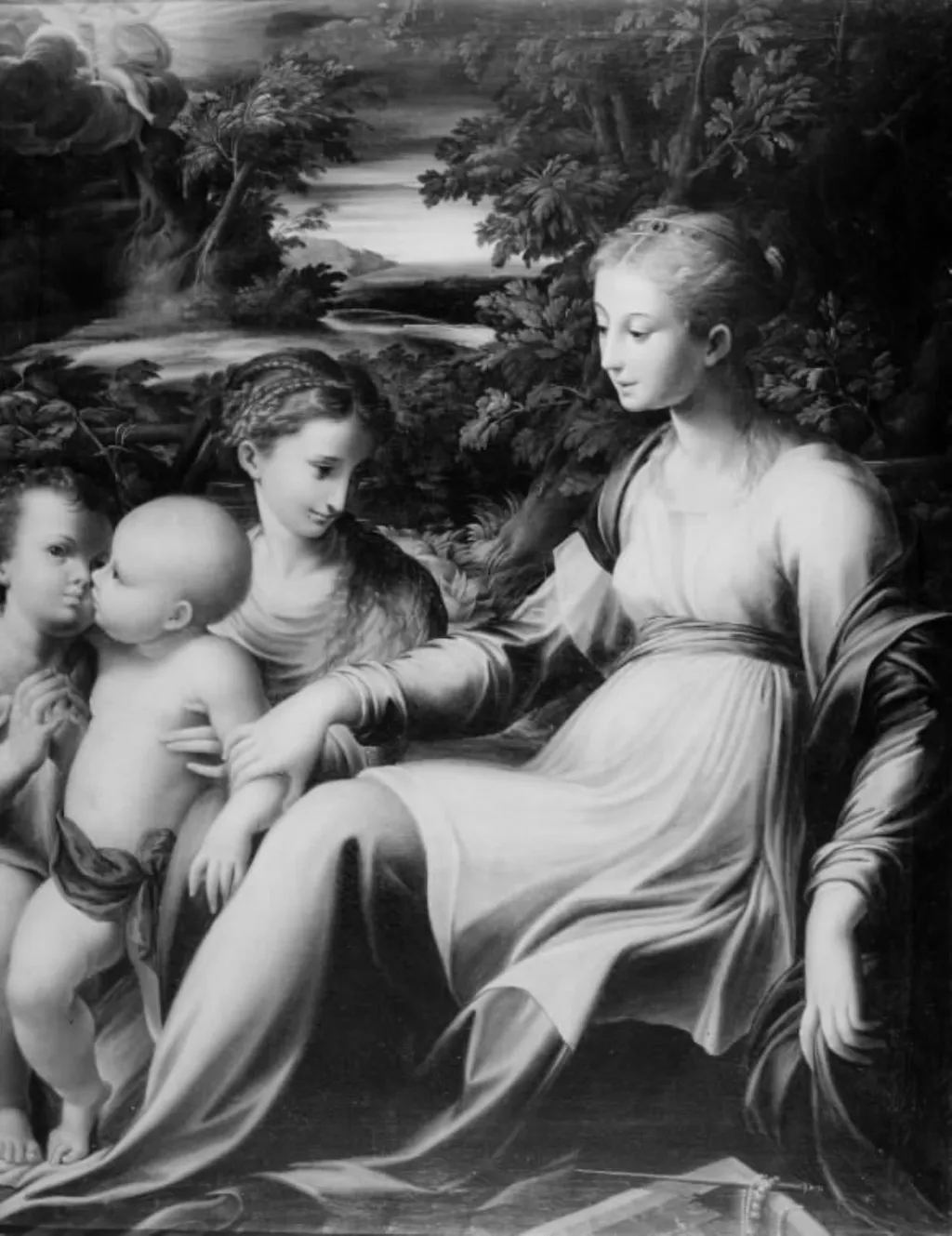
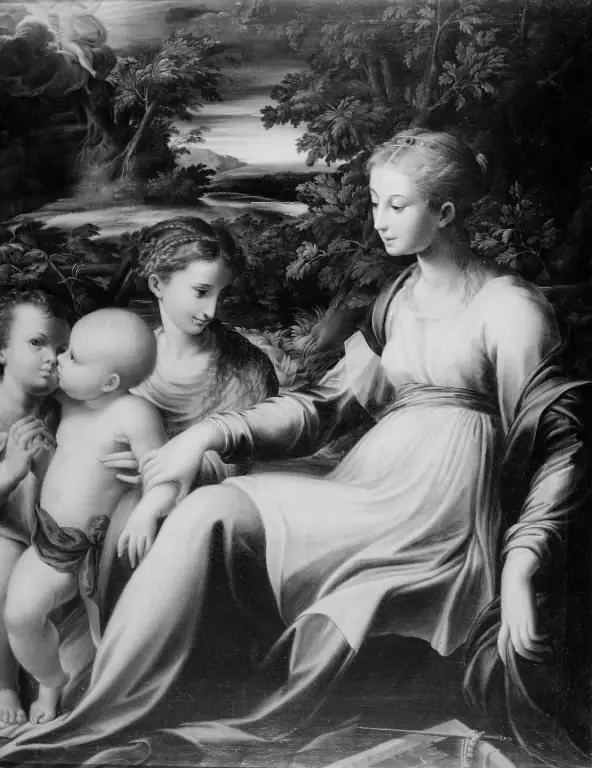
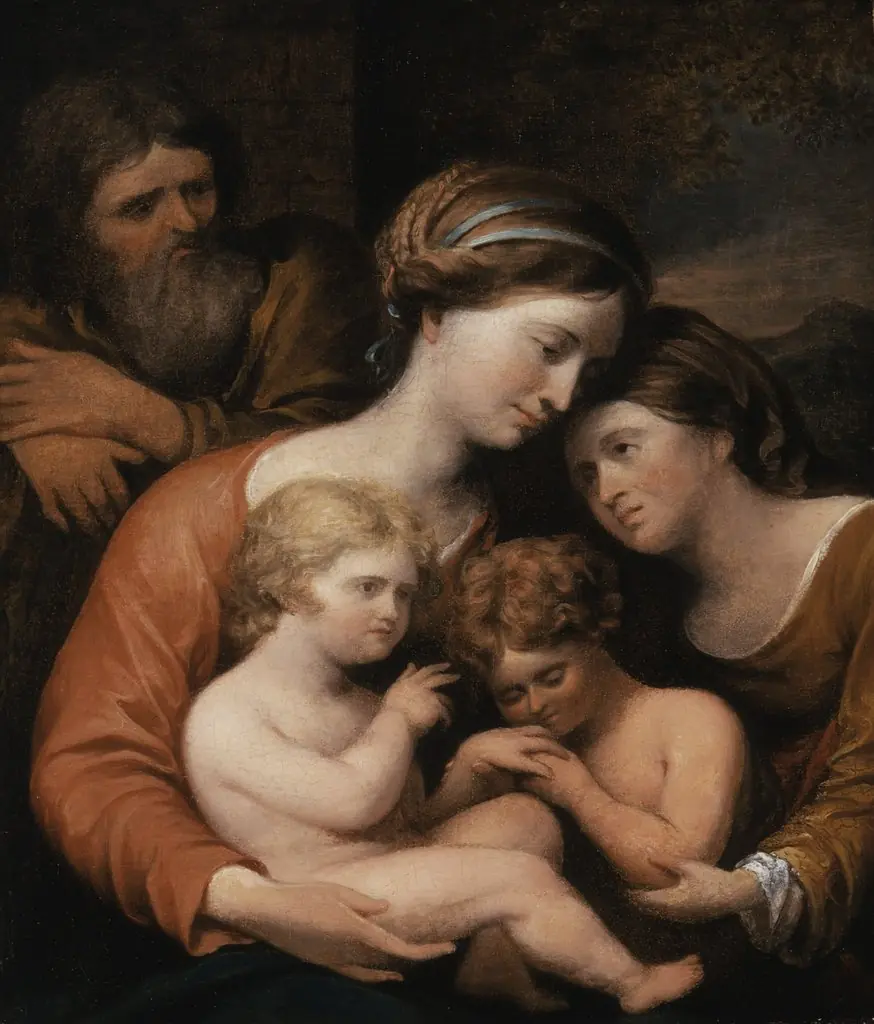
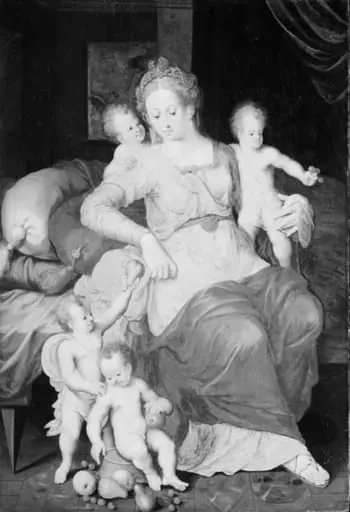
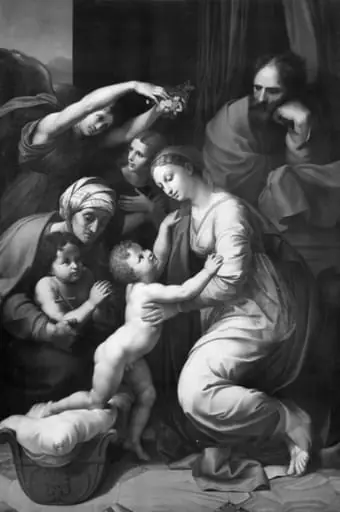
The Holy Family is a photography by the Renaissance artist Unknown. It dates from 1530 and is held in the collection of the Statens Museum for Kunst.
About this work
Overview
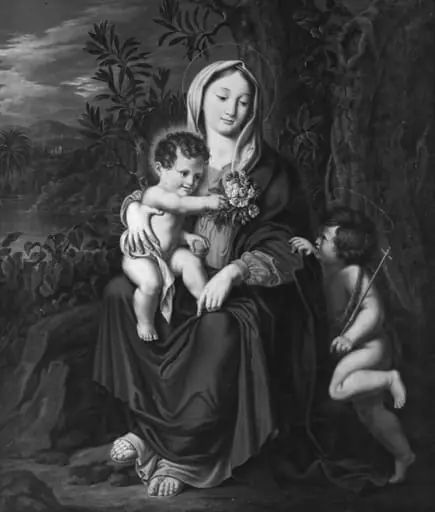
Created in 1530 by the artist known as 901_person, this work titled *The Holy Family* is presently part of the collection of the Museum of Ethnography. The piece is reproduced as a black‑and‑white photographic image, allowing viewers to examine its composition and iconography despite the absence of original colour.
Subject & Meaning
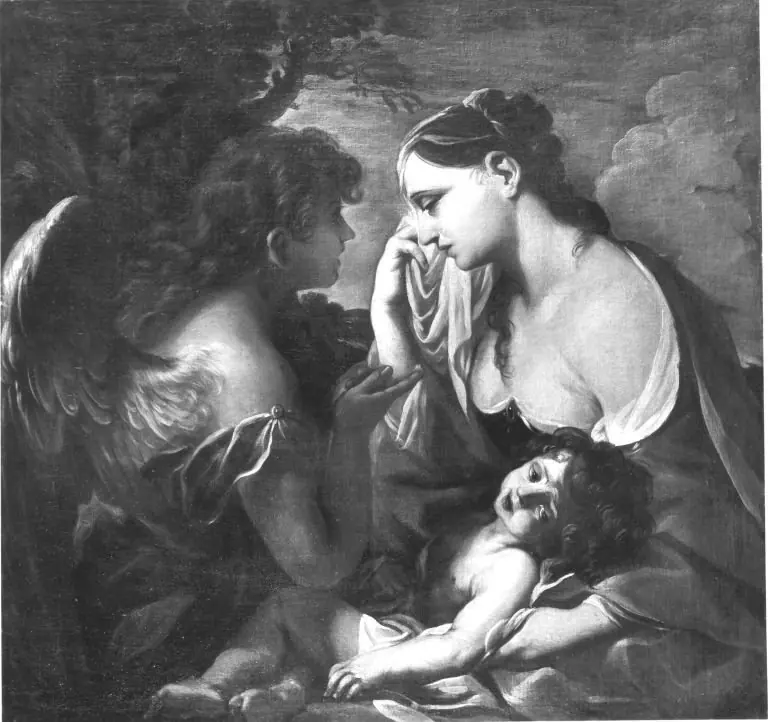
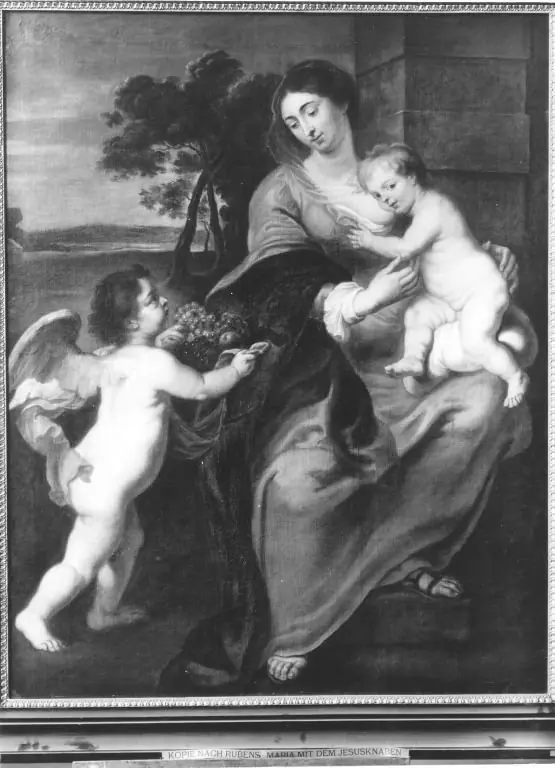
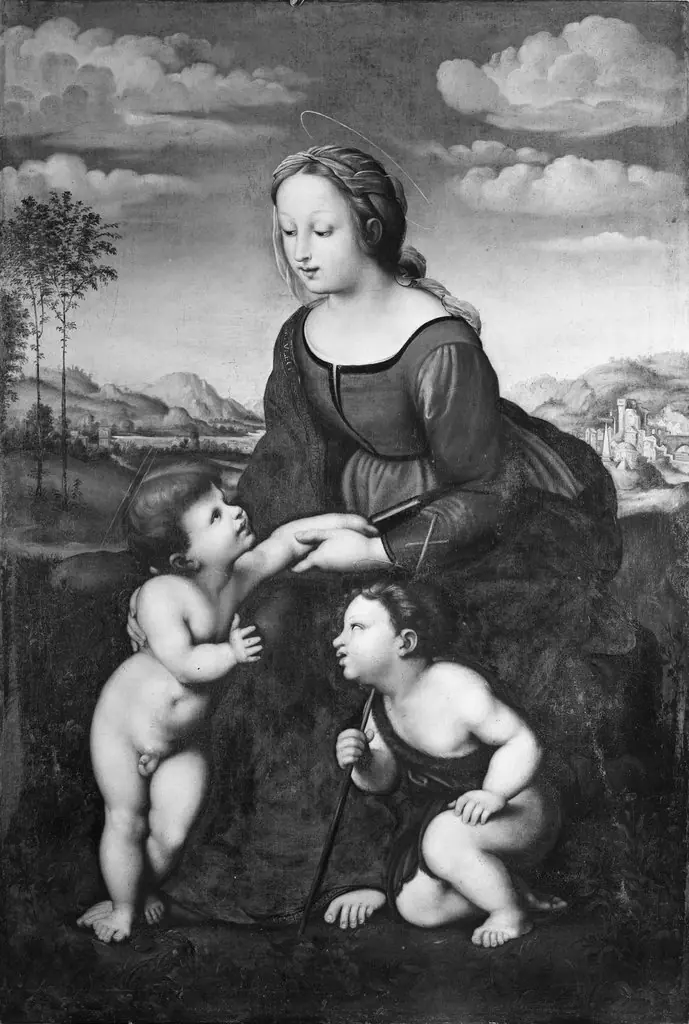
The composition centers on the Virgin Mary, whose gentle gaze falls upon the infant Jesus cradled in the arms of a female figure positioned to her left. Two small cherubic figures flank the scene, adding a sense of divine presence. The arrangement conveys themes of familial devotion and the sanctity of the Christ child within a tranquil setting.
Technique & Style
Rendered in a manner reminiscent of Renaissance painting, the image displays balanced proportions, soft modelling of forms, and a harmonious spatial layout. The foreground figures are delineated with clear outlines, while the background recedes into a calm landscape of trees, rolling hills and a reflective water surface, reinforcing the serene atmosphere.
History & Provenance
The work dates to the early sixteenth century, a period when religious subjects dominated artistic production in Europe. Its attribution to 901_person is based on stylistic analysis and archival references. The painting entered the Museum of Ethnography’s holdings through acquisition in the twentieth century, where it remains on display as part of the museum’s European art holdings.
Context
The image reflects broader Renaissance interests in naturalistic settings and the integration of sacred narrative with everyday surroundings.
The image reflects broader Renaissance interests in naturalistic settings and the integration of sacred narrative with everyday surroundings. By placing the Holy Family within a peaceful pastoral environment, the artist aligns with contemporary efforts to make divine figures relatable, while the inclusion of putti underscores the period’s fascination with classical motifs blended into Christian iconography.
Artist & collection

 Domestic Scene
 Giacomo and Cardinal Marco, investing Andrea, Abbot of San Zeno, with his Benefice
 The Nymph of Fontainebleau
 Portrait of a Woman
 Madonna and Child with Saints in the Enclosed Garden
 Venus and Minerva
 Family Group of Four on Sofa
 Wall painting from Room H of the Villa of P. Fannius Synistor at Boscoreale