Artwork
Untitled
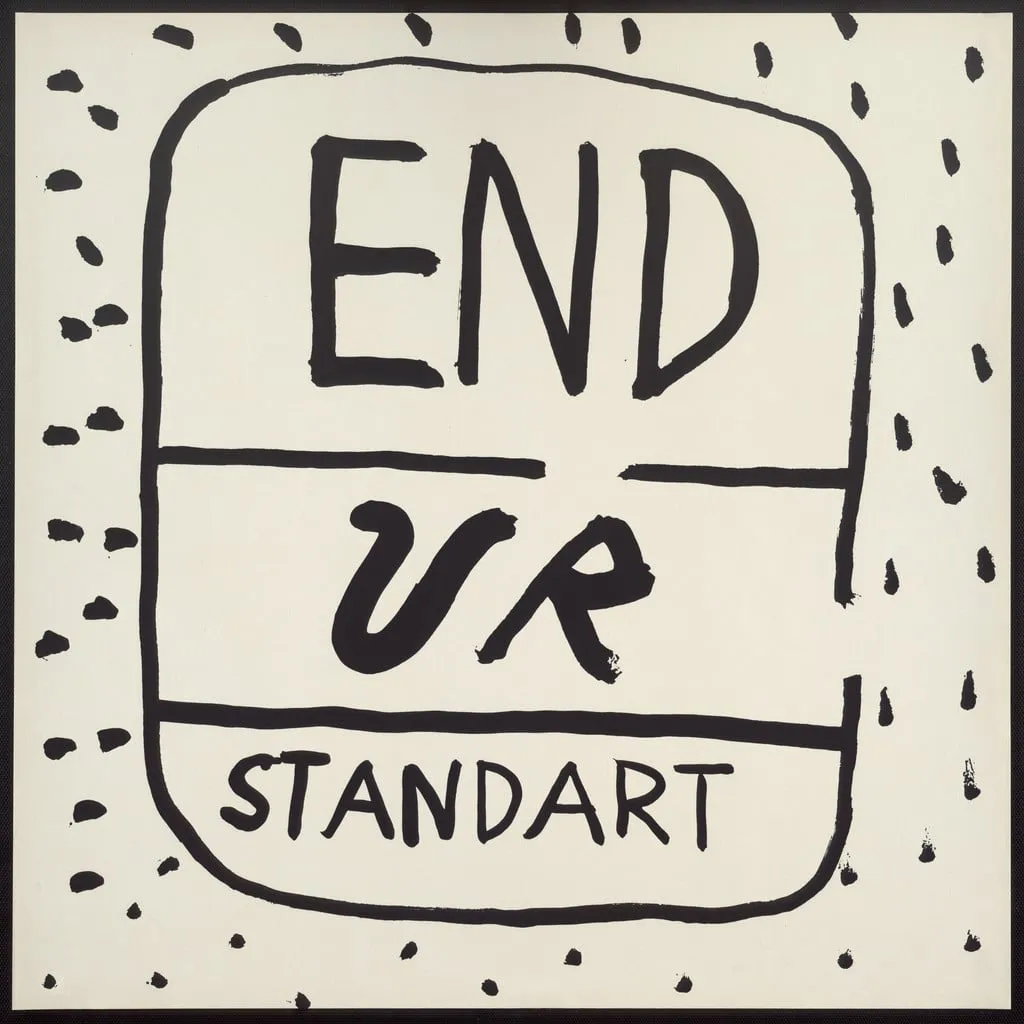
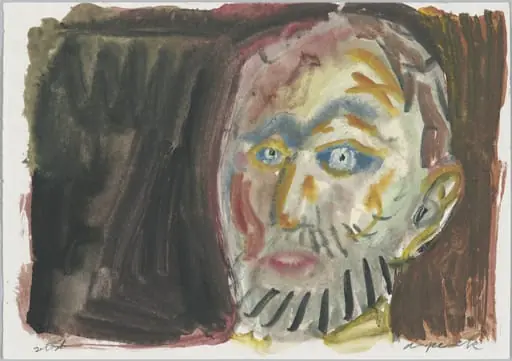
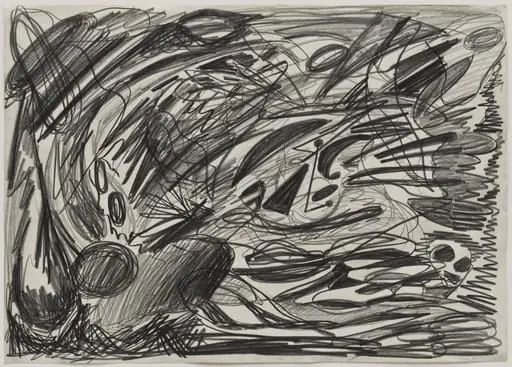
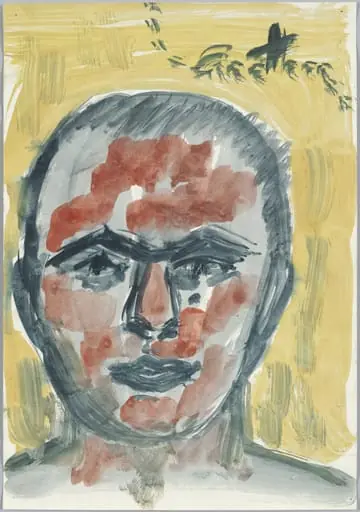
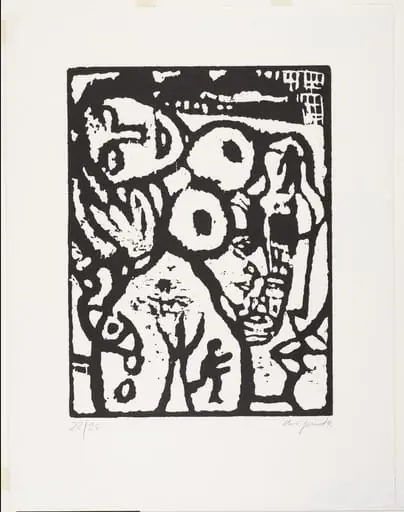
Untitled is an ink print by A.R. Penck. It dates from 1972 and is held in the collection of the Museum of Modern Art. Created in 1972, this screenprint by A.
About this work
Overview
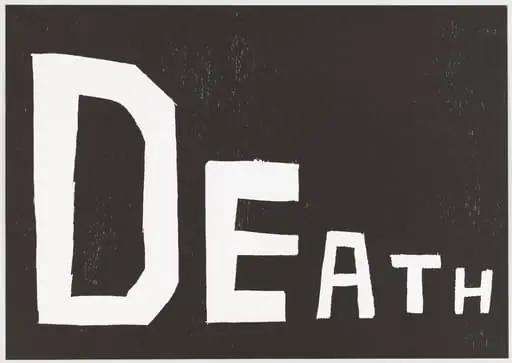
Executed in black and white, it presents a fragmented textual message on a rounded, sign-like format.
Created in 1972, this screenprint by A.R. Penck is part of a body of work that merges visual symbolism with linguistic disruption. Executed in black and white, it presents a fragmented textual message on a rounded, sign-like format. The piece reflects Penck’s broader interest in rejecting conventional aesthetics in favor of raw, symbolic expression, aligning with his association with postwar German neo-expressionism.
Subject & Meaning
The phrase 'END UR STANDART' is deliberately misspelled and fragmented across three lines, challenging the viewer’s expectation of legibility and authority. The distortion suggests a critique of standardized language and institutional norms. Penck’s use of crude, hand-drawn lettering evokes graffiti or protest signage, implying a subversive, anti-establishment stance without explicit political reference.
Technique & Style
Penck employed screenprinting to achieve flat, high-contrast fields of black ink, emphasizing the work’s graphic simplicity. The uneven letterforms and scattered ink splatters mimic the spontaneity of hand-painted signs, rejecting mechanical precision. This aesthetic draws from non-Western and children’s art, reinforcing his preference for primal, unrefined visual language over academic tradition.
History & Provenance
The work entered the collection of The Museum of Modern Art as part of its broader acquisition of post-1960s German art. Penck, who operated under multiple pseudonyms during the Cold War, was recognized in the West for his resistance to East German cultural controls. This screenprint reflects his early experimentation with printmaking, preceding his more widely known paintings of the late 1970s.
Context
Made during a period of political tension in divided Germany, the piece resonates with underground artistic movements that rejected state-sanctioned realism. Penck’s visual vocabulary—reductive symbols, distorted text—mirrored broader countercultural efforts to dismantle rigid systems of communication. His work aligned with international trends in punk and conceptual art, though rooted in personal, non-ideological expression.
Legacy
This screenprint exemplifies Penck’s enduring influence on artists who prioritize raw visual language over technical polish. Its inclusion in MoMA’s collection helped legitimize the use of linguistic distortion and primitive forms in contemporary printmaking. Later generations of artists have cited this work as an early example of how text can function as both image and critique.
Artist & collection
Artist
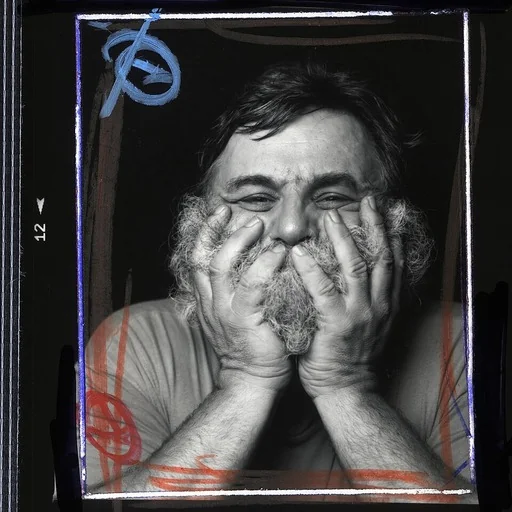
Ralf Winkler (alias A. R. Penck, who also used the pseudonyms Mike Hammer, T. M., Mickey Spilane, Theodor Marx, "a. Y." or just "Y" 5 October 1939 – 2 May 2017) was a German painter, printmaker, sculptor, and jazz…