Artwork
The Roses: Rosa Gallica Purpurea Velutina Parva
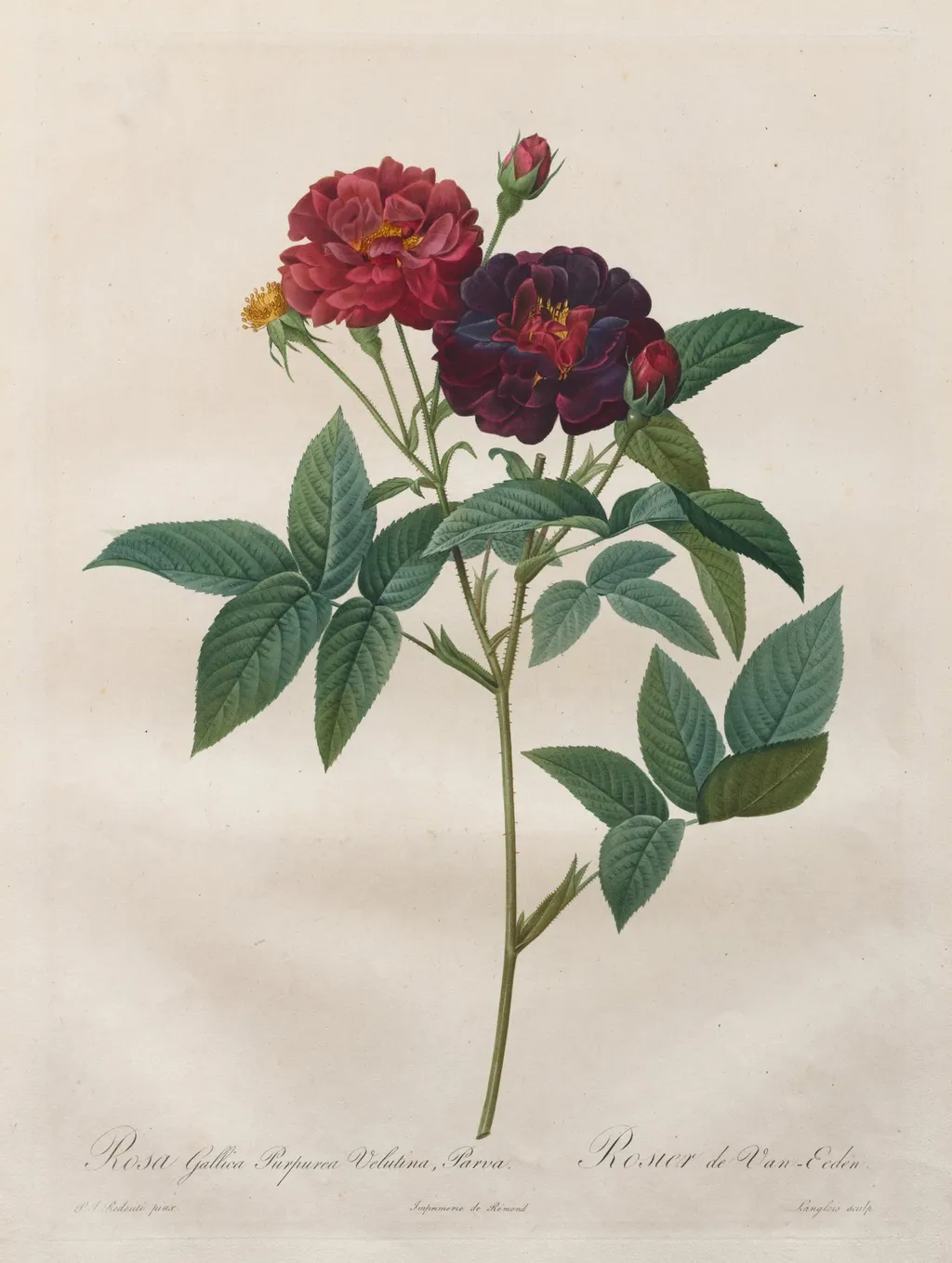
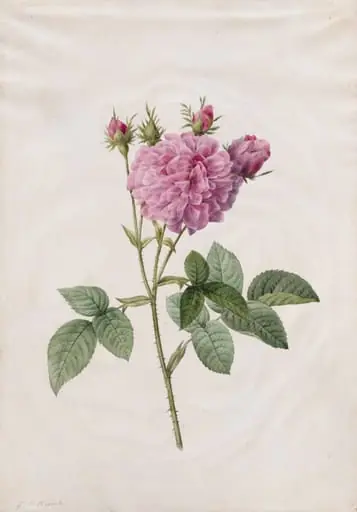
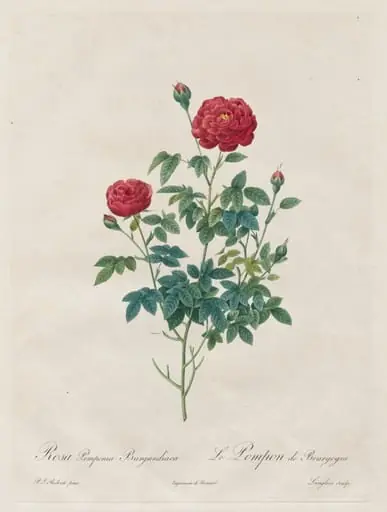
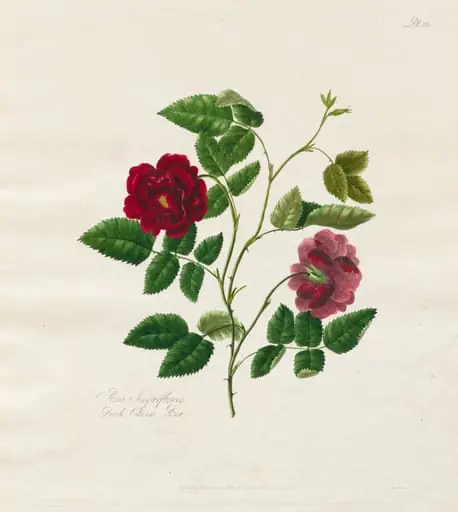
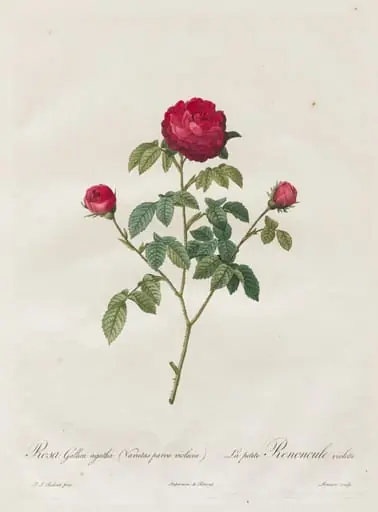
The Roses: Rosa Gallica Purpurea Velutina Parva is a print by the Romanticist artist Jérôme-Martin Langlois. It dates from 1820 and is held in the collection of the Cleveland Museum of Art. This print depicts a single Rosa gallica purpurea velutina parva, rendered with meticulous precision on a plain background.
About this work
Overview
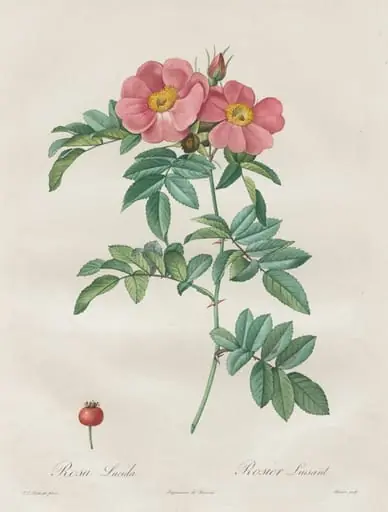
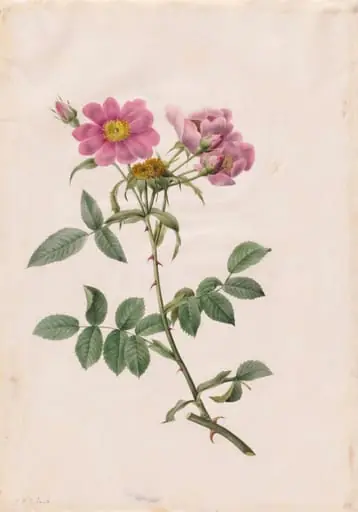
This print depicts a single Rosa gallica purpurea velutina parva, rendered with meticulous precision on a plain background.
This print depicts a single Rosa gallica purpurea velutina parva, rendered with meticulous precision on a plain background. Created through stipple engraving and hand-colored with watercolor washes, it captures the rose’s velvety texture and delicate structure without overt artistic flourish. The work reflects a shift in botanical illustration toward accuracy over dramatic expression, prioritizing scientific clarity in an era when watercolor and ink were replacing oil for natural studies.
Subject & Meaning
The rose is presented as a specimen, not a symbol. Its half-open petals, fine venation, and thorns are rendered with clinical attention, suggesting a purpose rooted in taxonomy rather than ornamentation. The quiet composition invites close observation, aligning with 18th- and early 19th-century botanical efforts to document plant forms with fidelity. There is no narrative, only the silent record of a living form preserved in ink and pigment.
Technique & Style
Engravers used fine stippling to replicate the subtle gradations of color and texture found in Redouté’s original drawings. Each petal and thorn was carefully defined, then enhanced with thin, transparent watercolor washes that matched the printed tones. Occasional highlights in contrasting tints added dimension without disrupting the overall restraint. The method prioritized consistency and reproducibility over the spontaneity of brushwork.
History & Provenance
Produced during a period when botanical illustration was becoming a specialized discipline, this print emerged from a collaborative process between artist, engraver, and colorist. It belongs to a series of works commissioned to document European flora, often for scientific institutions or private collectors. The reliance on hand-coloring ensured each impression retained individuality despite mass production techniques.
Context
At the time, artists were moving away from oil’s heaviness toward watercolor and ink for their immediacy and lightness, better suited to capturing transient natural forms. This print reflects that transition, aligning with broader trends in natural history where visual precision replaced romanticized depictions. The absence of landscape or context underscores its role as a scientific record rather than a decorative piece.
Legacy
The print exemplifies the peak of pre-photographic botanical documentation, where human skill compensated for technological limits. Its influence extended into horticultural publications and museum collections, setting standards for accuracy in plant illustration. Though later replaced by photographic reproduction, its method remains a benchmark for the marriage of art and science in natural history.
Artist & collection
Artist
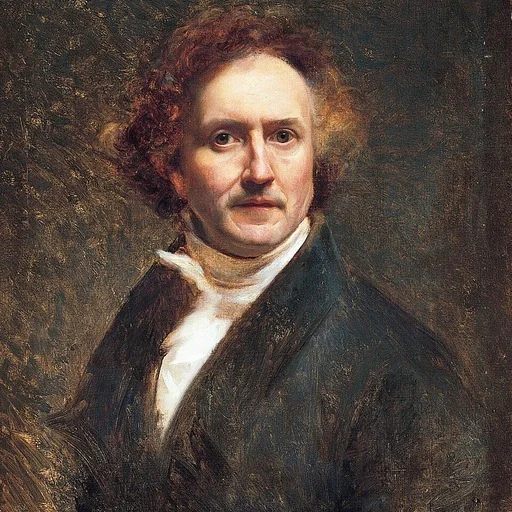
Jerome-Martin Langlois (11 March 1779 – 28 December 1838) was a French Neoclassical style painter. He was trained by painter Jacques-Louis David and he was a Knight of the Legion of Honour.