Artwork
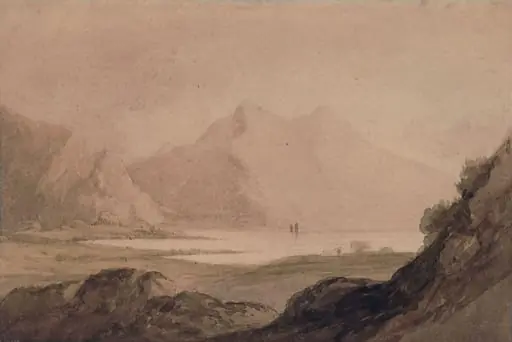
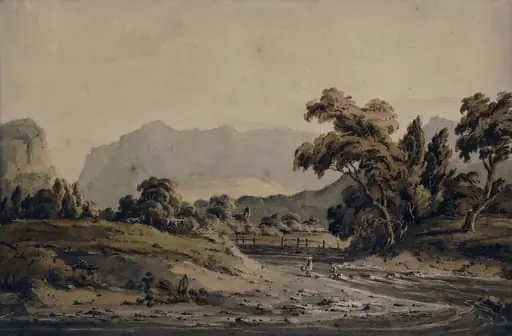
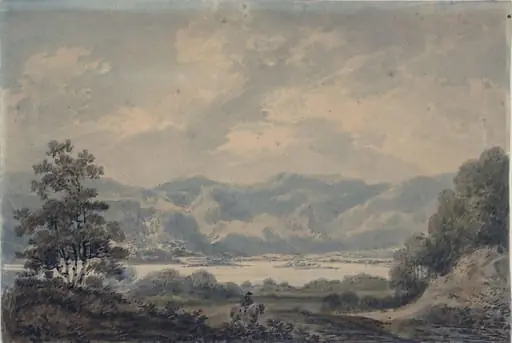
View looking down to Lodore and Borrowdale
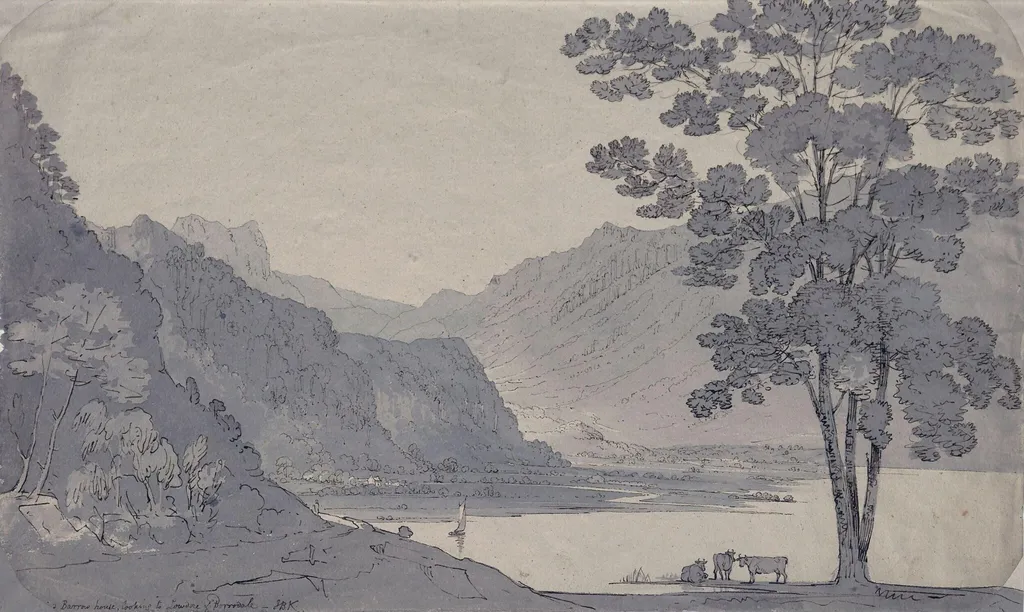
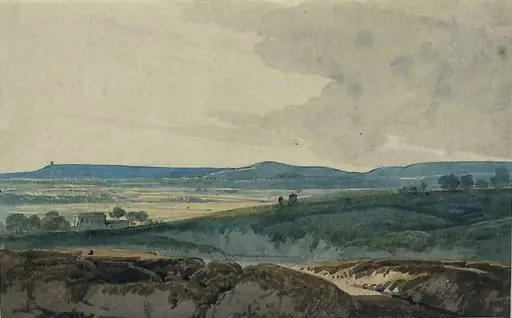
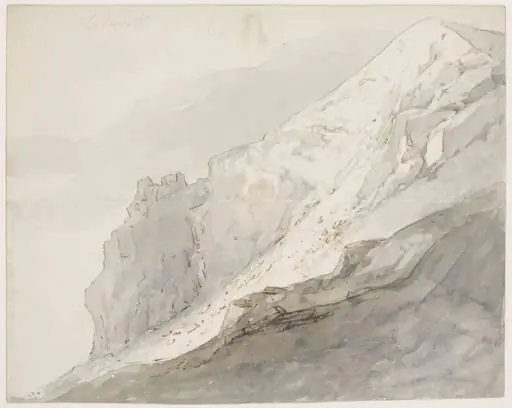
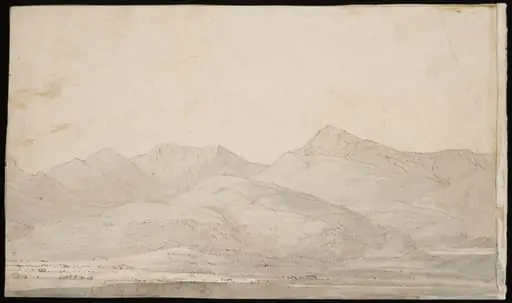
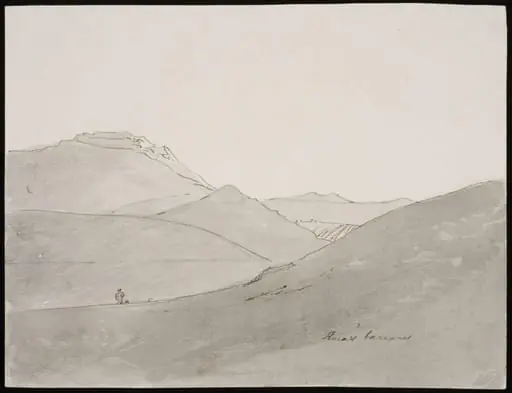
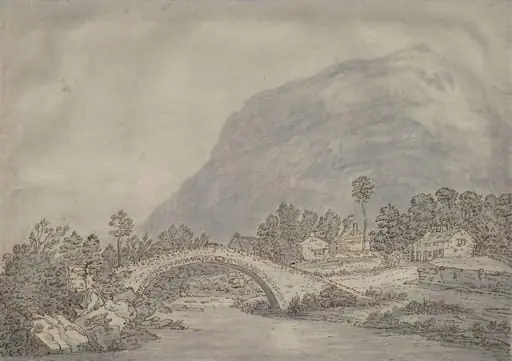
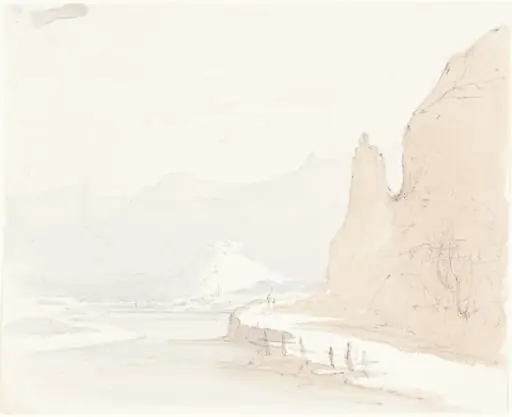
View looking down to Lodore and Borrowdale is a watercolor work on paper by John Baverstock Knight. It dates from 1850 and is held in the collection of the Victoria and Albert Museum.
About this work
Overview
The work carries the immediacy of an outdoor sketch, its loose brushwork indicating a direct response to the scene rather than a finished composition.
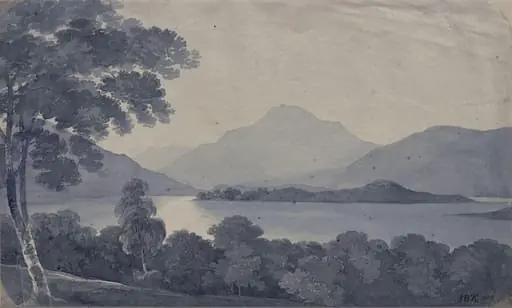
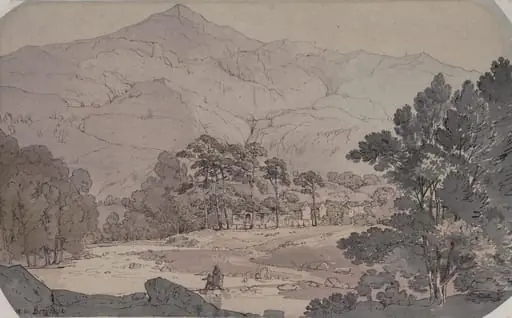
This watercolour presents a downward perspective of Lodore and Borrowdale in the Lake District, capturing the quiet expanse of a rural valley. The composition emphasizes natural topography over detail, with soft washes of blue and gray dominating the palette. Light areas suggest sunlit slopes, while the river winds subtly through the landscape. The work carries the immediacy of an outdoor sketch, its loose brushwork indicating a direct response to the scene rather than a finished composition.
Subject & Meaning
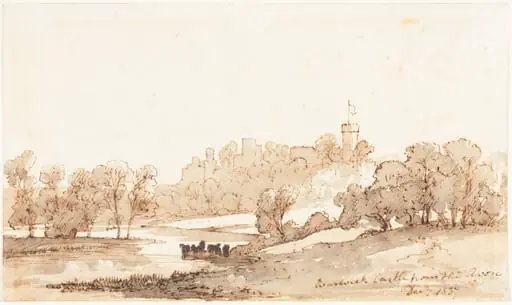
The scene depicts a pastoral landscape marked by gentle hills, a meandering river, and scattered sheep grazing near the water’s edge. Trees fringe the banks, their forms rendered with minimal strokes. There is no human activity beyond the animals, reinforcing a sense of quiet solitude. The view suggests an intimate, observational engagement with the land, valuing atmosphere over narrative or symbolic content.
Technique & Style
The artist employed loose, fluid watercolour techniques, using diluted pigments to create translucent layers that suggest form without definition. Trees and distant hills are indicated with quick, sketchy strokes rather than detailed rendering. The absence of sharp contours and the emphasis on tonal gradation reflect a preference for capturing light and mood over precise representation, characteristic of topographical watercolours of the period.
History & Provenance
The artist’s name, dates, and address are inscribed on the work, though these were likely added by a later owner or donor rather than the original creator. The piece lacks a documented exhibition or ownership history prior to its current context. Its survival as a private study suggests it was not intended for public display, preserving its character as a personal record of the landscape.
Context
Created during a period when watercolour was gaining recognition as a medium for landscape study, this work aligns with the British tradition of topographical drawing. Artists frequently traveled to the Lake District to record its scenery, often producing quick studies for personal use or reference. This piece reflects that practice—unpolished, unidealized, and grounded in direct observation of the natural world.
Legacy
As an example of unassuming landscape watercolour, it contributes to the broader understanding of 19th-century British artistic practices beyond major exhibitions. Its modest scale and informal technique highlight how many artists engaged with nature through private, observational work. Similar studies can be found in institutional collections such as the Victoria and Albert Museum, where they form part of a quiet but significant archive of landscape documentation.
Artist & collection
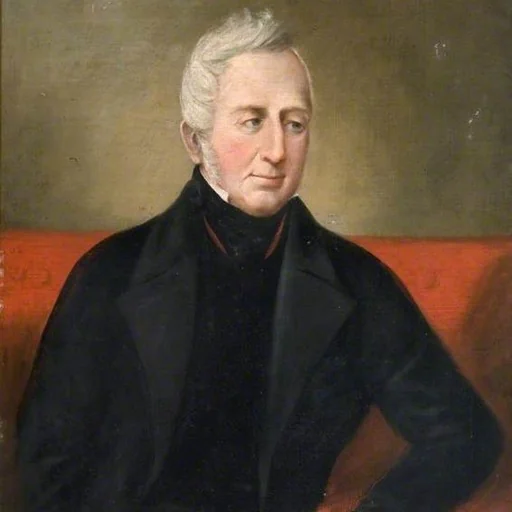
Artist
John Baverstock Knight (1785–1859) was an English land surveyor and artist, born in Langton Long Blandford.