Artwork
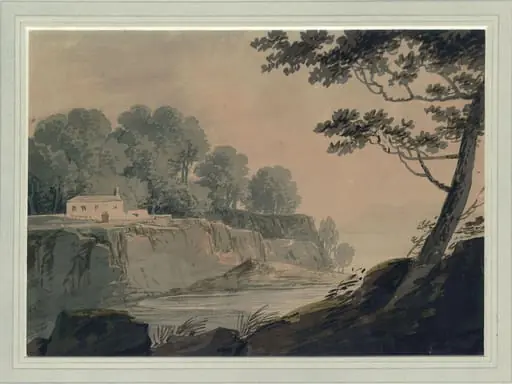
Part of Chepstow Castle
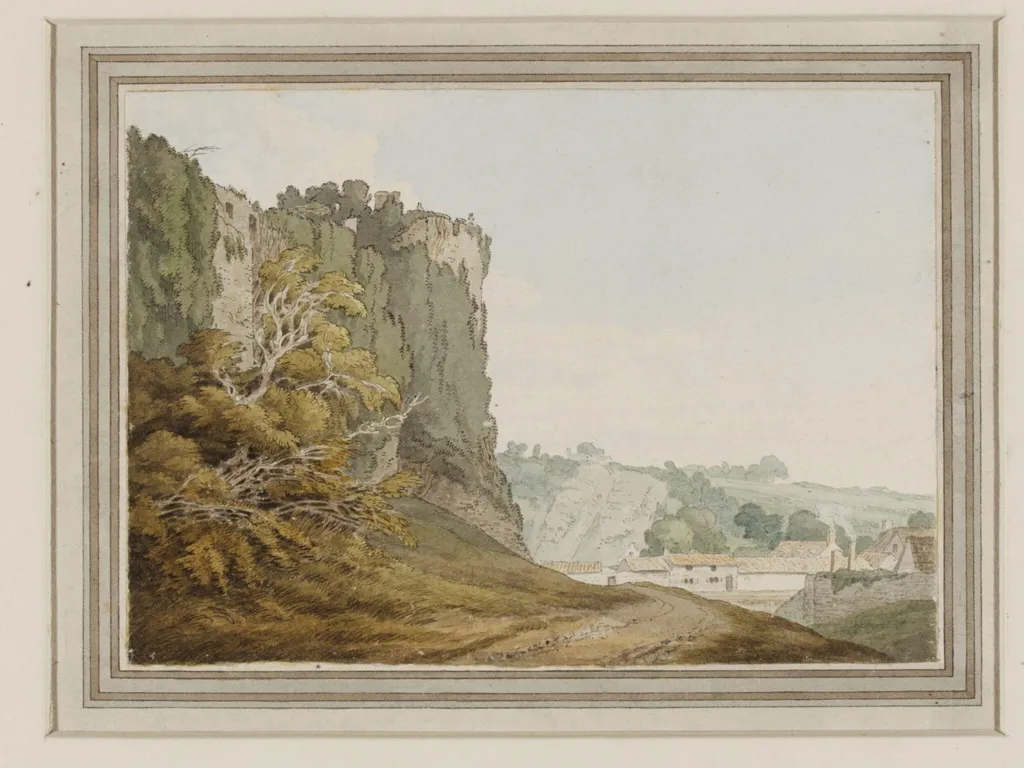
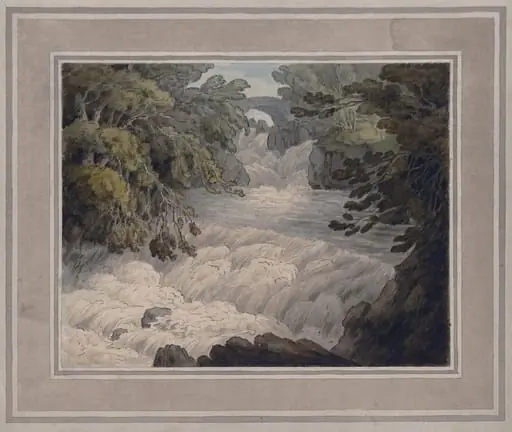
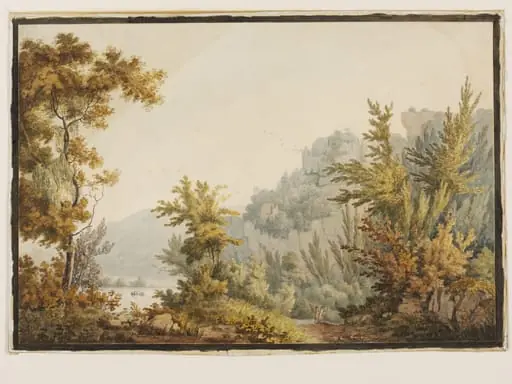
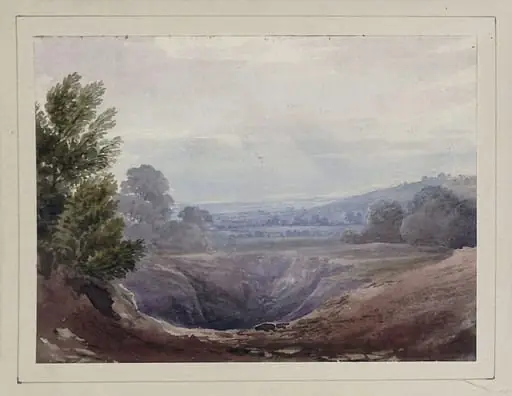
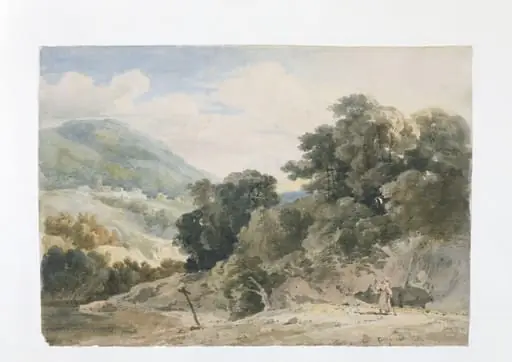
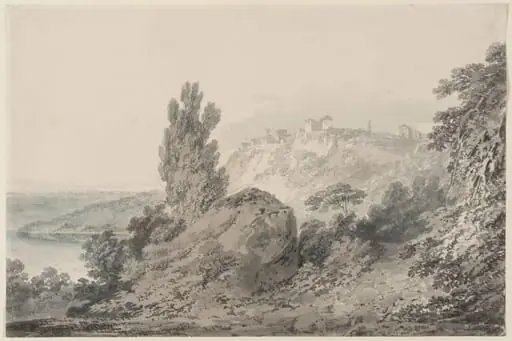
Part of Chepstow Castle is a watercolor work on paper by the Romanticist artist John White Abbott. It dates from 1797 and is held in the collection of the Victoria and Albert Museum.
About this work
Overview
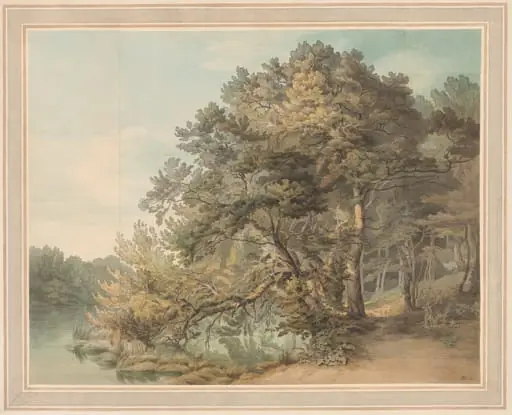
John White Abbott’s 1797 watercolour, *Part of Chepstow Castle*, captures a fragment of the historic fortress nestled in a rugged Welsh landscape. Executed in transparent water-based pigments on paper and mounted to a backing sheet, the work exemplifies the topographical precision and atmospheric sensitivity characteristic of late 18th-century British watercolour practice.
Subject & Meaning
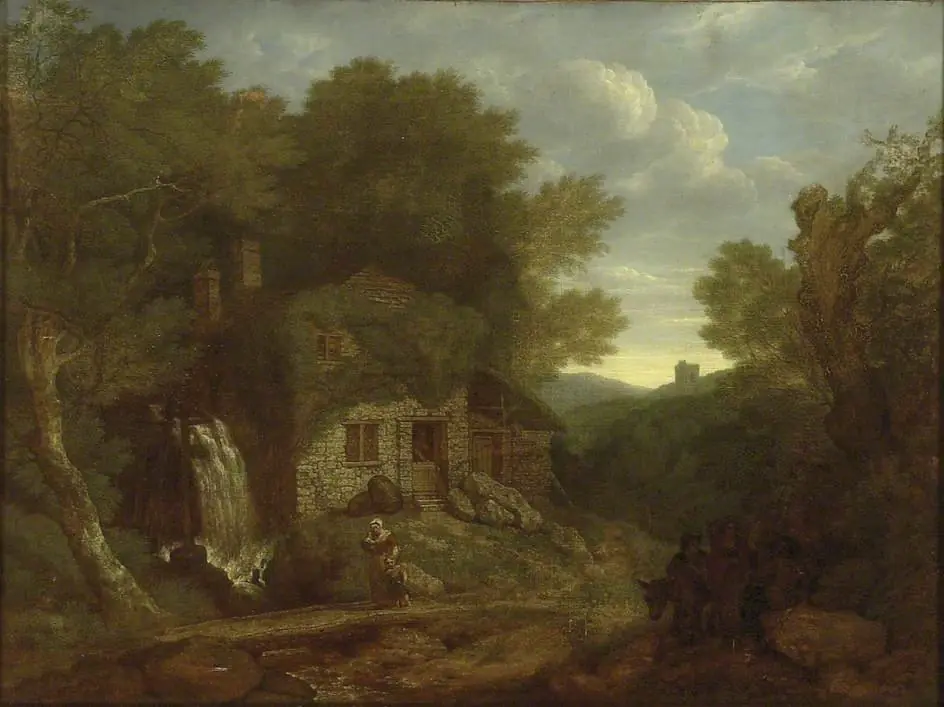
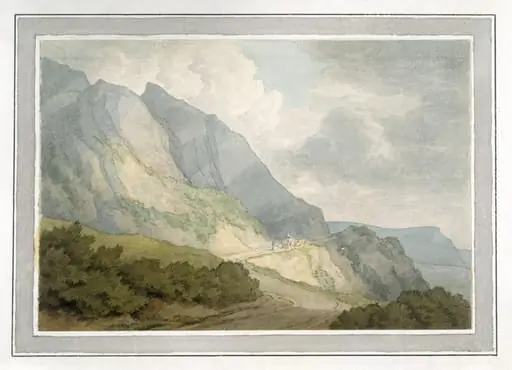
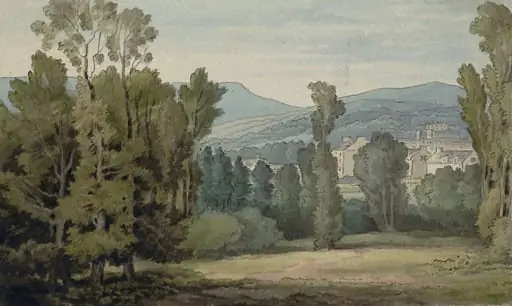
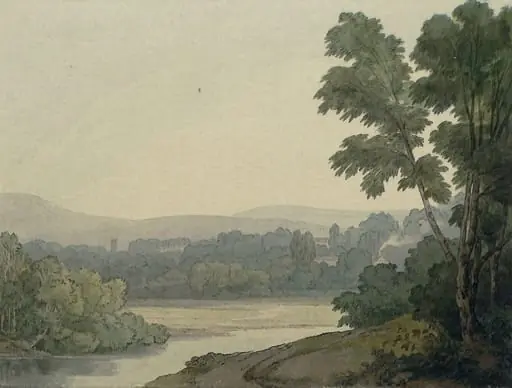
The scene centers on a dramatic waterfall tumbling down a steep, rocky slope, with Chepstow Castle’s ruins partially visible in the distance. Below, a modest village and cultivated fields suggest quiet rural life. The composition emphasizes harmony between nature and human habitation, reflecting a contemplative engagement with the English landscape rather than a focus on architectural grandeur.
Technique & Style
Abbott employed delicate washes of green, brown, and white to model the terrain and suggest the movement of water. The cascade is rendered with fine, fluid lines, contrasting with the heavier, muted tones of the rockface. Light is used to define form and texture, avoiding bold outlines in favor of subtle tonal transitions that enhance the work’s serene, observational quality.
History & Provenance
Created in 1797, the watercolour belongs to Abbott’s period of active travel and sketching across Britain. While its early ownership is undocumented, it entered the collection of the Victoria and Albert Museum, where it remains as part of a broader archive of British watercolours from the Romantic era, valued for its documentary and aesthetic qualities.
Context
Abbott worked during a time when watercolour was gaining recognition as a serious medium for landscape depiction, distinct from oil painting. His focus on natural features and modest settlements aligned with contemporary interest in the picturesque, a movement that celebrated irregular beauty and the emotional resonance of rural scenery.
Legacy
The work contributes to the legacy of British watercolourists who elevated landscape observation into a refined artistic practice. Abbott’s restrained palette and attention to natural detail influenced later generations of artists who sought to capture the quiet character of Britain’s topography without theatrical embellishment.
Own this work as a print
Artist & collection
Artist
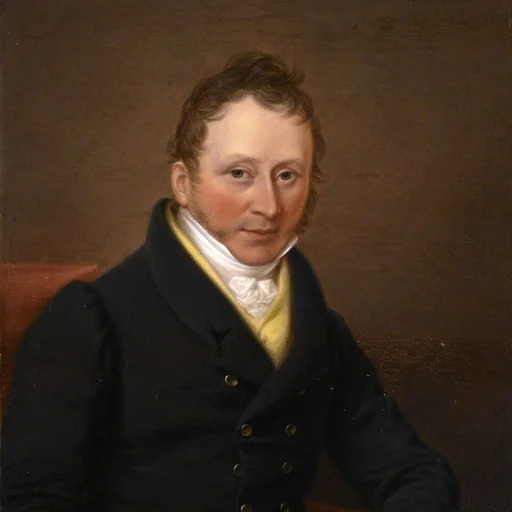
John White Abbott (13 May 1763 – 1851) was an English surgeon and apothecary in Exeter, remembered as a keen amateur painter in both watercolour and oils. His watercolours are close in style to those of his teacher, Francis Towne.