Artwork
Architectural Fantasy with Arched Gateways
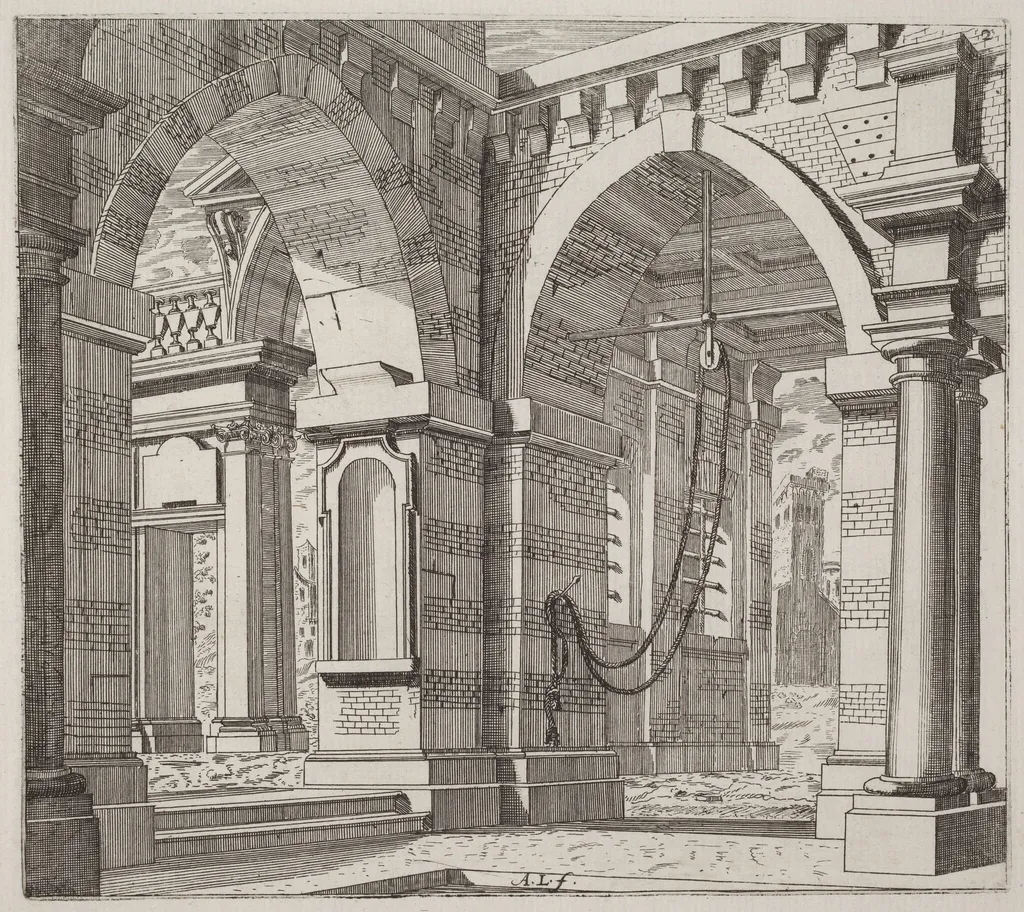
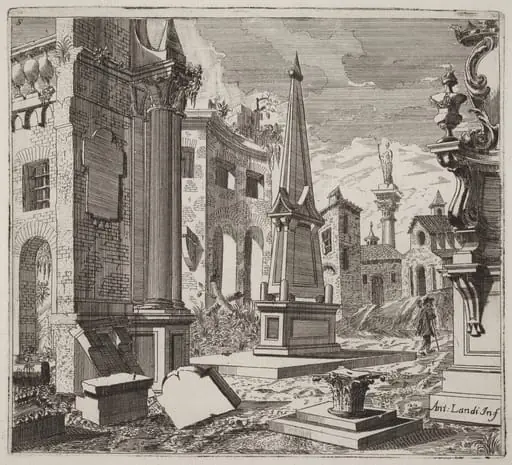
Architectural Fantasy with Arched Gateways is an ink print by the Baroque artist Giuseppe Antonio Landi. It dates from 1753 and is held in the collection of the National Gallery of Art.
About this work
Overview
Created in 1753 by Giuseppe Antonio Landi, this black-and-white print combines etching and engraving on laid paper to depict an imaginary architectural space.
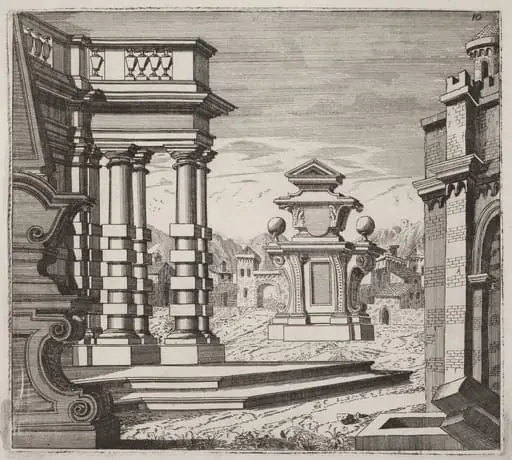
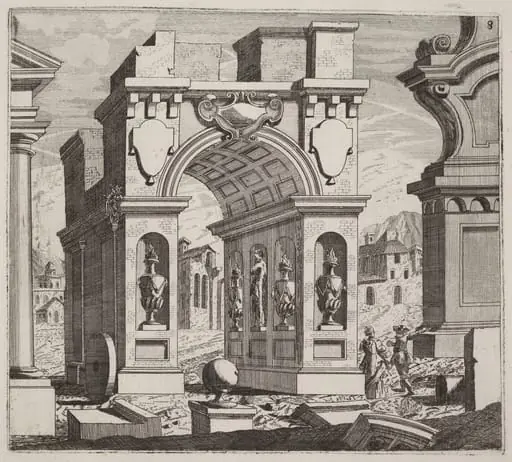
Created in 1753 by Giuseppe Antonio Landi, this black-and-white print combines etching and engraving on laid paper to depict an imaginary architectural space. The composition centers on a narrow, tall gateway flanked by two larger arches, one damaged and the other equipped with a pulley system. Crumbling masonry and uneven stonework suggest decay, while a small statue in the far-right arch adds a solitary human presence.
Subject & Meaning
The scene presents no literal location but evokes a sense of abandoned grandeur. The mix of intact and ruined structures implies the passage of time and the fragility of human achievement. The pulley and broken pediment hint at halted construction or forgotten labor, while the lone statue may symbolize enduring memory amid decay. The fantasy architecture invites contemplation rather than narrative.
Technique & Style
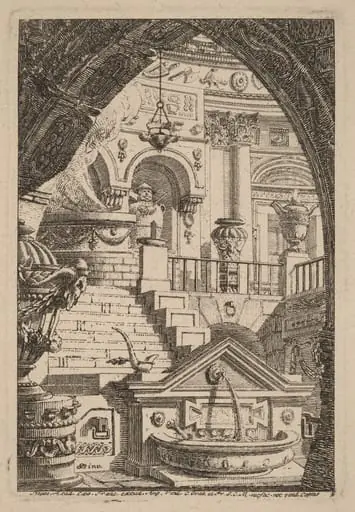
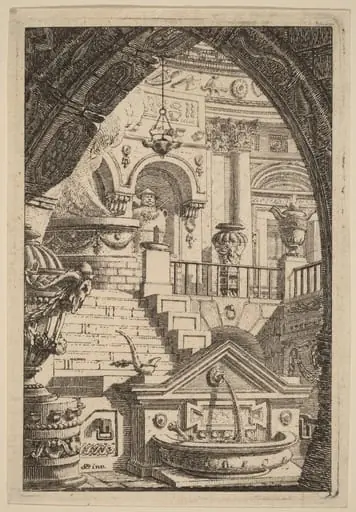
Landi employed fine, controlled lines to render textures: rough brickwork, smooth stone columns, and shadowed recesses. Etching allowed for delicate detail, while engraving added depth and contrast. The composition uses exaggerated perspective to heighten spatial tension, a hallmark of Baroque visual language. The absence of color focuses attention on form, light, and the interplay of structure and ruin.
History & Provenance
Landi, an Italian artist active in the mid-18th century, produced this print during his early career, likely before his move to Brazil. It reflects the European fascination with architectural imagination and antiquity, common among artists trained in the tradition of vedute. The work survives in museum collections, though its early ownership remains undocumented.
Context
In mid-18th-century Europe, prints of imaginary ruins and architectural fantasies were popular among collectors and architects. Landi’s work aligns with the genre of capriccio, which blended real and invented elements to evoke classical grandeur. Such images served both aesthetic and intellectual purposes, stimulating ideas about history, design, and the sublime in decay.
Legacy
Though not widely known today, Landi’s print exemplifies a broader trend in Enlightenment-era printmaking that explored architecture as a vessel for philosophical reflection. His precise technique influenced later artists interested in ruin imagery, and the work remains a quiet example of how print media extended architectural discourse beyond the building site.
Artist & collection


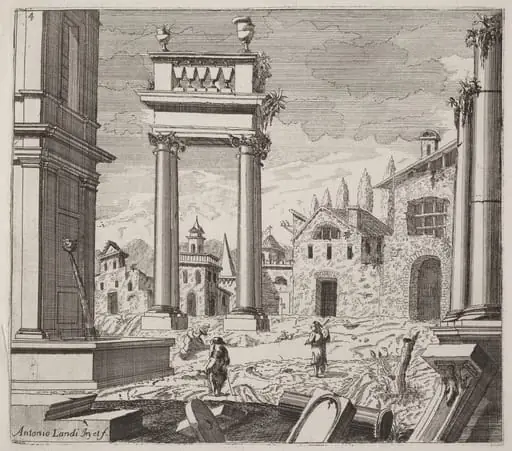 Architectural Fantasy with Classical Ruins and Vernacular Buildings
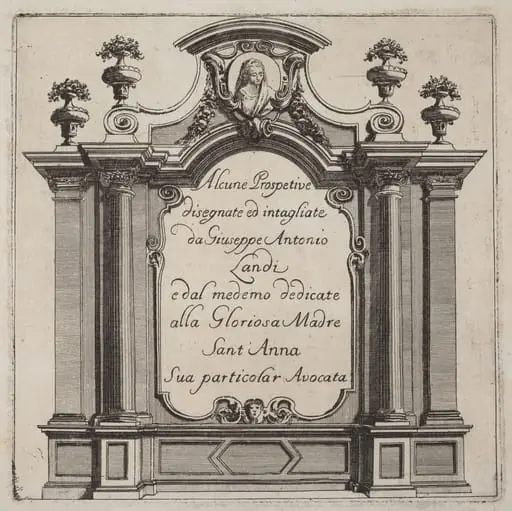 Alcune Prospettive
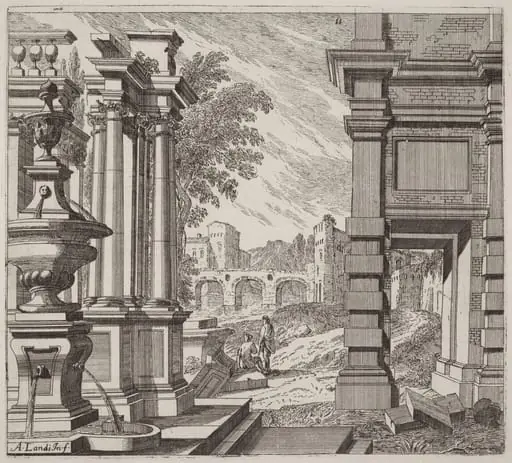 Architectural Fantasy with a Fountain, Classical Ruins, and a Bridge
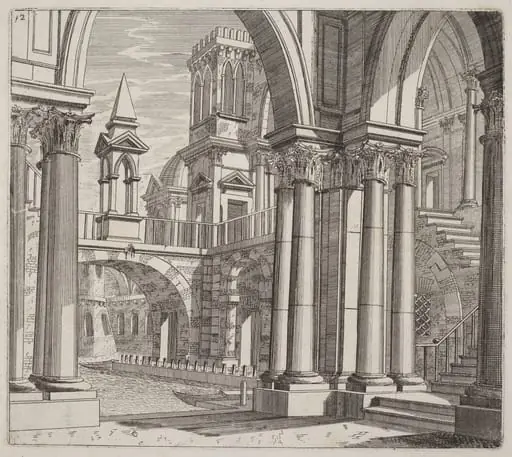 Architectural Fantasy with Buildings, Stairways, and Portals beside a Canal
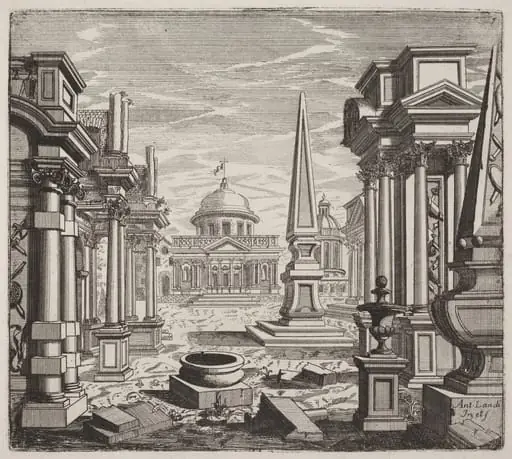 Architectural Fantasy with Obelisks, Ruins, and a Piazza
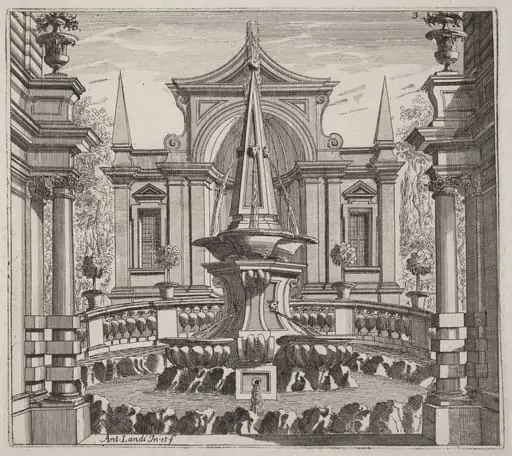 Fantastic Garden with a Fountain and a Garden Pavilion
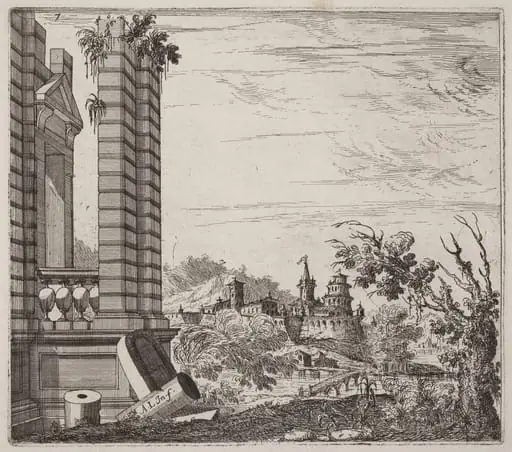 Fantastic River Landscape with Ruins and a Castle
 Fantastic Townscape with Ruins