Artwork
The Sawhorse
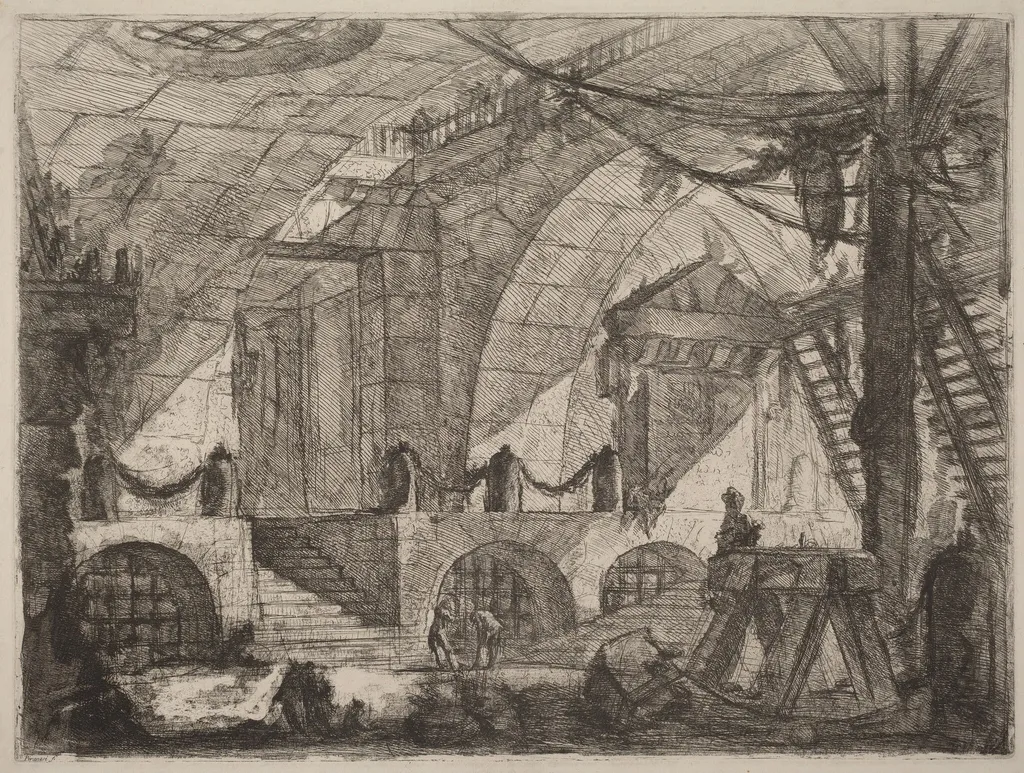
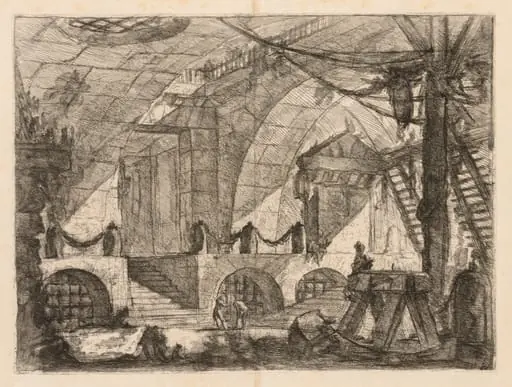
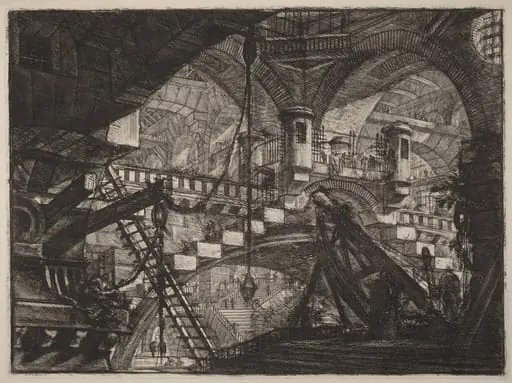
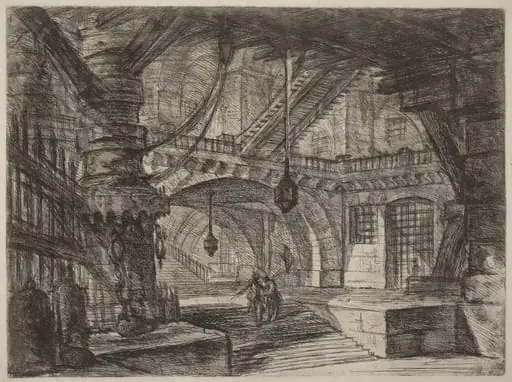
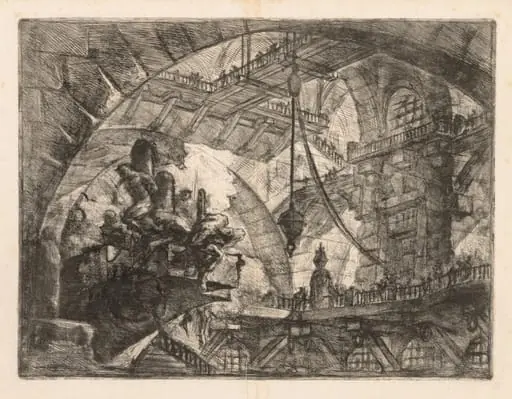
The Sawhorse is an ink print by the Romanticist artist Giovanni Battista Piranesi. It dates from 1754 and is held in the collection of the National Gallery of Art.
About this work
Overview
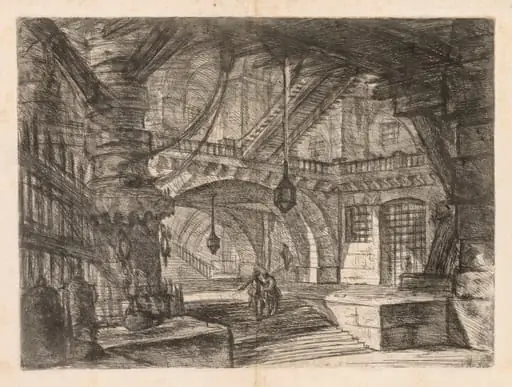
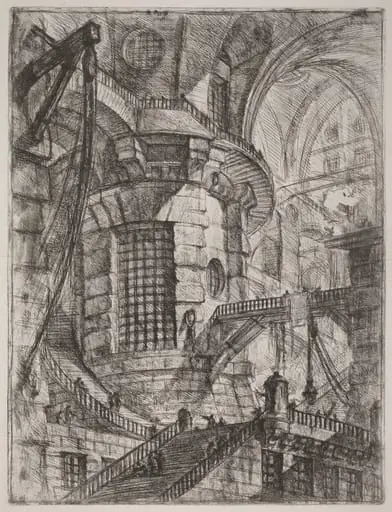
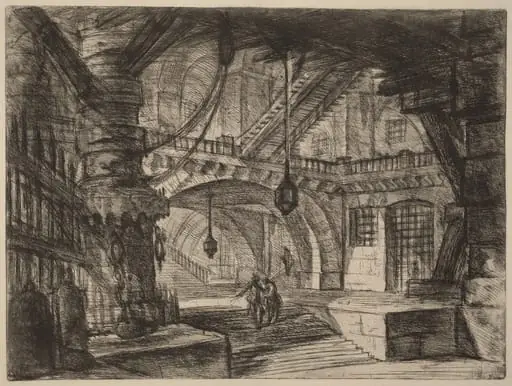
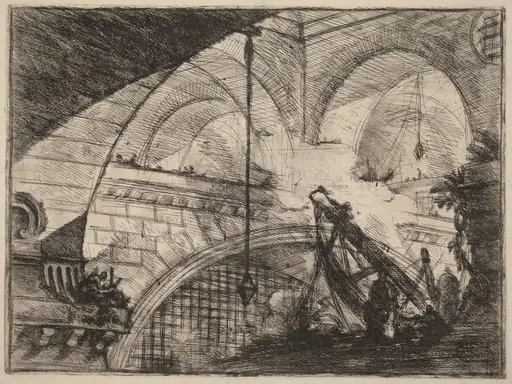
Created in 1754, *The Sawhorse* is a print by Giovanni Battista Piranesi, the Italian antiquarian whose work combined architectural documentation with imaginative scenes. Executed with a mixture of etching, engraving, open‑bite (sulphur tint) and scratching, the image presents a densely packed workshop where tools, unfinished structures and debris converge in a state of perpetual activity.
Subject & Meaning
The composition depicts a bustling atelier centered on a man assembling an odd wooden framework, surrounded by heaps of metal, rope, and broken objects. The chaotic arrangement suggests a space of ongoing construction and invention, reflecting Piranesi’s fascination with the interplay between order and disorder in architectural environments.
Technique & Style
Piranesi employed a combination of acid‑etched lines and hand‑scratched marks to generate deep shadows and texture, moving beyond smooth tonal shading. The thick, irregular strokes and the use of open‑bite areas create a dense, almost tactile surface that conveys the crowded, kinetic atmosphere of the workshop.
History & Provenance
The print forms part of Piranesi’s broader oeuvre of architectural and atmospheric imagery, produced alongside his celebrated series of Roman vistas and fantastical “prison” scenes. While specific ownership records are scarce, the work has been documented in several 19th‑century catalogues of Piranesi’s prints and remains a reference point for his experimental printmaking techniques.
Own this work as a print
Artist & collection
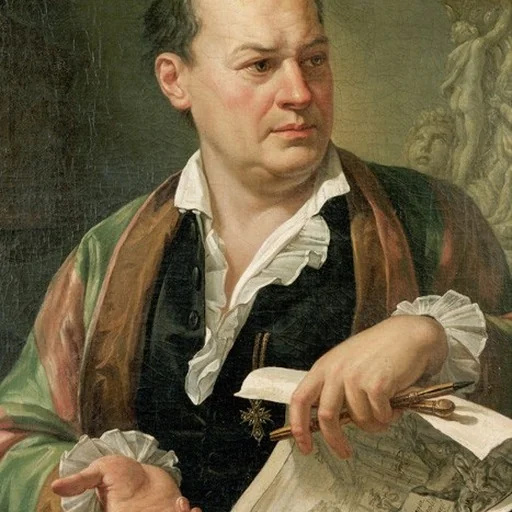
Artist
Giovanni Battista (or Giambattista) Piranesi (Italian pronunciation: ; also known as simply Piranesi; 4 October 1720 – 9 November 1778) was an Italian classical archaeologist, architect, and artist, famous for his…