Artwork
Interior with Still Life of Fish
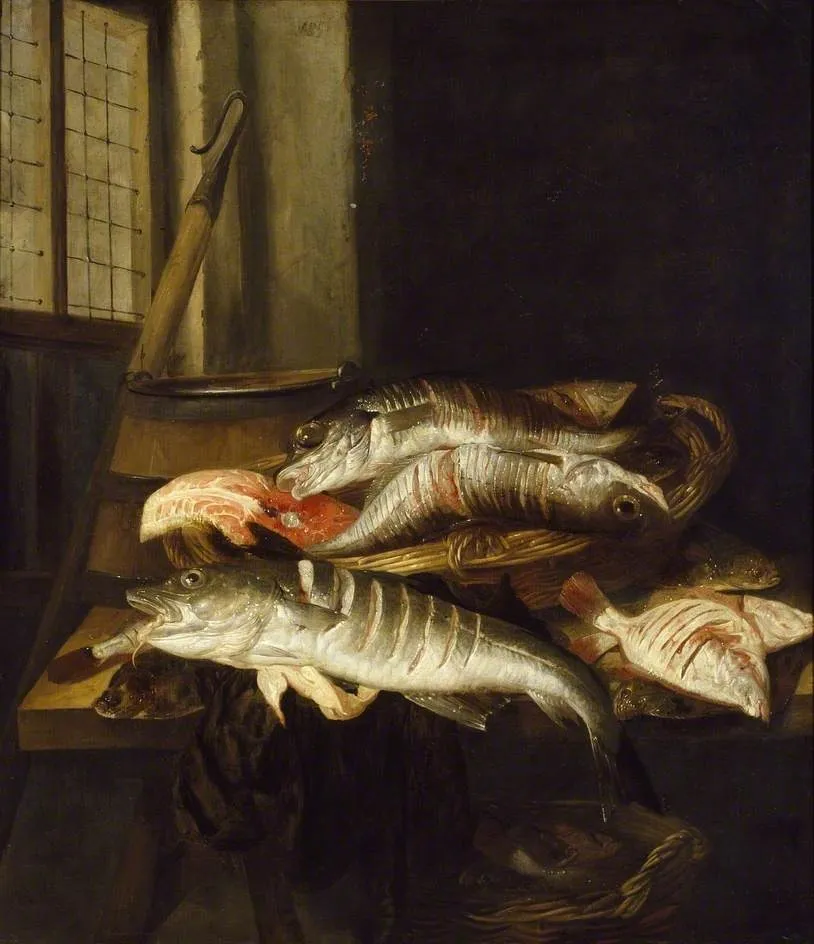
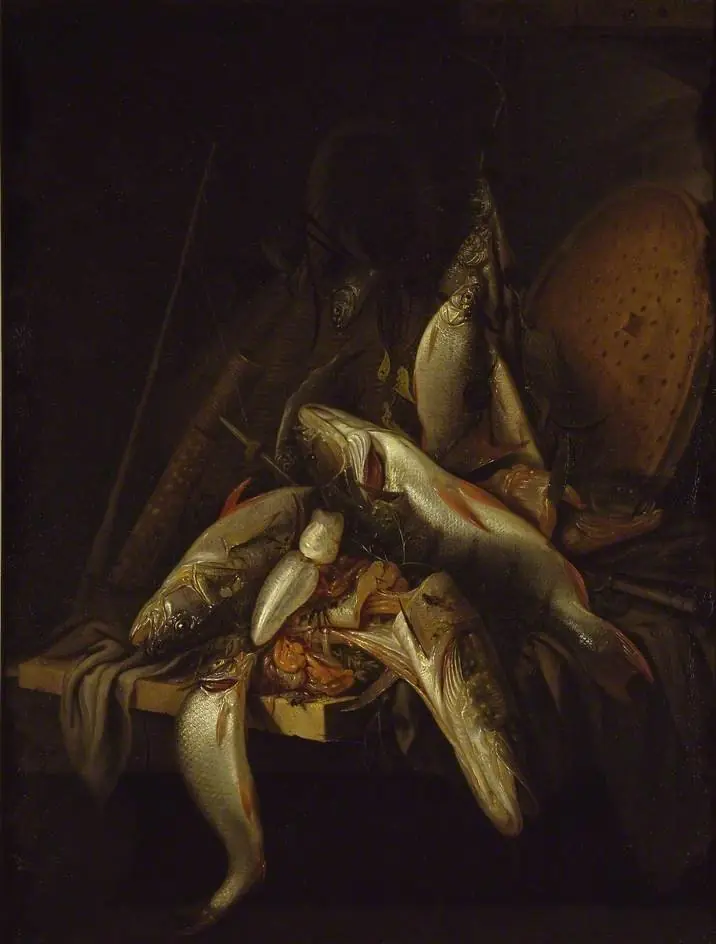
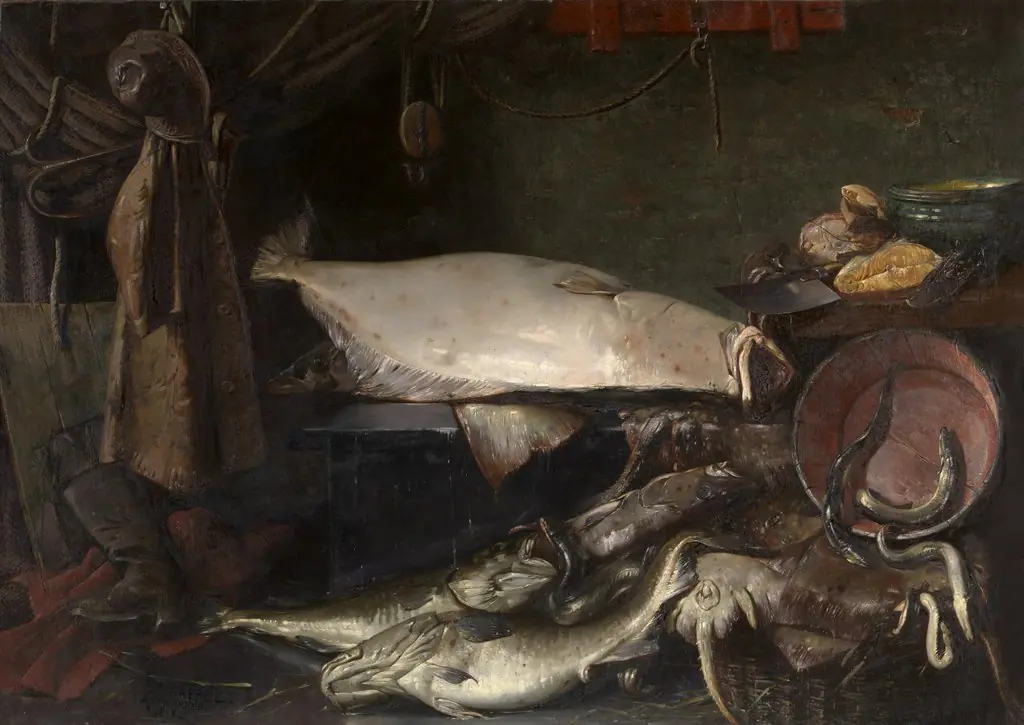
Interior with Still Life of Fish is an oil painting by the Dutch Golden Age artist Abraham van Beijeren. It dates from 1655 and is held in the collection of the Ashmolean Museum.
About this work
Overview
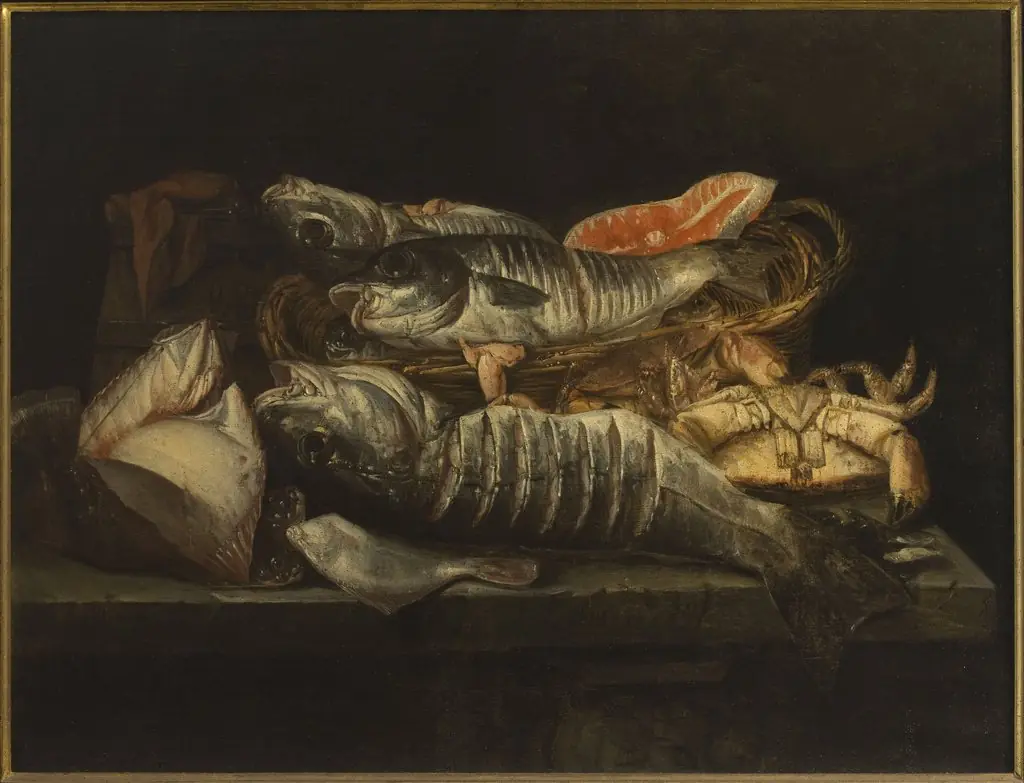
Painted in 1655 by Abraham van Beijeren, this oil on canvas work presents a quiet domestic interior centered on a arrangement of fish. Unlike grand historical or religious scenes common in the period, it focuses on the humble, transient nature of food. The composition is restrained, with no ornate tableware or exotic elements, emphasizing the fish as both subject and symbol.
Subject & Meaning
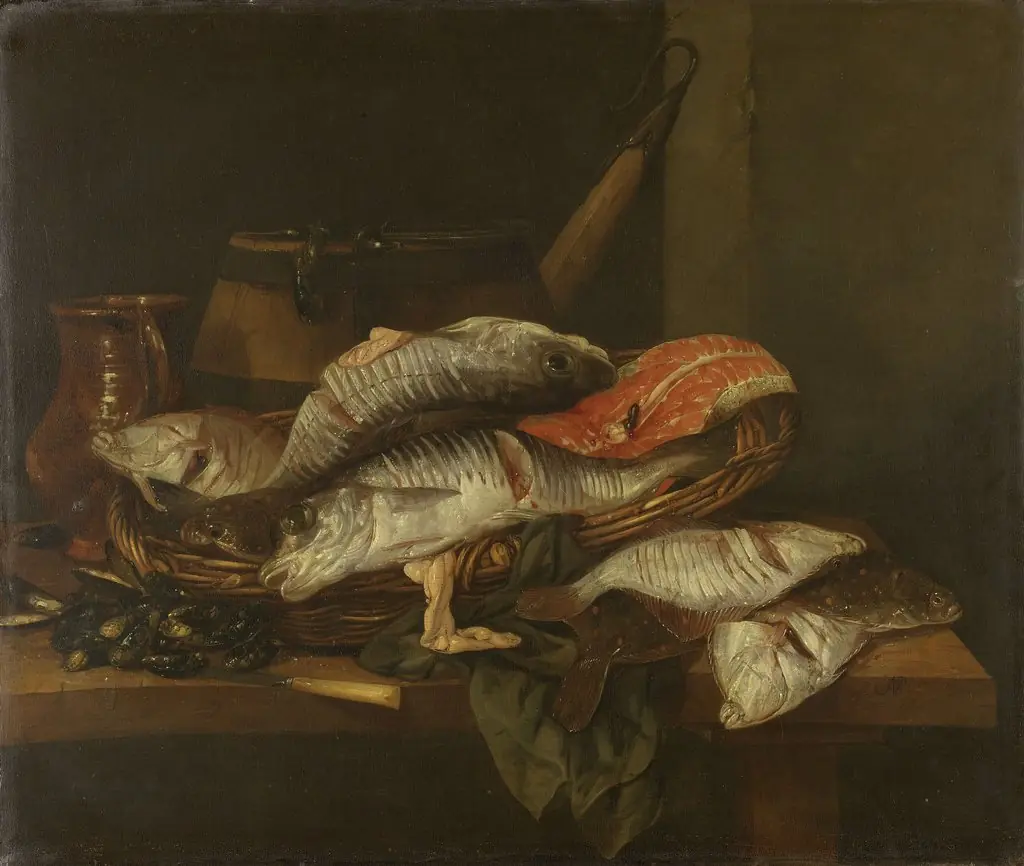
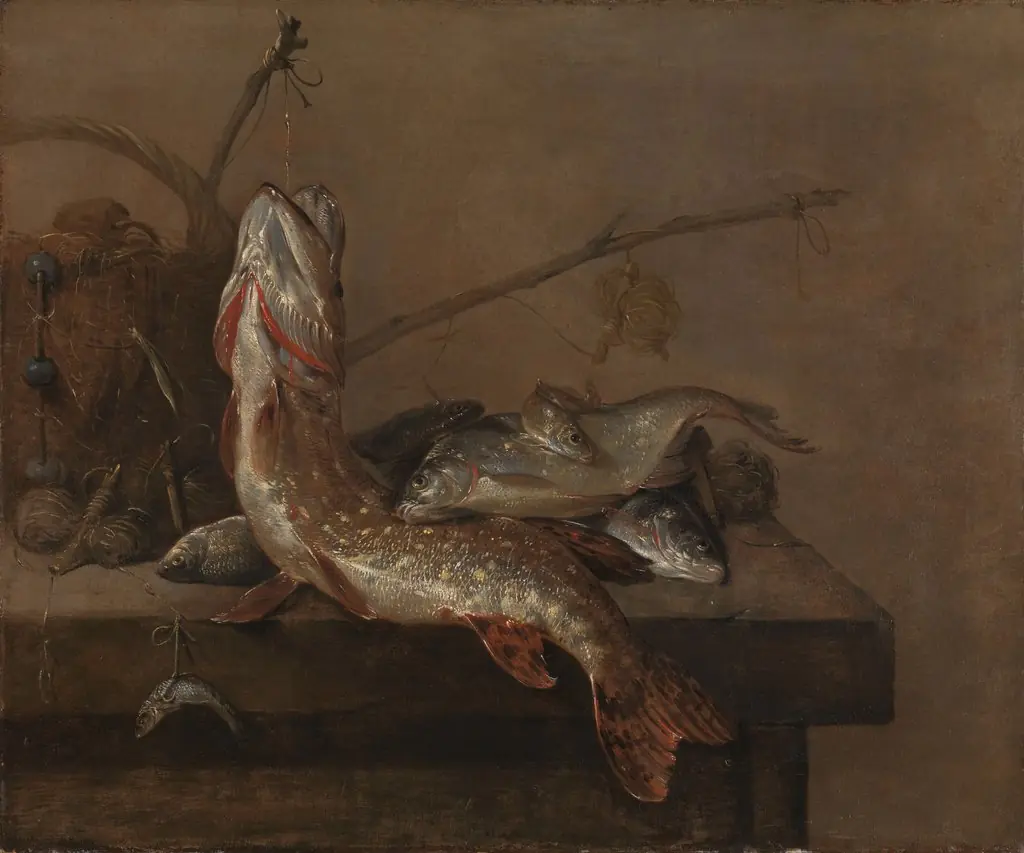
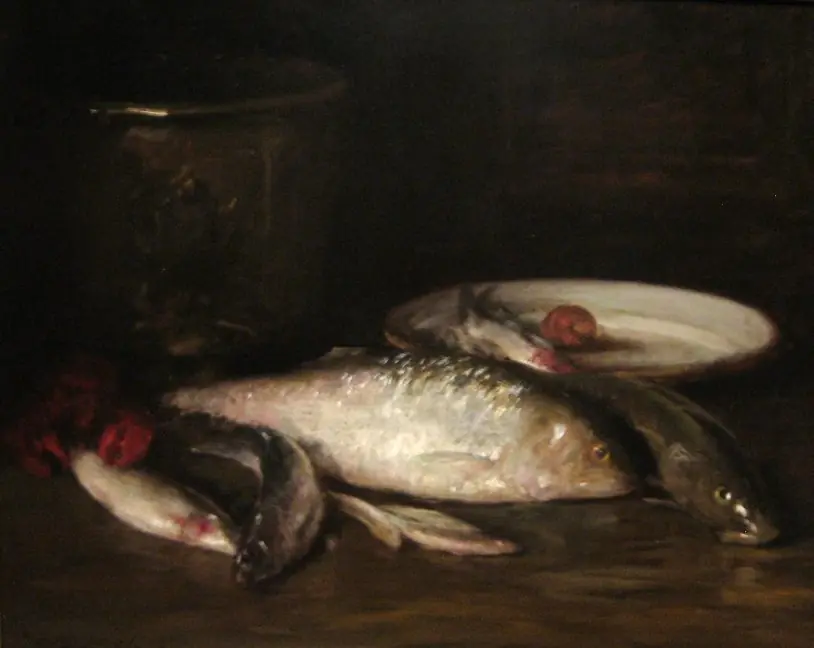
The fish, some whole and others cut open, are displayed on a wooden board and in a woven basket, suggesting a recent market purchase or household preparation.
The fish, some whole and others cut open, are displayed on a wooden board and in a woven basket, suggesting a recent market purchase or household preparation. Their exposed interiors draw attention to mortality and the fragility of life, themes common in Dutch still life. The somber tone and lack of human presence invite contemplation rather than celebration, aligning with moralizing undertones of the genre.
Technique & Style
Van Beijeren employs subtle chiaroscuro to model the fish’s scales and flesh, creating volume without dramatic contrasts. The lighting is diffuse, likely from a nearby window, casting a soft glow that enhances texture without harsh shadows. Brushwork is precise yet unobtrusive, capturing the sheen of wet skin and the grain of wood with quiet accuracy, reflecting the Dutch preference for observational realism.
History & Provenance
Created during the height of the Dutch Golden Age, the painting reflects van Beijeren’s shift from marine subjects to still life, a move that defined his career. While its early ownership is undocumented, it entered a public collection in the 20th century, where it remains as part of a broader effort to preserve domestic Dutch painting from the 17th century.
Context
In mid-17th-century Holland, still life painting flourished as a reflection of urban prosperity and emerging middle-class values. Fish, as perishable goods, carried associations with trade, abundance, and transience. Van Beijeren’s interiors, often dimly lit and sparse, contrasted with the opulent banquets of contemporaries, offering a more introspective take on material life.
Legacy
Van Beijeren’s restrained approach influenced later Dutch still life painters who favored quietude over spectacle. His focus on ordinary subjects, rendered with technical precision, helped solidify the genre’s legitimacy as a serious artistic pursuit. Though less celebrated than his peers, his work remains a quiet testament to the aesthetic value found in everyday observation.
Artist & collection
Artist
Abraham Hendriksz van Beijeren or Abraham van Beyeren (c. 1620, The Hague – March 1690, Overschie (Rotterdam)) was a Dutch Baroque painter of still lifes. Little recognized in his day and initially active as a marine…

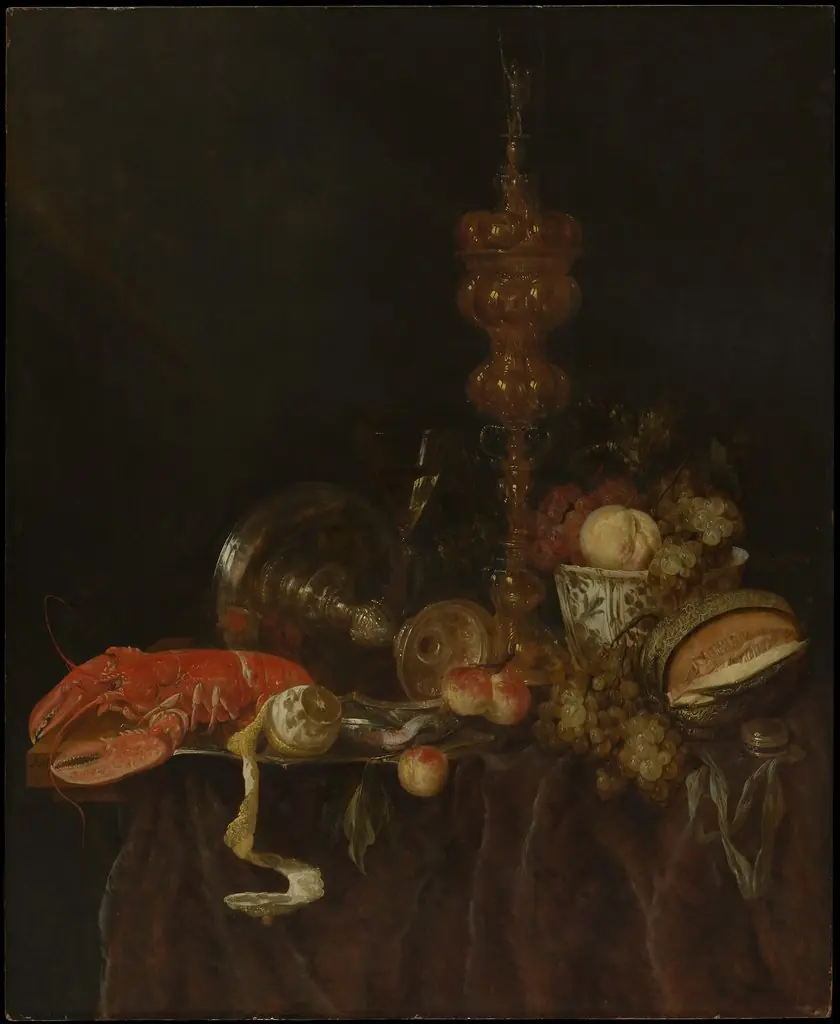 Still Life with Lobster and Fruit
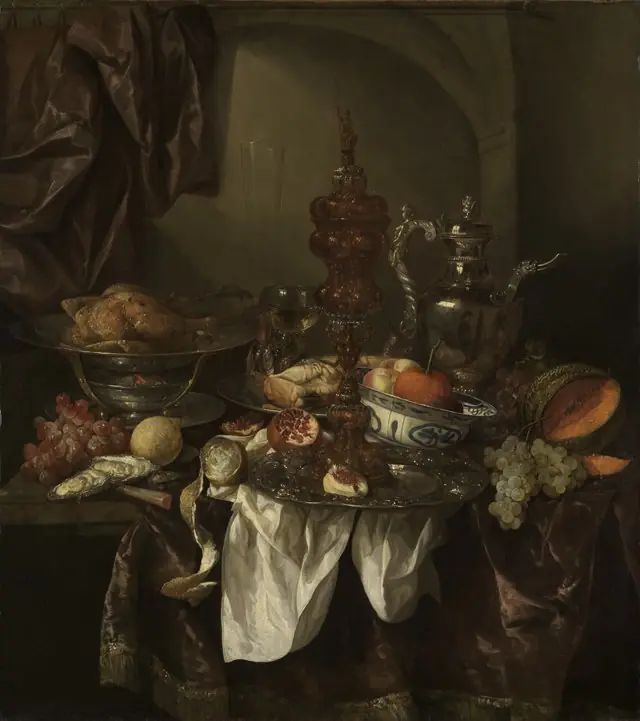 Still life with fruit, roast, silver- and glassware, porcelain and columbine cup on a dark tablecloth with white serviette
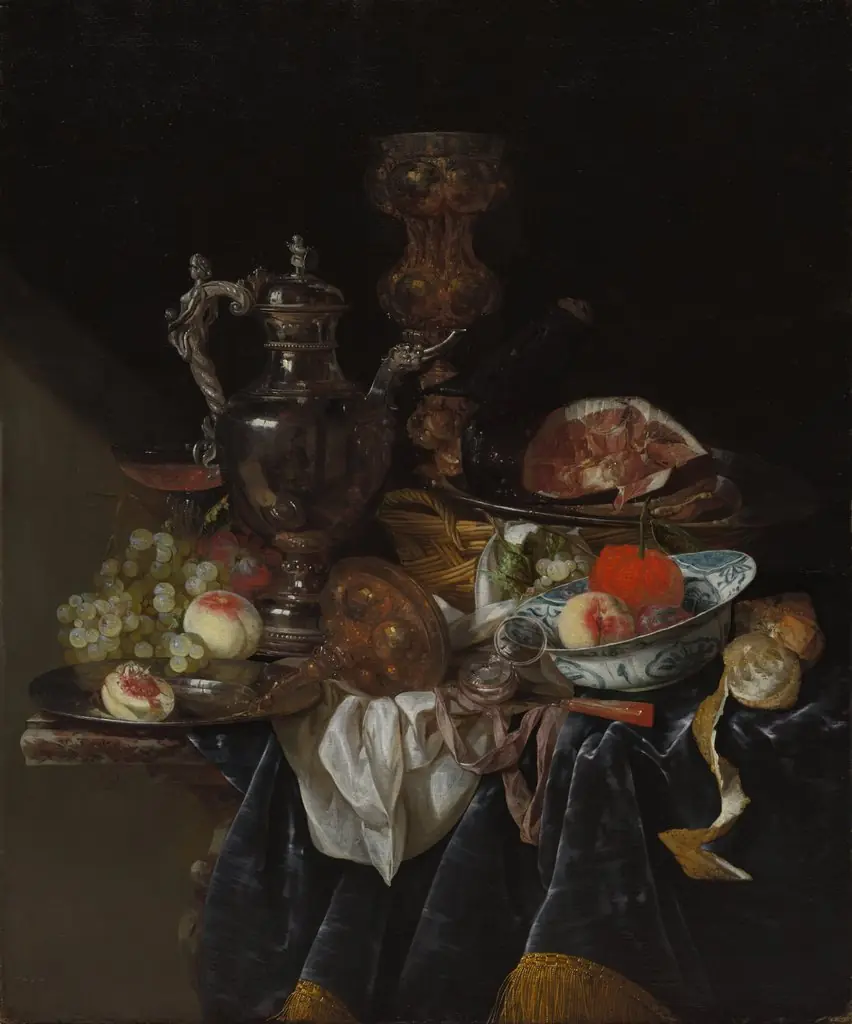 Silver Wine Jug, Ham, and Fruit
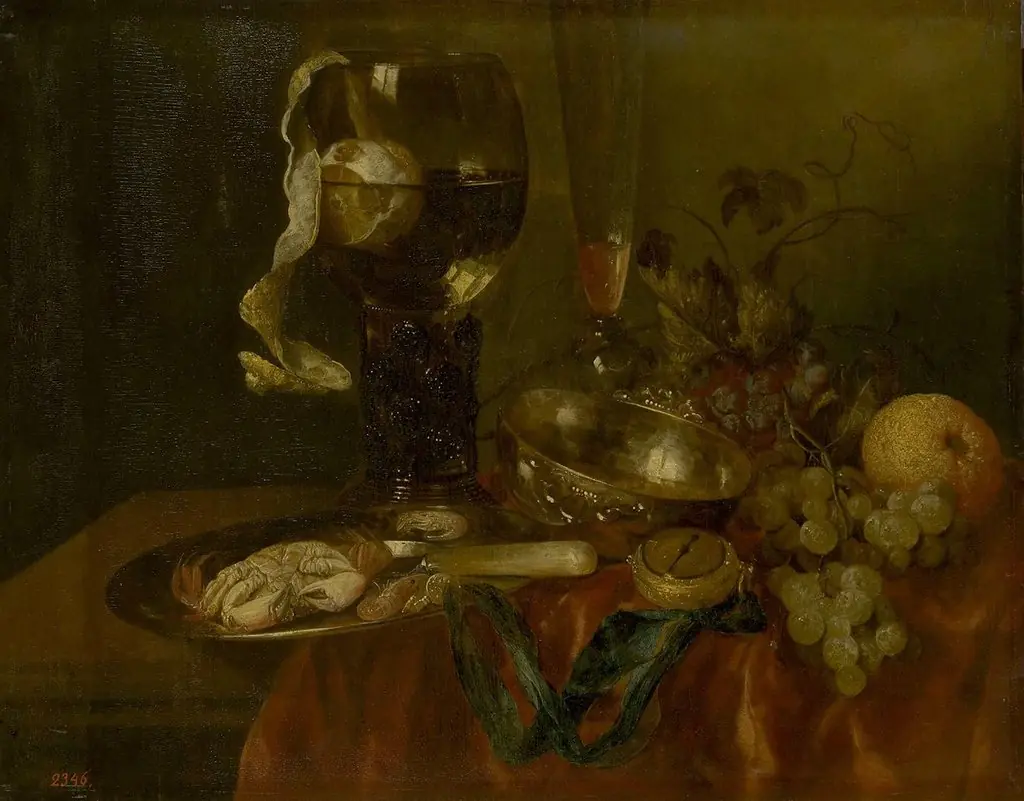 Snack (Still Life with Crab, Fruit and Clock)
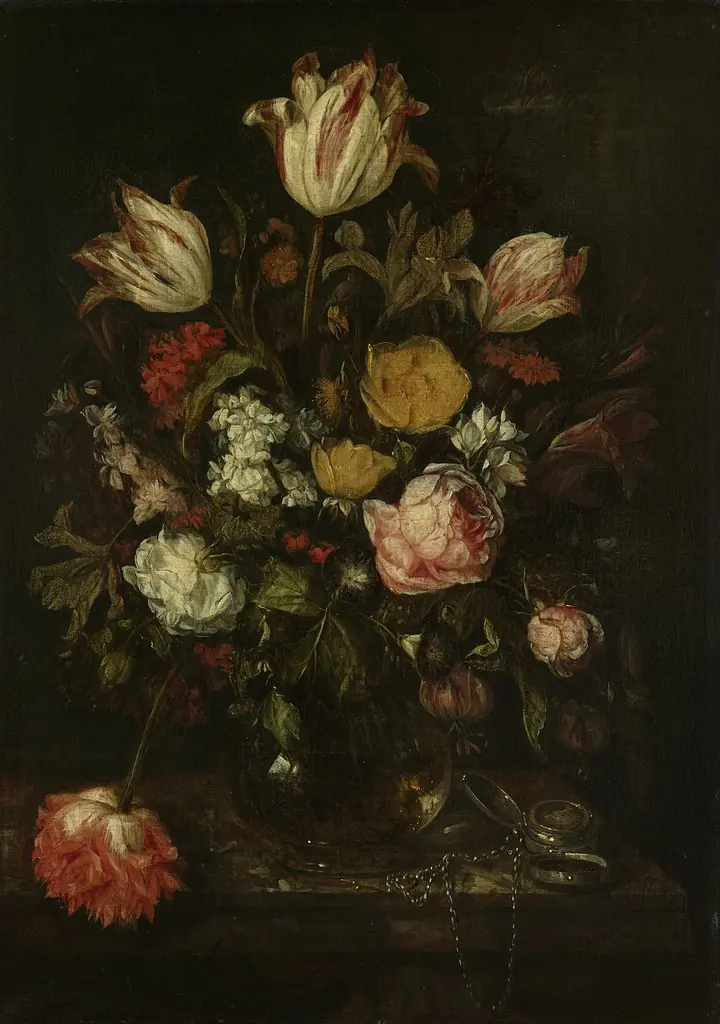 Still life with flowers
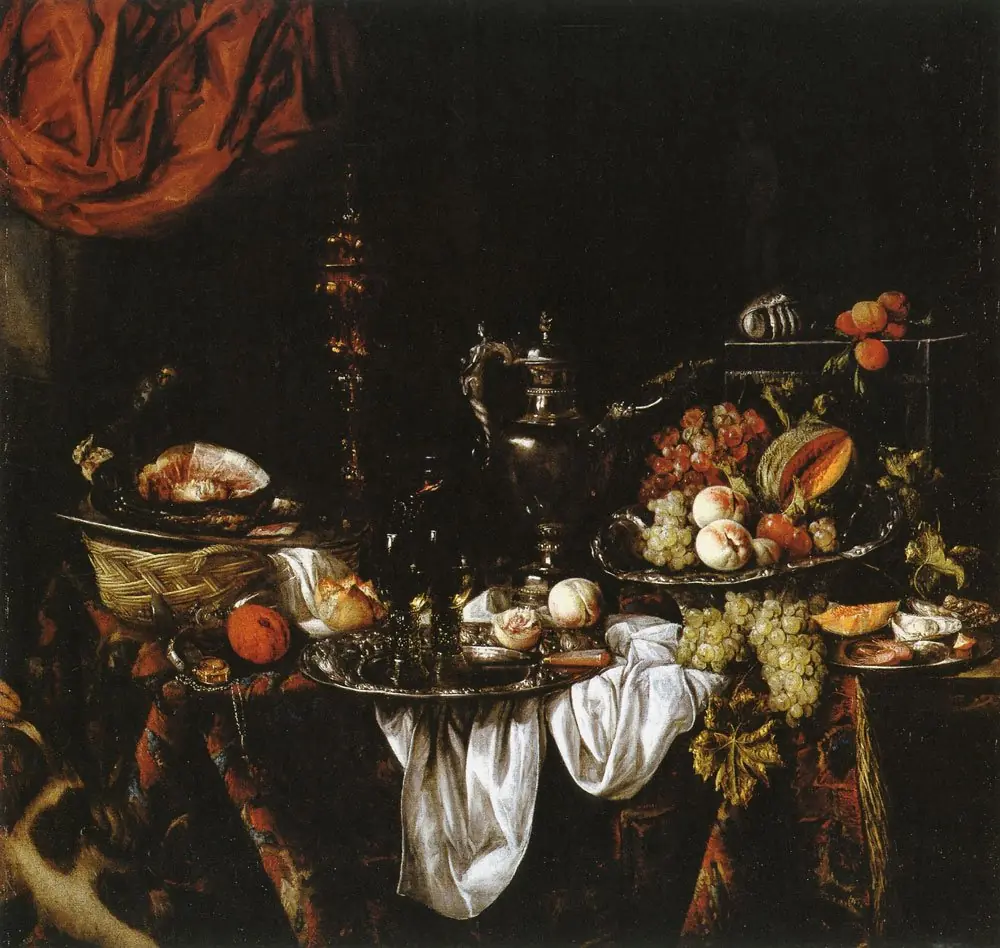 Still life on a draped table with a sculpture of Venus in a niche behind a curtain
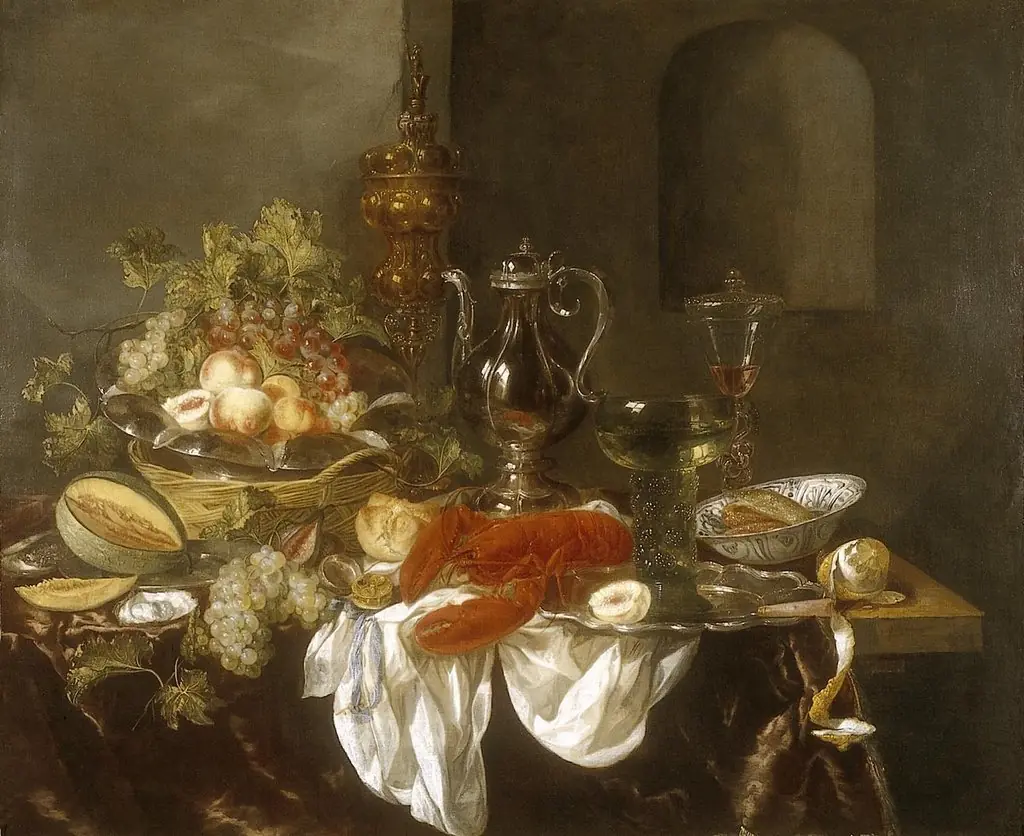 still-life
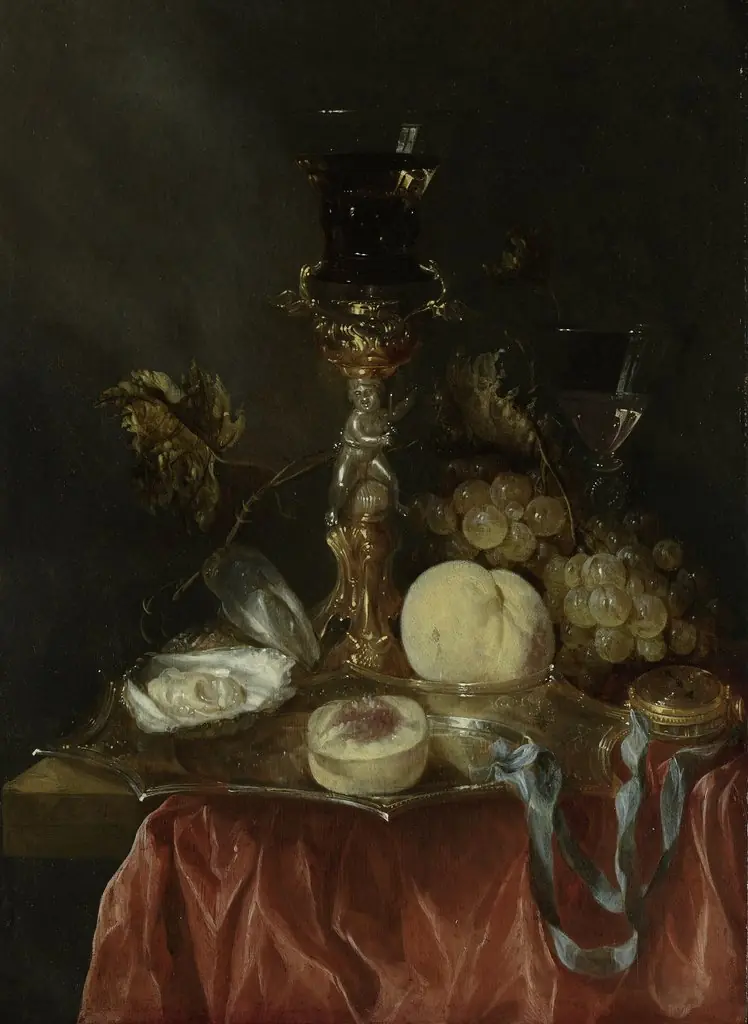 Still Life with Silver-gilt Bekerschroef with Roemer