Artwork
Frühstücksstilleben
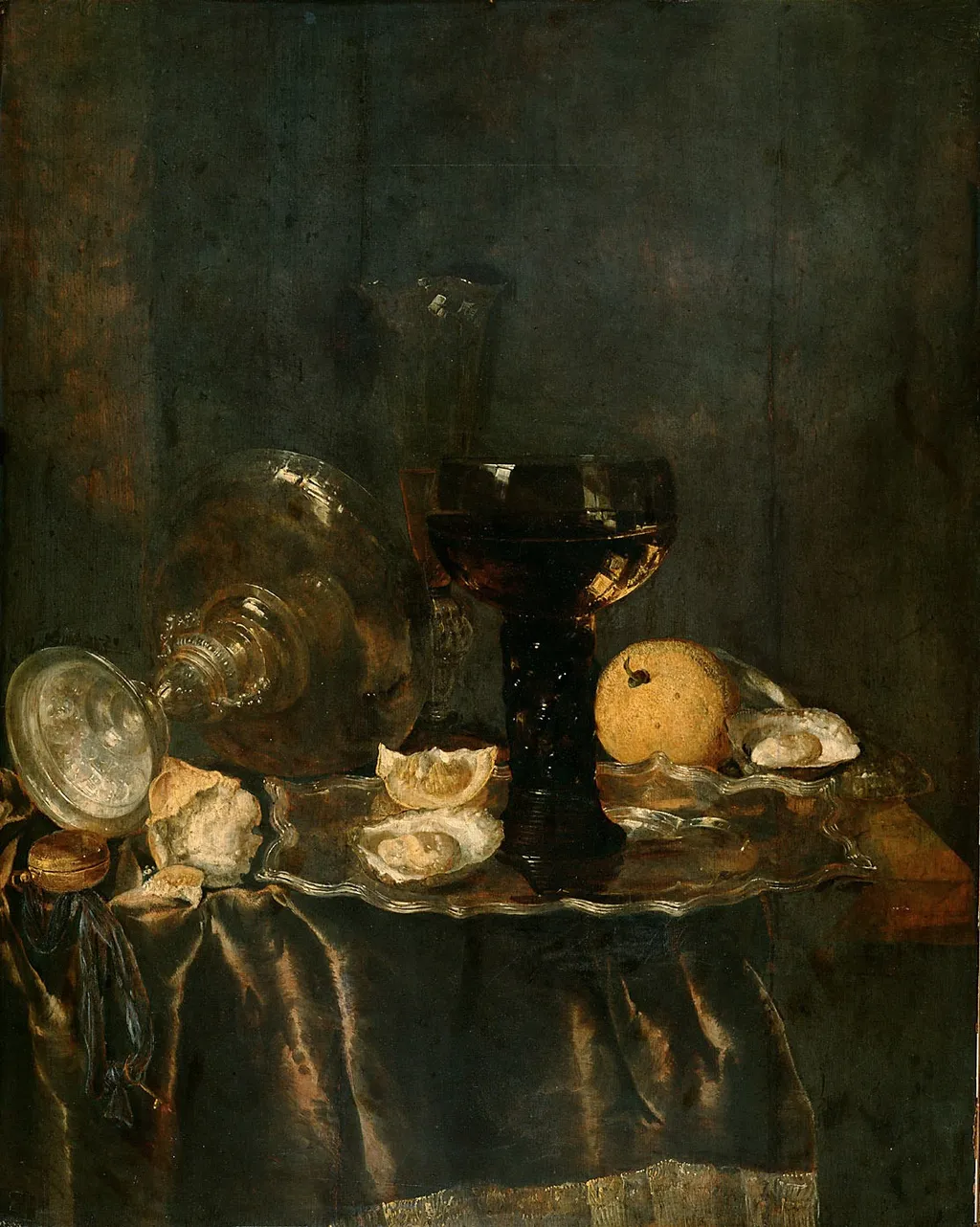
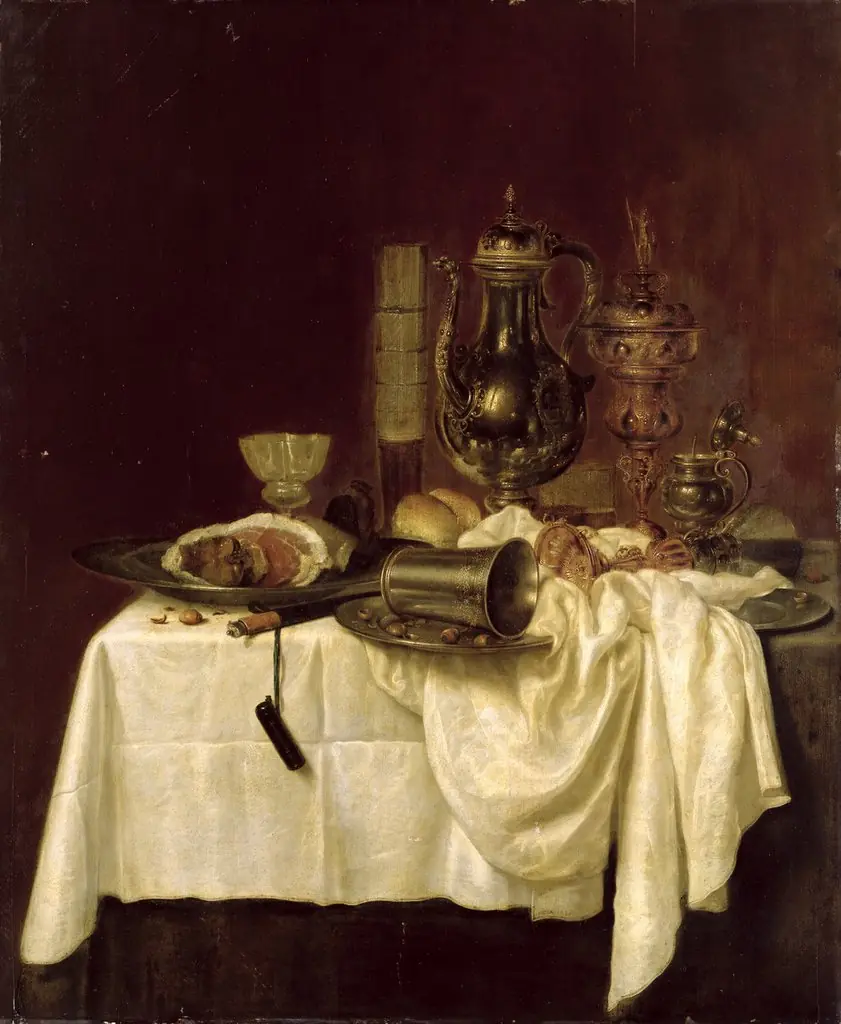
Frühstücksstilleben is an oil painting by the Dutch Golden Age artist Abraham van Beijeren. It dates from 1666 and is held in the collection of the Kunsthistorisches Museum.
About this work
The oysters on the plate are also depicted in a lifelike manner, with a sense of freshness and vitality.
This painting shows a collection of objects on a table. The objects include a large glass goblet, a plate of oysters, a lemon, and a few other items. The objects are arranged on a table with a dark cloth draped over it.
The objects are depicted in a realistic style, with attention to detail and texture. The glass goblet is particularly well-rendered, with a sense of depth and luminosity. The oysters on the plate are also depicted in a lifelike manner, with a sense of freshness and vitality.
The painting is a still life, a common genre in Dutch art of the 17th century. It showcases the artist's skill in rendering everyday objects in a realistic and detailed manner. Check out more works by artist: Abraham van Beijeren.
Overview
Painted in 1666 by Abraham van Beijeren, *Frühstücksstilleben* is a still life from the Dutch Golden Age that reflects the artist’s shift from marine subjects to elaborate domestic arrangements. Executed in oil on panel, the work exemplifies the *pronkstillevens* tradition—characterized by rich, carefully composed displays of luxury items. It is part of the permanent collection at the Kunsthistorisches Museum in Vienna.
Subject & Meaning
The composition features a modest breakfast setting: a glass goblet, a plate of oysters, a lemon, and other tableware arranged on a dark draped cloth. These objects suggest abundance and refinement, yet their transience is implied—oysters spoil, lemon wilts, glass reflects fleeting light. Such details align with Dutch moralizing still life traditions, where luxury subtly hints at the impermanence of earthly pleasures.
Technique & Style
Van Beijeren renders textures with precise observation: the glass goblet captures subtle refractions and internal reflections, while the oysters’ moist, irregular surfaces convey freshness. Brushwork is controlled yet unobtrusive, prioritizing material authenticity over dramatic flair. The dark background isolates the objects, enhancing their three-dimensionality and luminous presence through careful modulation of light and shadow.
History & Provenance
The painting entered the Kunsthistorisches Museum’s collection in the 19th century, likely through imperial Austrian acquisitions of Dutch art. Van Beijeren’s reputation grew posthumously as collectors valued his refined still lifes over his earlier seascapes. Its documented history within the museum confirms its status as a representative example of mid-17th-century Dutch still life practice.
Context
In 17th-century Holland, still lifes like this reflected both economic prosperity and cultural fascination with material culture. The *pronkstillevens* genre emerged among wealthy urban patrons who appreciated art that celebrated global trade—oysters from the North Sea, lemons from the Mediterranean, glass from Venice. These paintings balanced aesthetic pleasure with quiet moral undertones.
Legacy
Van Beijeren’s work influenced later Dutch still life painters through his attention to surface detail and compositional balance. While not as widely known as some contemporaries, his paintings remain valued for their quiet precision and restrained elegance. *Frühstücksstilleben* continues to serve as a reference for the technical and symbolic dimensions of Dutch Golden Age domestic still life.
Artist & collection
Artist
Abraham Hendriksz van Beijeren or Abraham van Beyeren (c. 1620, The Hague – March 1690, Overschie (Rotterdam)) was a Dutch Baroque painter of still lifes. Little recognized in his day and initially active as a marine…

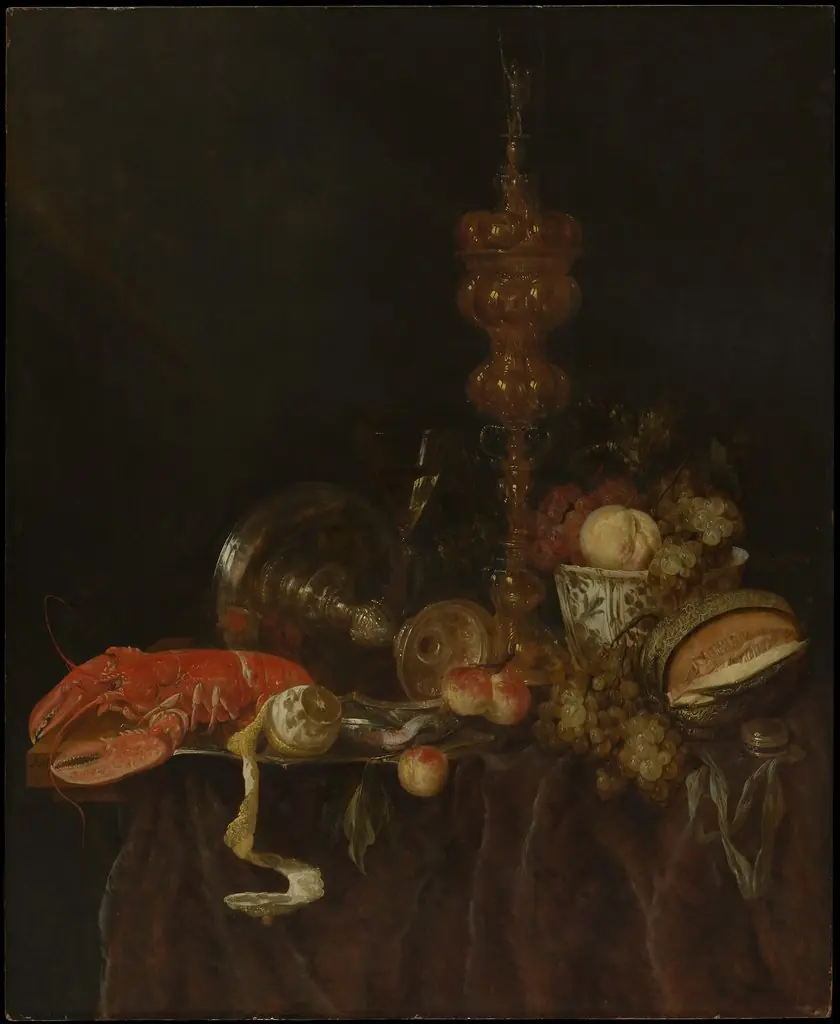 Still Life with Lobster and Fruit
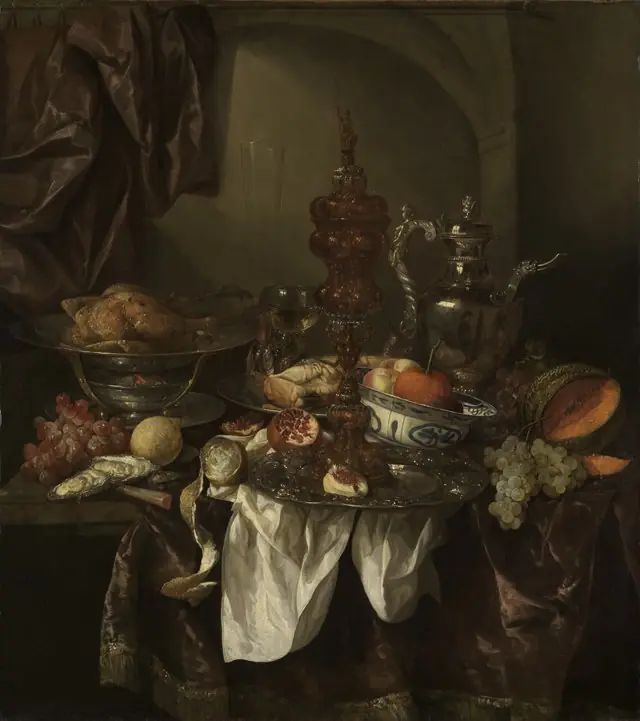 Still life with fruit, roast, silver- and glassware, porcelain and columbine cup on a dark tablecloth with white serviette
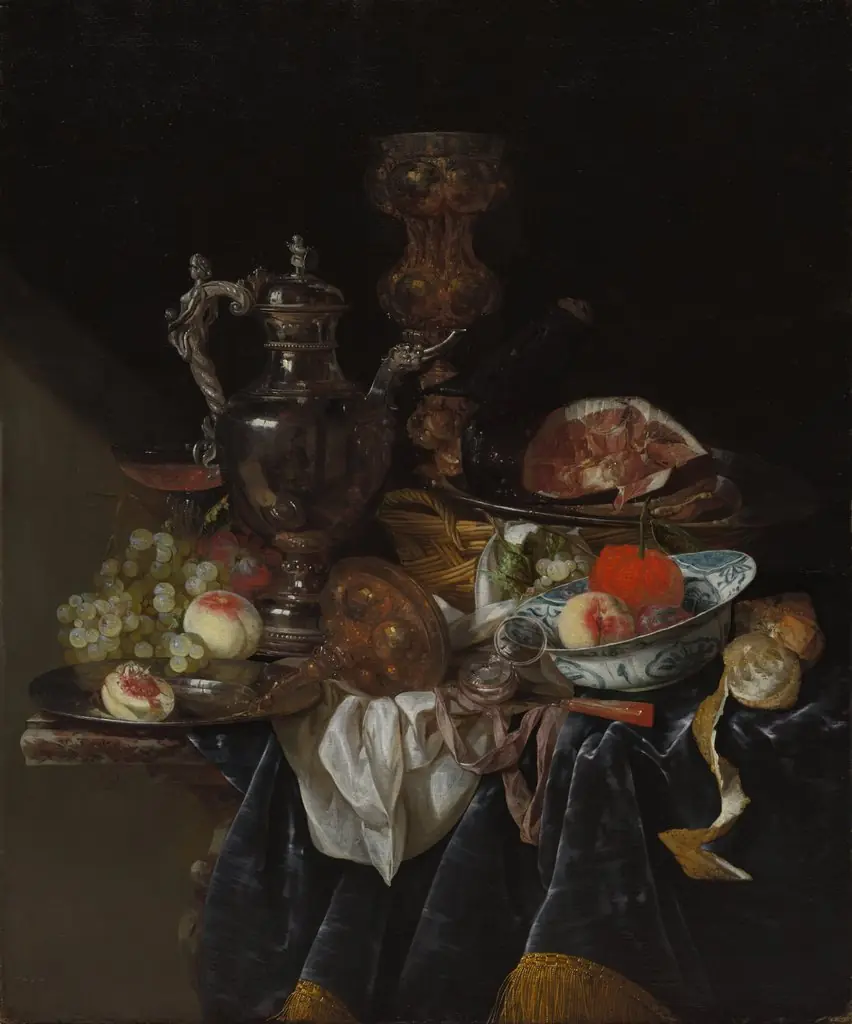 Silver Wine Jug, Ham, and Fruit
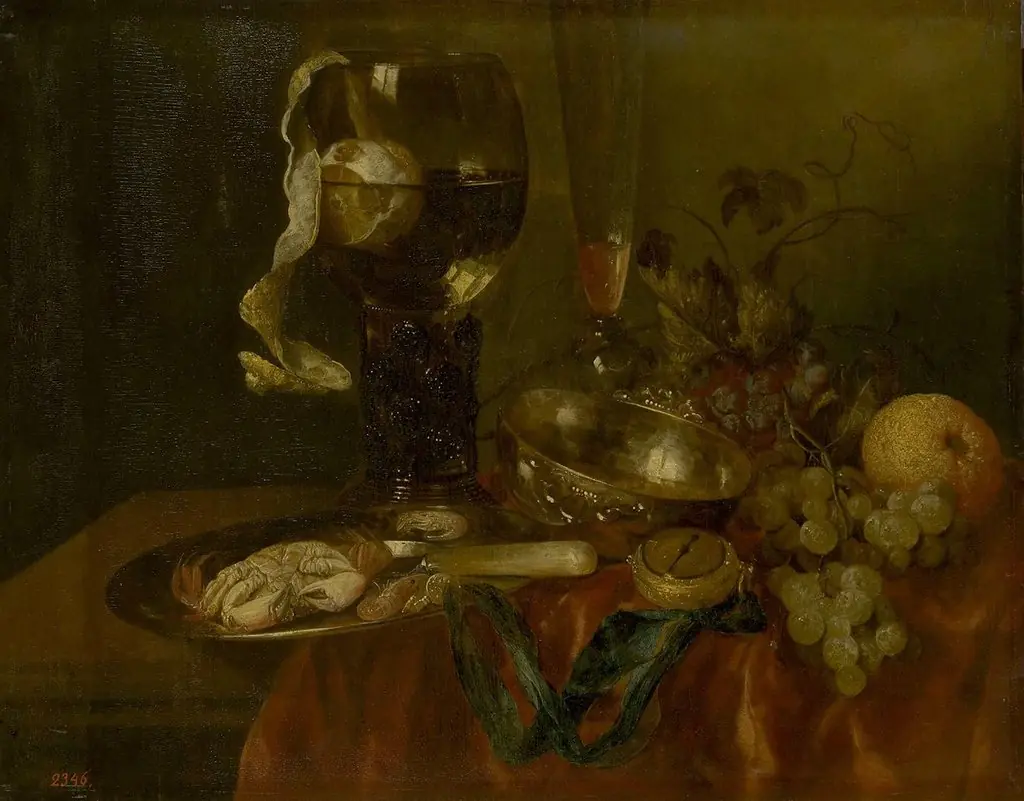 Snack (Still Life with Crab, Fruit and Clock)
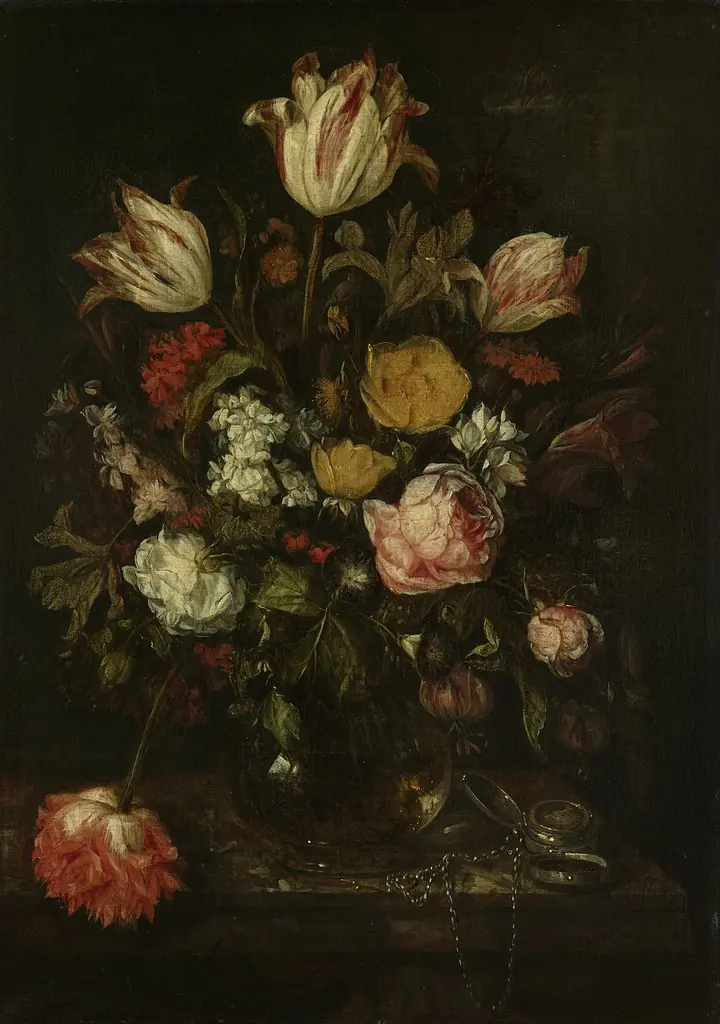 Still life with flowers
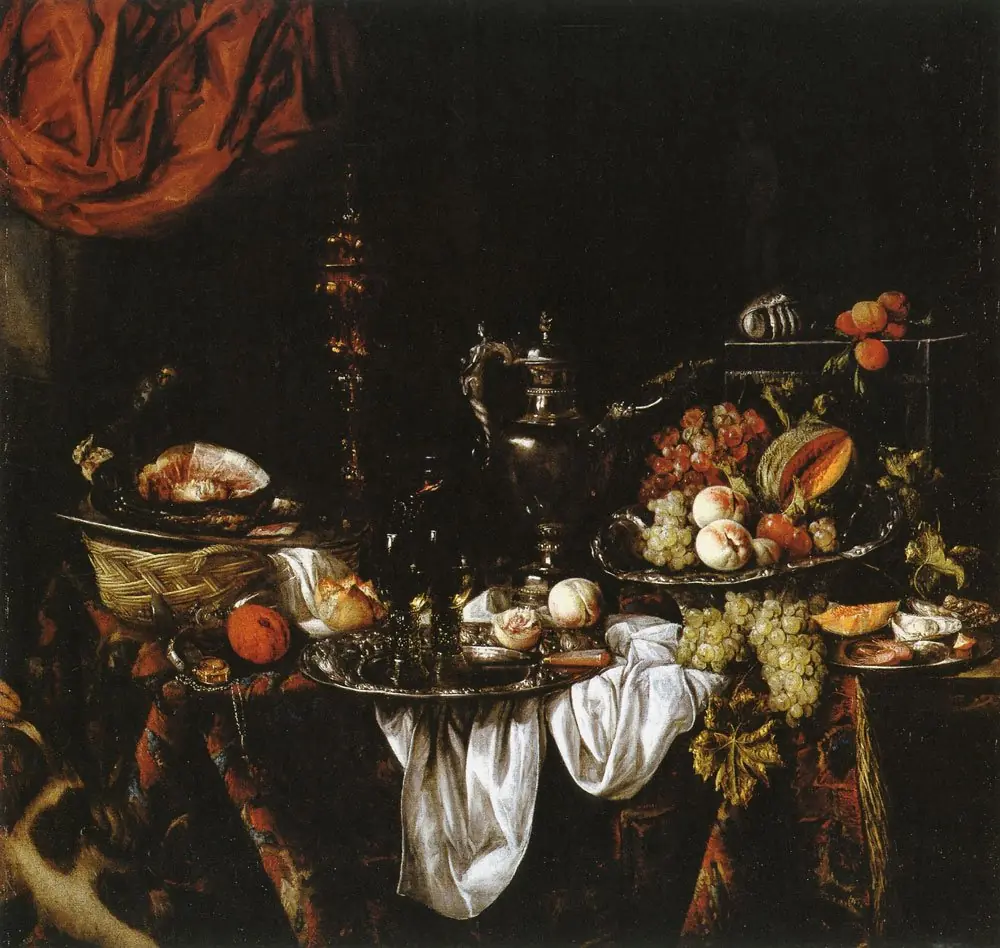 Still life on a draped table with a sculpture of Venus in a niche behind a curtain
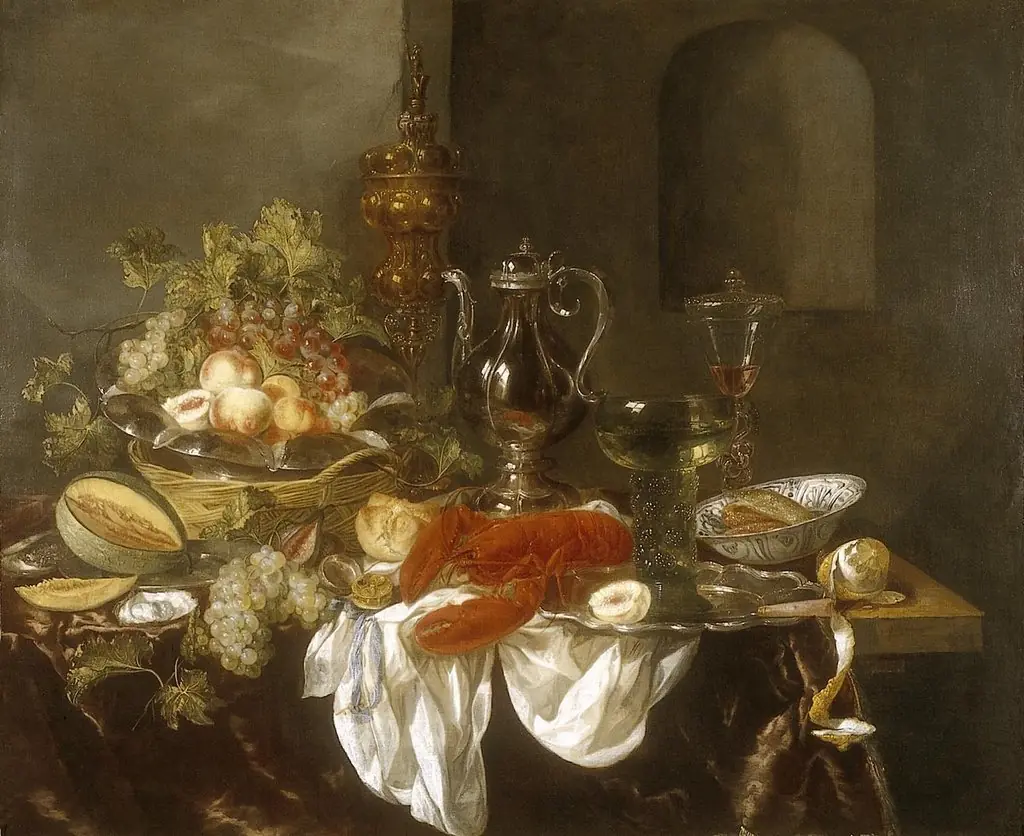 still-life
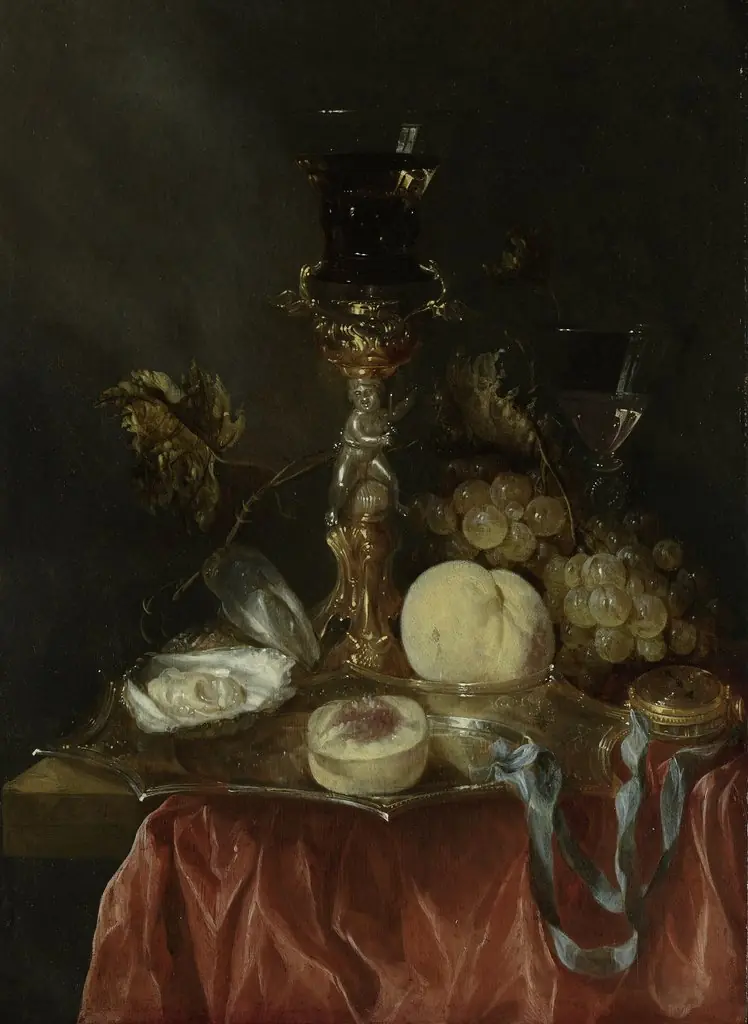 Still Life with Silver-gilt Bekerschroef with Roemer
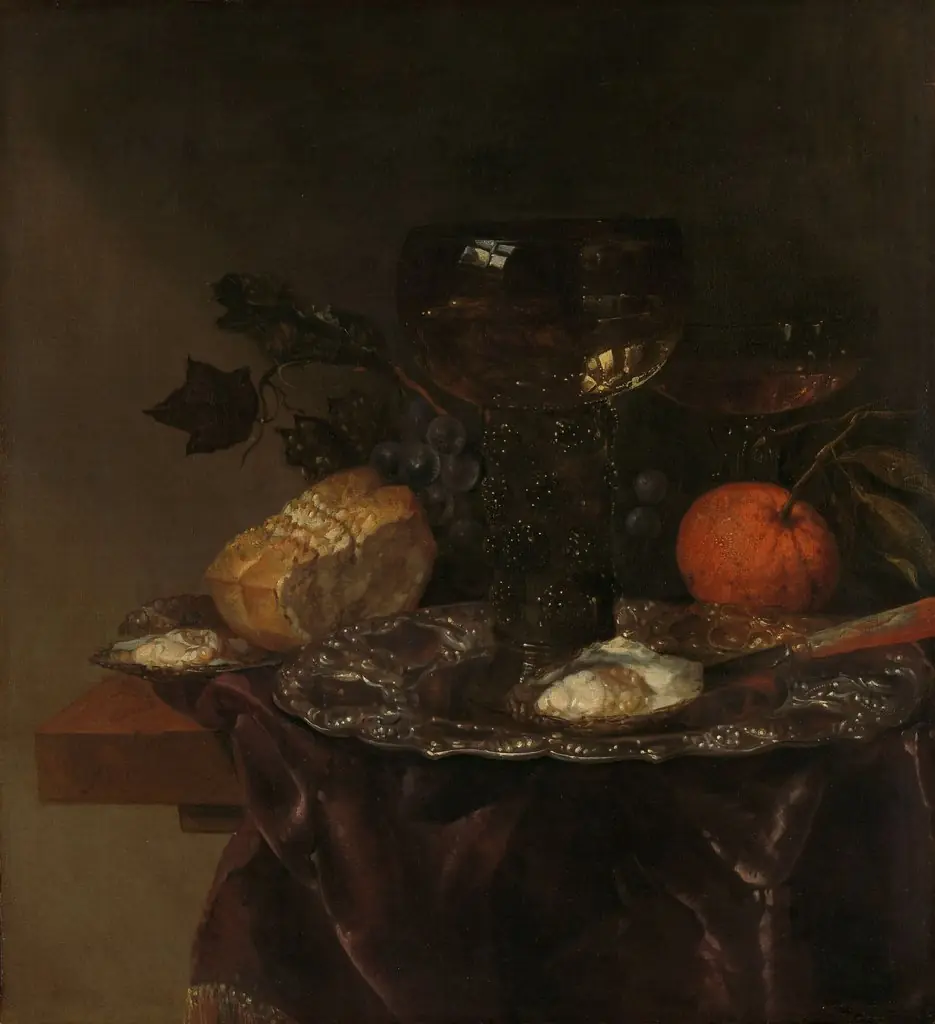 Still life
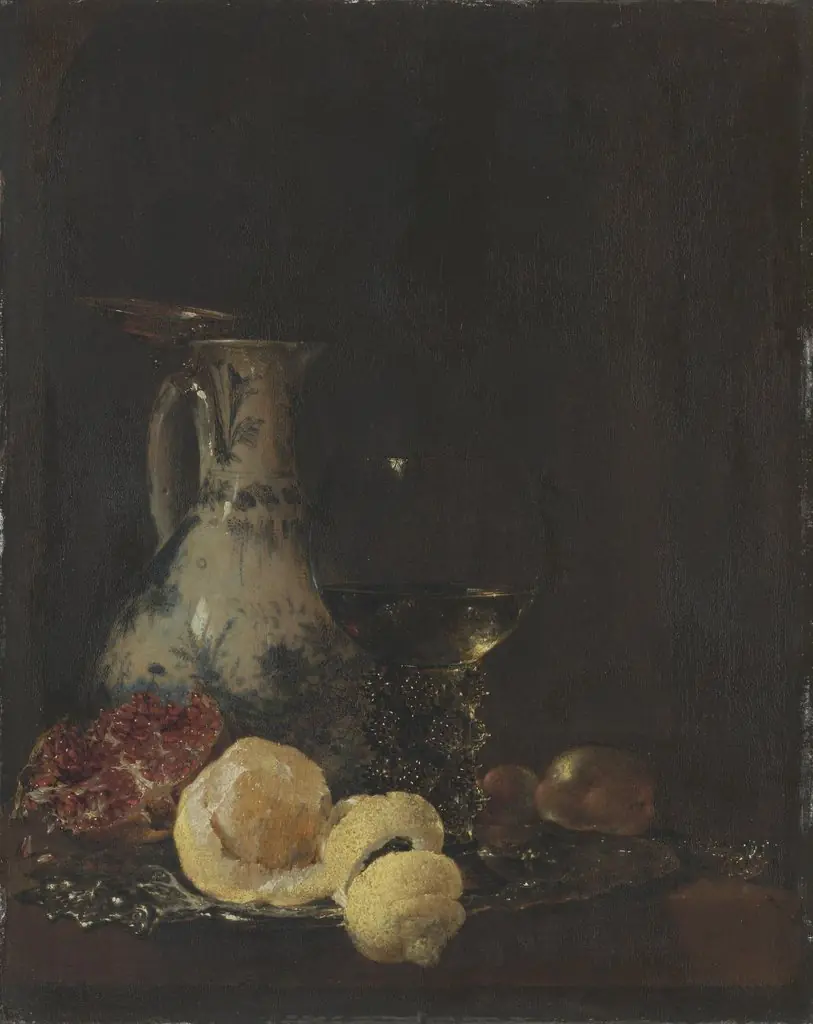 Still Life with a Ming Jug
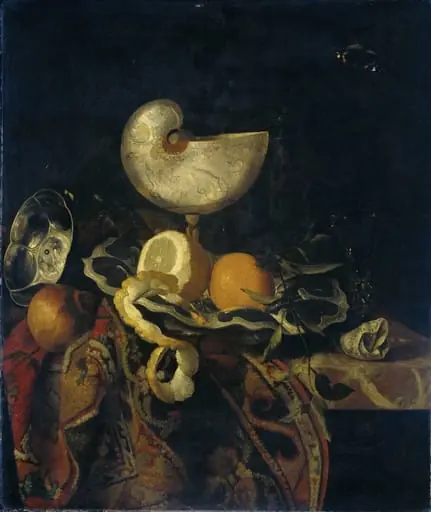 Still Life with Nautilus Cup
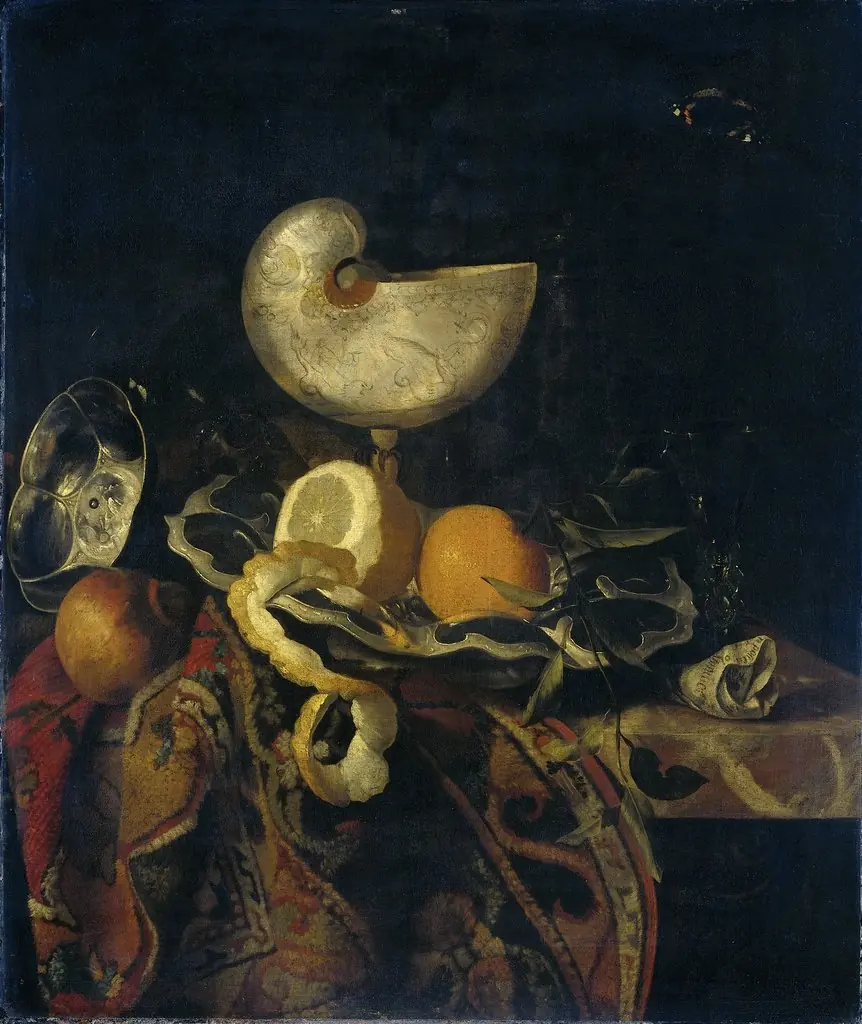 Still Life with Nautilus Cup
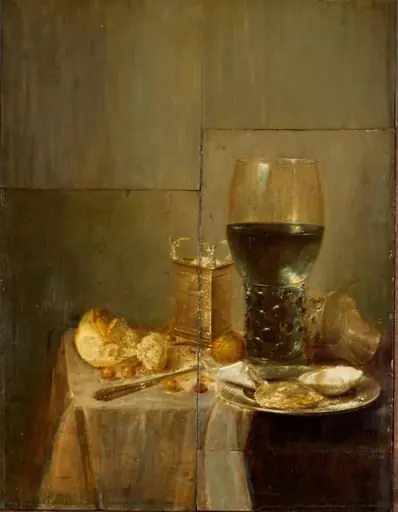 Still Life
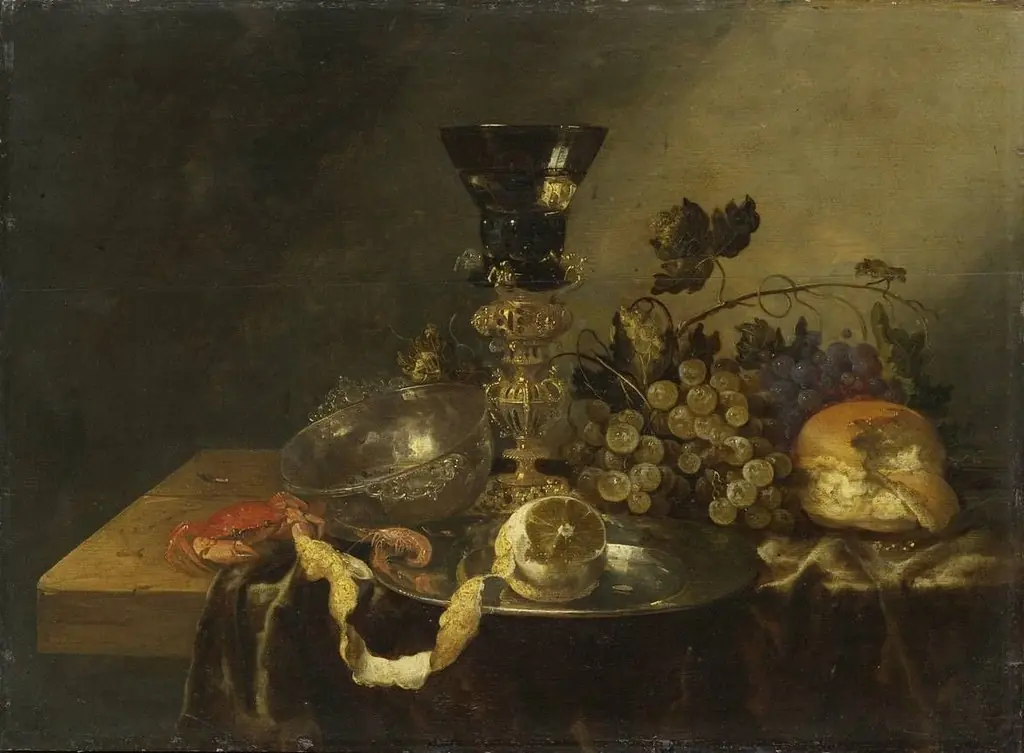 Stillleben mit Silberschale und Becherschraube
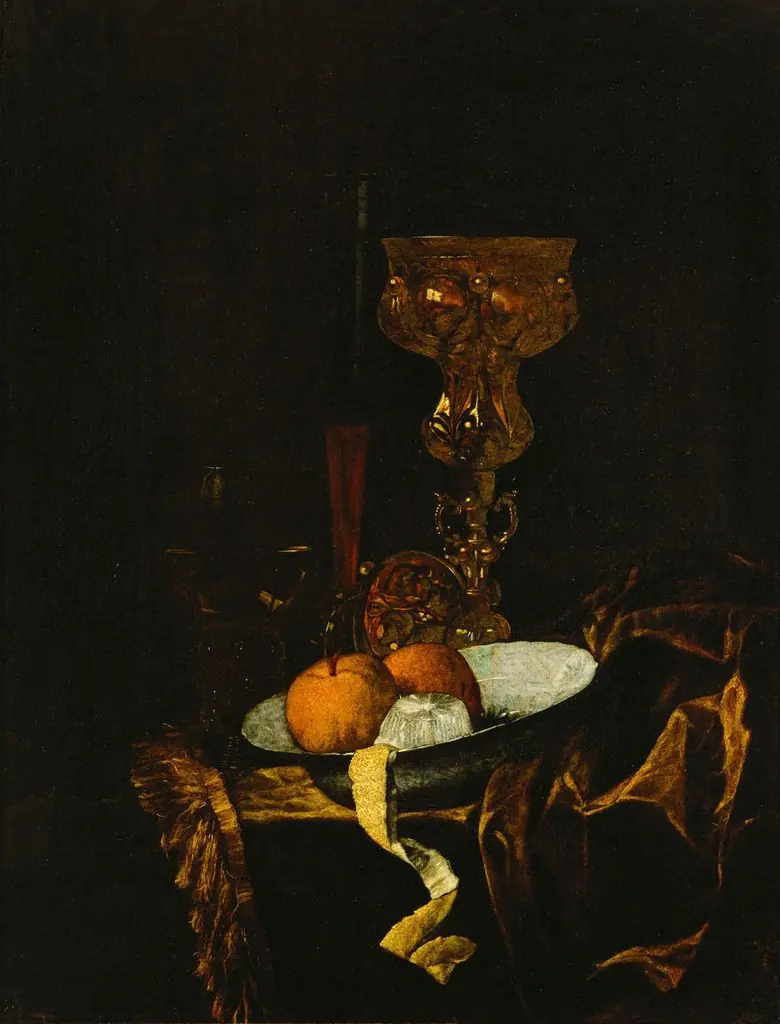 Frühstücksstilleben
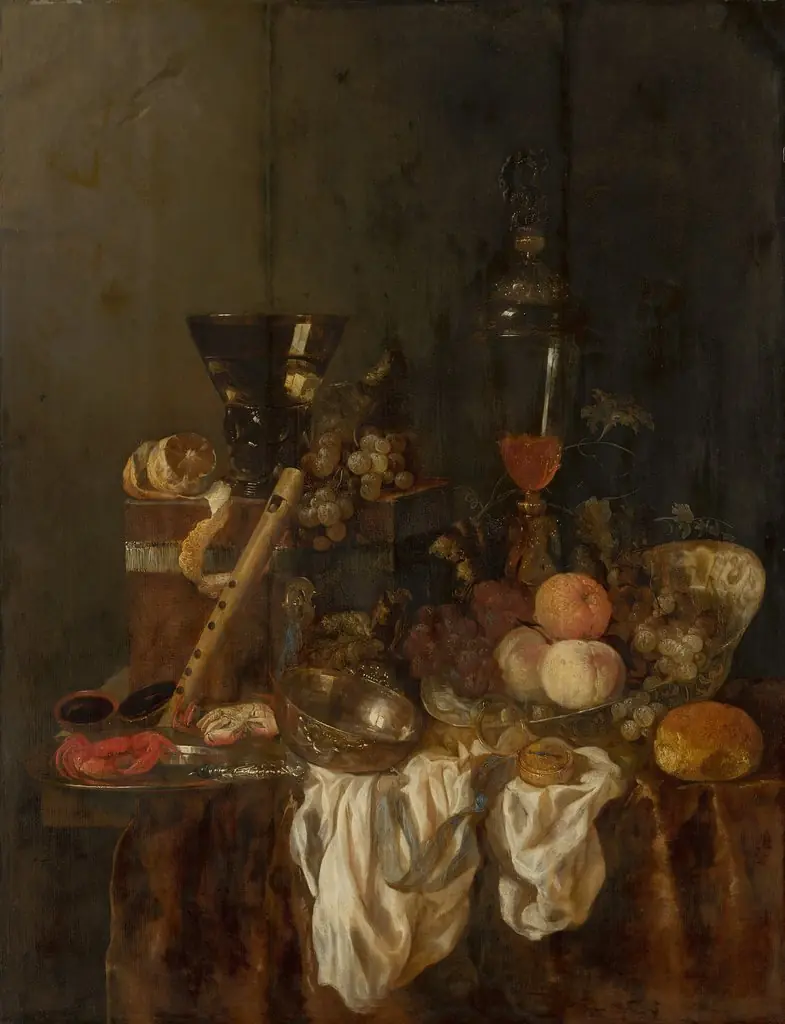 Suptuous Still Life.
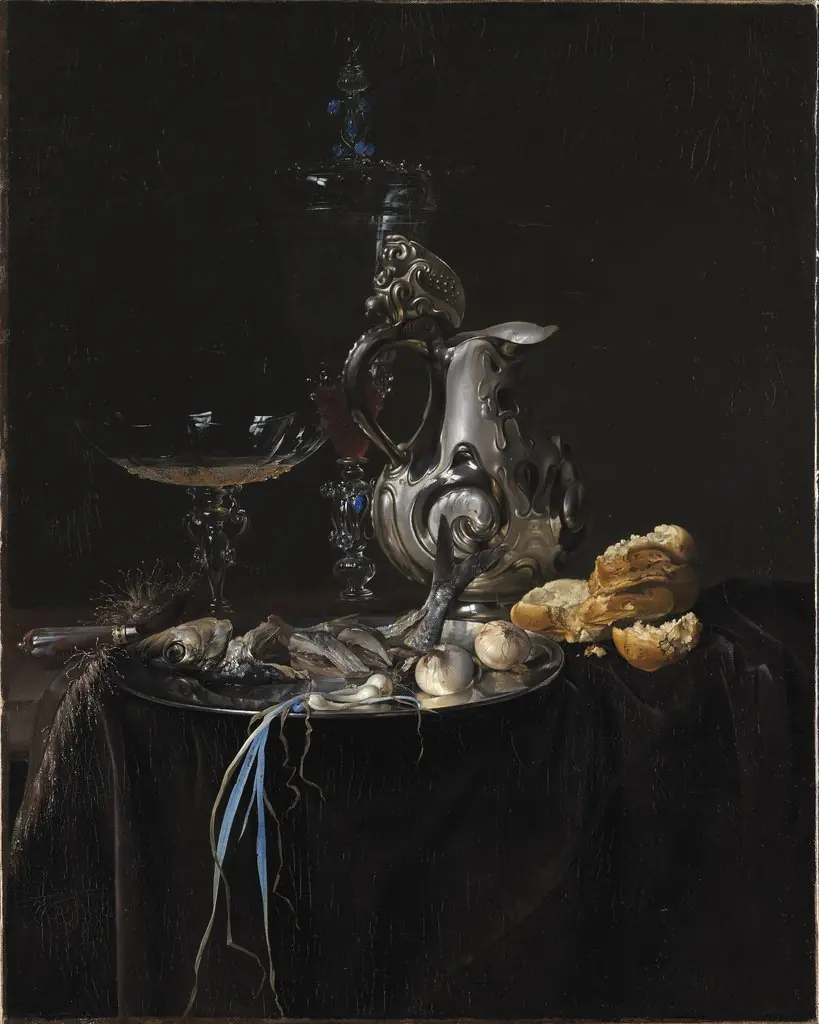 Still Life. Breakfast Piece with a Silver Jug
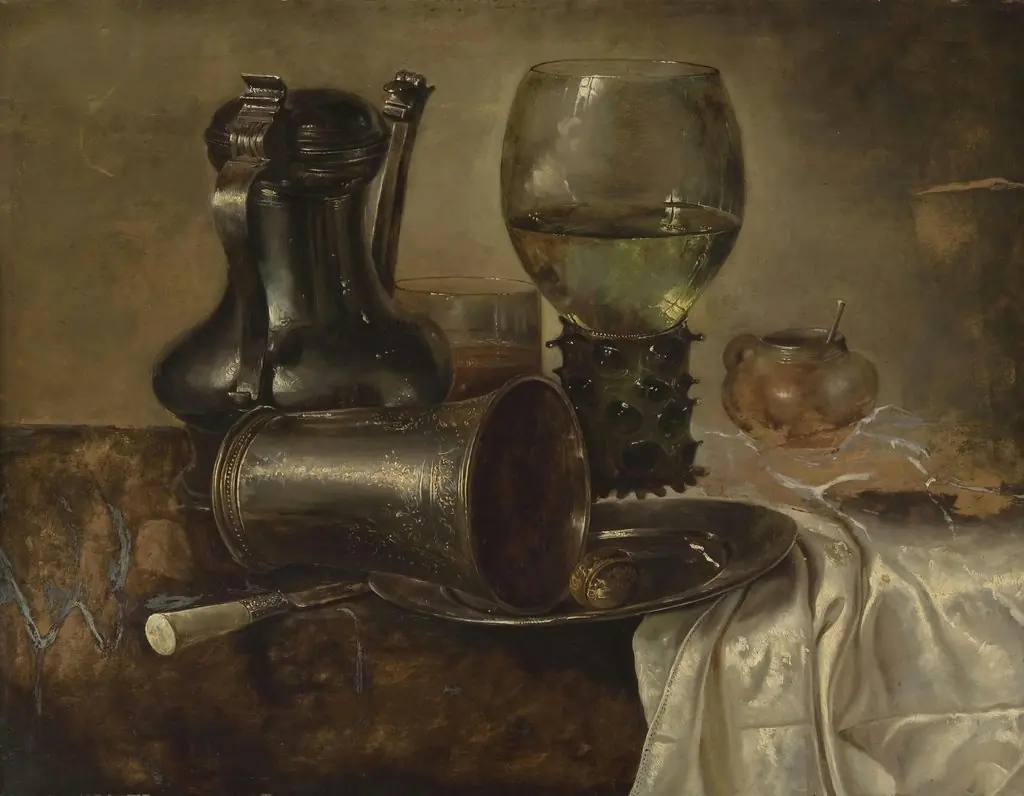 Still Life with a Roemer, a Covered Flagon, and a Beaker
 Still life with ham, decanter, columbine cup and passglass on a laid table