Artwork
A Coastal Scene with Dutch Vessels and a Fish Market
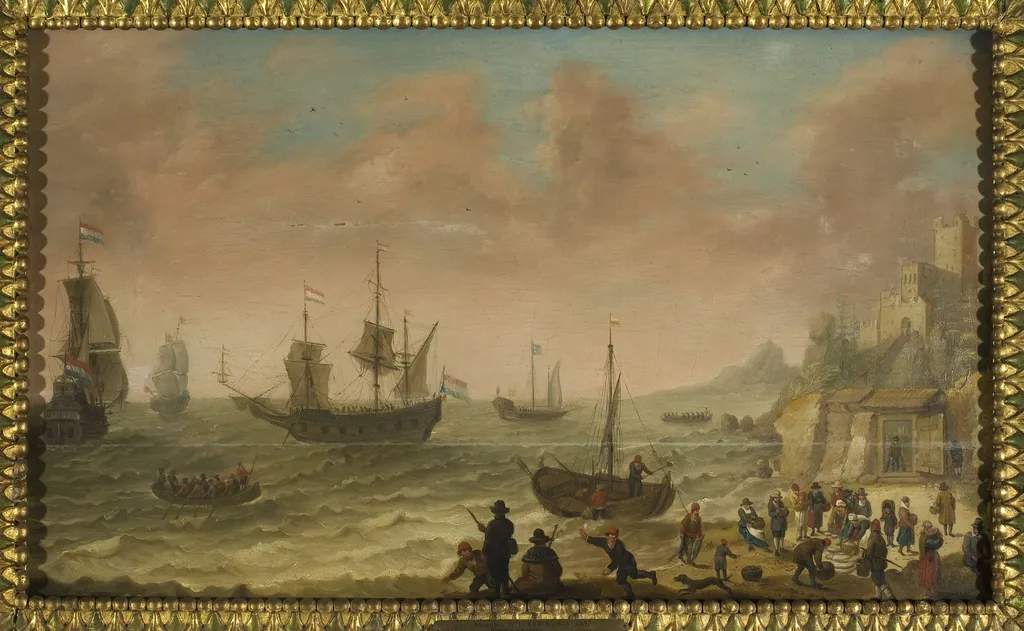
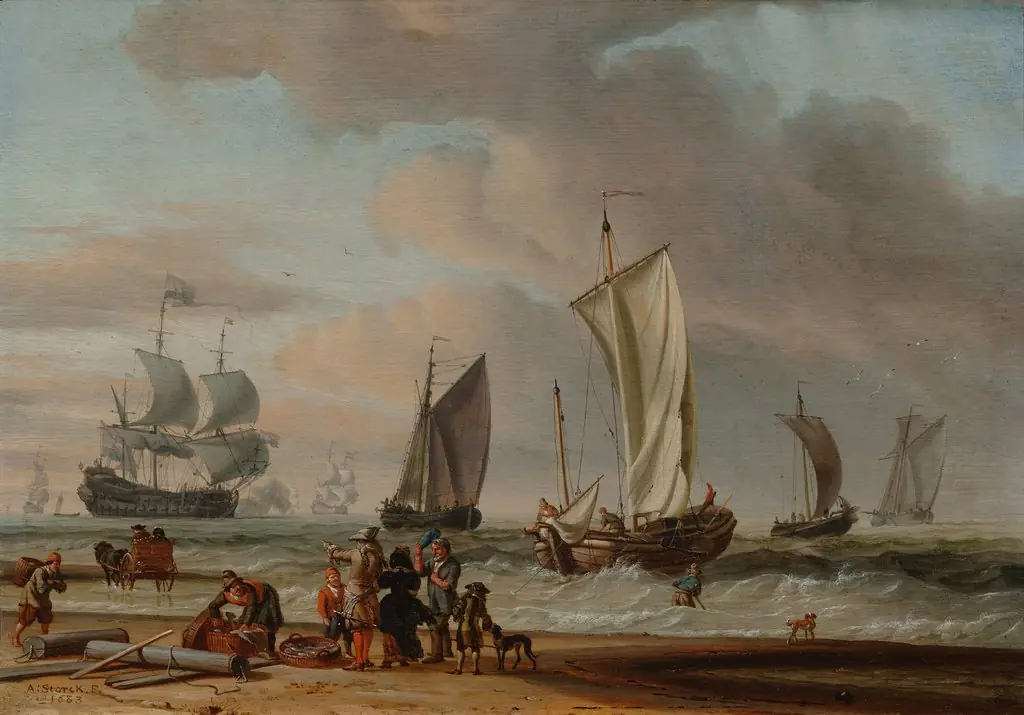
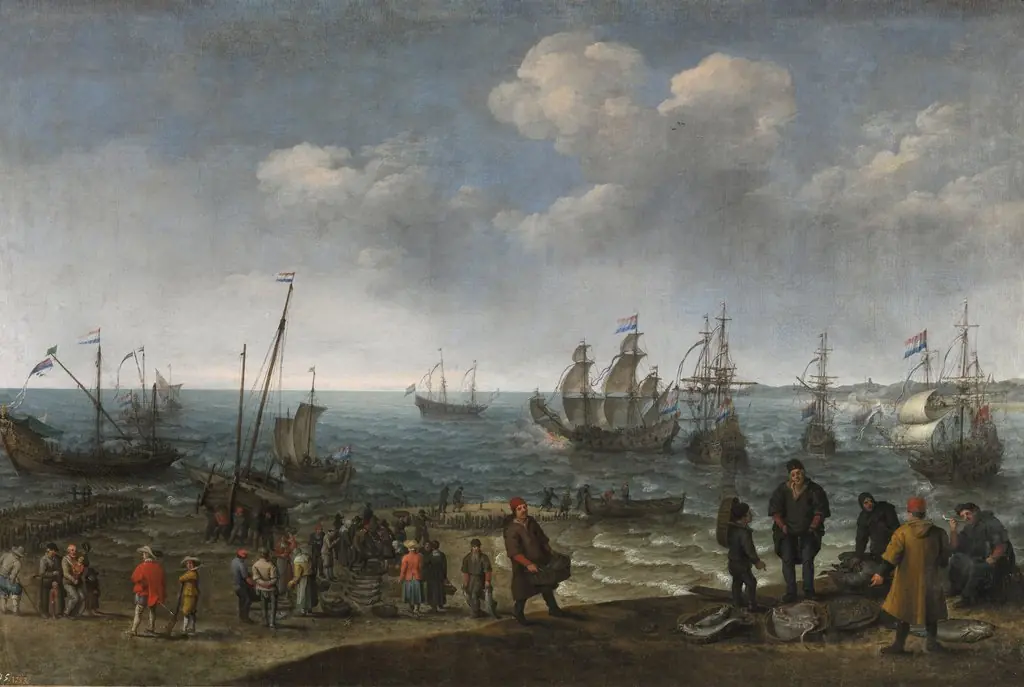
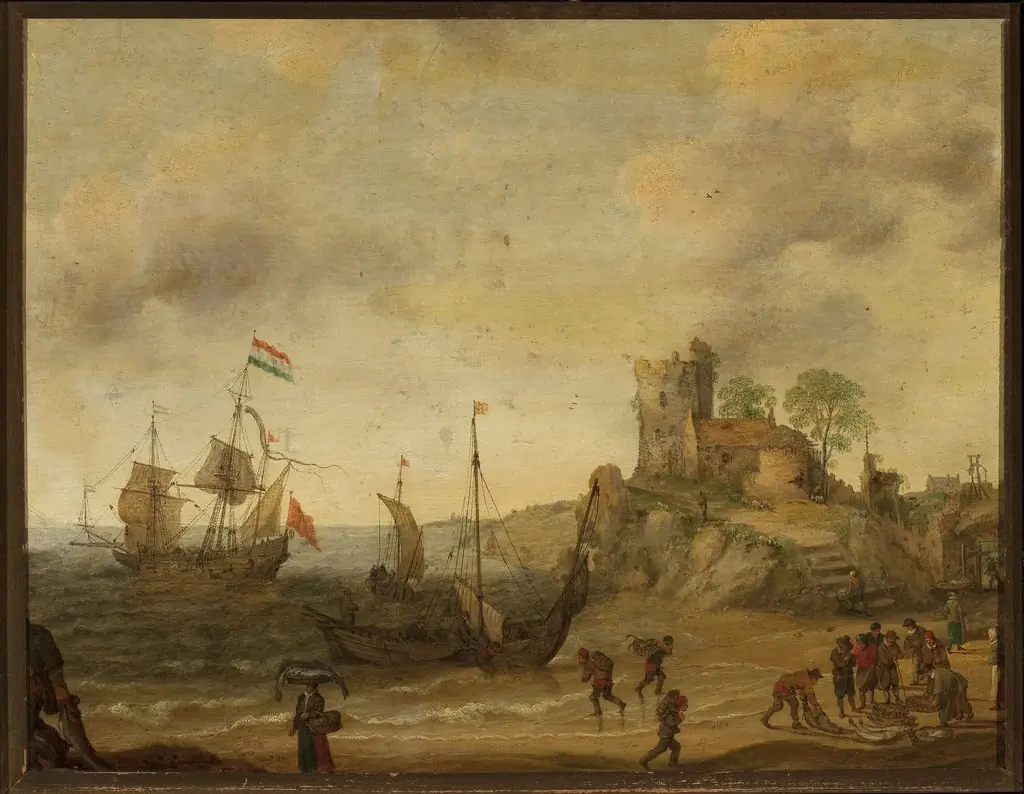
A Coastal Scene with Dutch Vessels and a Fish Market is an oil painting by the Dutch Golden Age artist Abraham Willaerts. It dates from 1650 and is held in the collection of the National Museum in Warsaw.
About this work
Overview
The painting is part of the National Museum in Warsaw’s collection, preserving a moment of everyday coastal commerce from mid-17th-century Holland.
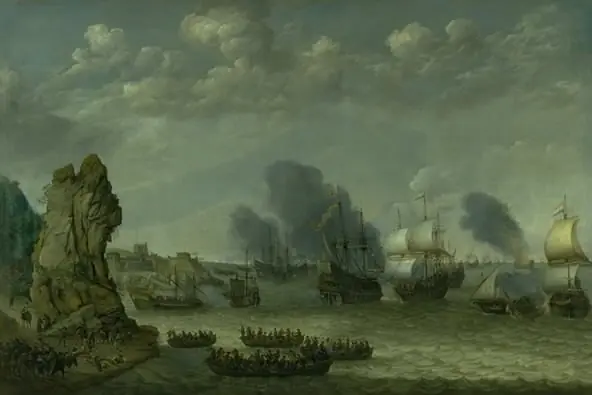
Painted around 1650 by Abraham Willaerts, this oil-on-canvas work captures a coastal Dutch harbor teeming with maritime activity. It portrays a working waterfront where fishing vessels anchor near a lively market, reflecting the economic vitality of the Dutch Golden Age. The painting is part of the National Museum in Warsaw’s collection, preserving a moment of everyday coastal commerce from mid-17th-century Holland.
Subject & Meaning
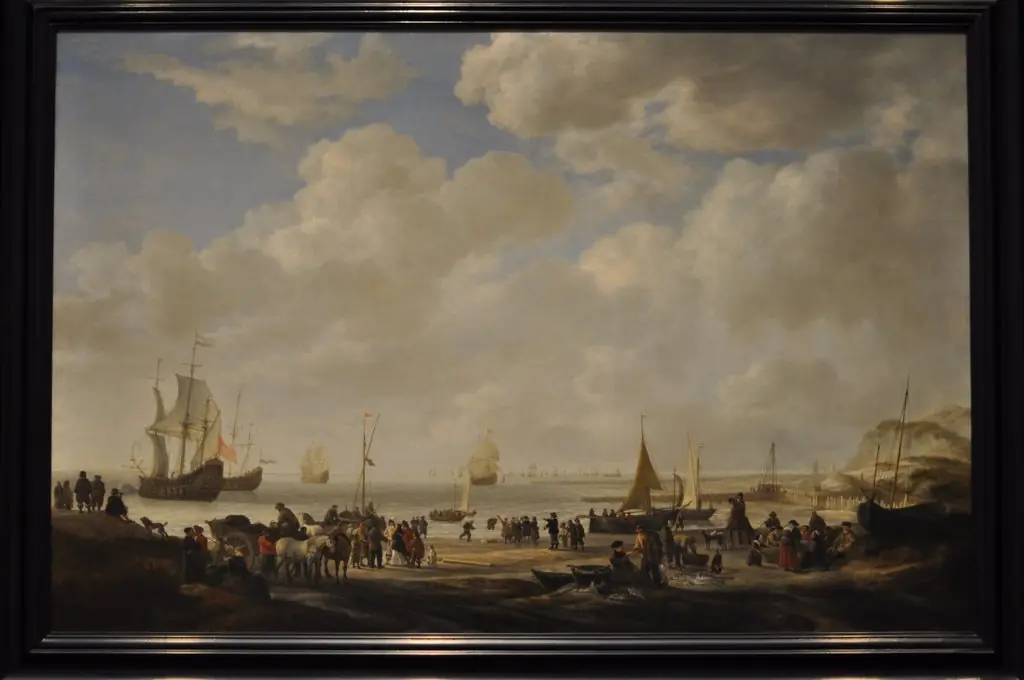
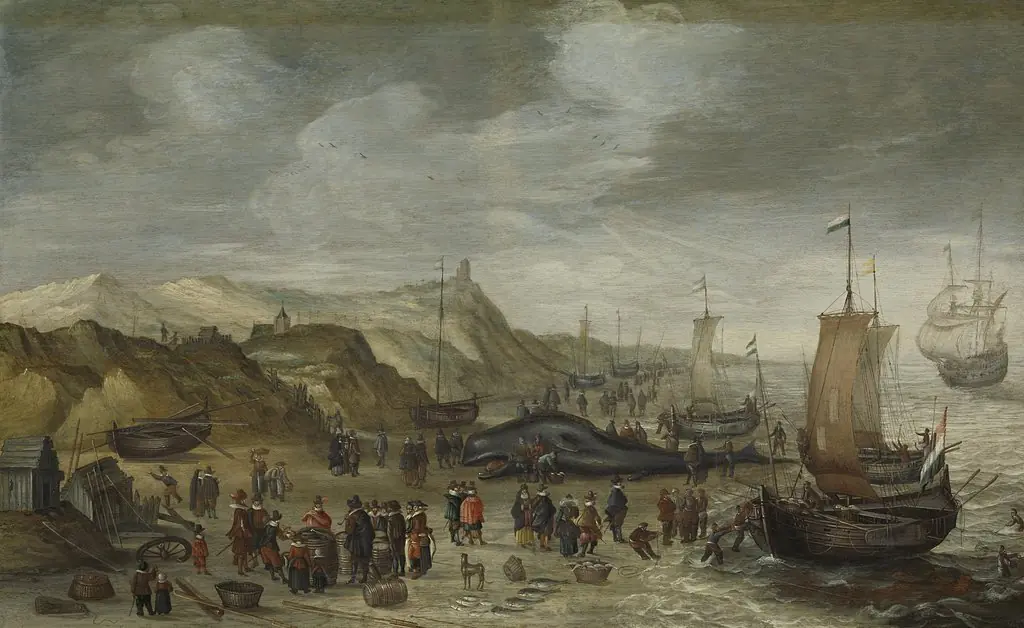
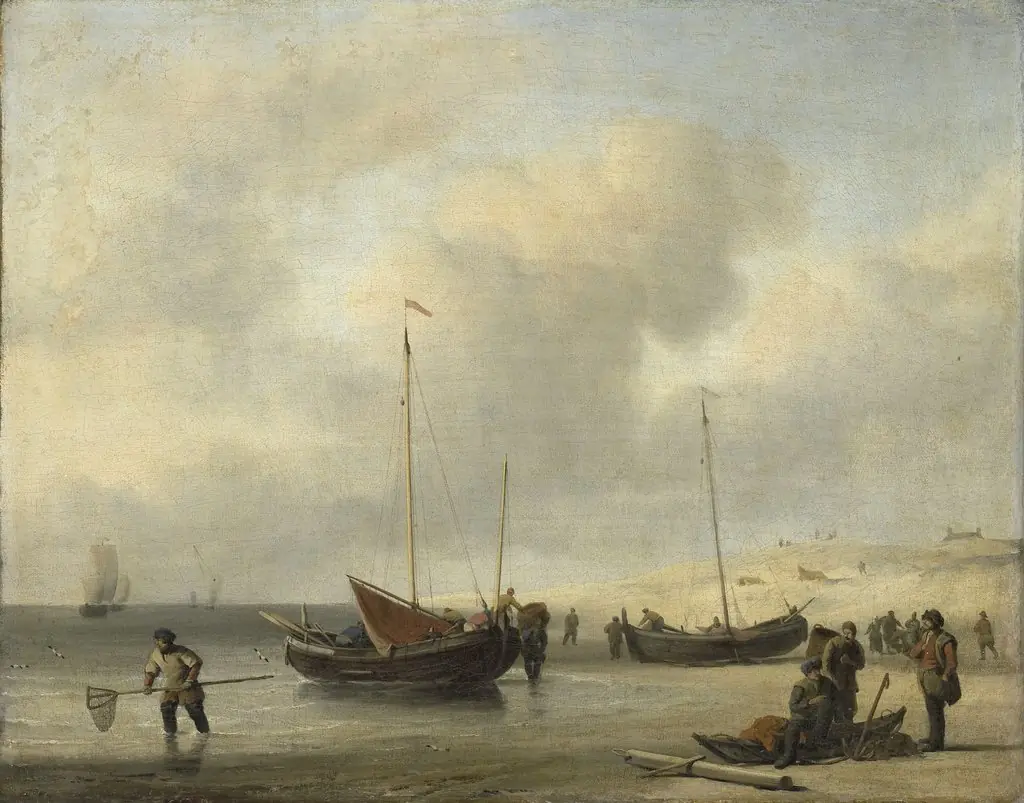
The scene centers on a fish market in the foreground, where vendors and buyers engage in transaction and conversation amid stacked baskets and glistening catches. Behind them, ships of varying sizes sail or dock, signaling the integration of fishing with broader trade networks. The composition emphasizes labor and community, portraying the sea not as a romantic backdrop but as a source of daily sustenance and livelihood.
Technique & Style
Willaerts employed oil paint to render textures with precision—glossy fish scales, weathered wood, and rippling water. Light falls from the left, casting strong shadows and highlighting figures and sails, a technique rooted in chiaroscuro. Brushwork varies between loose, atmospheric strokes for the sea and tighter details in the crowd, balancing realism with a sense of movement across the canvas.
History & Provenance
Created during Willaerts’s mature period, the painting aligns with his known focus on harbor scenes and maritime commerce. It entered the National Museum in Warsaw’s collection in the 20th century, likely through acquisitions of Dutch Golden Age works. Its survival through centuries of political change underscores its value as a document of Dutch visual culture beyond the Netherlands.
Context
In mid-17th-century Holland, coastal towns thrived on fishing and trade, and marine painting became a distinct genre. Artists like Willaerts documented these scenes not as grand narratives but as honest records of labor and commerce. This work fits within a broader trend of genre scenes that celebrated civic pride and economic self-sufficiency during the Dutch Republic’s peak.
Legacy
Though less widely known than some contemporaries, Willaerts contributed to the codification of Dutch marine painting as a genre grounded in observation. His attention to authentic detail—vessel types, market practices, and coastal light—helped shape how later viewers understood the rhythm of Dutch maritime life. The painting remains a quiet testament to the ordinary yet vital economies of the era.
Artist & collection
Artist
Abraham Willaerts (c. 1603 - 18 October 1669) was a Dutch Baroque painter, mostly of marine and harbor scenes. He also painted a number of single and family portraits.