Artwork
The lute player
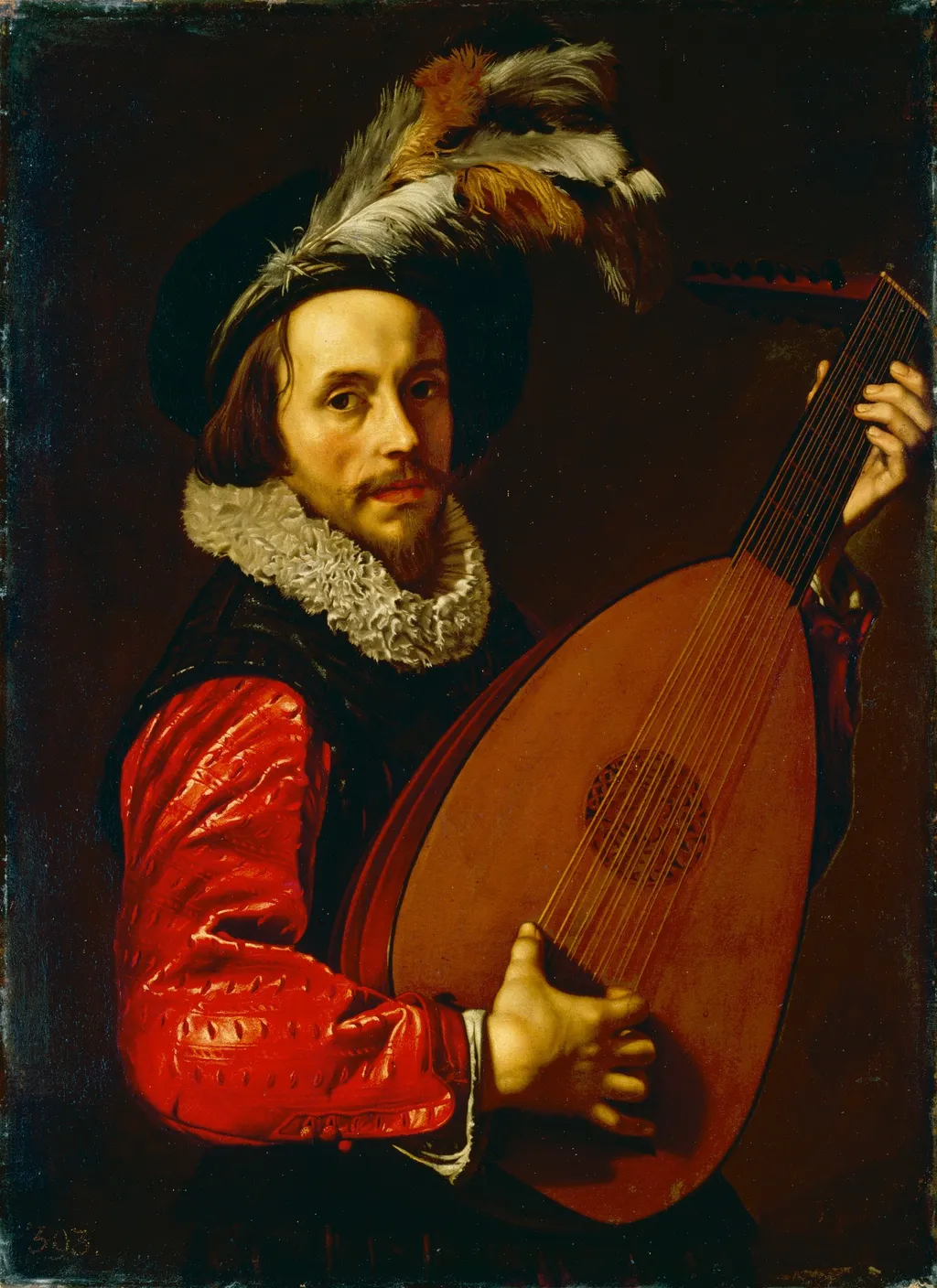
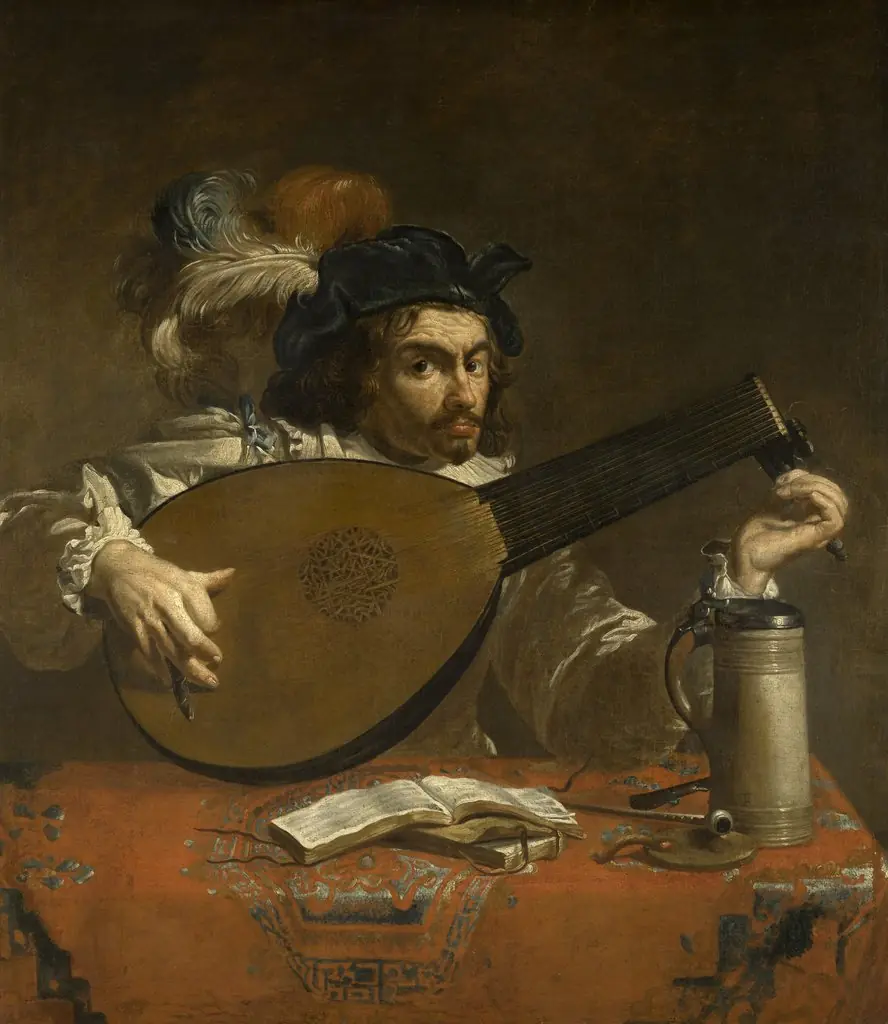
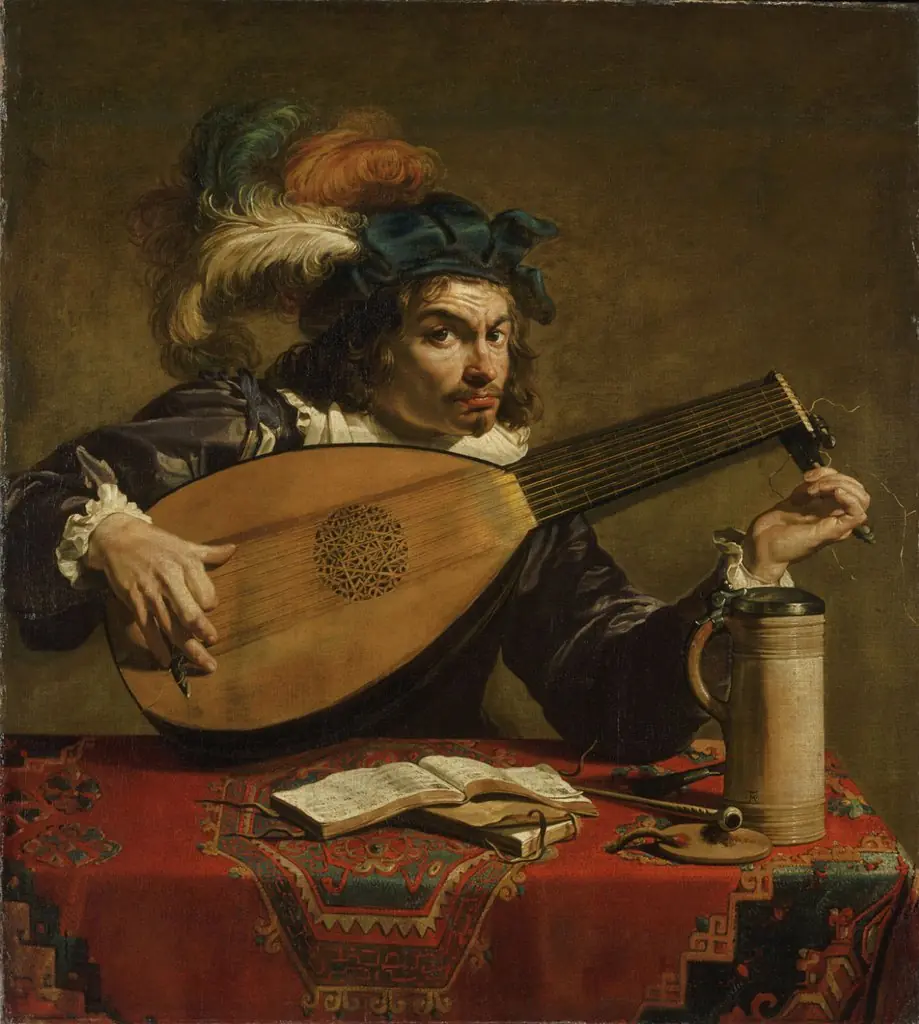
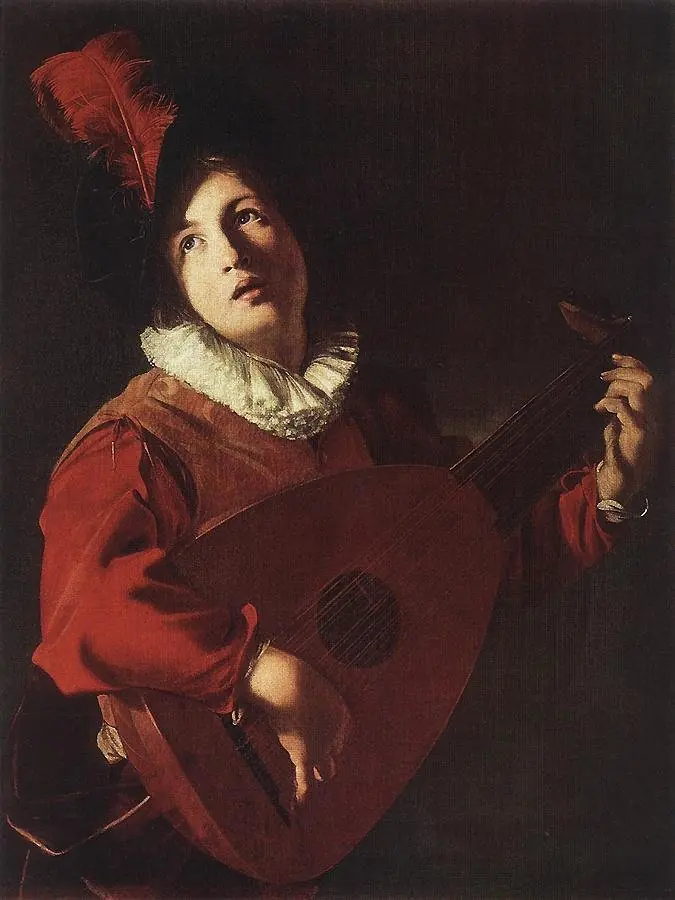
The lute player is an oil painting by the Flemish Baroque painting artist Adam de Coster. It dates from 1625 and is held in the collection of the Staatliche Kunstsammlungen Dresden.
About this work
Overview
Created in 1625, *The Lute Player* is an oil painting by the Flemish artist Adam de Coster. The work depicts a solitary figure engaged in music, illuminated against a deep, shadowy backdrop. It belongs to the collection of the Gemäldegalerie Alte Meister and exemplifies the painter’s focus on dramatic lighting.
Subject & Meaning
The central figure is a man wearing a black feathered hat, a red-sleeved garment, and a dark vest. He holds a lute in his left hand and plucks the strings with his right, suggesting a moment of private performance. The attire hints at a status linked to wealth or artistic patronage, while the act of playing underscores the cultural value of music in the period.
Technique & Style
De Coster employs a stark chiaroscuro, a technique that juxtaposes intense illumination with enveloping darkness. The luminous rendering of the lute and the sitter’s features emerges from the surrounding gloom, creating a three‑dimensional effect. This approach aligns him with the Antwerp Caravaggisti, a group that adapted Caravaggio’s theatrical light treatment for Northern European subjects.
History & Provenance
Born around 1586 in Mechelen, Adam de Coster worked primarily in Antwerp, where he became a leading figure among local Caravaggisti. *The Lute Player* reflects his mature period and his reputation as a painter of nocturnal scenes, a trait that earned him the nickname “Pictor Noctium.” The painting entered the Gemäldegalerie Alte Meister’s holdings in the 20th century, where it remains on view.
Own this work as a print
Artist & collection
Artist
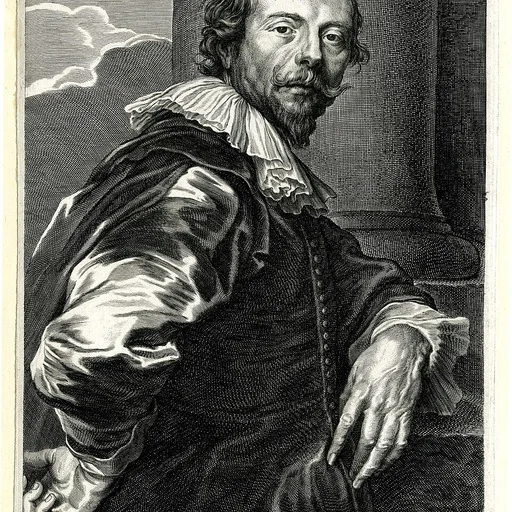
Adam de Coster (c. 1586 in Mechelen – 4 May 1643 in Antwerp) was a Flemish painter. He was a prominent member of the Antwerp Caravaggisti. These Caravaggisti were part of an international movement of European artists…