Artwork
Tobiah and the Angel
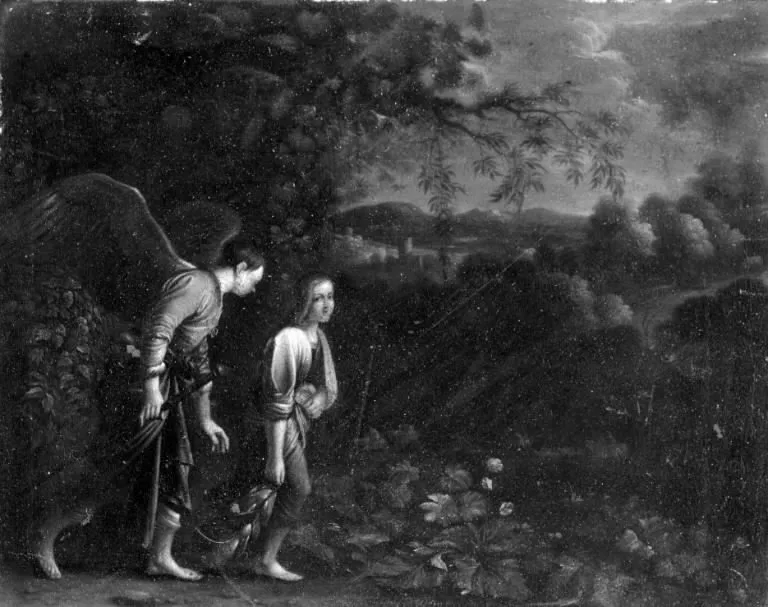
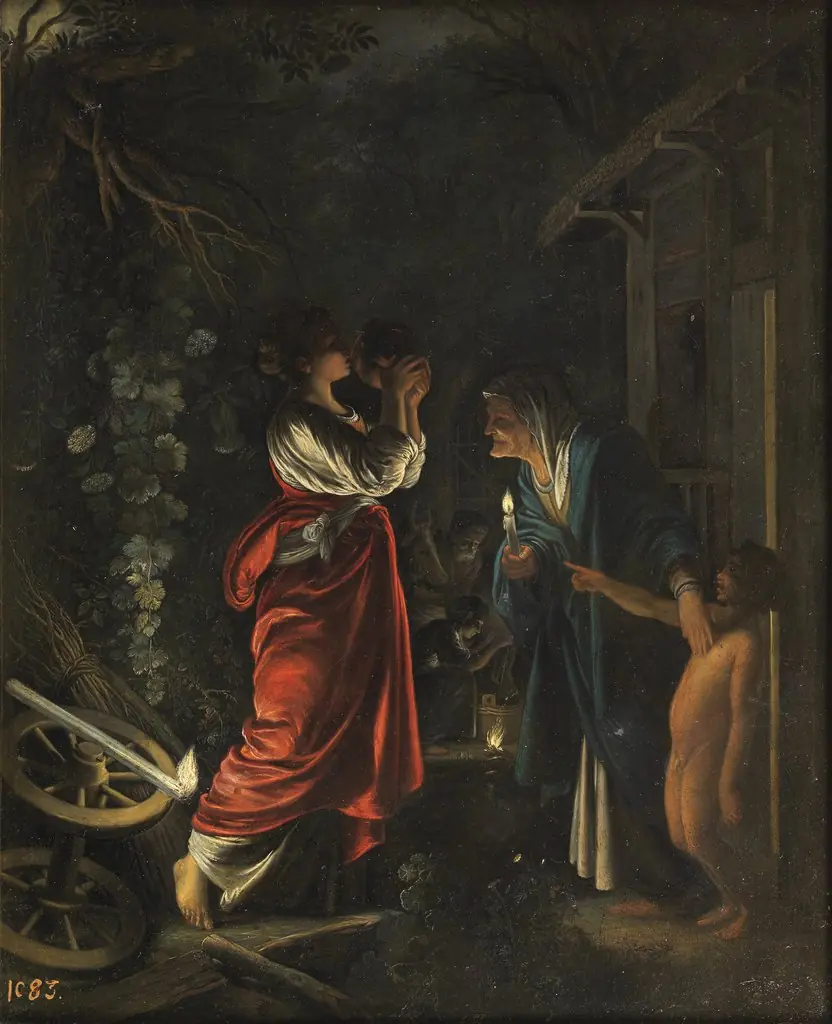
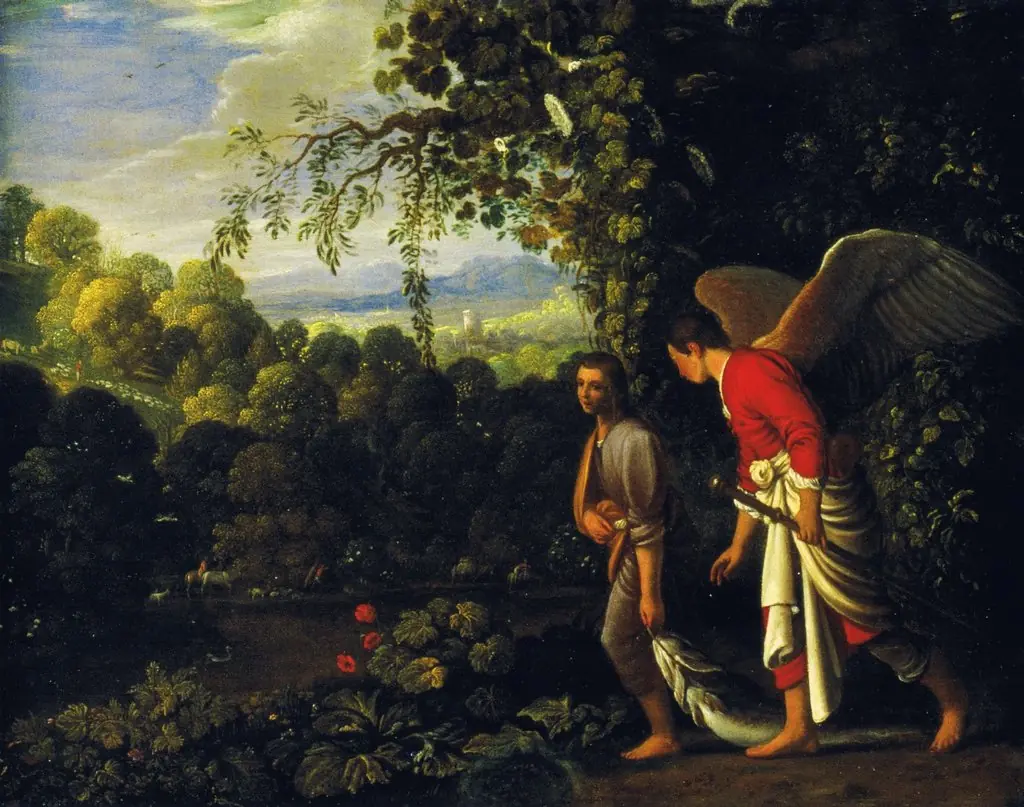
Tobiah and the Angel is an oil painting by the Early Baroque Italian artist Adam Elsheimer. It dates from 1601 and is held in the collection of the Statens Museum for Kunst.
About this work
Overview
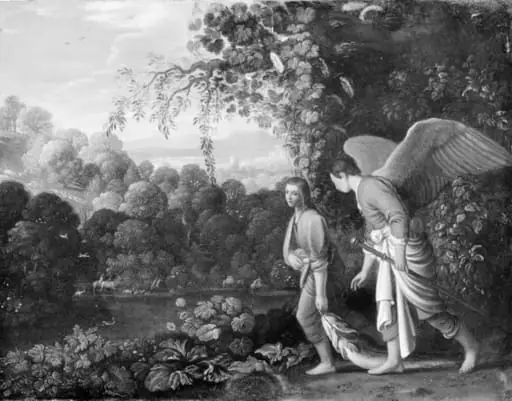
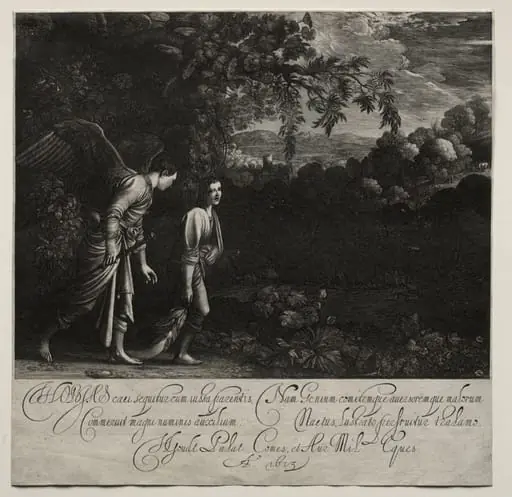
Tobiah and the Angel is a copper painting created in 1601 by Adam Elsheimer, a German artist working in Rome during the early Italian Baroque period. The work depicts a serene religious scene with two central figures set against a landscape backdrop.
Subject & Meaning
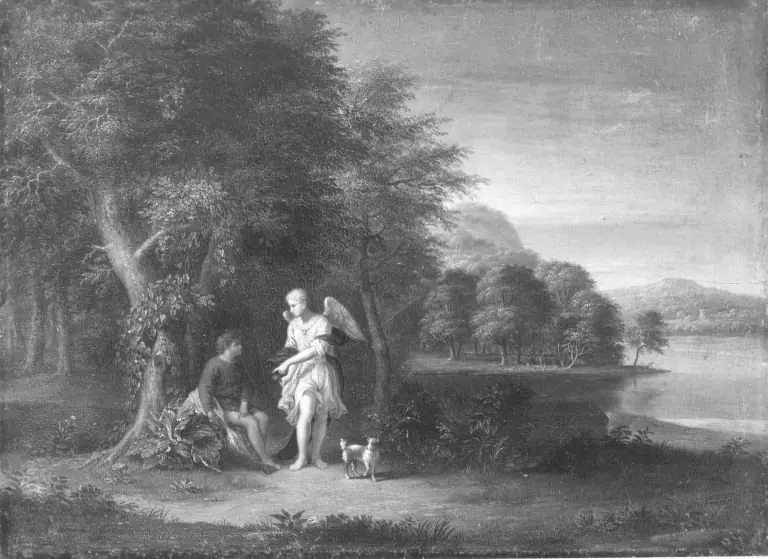
The painting illustrates a biblical episode featuring Tobiah, accompanied by an angel. The angel, identifiable by large wings, guides Tobiah, who holds a fish - a reference to the story's themes of protection and divine intervention. The interaction between the two figures conveys a sense of gentle guidance and contemplation.
Technique & Style
Elsheimer's use of oil on copper enabled the achievement of precise details and luminous effects, characteristic of his innovative approach to light. The small-scale format intensifies the intimacy of the scene, while the detailed rendering of figures, landscape, and sky showcases Elsheimer's meticulous craftsmanship.
History & Provenance
Created in 1601, the painting exemplifies Elsheimer's brief yet influential career. Despite the brevity of his practice, his works significantly impacted the development of Baroque painting, particularly in their handling of light and small-scale, intricately detailed compositions.
Context
As an early Italian Baroque work, Tobiah and the Angel reflects the period's emphasis on emotional depth and naturalism. Elsheimer's fusion of German attention to detail with Italian Baroque sensibilities positions the painting at the crossroads of artistic traditions in early 17th-century Rome.
Artist & collection
Artist
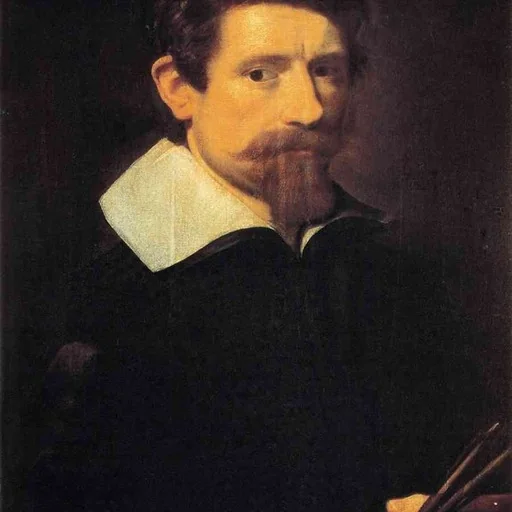
Adam Elsheimer (18 March 1578 – 11 December 1610) was a German Baroque painter who worked in Rome.