Artwork
Saint John the Baptist in the Wilderness
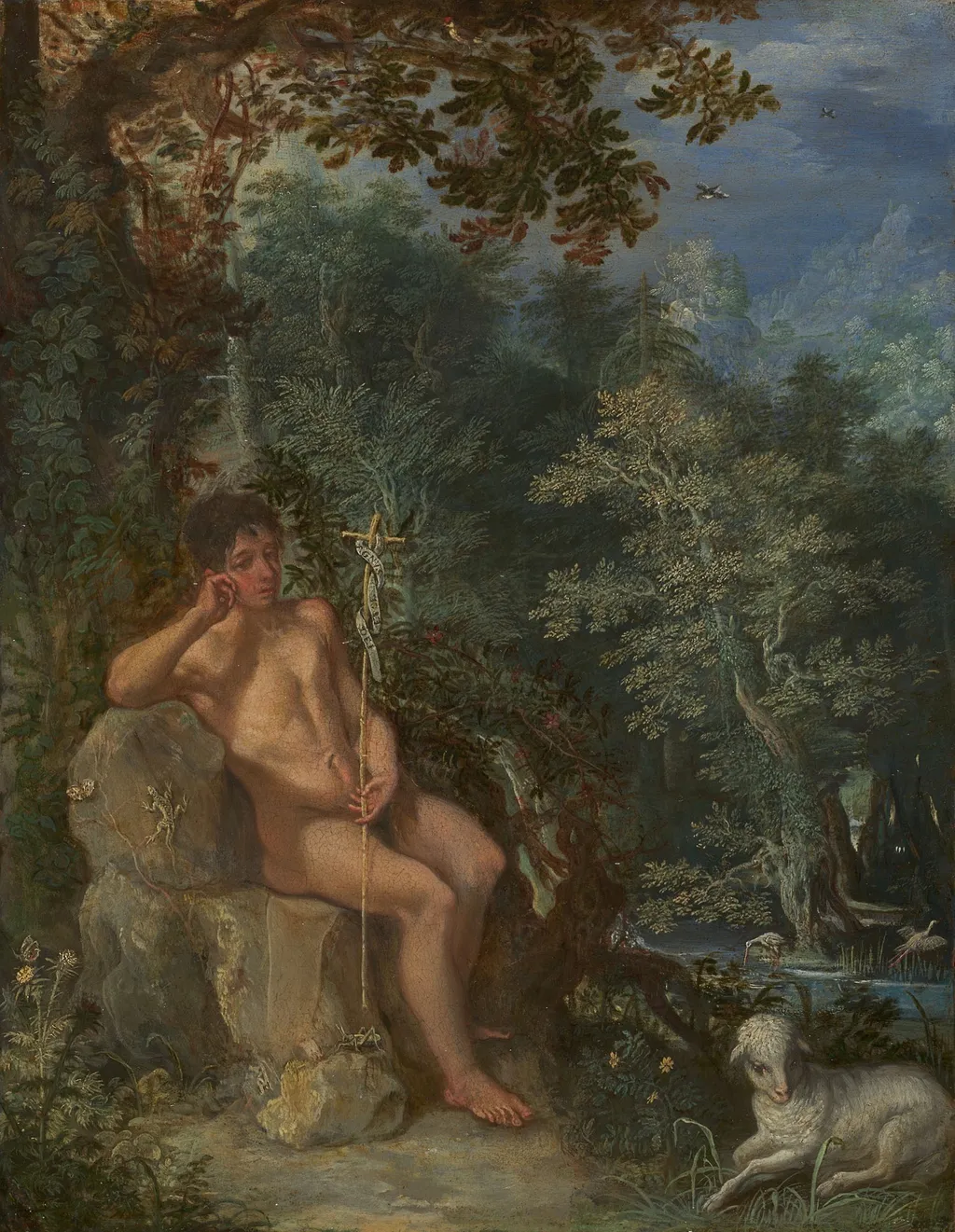
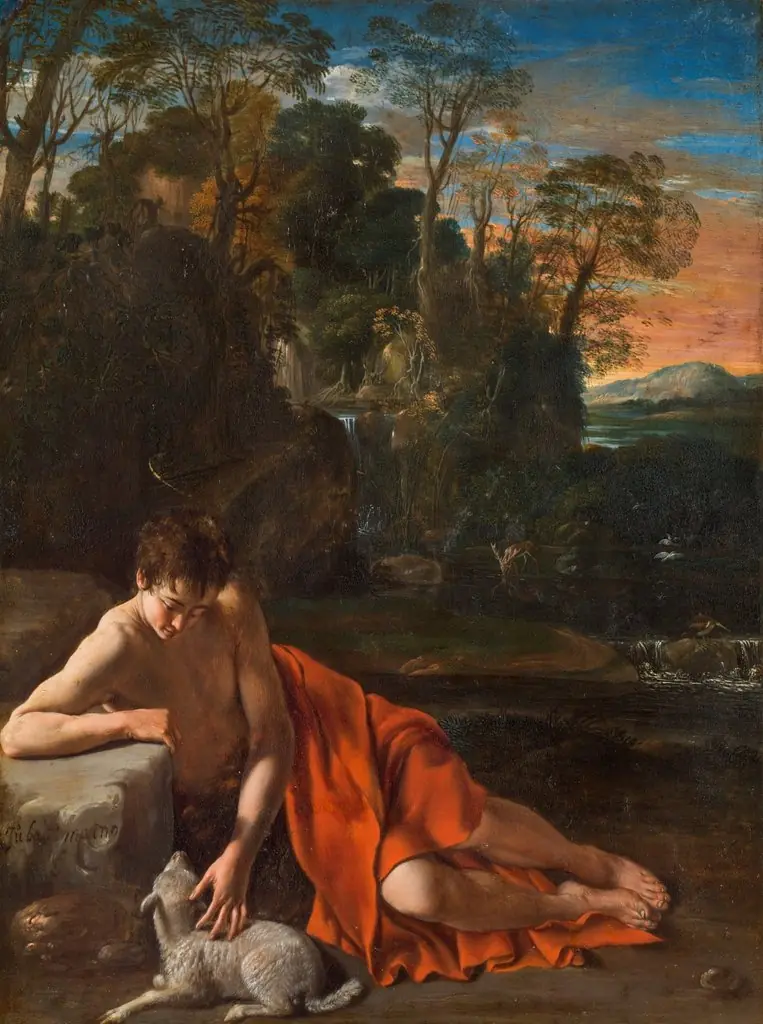
Saint John the Baptist in the Wilderness is an oil painting by the Early Baroque Italian artist Adam Elsheimer. It dates from 1610 and is held in the collection of the Art Institute of Chicago.
About this work
Overview
Though modest in size, it encapsulates the refined naturalism and atmospheric effects that defined his brief but influential career.
Adam Elsheimer’s *Saint John the Baptist in the Wilderness* (1610) is a small-scale painting executed on copper, a support he favored for its smooth surface and luminous potential. Measuring approximately 20 by 15 centimeters, the work reflects the artist’s meticulous approach to composition and light. Though modest in size, it encapsulates the refined naturalism and atmospheric effects that defined his brief but influential career.
Subject & Meaning
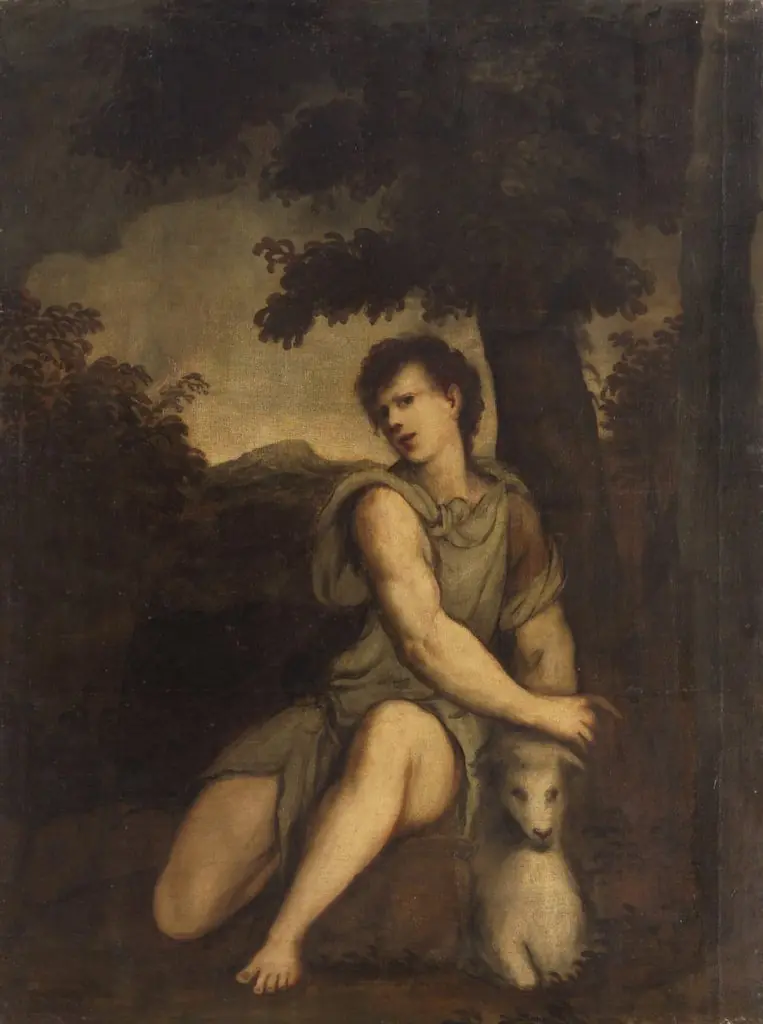
The painting portrays John the Baptist in a secluded landscape, a common theme in Christian art symbolizing penitence and spiritual preparation. Seated on a rocky outcrop, the figure is nearly nude, draped only in a simple cloth that subtly evokes the cross. A lamb at his feet reinforces his biblical role as the forerunner of Christ. The gesture of his hand near his ear suggests attentiveness, possibly to a divine presence beyond the frame.
Technique & Style
Elsheimer’s technique on copper allowed for precise detail and a delicate interplay of light and shadow, known as chiaroscuro. The dense foliage and distant water are rendered with fine brushwork, creating depth and texture. Soft transitions between illuminated areas and shadowed recesses lend the scene a quiet, contemplative mood. This approach aligns with early Baroque tendencies, emphasizing naturalism and emotional resonance over dramatic exaggeration.
History & Provenance
Completed in 1610, the painting is among Elsheimer’s later works, produced during his residence in Rome. The artist’s premature death in 1610 left his output limited, though his influence persisted among contemporaries. The work’s early ownership history remains unclear, but it has since entered public collections, where it is recognized as a key example of his refined treatment of religious subjects within landscape settings.
Context
Elsheimer’s work emerged during a period of transition in European art, bridging late Mannerism and the Baroque. His focus on intimate, luminous scenes reflected broader shifts toward naturalism and emotional immediacy. The choice of copper—a less conventional support—enabled a level of detail and luminosity that distinguished his work from larger, more theatrical compositions by peers. His landscapes, in particular, influenced later artists exploring the interplay of light and nature.
Legacy
Though Elsheimer’s career was brief, his innovations in light and landscape left a lasting imprint on Baroque painting. His small-scale works on copper, including *Saint John the Baptist in the Wilderness*, demonstrated how meticulous technique could enhance narrative and mood. Later artists, such as Rubens and Claude Lorrain, drew inspiration from his atmospheric effects, ensuring his place in the development of European landscape traditions.
Own this work as a print
Artist & collection
Artist
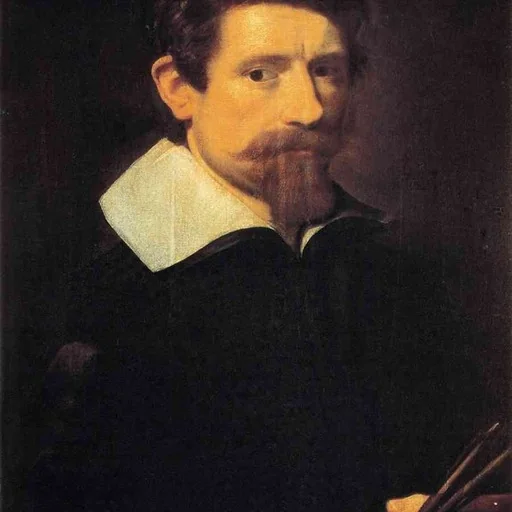
Adam Elsheimer (18 March 1578 – 11 December 1610) was a German Baroque painter who worked in Rome.