Artwork
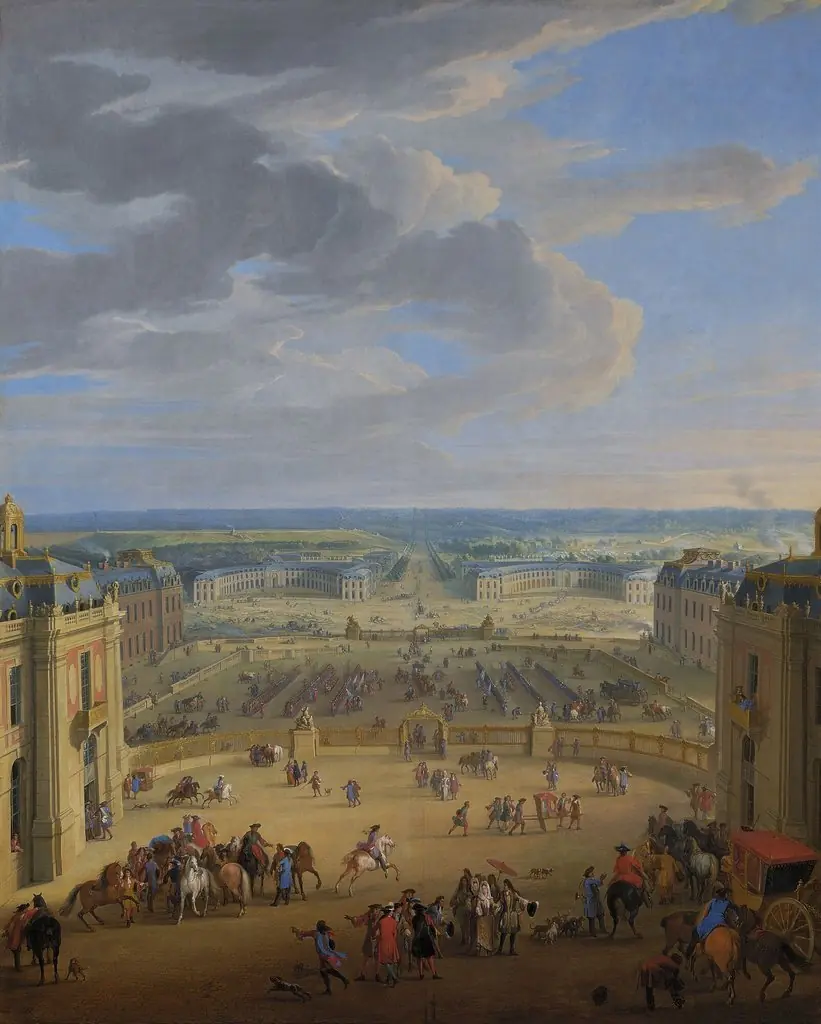
View of the castle of Versailles
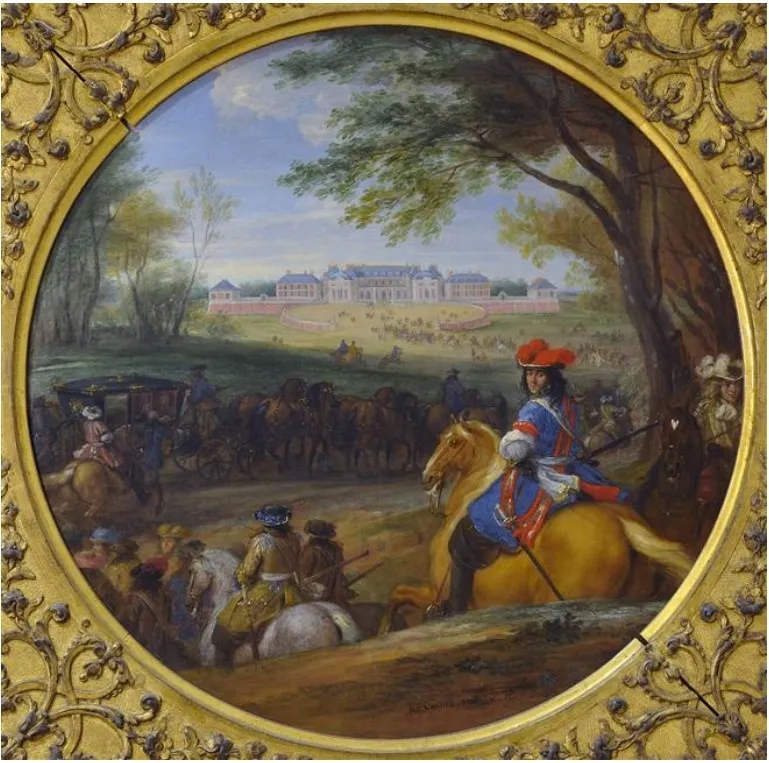
View of the castle of Versailles is an oil painting by the Dutch Golden Age artist Adam Frans van der Meulen. It dates from 1669 and is held in the collection of the Palace of Versailles.
About this work
Overview
The work functions as both a topographical record and a statement of royal authority, aligning with the king’s broader efforts to project power through imagery.
Painted in 1669 by Adam Frans van der Meulen, this oil on canvas depicts the Palace of Versailles during the early phase of its expansion under Louis XIV. Van der Meulen, a Flemish artist employed by the French court, specialized in documenting royal ceremonies and architectural projects. The work functions as both a topographical record and a statement of royal authority, aligning with the king’s broader efforts to project power through imagery.
Subject & Meaning
The painting centers on a noble figure on horseback, dressed in vivid blue and wearing a red hat, leading a procession of soldiers and carriages toward the palace. This figure likely represents the king or a high-ranking official, emphasizing order and hierarchy. The castle, rendered with architectural precision, dominates the background, symbolizing the centralized power of the monarchy. The scene conveys control, discipline, and the grandeur of the state apparatus.
Technique & Style
Van der Meulen employs a detailed, linear approach rooted in Dutch landscape traditions, with careful attention to perspective and naturalistic lighting. The composition guides the viewer’s eye from the foreground procession to the distant palace, using trees as framing devices. While the style retains Flemish precision, the scale and ceremonial tone reflect French courtly aesthetics, blending documentary realism with symbolic intent.
History & Provenance
Commissioned during Louis XIV’s early reign, the painting was part of a larger visual campaign to legitimize and glorify the monarchy’s architectural ambitions. Van der Meulen produced numerous works for the royal household, often recording military campaigns and palace developments. The painting has remained in the collection of the Palace of Versailles since its creation, serving as a historical document of the court’s self-representation.
Context
In the late 17th century, Versailles was being transformed from a hunting lodge into the seat of French political power. Art played a crucial role in this transformation, with imagery reinforcing the king’s divine right and administrative dominance. Van der Meulen’s work fits within a broader trend of using landscape and procession scenes to communicate political stability and royal prestige across Europe.
Legacy
The painting remains a key example of how art served state interests in early modern Europe. It documents the visual language of absolutism and the integration of architecture into royal propaganda. While not widely exhibited outside Versailles, it continues to inform scholarly understanding of how imagery shaped perceptions of power during Louis XIV’s reign.
Artist & collection
Artist
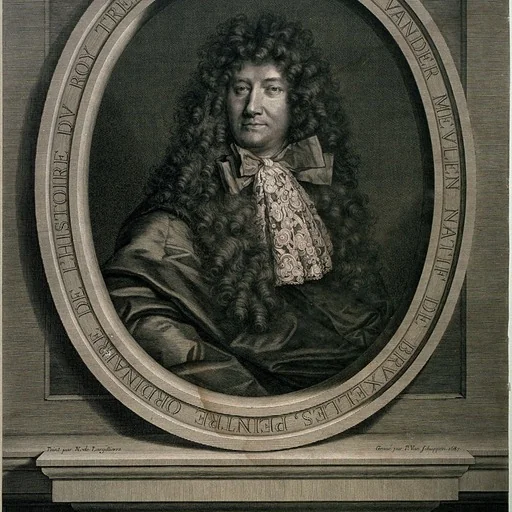
Adam Frans van der Meulen or Adam-François van der Meulen (11 January 1632 – 15 October 1690) was a Flemish painter and draughtsman who was particularly known for his scenes of military campaigns and conquests.

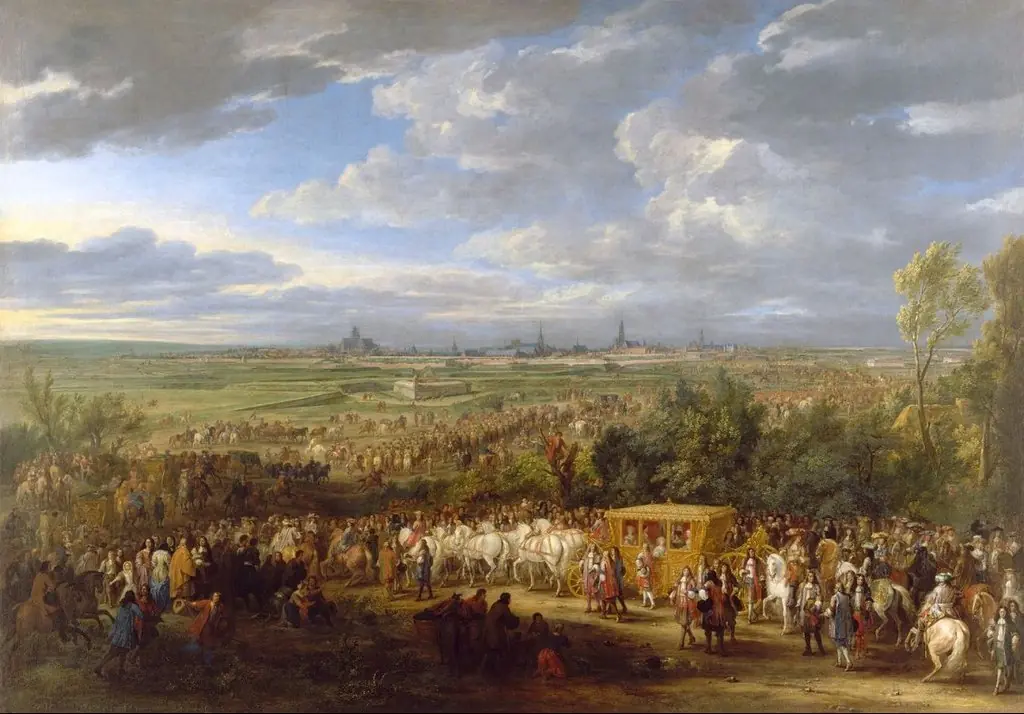
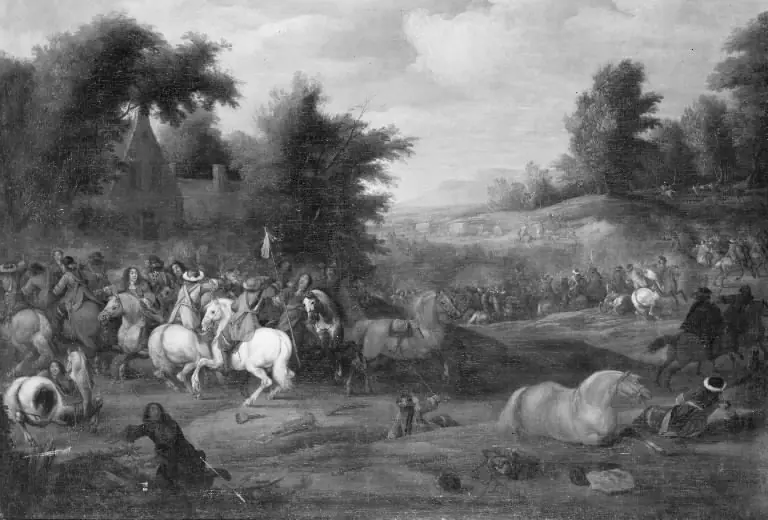
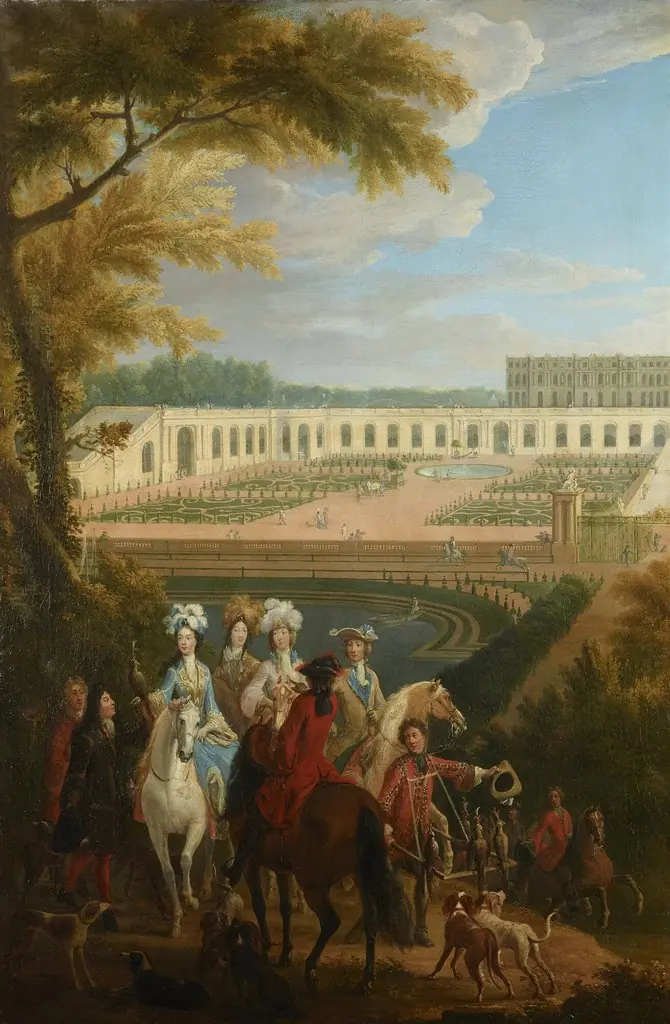 View of the departure of the Duchess of Burgundy for the hunt in front of the Orangery of Versailles
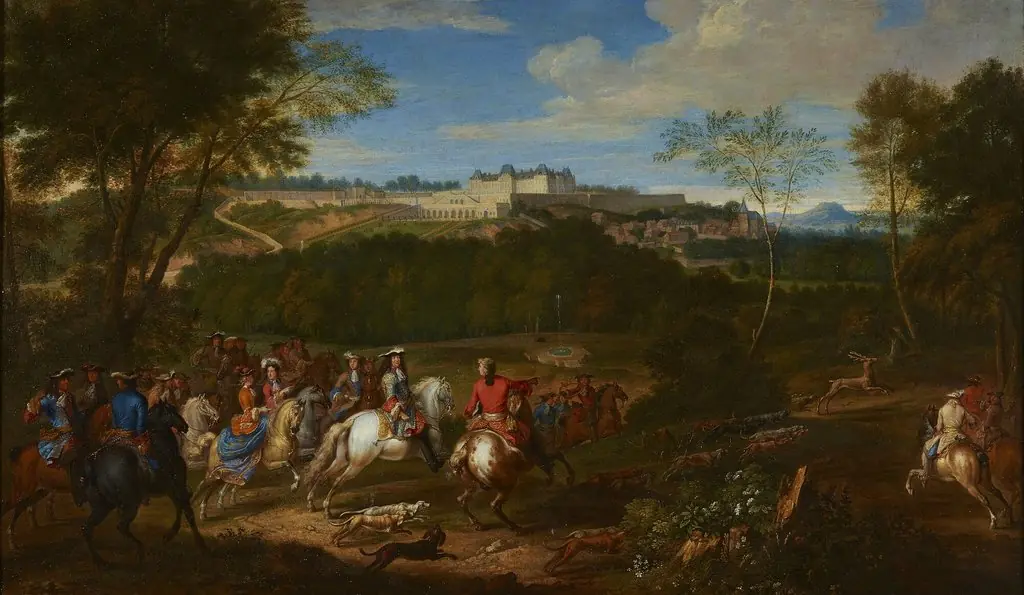 Louis XIV and his Court hunting in view of the castle of Meudon.
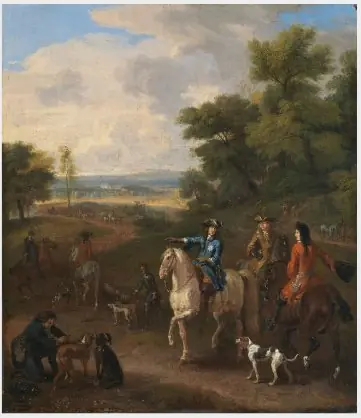 William III Hunting at Het Loo
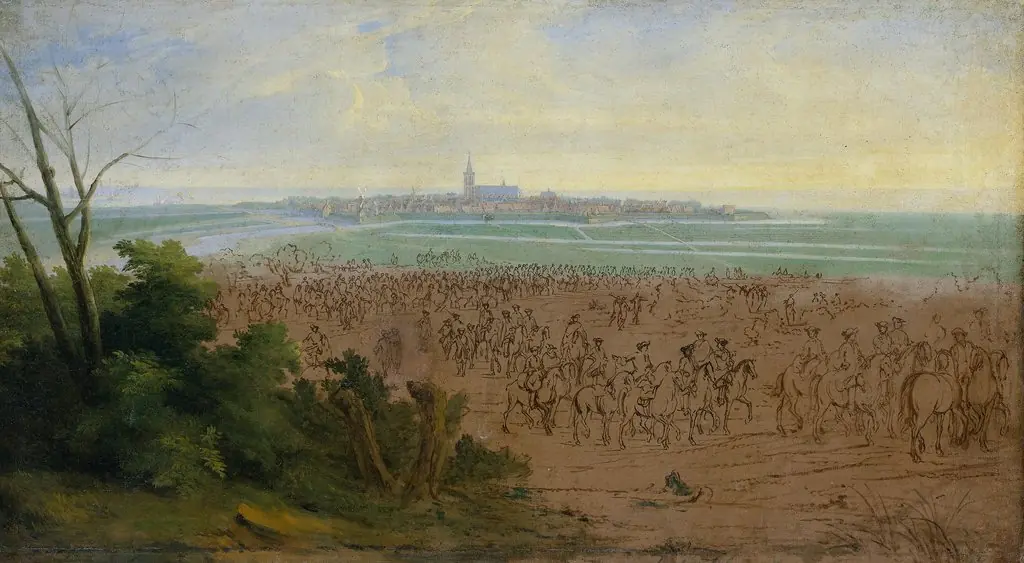
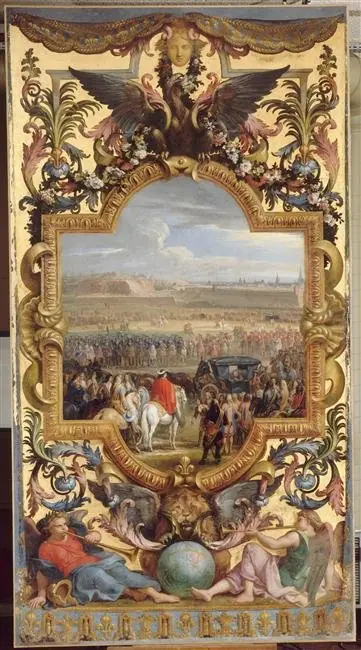 The surrender of Cambrai
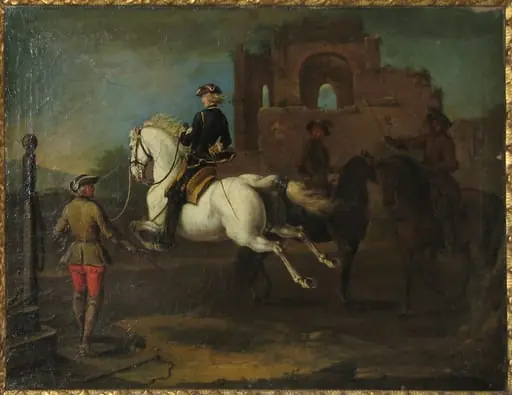 Manej
Manej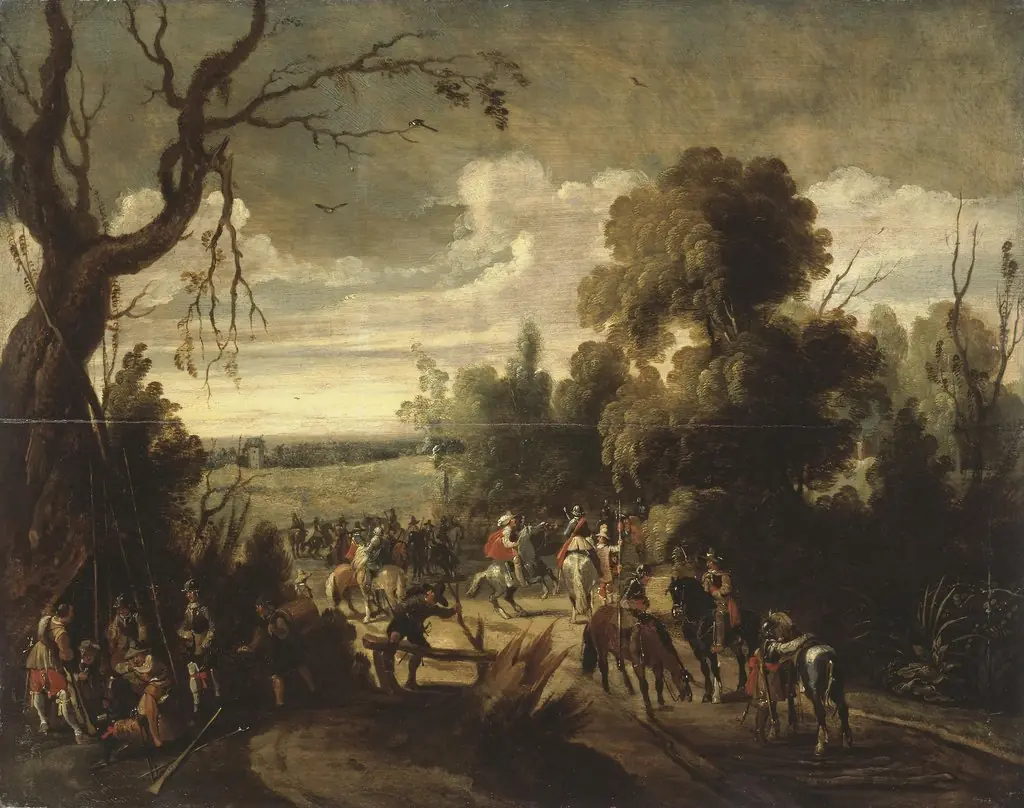 Rest of Cavalrymen
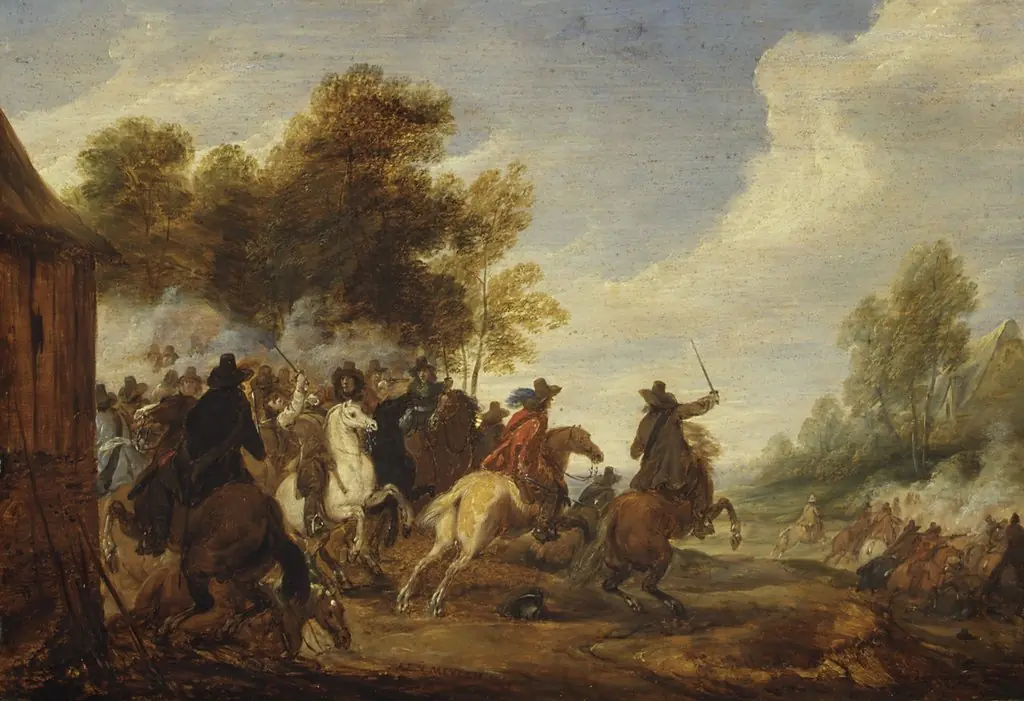
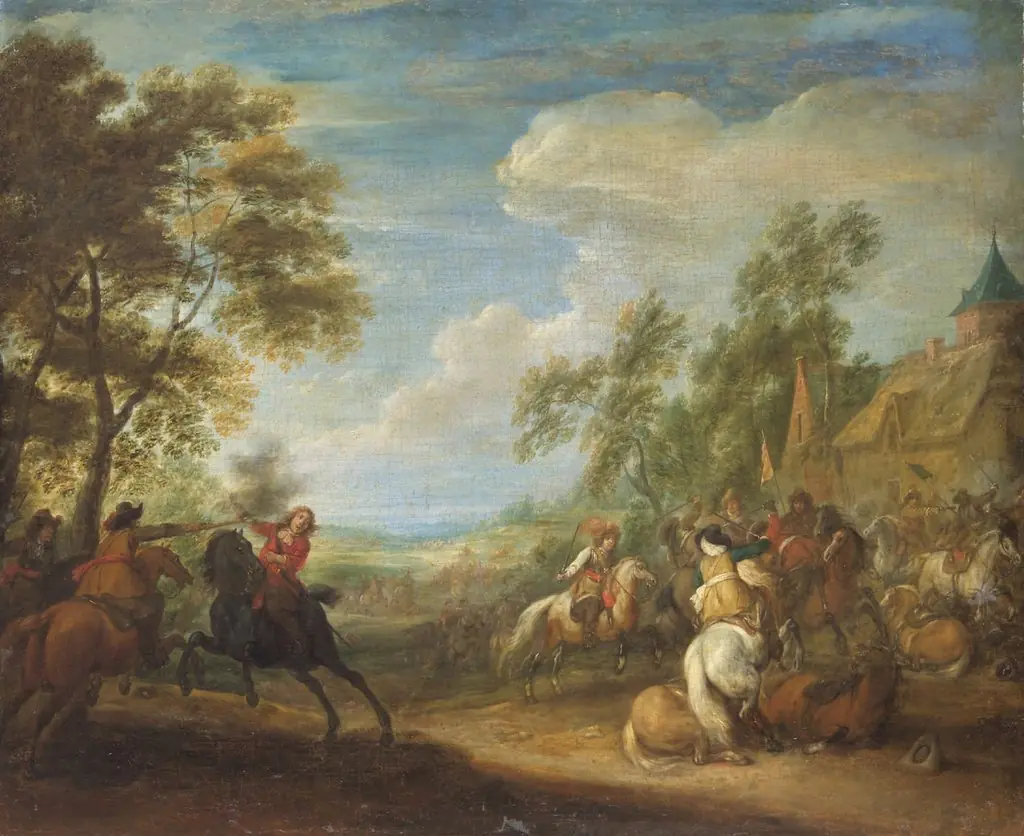 Reitergefecht
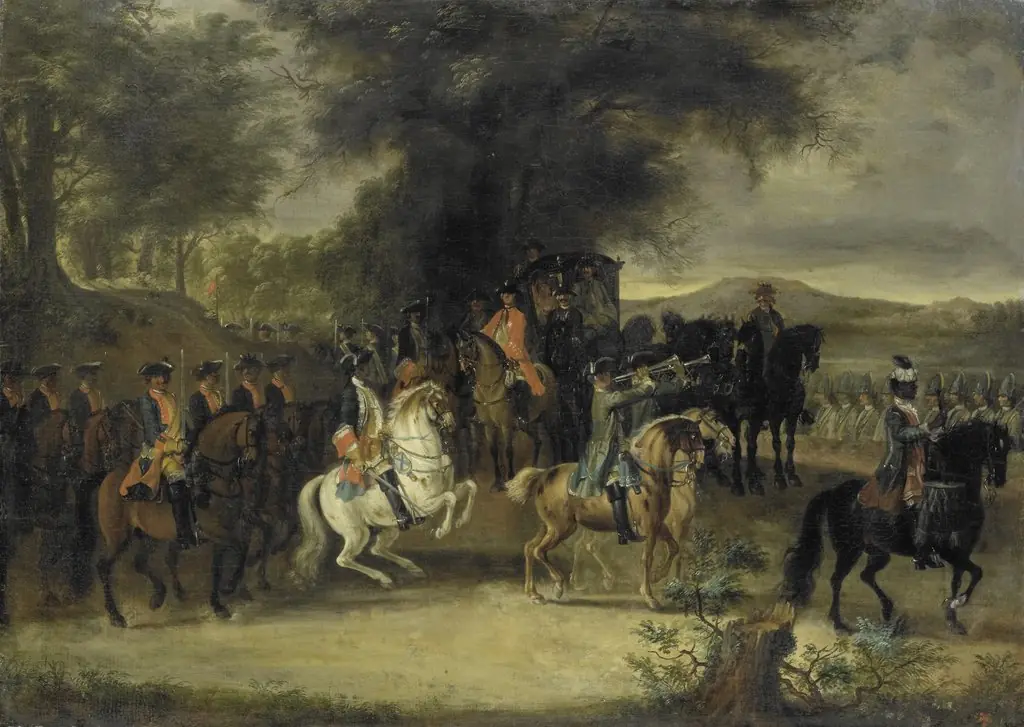 Inspection of a Cavalry Regiment, perhaps by William of Hesse-Homburg
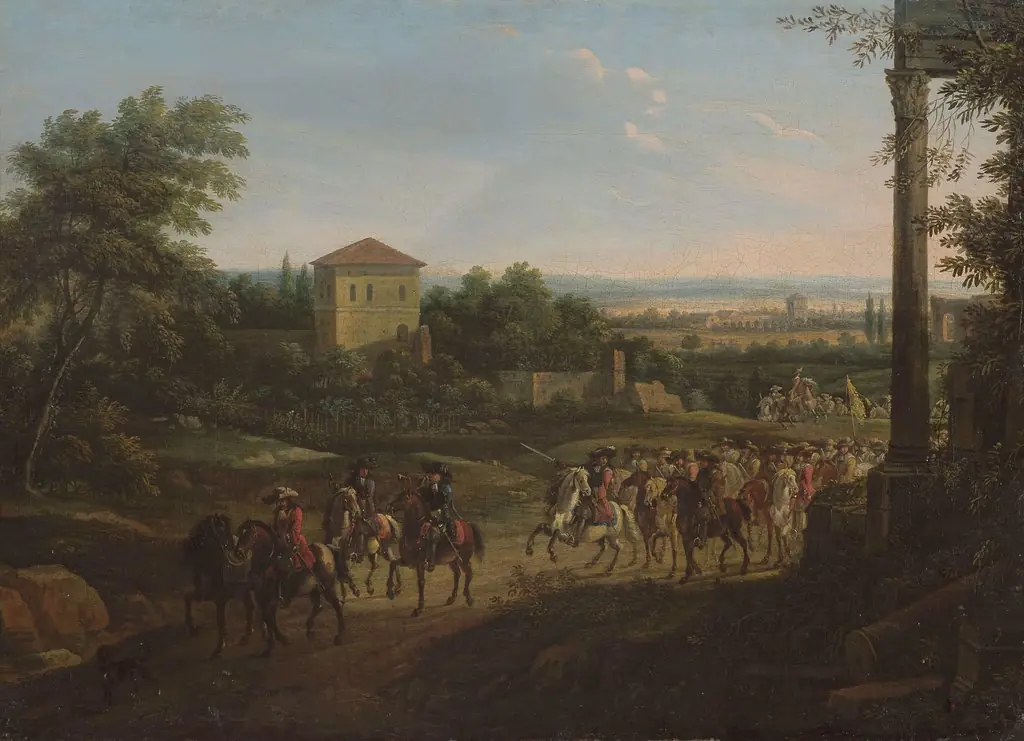 Landschaft mit Reitern
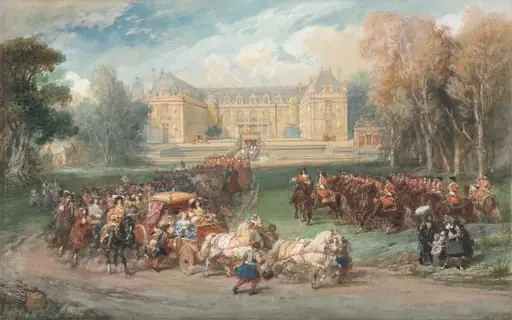 Louis XIV Driving his Coach in the Park of Versailles
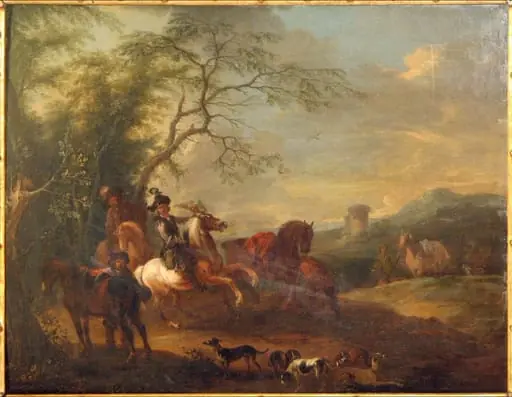 Plecarea la vânătoare; pandant: Întoarcerea de la vânătoare
 The Stables Viewed from the Château at Versailles