Artwork
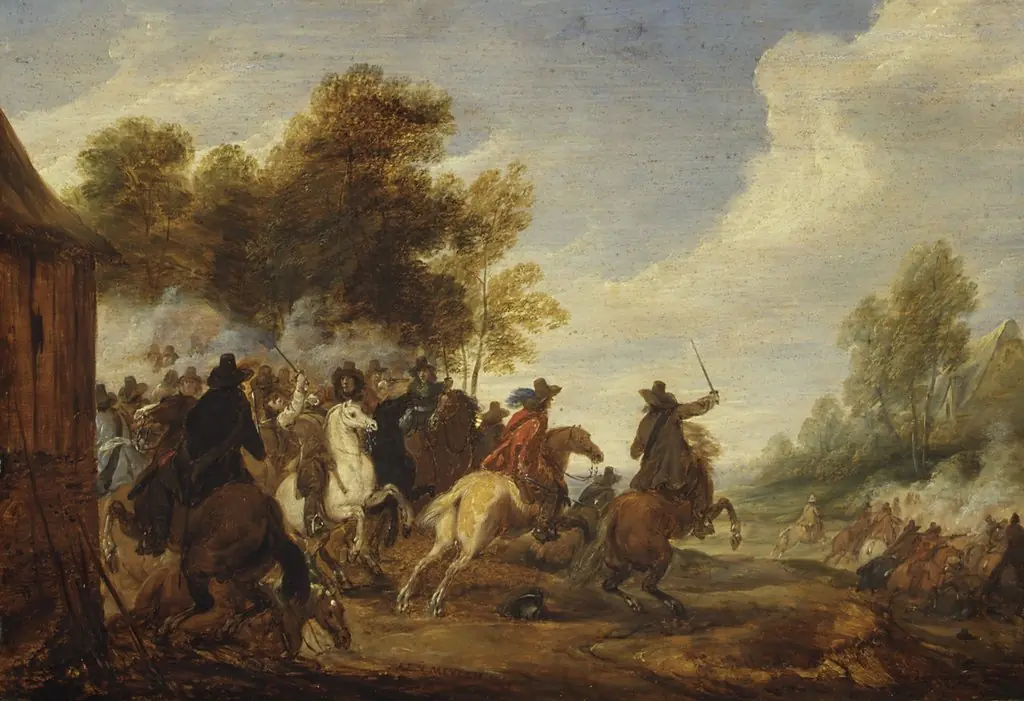
Reitergefecht
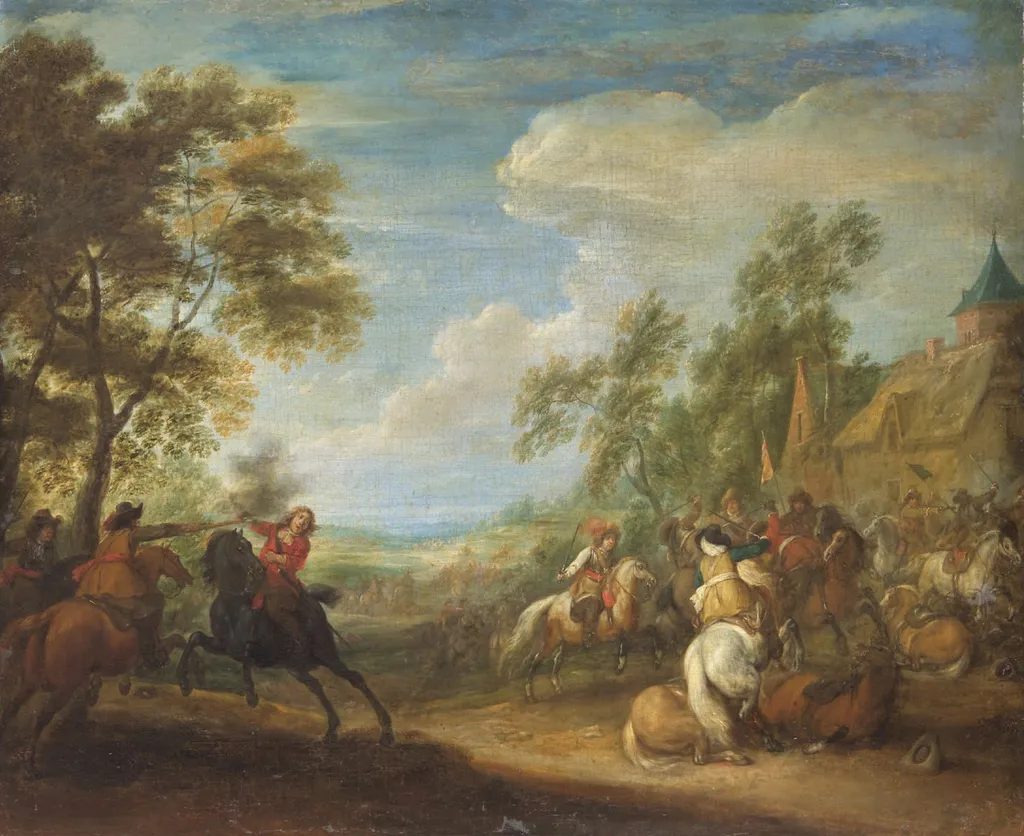
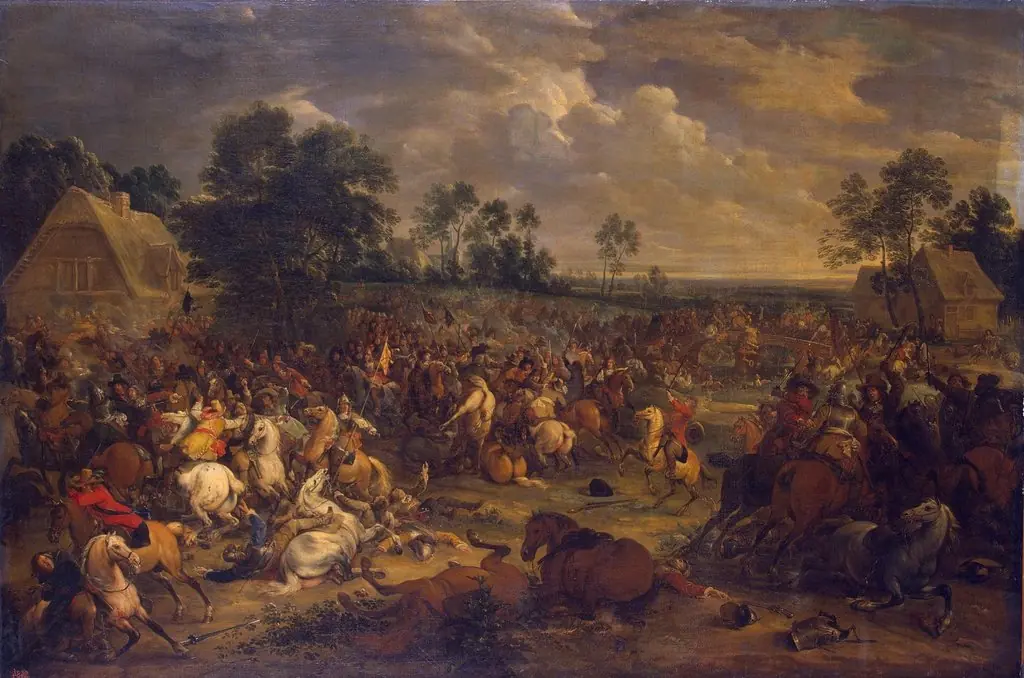
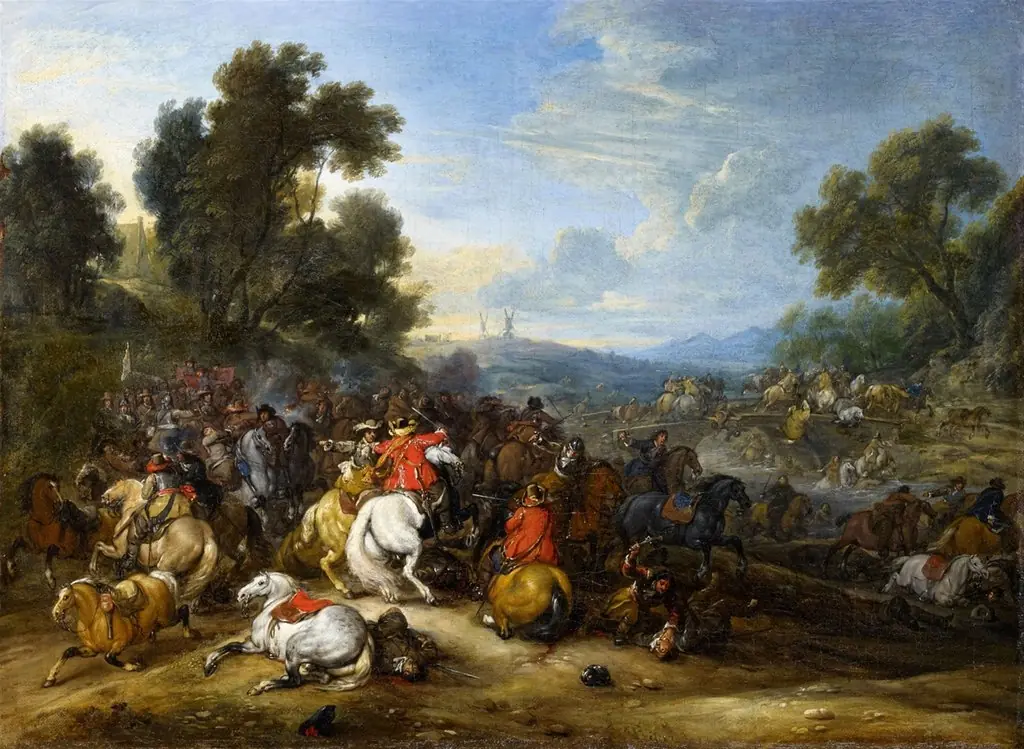
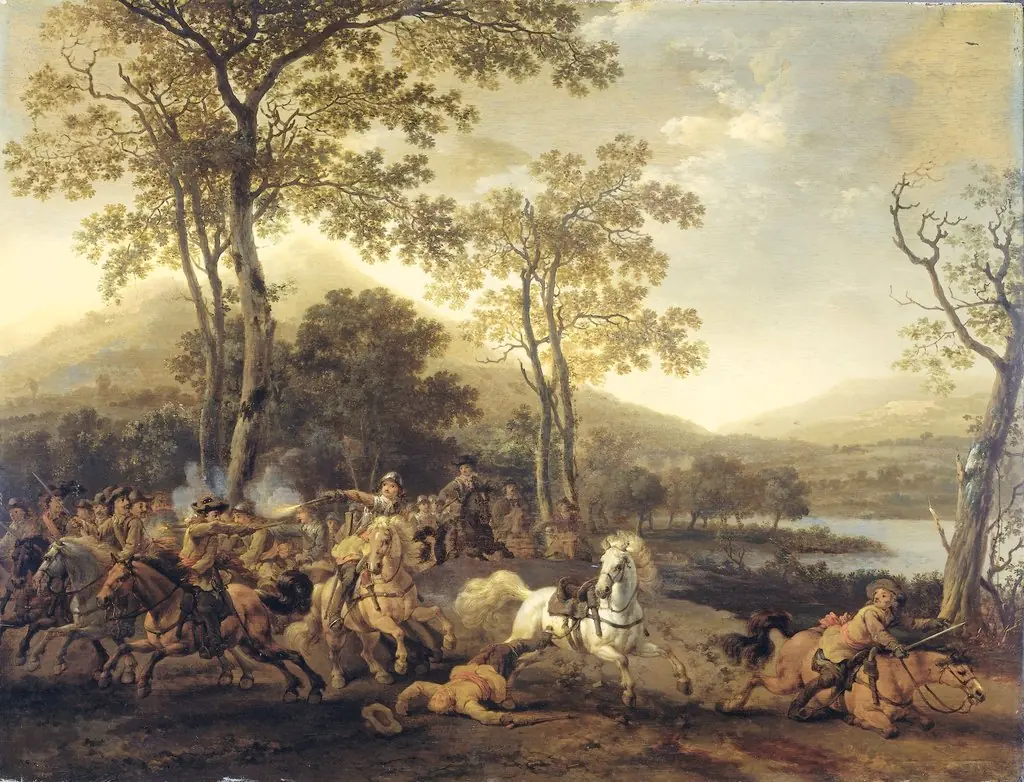
Reitergefecht is an unspecified painting by Adam Frans van der Meulen. It dates from 1671 and is held in the collection of the Kunsthistorisches Museum.
About this work
Overview
Though rendered with dynamic movement, the composition maintains a controlled structure, reflecting the king’s preference for orderly representations of power.
Adam Frans van der Meulen painted *Reitergefecht* circa 1671 during his tenure as a court artist to Louis XIV of France. The work belongs to a series of battle scenes commissioned to document and glorify French military campaigns. Though rendered with dynamic movement, the composition maintains a controlled structure, reflecting the king’s preference for orderly representations of power. The painting is now part of the Kunsthistorisches Museum’s collection in Vienna.
Subject & Meaning
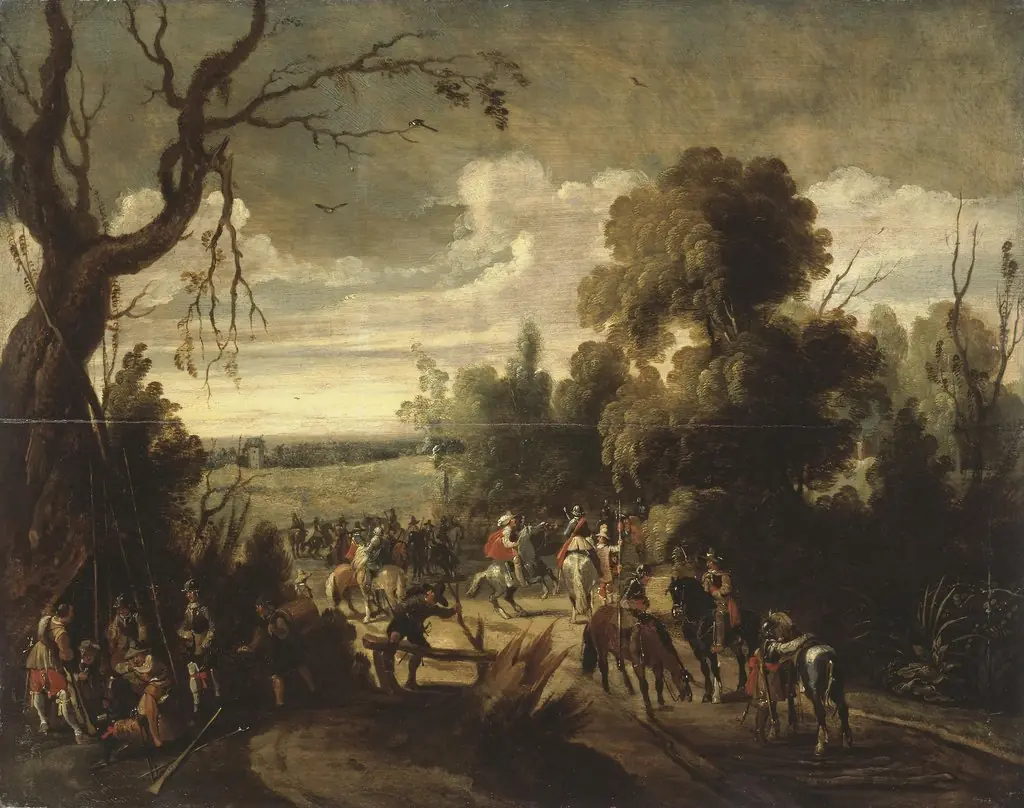
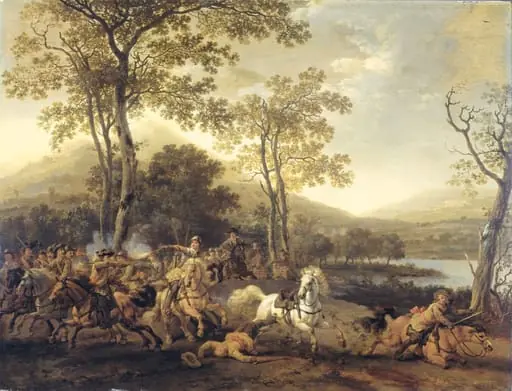
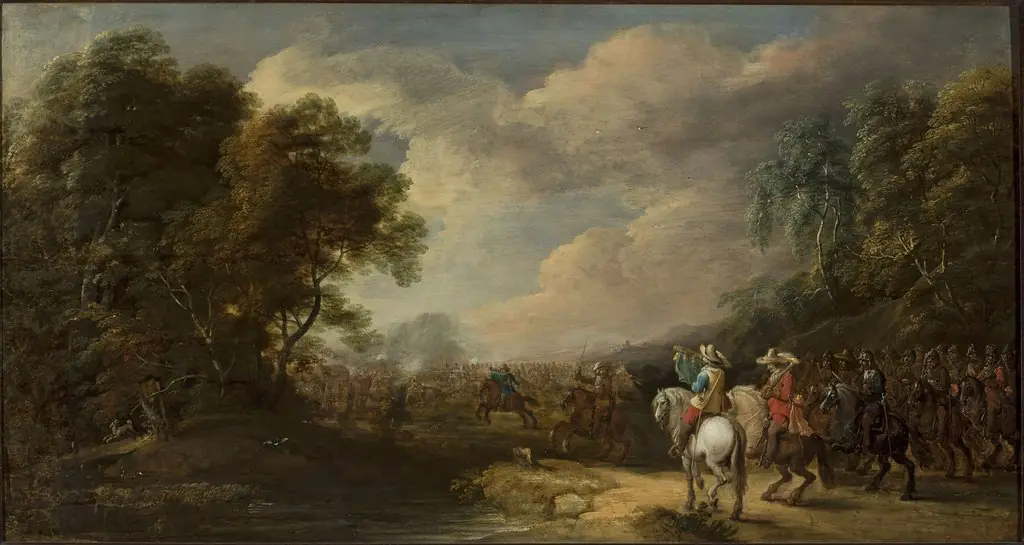
The scene captures a cavalry skirmish in a rural landscape, with riders locked in close combat, horses rearing, and weapons raised. While the action appears chaotic, the arrangement avoids pure disorder—each figure contributes to a larger narrative of martial discipline. The setting, likely inspired by real campaigns, serves not as a documentary record but as a symbolic assertion of French military authority under Louis XIV’s reign.
Technique & Style
Van der Meulen employed a muted palette of browns, greens, and blues to ground the scene in naturalism, while subtle chiaroscuro enhances the drama of motion and conflict. Brushwork is precise yet fluid, capturing the tension of galloping horses and swirling garments. The background, with its distant hills and a single building, provides spatial depth without distracting from the central fray, aligning with the Flemish tradition of detailed, atmospheric landscape integration.
History & Provenance
Created during van der Meulen’s years in Paris, where he documented Louis XIV’s wars, the painting was likely produced for royal archives or decorative cycles celebrating French conquests. It entered the Kunsthistorisches Museum’s holdings through Habsburg collections, possibly acquired as part of 18th-century art exchanges or diplomatic gifts, reflecting the broader European circulation of military imagery among courts.
Context
In late 17th-century Europe, battle paintings served political ends as much as aesthetic ones. Van der Meulen’s work aligned with a broader trend among royal courts to commission visual records of warfare that emphasized control, hierarchy, and triumph. His style bridged Flemish attention to detail with French courtly ideals, making his output a key reference for how power was visually constructed during the age of absolutism.
Legacy
Van der Meulen’s battle scenes influenced later military painters in France and beyond, setting a precedent for the integration of landscape and action in state-sponsored art. Though less celebrated today than contemporaries like Le Brun, his systematic documentation of campaigns provided a visual vocabulary for royal propaganda that endured well into the 18th century.
Artist & collection
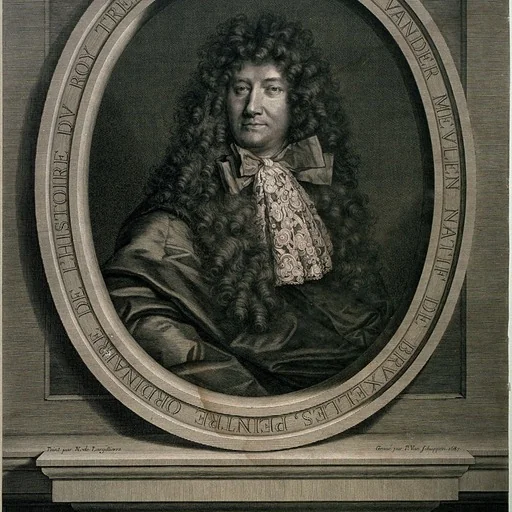
Artist
Adam Frans van der Meulen or Adam-François van der Meulen (11 January 1632 – 15 October 1690) was a Flemish painter and draughtsman who was particularly known for his scenes of military campaigns and conquests.