Artwork
A Landscape with Figures and Horses
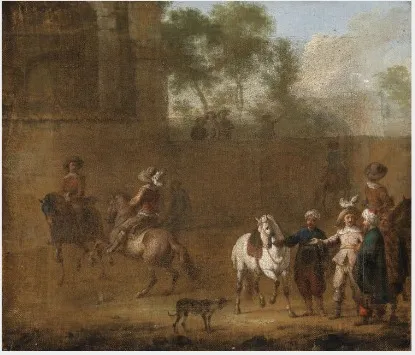
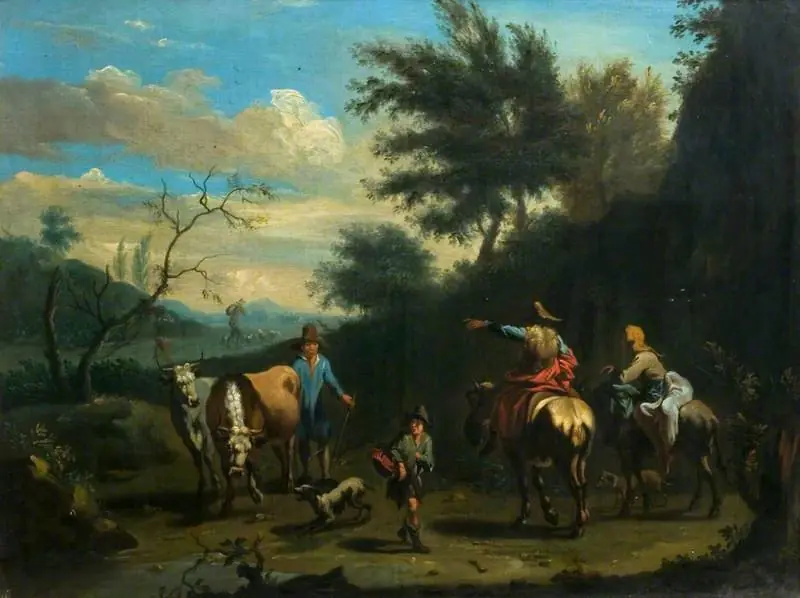
A Landscape with Figures and Horses is an oil painting by Adam Pankratz Ferg. It dates from 1700 and is held in the collection of the National Gallery of Ireland. This oil painting, dated around 1700, depicts a rural scene with figures and horses set against a stone structure and wooded backdrop.
About this work
Overview
This oil painting, dated around 1700, depicts a rural scene with figures and horses set against a stone structure and wooded backdrop. Attributed to Adam Pankratz Ferg, it resides in the National Gallery of Ireland. The composition balances human and animal presence within a quiet, open landscape, rendered in muted earth tones and deliberate brushwork that emphasizes texture over polish.
Subject & Meaning
The scene portrays a moment of stillness: a group of people gathers near a white horse in the foreground, while a rider moves slowly through the distance.
The scene portrays a moment of stillness: a group of people gathers near a white horse in the foreground, while a rider moves slowly through the distance. No narrative or dramatic event is indicated; instead, the focus lies in the quiet coexistence of humans, animals, and environment. The absence of overt symbolism suggests an everyday rural observation, valued for its calm realism rather than allegorical weight.
Technique & Style
The artist employs visible, deliberate brushstrokes to build form and atmosphere, avoiding smooth finishes typical of more formal portraiture. Earthy browns and greens dominate the palette, grounding the scene in naturalism. Light falls evenly across the composition, enhancing the sense of depth without dramatic contrast. The texture of the paint reinforces the tactile quality of the landscape and its inhabitants.
History & Provenance
The painting has been in the collection of the National Gallery of Ireland since at least the mid-20th century, though its earlier ownership history remains undocumented. Attributed to Adam Pankratz Ferg, little is known about his life or training. The work’s survival and preservation suggest it was valued locally, possibly as a record of regional life rather than a commissioned piece.
Context
Created in the early 18th century, the painting reflects a growing interest in non-idealized rural scenes among European artists outside major academies. While grand historical or mythological subjects dominated official circles, smaller works like this captured ordinary moments in the countryside. Its style aligns with regional traditions that prioritized observation over embellishment.
Legacy
Though not widely exhibited or studied, the painting contributes to the understanding of lesser-known artists working in the periphery of mainstream art movements. Its preservation offers insight into how everyday rural life was visually recorded in early 18th-century Ireland, providing a quiet counterpoint to more celebrated landscape traditions of the period.
Artist & collection

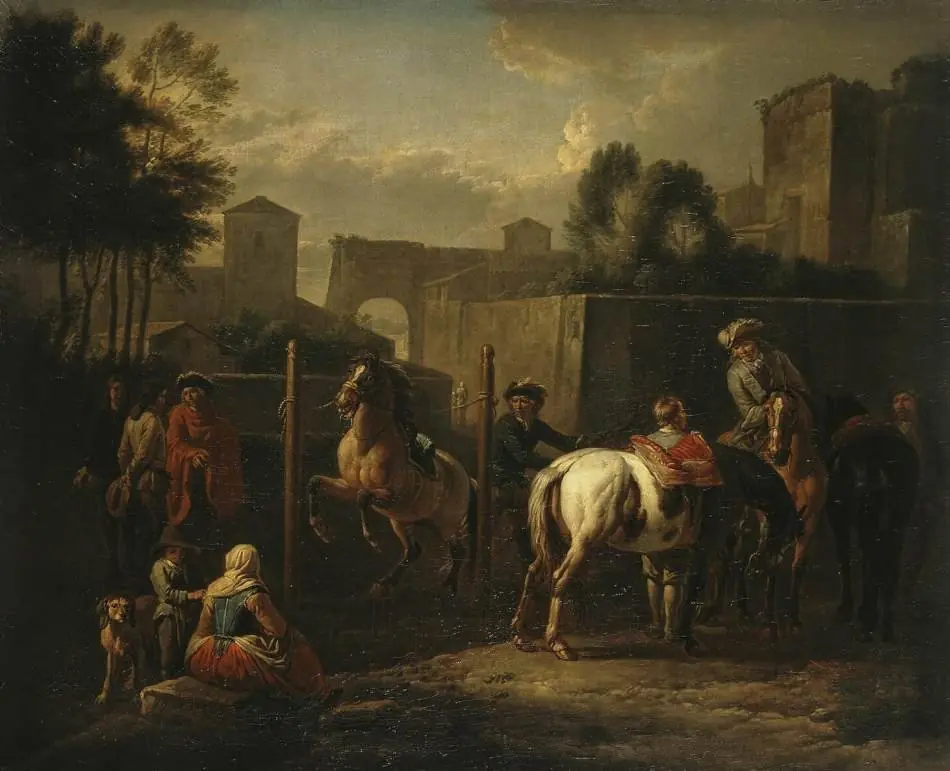 Open-Air Manege
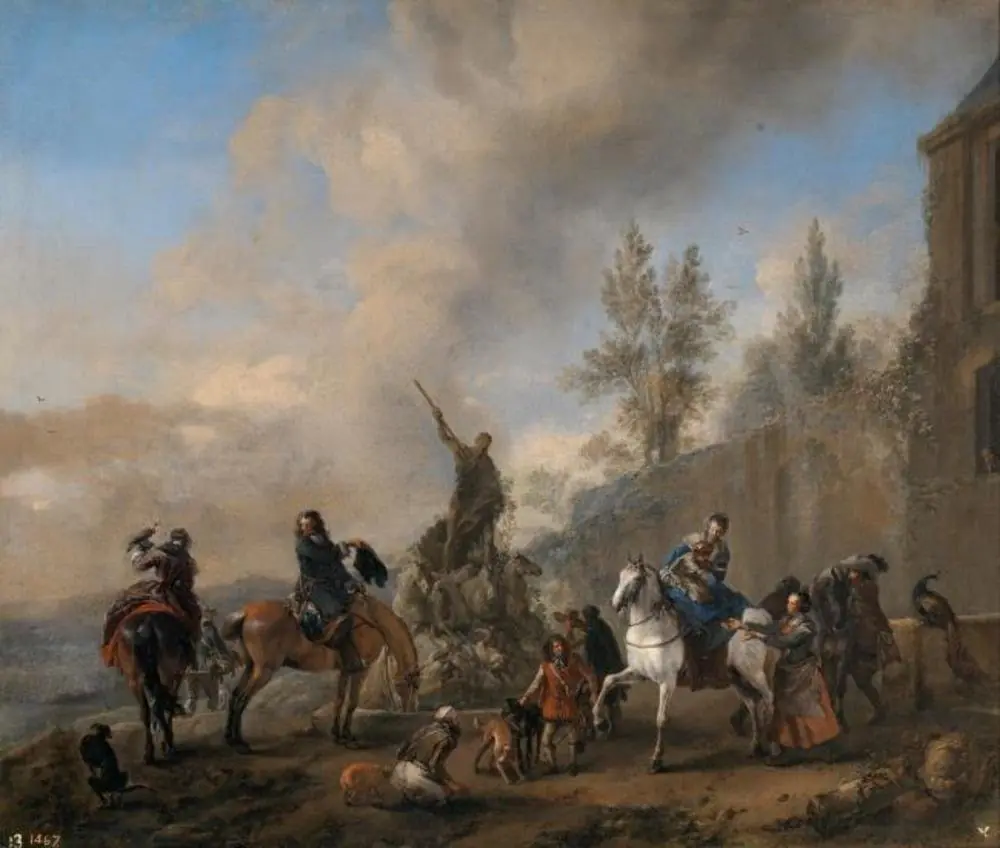 Falconers setting out on a Hunt
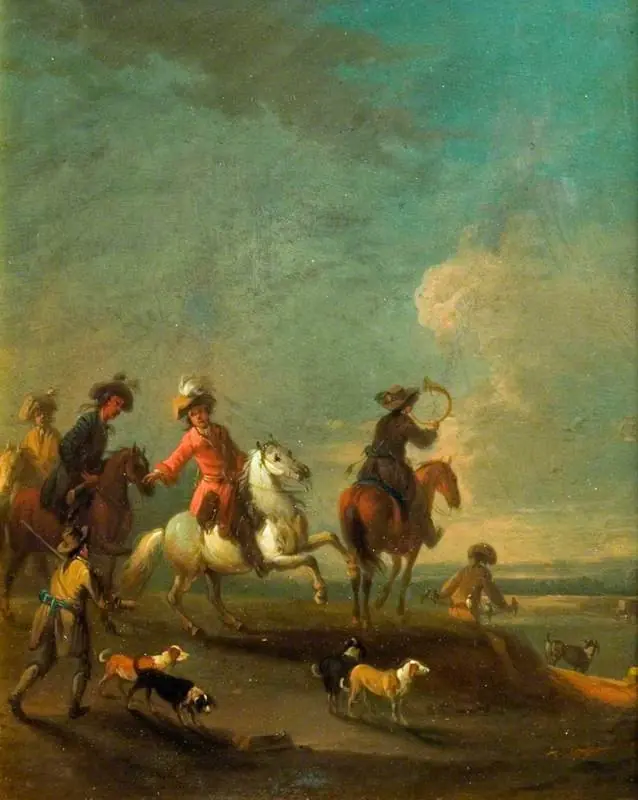 A Hawking Party
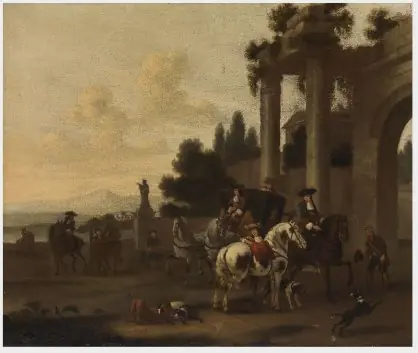 A Coach Party with a Classical Building
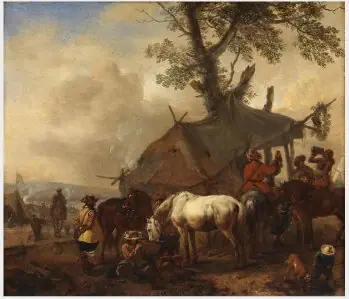 Cavalry Halted at a Sutler's Tent
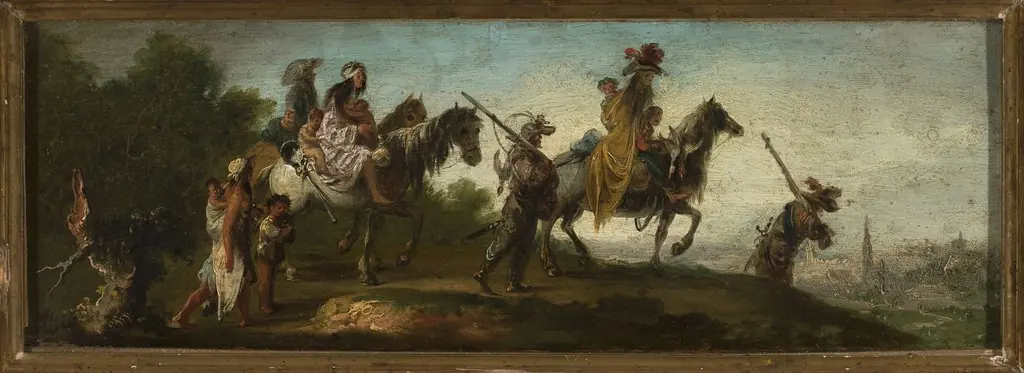 Gipsies on the road
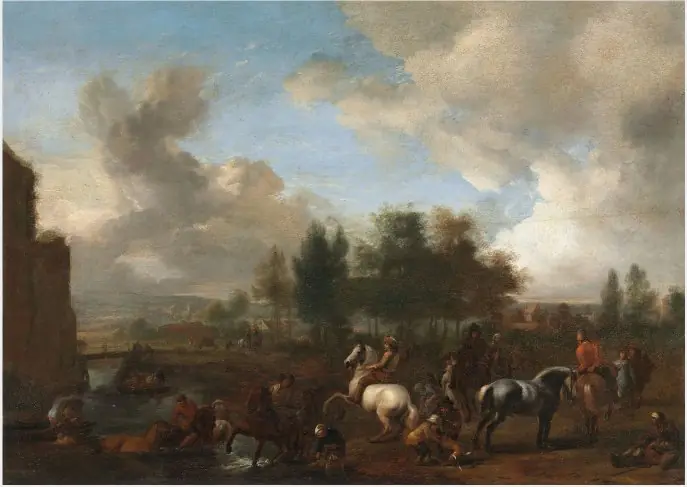 Horses Watering: a Landscape
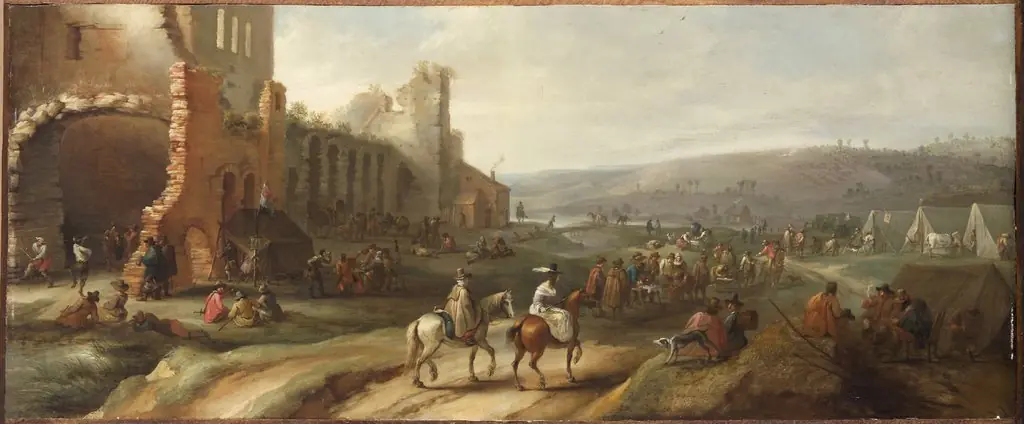 Field Camp with Ruins
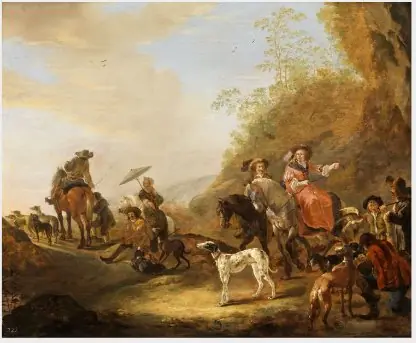 A Hunting Party in a Landscape
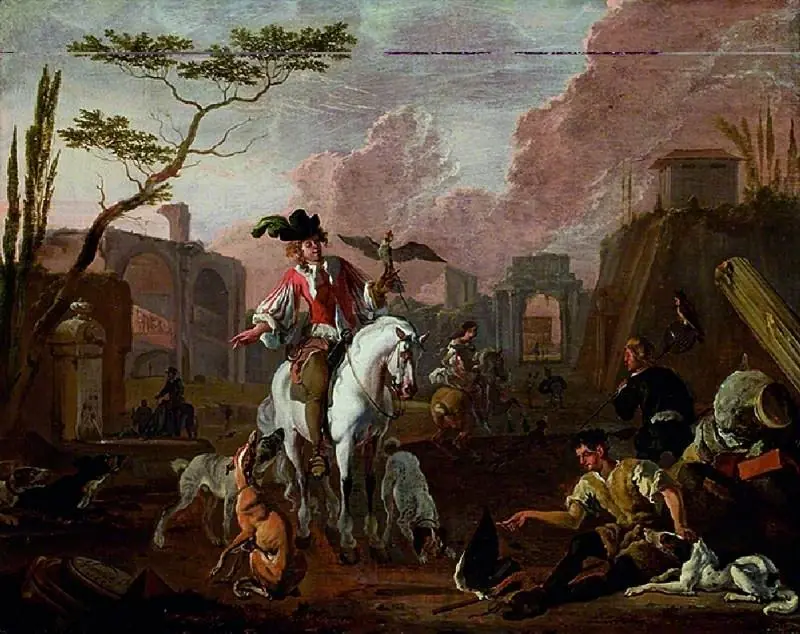 Hawking party
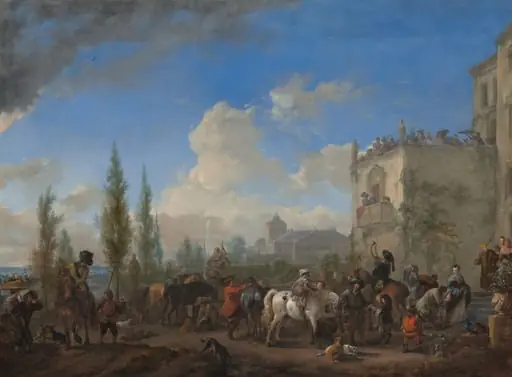 The Departure for the Hunt
 Landscape with Figures and Cattle