Artwork
Arabs in Egypt, Sunrise
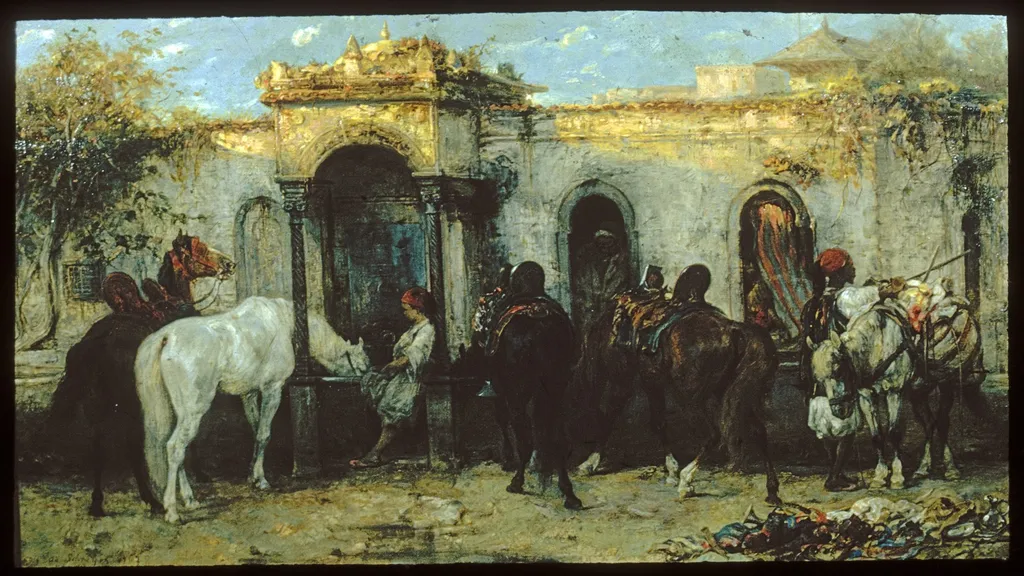
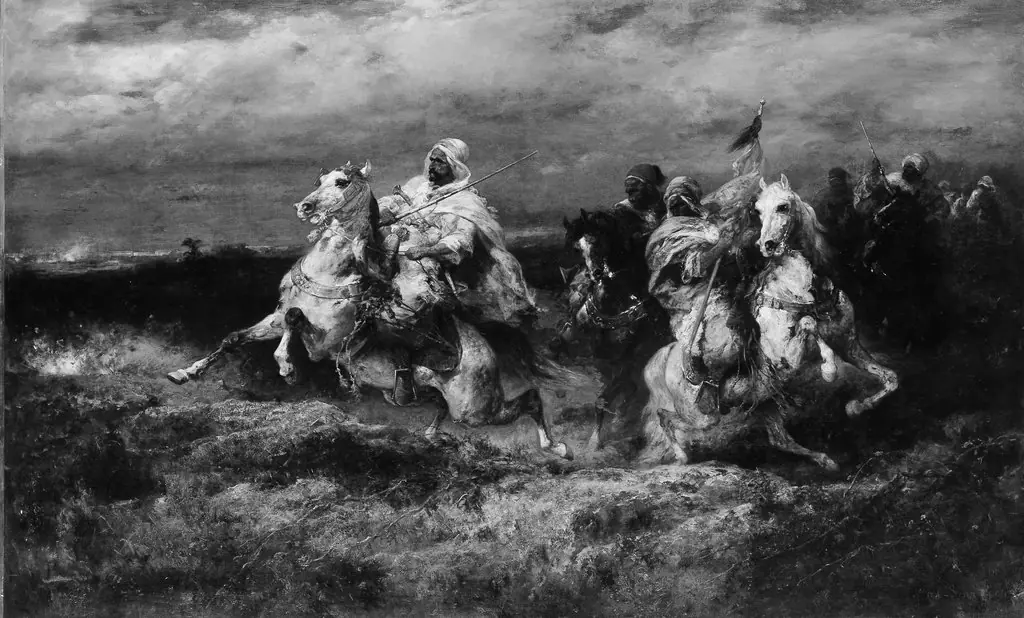
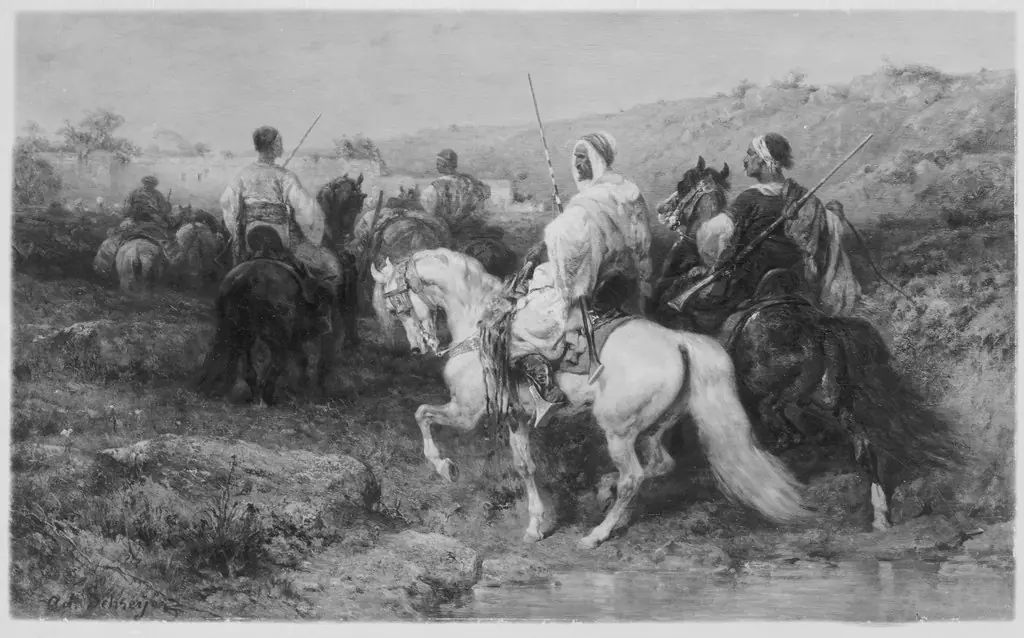
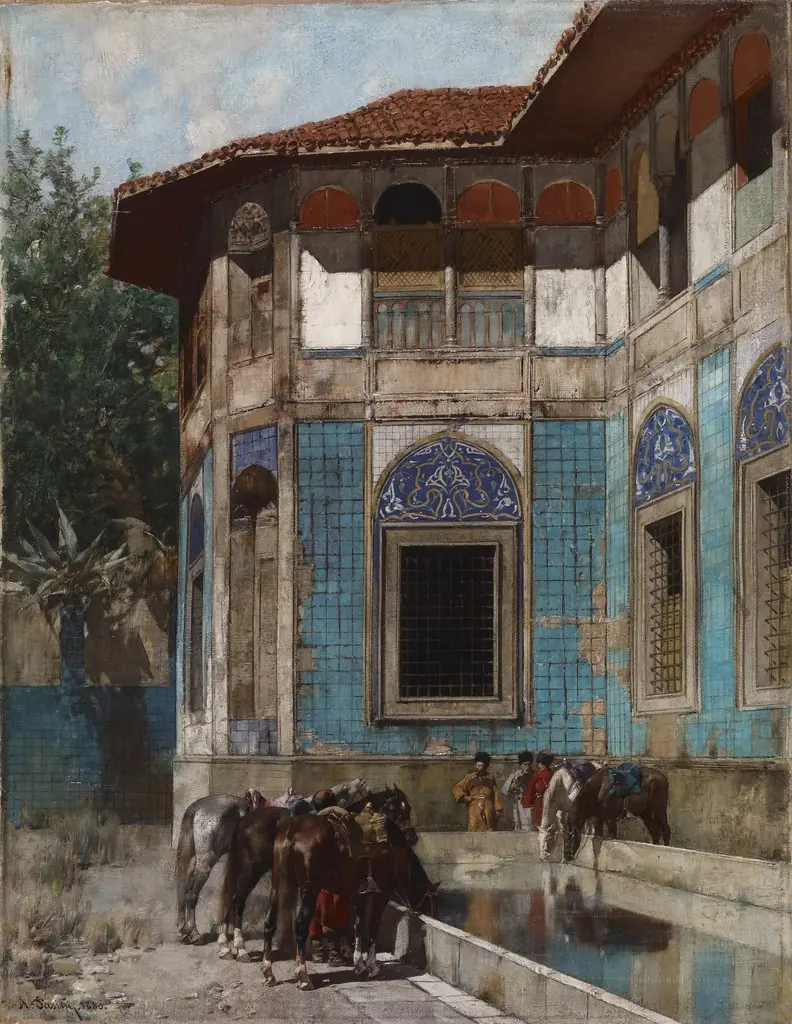
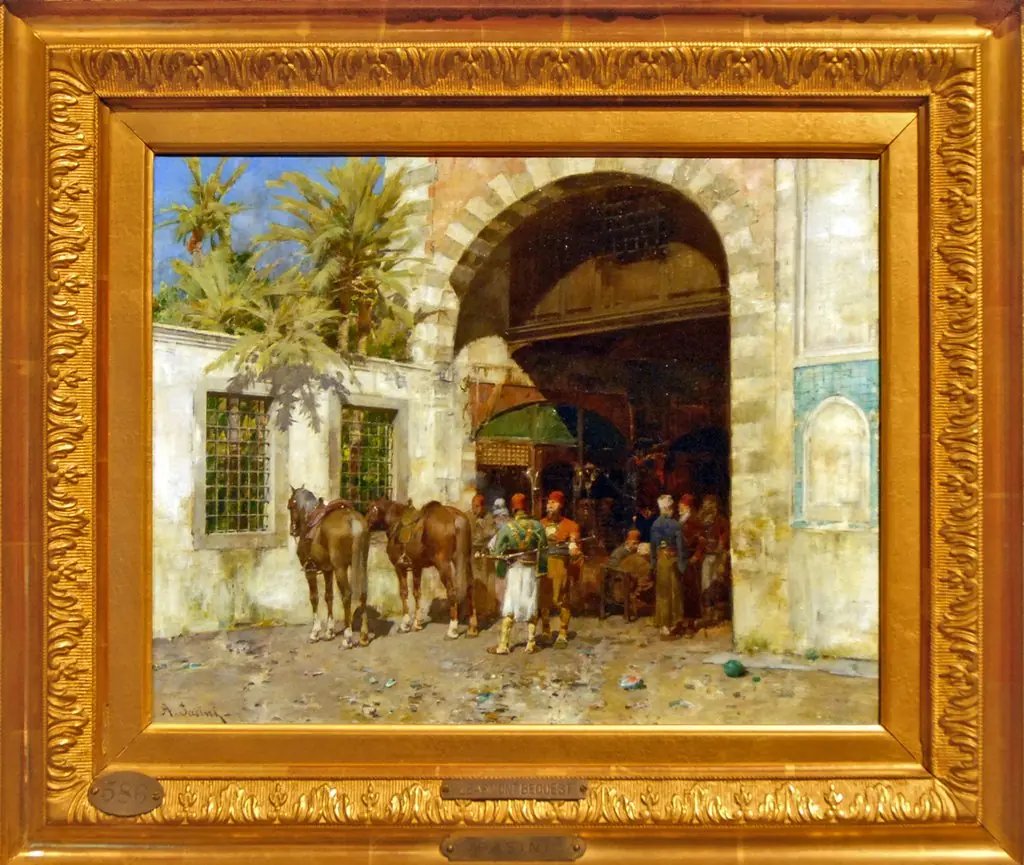
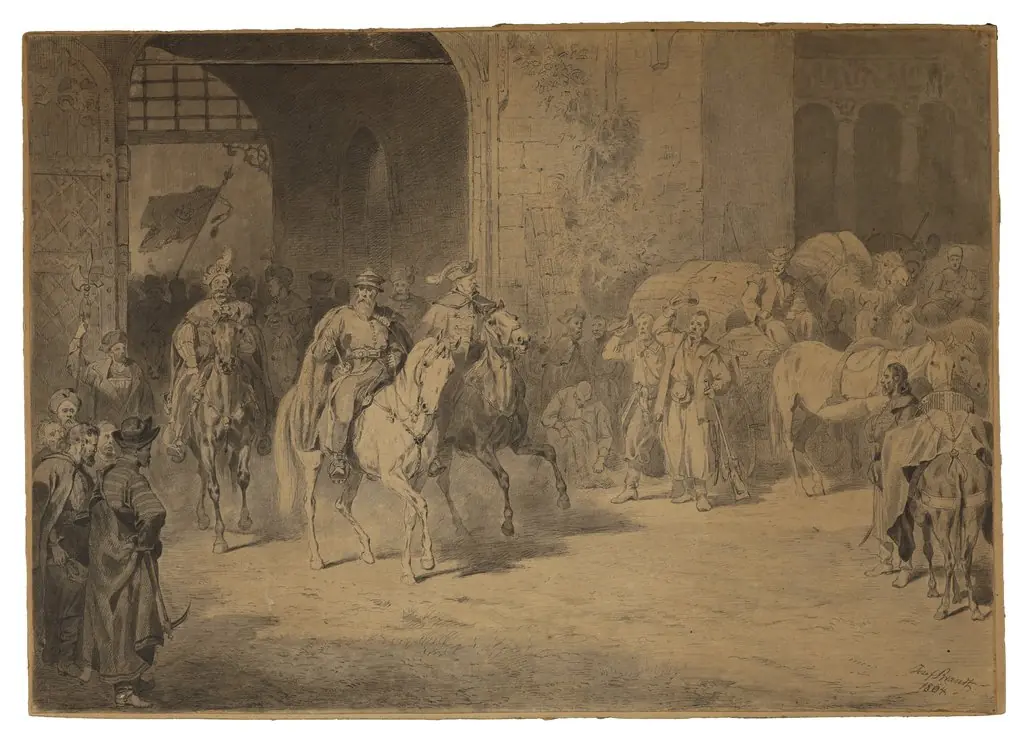
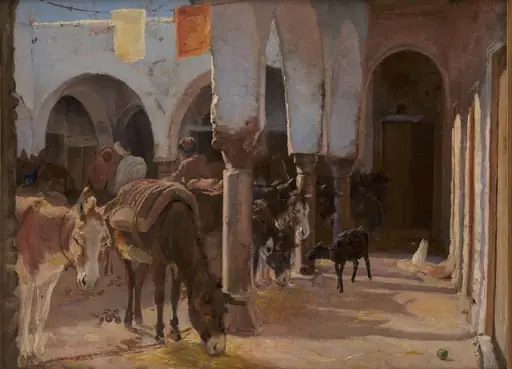
Arabs in Egypt, Sunrise is an oil painting by the Orientalist artist Adolf Schreyer. It dates from 1867 and is held in the collection of the Walters Art Museum.
About this work
Overview
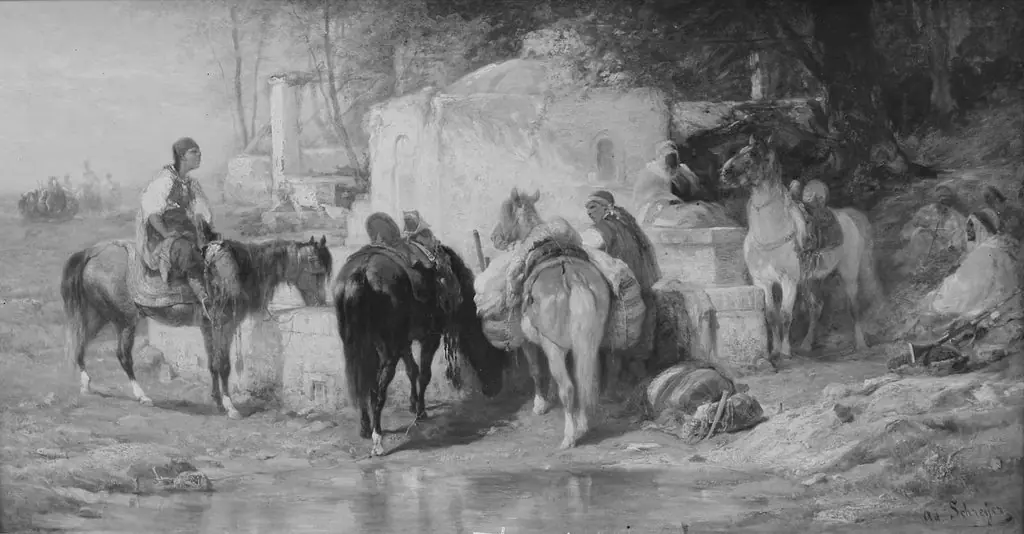
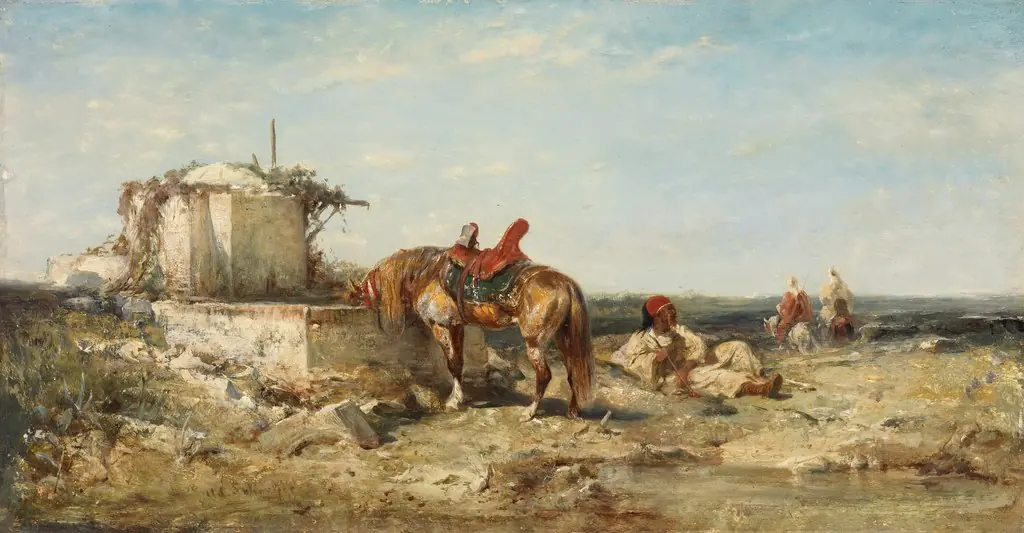
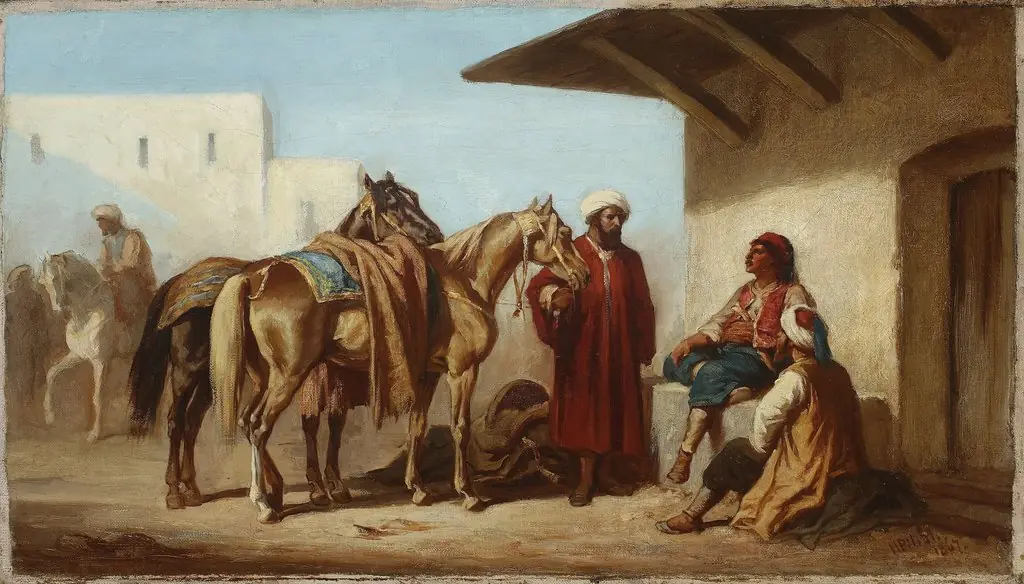
The work captures a dawn-lit courtyard scene where figures in traditional robes and headscarves gather beside saddled horses, poised for departure.
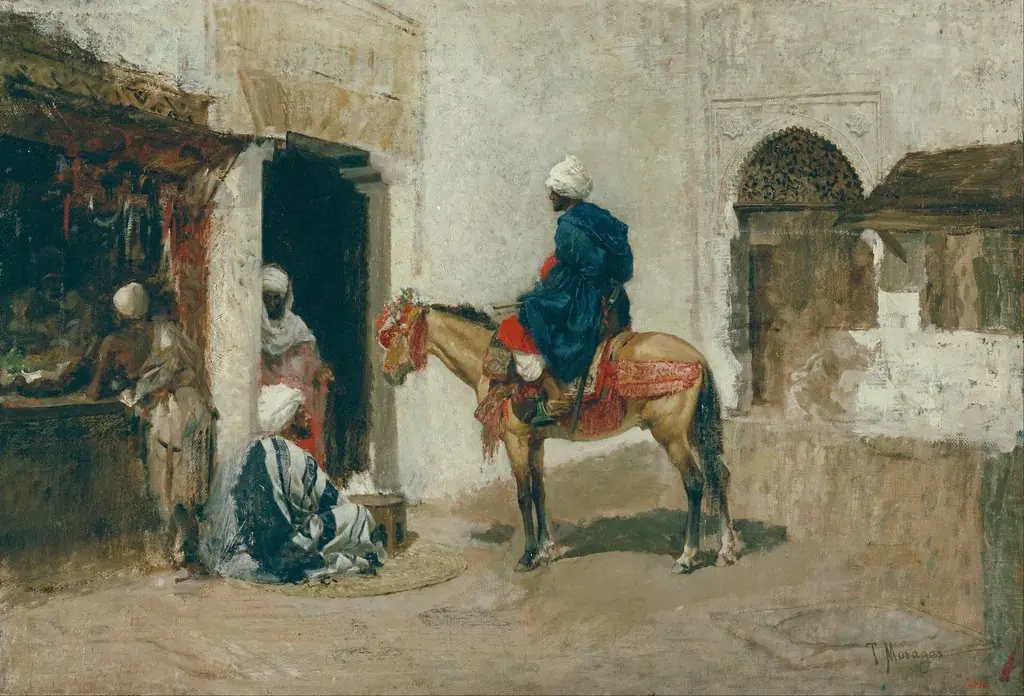
“Arabs in Egypt, Sunrise,” an oil on canvas painted in 1867 by German artist Adolf Schreyer, is part of the Walters Art Museum collection. The work captures a dawn-lit courtyard scene where figures in traditional robes and headscarves gather beside saddled horses, poised for departure. A stone structure with arched openings frames the composition, while a scattered heap of garments and personal items lies in the foreground, suggesting recent activity.
Subject & Meaning
The painting depicts a moment of transition, likely a caravan preparing to set out from an Egyptian settlement. The presence of both people and horses, together with the disordered clothing, conveys a sense of imminent travel and the logistical bustle that precedes it. The sunrise light bathes the scene in a gentle glow, emphasizing the anticipation of a new journey.
Technique & Style
Schreyer employs a restrained palette of earth tones punctuated by the warm hues of sunrise, rendering the stone architecture and fabric textures with careful brushwork. The figures are outlined with modest detail, allowing the overall atmosphere to dominate. The composition balances foreground clutter with a clear, open background, a hallmark of mid‑19th‑century Orientalist painting.
History & Provenance
Created in 1867, the canvas entered the Walters Art Museum’s holdings through acquisition in the early 20th century, though precise purchase records are limited. Its presence in the museum reflects the period’s European fascination with Middle‑Eastern subjects and the artist’s reputation for vivid travel scenes.
Context
During the 1860s, European artists frequently traveled to North Africa and the Near East, producing works that catered to a market eager for exotic imagery. Schreyer, known for his depictions of military and nomadic life, applied his experience to this Egyptian setting, contributing to the broader Orientalist narrative that shaped Western perceptions of the region.
Artist & collection