Artwork
Essay on Stone with Brush and Scraper: Playing at Hoops on the Castle Terrace
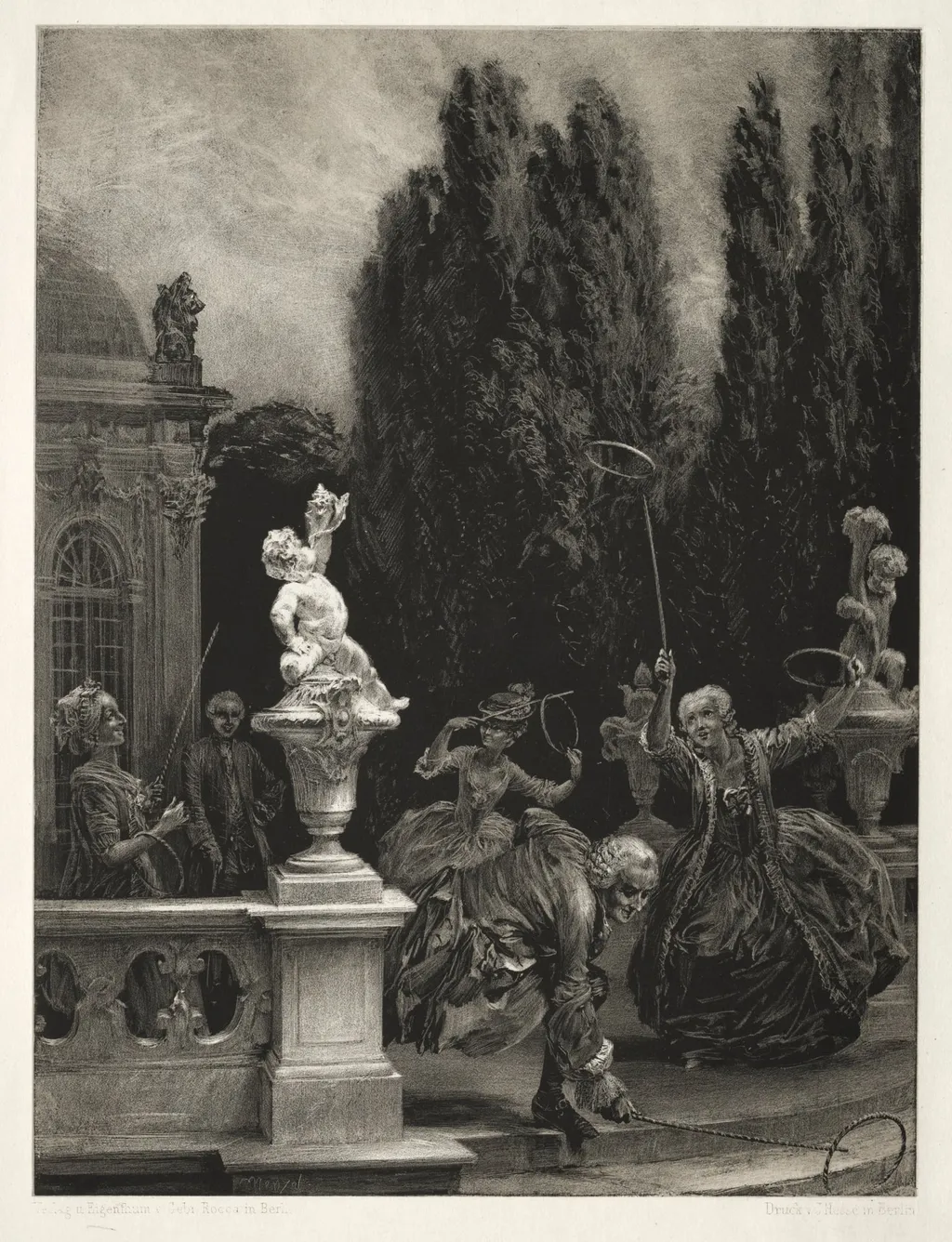
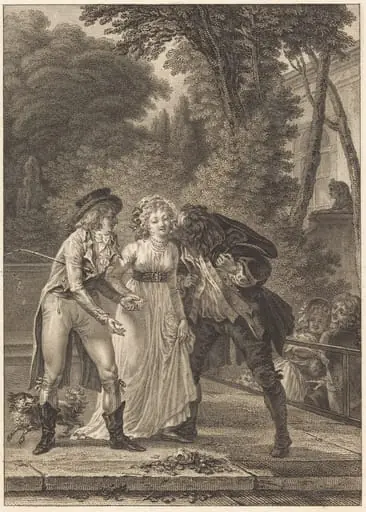
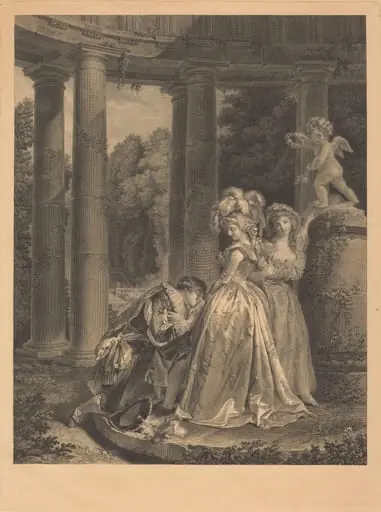
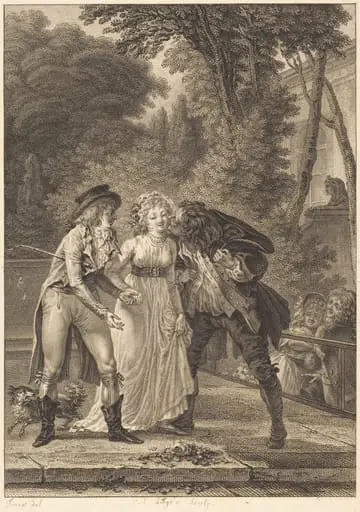
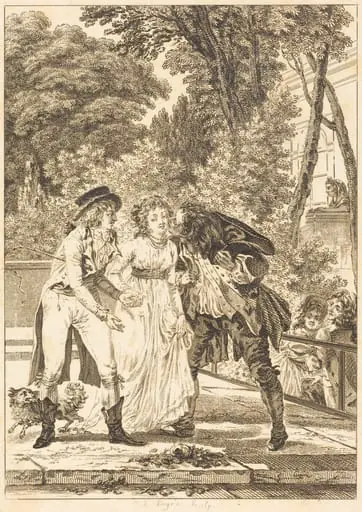
Essay on Stone with Brush and Scraper: Playing at Hoops on the Castle Terrace is a print by the Impressionist artist Adolph von Menzel. It dates from 1851 and is held in the collection of the Cleveland Museum of Art.
About this work
Overview
Executed with brush and scraper on stone, the work belongs to a series exploring everyday life through precise observation.
Created in 1851 by Adolph von Menzel, this drawing captures a moment of casual recreation on a stone terrace. Executed with brush and scraper on stone, the work belongs to a series exploring everyday life through precise observation. It is part of the collection at The Cleveland Museum of Art, where its tactile surface and nuanced tonality reflect Menzel’s interest in translating real-world scenes into graphic form.
Subject & Meaning
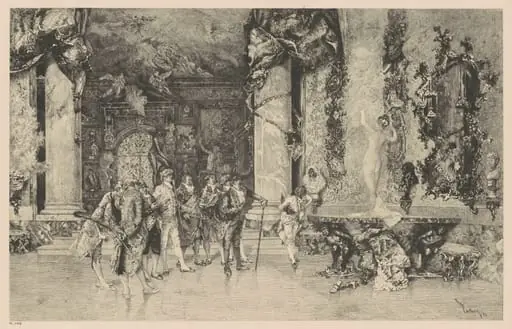
The scene depicts children and adults engaged in the game of hoop rolling, a common pastime in 19th-century Europe. Set against a formal garden terrace adorned with classical statues and an arched building, the activity contrasts with its ornate surroundings. The lively gestures and varied postures suggest spontaneity within a structured environment, hinting at the coexistence of leisure and social order in bourgeois life.
Technique & Style
Menzel employed a scraper to remove pigment and a brush to apply wash, creating subtle gradations of tone. The figures emerge from a dark ground through carefully modulated light, emphasizing volume and movement. This method, rooted in chiaroscuro, enhances the three-dimensionality of forms without relying on line. The texture of the stone surface adds a tactile quality, reinforcing the physical presence of the scene.
History & Provenance
The work was produced during Menzel’s early period, when he was documenting urban and aristocratic life in Berlin. It likely originated as a study for larger compositions or as an independent exploration of light and social behavior. Acquired by The Cleveland Museum of Art in the 20th century, it remains one of the few surviving examples of his experimental stone drawings from this era.
Context
In mid-19th-century Germany, artists increasingly turned to scenes of daily life, moving away from idealized historical subjects. Menzel’s focus on unposed moments in public spaces aligned with broader trends in realism. The presence of classical statuary and architecture reflects lingering Enlightenment ideals, while the informal activity grounds the scene in contemporary social practice.
Legacy
This drawing exemplifies Menzel’s contribution to the evolution of graphic realism in Europe. His ability to render transient movement and atmospheric depth with minimal means influenced later generations of draftsmen. Though not widely exhibited, the work stands as a quiet testament to his commitment to observing the ordinary with technical rigor and perceptual clarity.
Artist & collection

Artist
Adolph Friedrich Erdmann von Menzel was a German Realist artist noted for drawings, etchings, and paintings.