Artwork
Le chemin de la fortune
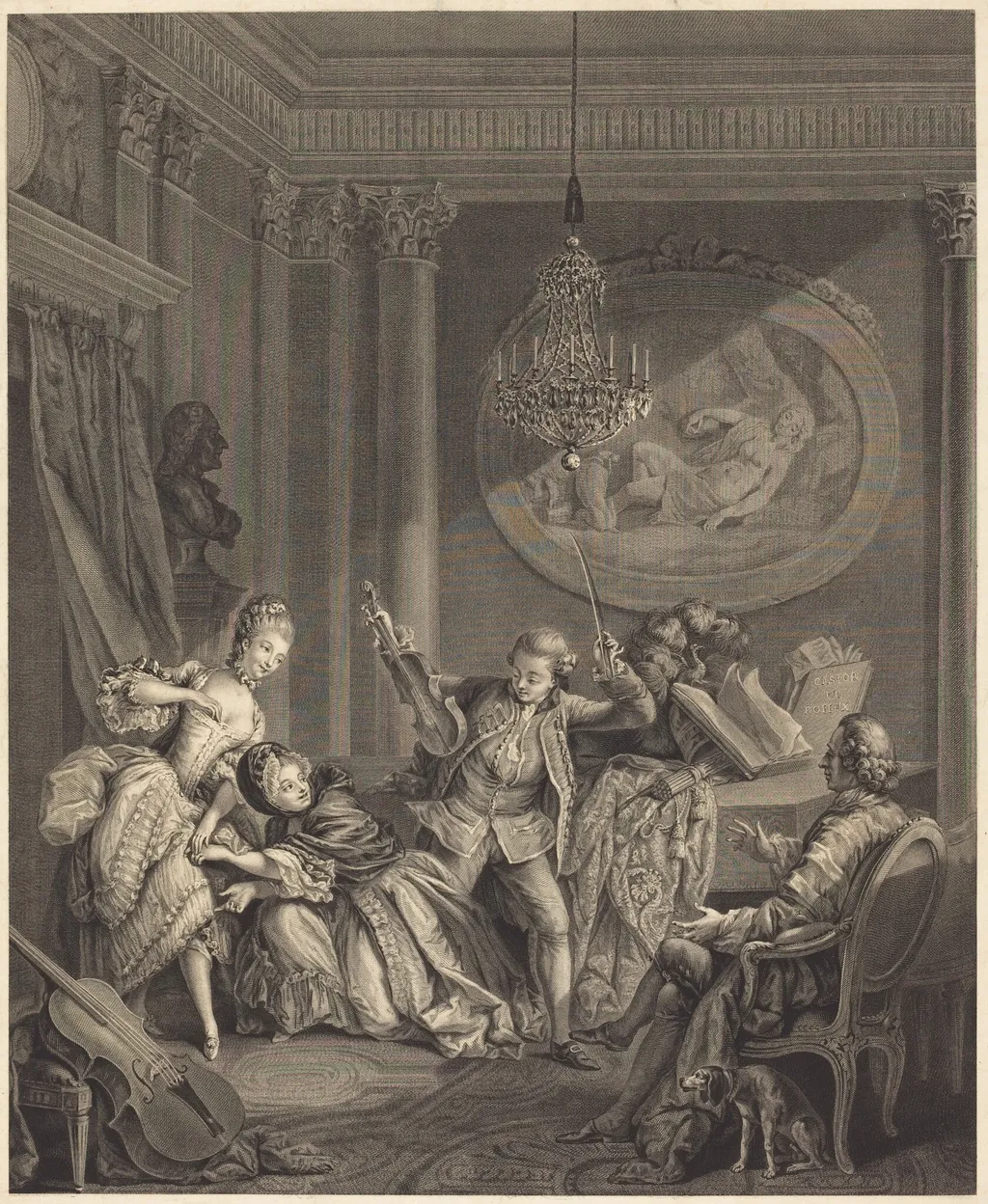
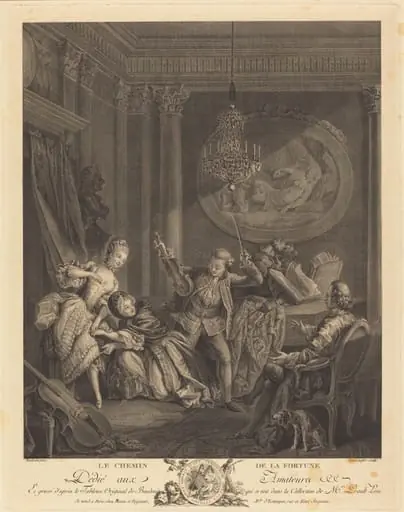
Le chemin de la fortune is an ink print by the Romanticist artist Nicolas Joseph Voyez. It dates from 1778 and is held in the collection of the National Gallery of Art.
About this work
Overview
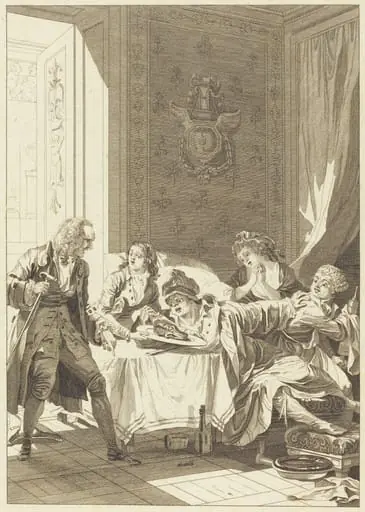
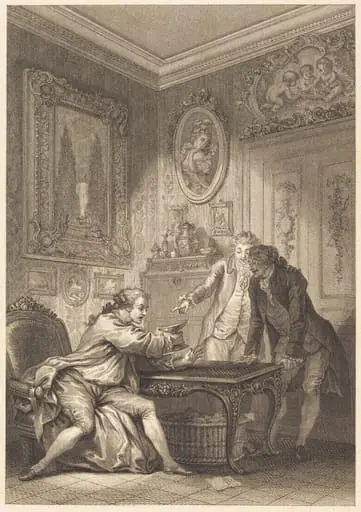
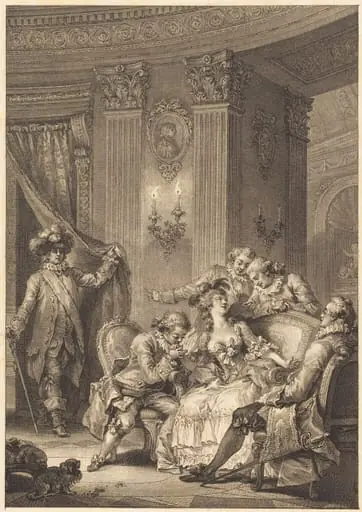
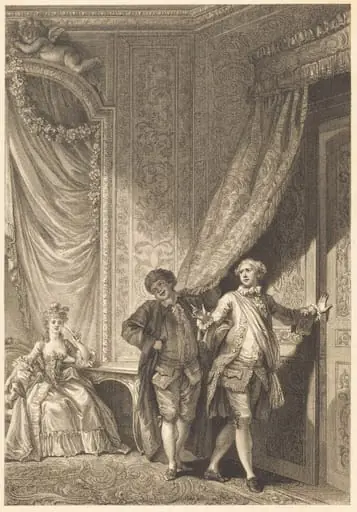
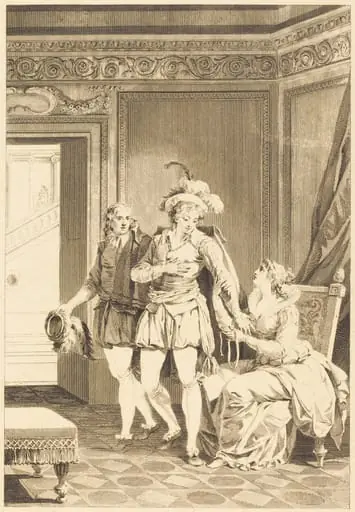
Created in 1778, Le chemin de la fortune is a black‑and‑white print produced by the French engraver Nicolas Joseph Voyez. Executed through a combination of engraving and etching, the work presents an interior tableau populated by several figures and assorted objects, rendered with fine linear detail that guides the viewer’s eye across the composition.
Subject & Meaning
The scene unfolds within an elaborately furnished room where a central male figure, sword in hand, commands attention.
The scene unfolds within an elaborately furnished room where a central male figure, sword in hand, commands attention. A seated woman looks upward toward him, while another woman stands nearby holding a violin. Additional elements—a chandelier, a dog, a book, and a violin—populate the space, suggesting a narrative of social interaction, perhaps alluding to the unpredictable nature of fortune and the tensions it can generate.
Technique & Style
Voyez employed both engraving and etching, allowing for crisp, controlled lines alongside softer tonal washes. The meticulous rendering of textures—fabric, metal, and wood—demonstrates the artist’s command of the medium. While the work predates the height of Romanticism, its emphasis on dramatic composition and emotional tension anticipates the movement’s focus on feeling and imagination.
History & Provenance
The print was issued in the late eighteenth century, a period when French printmakers frequently produced narrative scenes for a growing market of collectors. No specific patron or original ownership record is documented, but the work has appeared in several nineteenth‑century catalogues of French engravings, indicating its circulation among connoisseurs of the genre.
Artist & collection